Loading...
Emperor Xianzong of Tang vs Napoleon Bonaparte
Napoleon Bonaparte leads by 10.2 pts · 2 figures compared
…
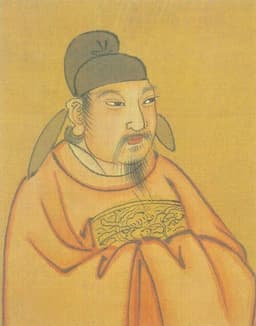
Emperor Xianzong of Tang
Emperor · Medieval
60.7Total

Napoleon Bonaparte
General · Modern
70.9Total
Basic Information
Born
778
1769
Died
820
1821
Era
Medieval
Modern
Nationality
China
France
Occupation
Emperor
General
Civilization
Eastern
Western
Score Comparison
Military (10%)
70.0
94.0
Political (20%)
65.0
72.0
Influence (20%)
59.0
40.0
Legacy (20%)
54.0
80.0
Leadership (15%)
68.0
78.0
Strategy (15%)
55.0
90.0
TOTAL
60.7
70.9
Emperor Xianzong of Tang — Complete Timeline
805 AD
Yuanhe RestorationPolitical Action
Emperor Xianzong initiated the Yuanhe Restoration, a series of reforms aimed at centralizing power and curbing the autonomy of military governors (jiedushi). He reasserted imperial authority over several rebellious provinces, strengthening the Tang state.
ReformCentralization
Impact: regionalconstructive
810 AD
Campaign against the Chengde CircuitWar◆ Major
Emperor Xianzong launched a military campaign against the Chengde Circuit, a rebellious province in Hebei. After initial setbacks, the Tang forces secured a victory, forcing the Chengde governor to submit to imperial authority.
Military CampaignRebellion Suppression
Impact: nationalconstructive
812 AD
Campaign against the Zhaoyi CircuitWar◆ Major
Emperor Xianzong's forces conquered the Zhaoyi Circuit, a rebellious province in modern Shanxi. This victory further reduced the power of the military governors and strengthened imperial control.
Military CampaignRebellion Suppression
Impact: nationalconstructive
818 AD
Campaign against the Pinglu CircuitWar◆ Major
Emperor Xianzong launched a campaign against the Pinglu Circuit in Shandong. The Tang forces defeated the rebel governor, bringing the province back under imperial control and completing the Yuanhe Restoration's military successes.
Military CampaignRebellion Suppression
Impact: nationalconstructive
820 AD
Death of Emperor XianzongPolitical Action◆ Major
Emperor Xianzong died suddenly, possibly poisoned by eunuchs. His death ended the Yuanhe Restoration, and subsequent emperors were unable to maintain the centralization he achieved, leading to the Tang dynasty's further decline.
DeathSuccession Crisis
Impact: regionaltragic
Napoleon Bonaparte — Complete Timeline
1799 AD
Coup of 18 BrumaireOther◆ Major
Napoleon Bonaparte, with support from his brother Lucien and key political figures, overthrew the Directory in a bloodless coup. He established the Consulate with himself as First Consul, effectively becoming the ruler of France. This event ended the French Revolution's most unstable period.
French RevolutionCoupRise to Power
Impact: regional
1804 AD
Promulgation of the Napoleonic CodeOther◆ Major
Napoleon enacted the Civil Code of the French, known as the Napoleonic Code, a comprehensive set of laws that replaced the fragmented feudal legal systems. The code established legal equality, protected property rights, and secularized law. It became the basis for legal systems in many European and world countries.
Legal ReformNapoleonic CodeCivil Law
Impact: globalconstructive
1805 AD
Battle of AusterlitzWar◆ Major
Napoleon's Grande Arm
Napoleonic WarsBattleDecisive Victory
Impact: global
1812 AD
Invasion of RussiaWar◆ Major
Napoleon led the Grande Arm
Napoleonic WarsInvasionDisaster
Impact: globaldestructive
1815 AD
Battle of WaterlooWar◆ Major
Napoleon's French army was defeated by the combined forces of the Duke of Wellington's Anglo-Allied army and Gebhard Leberecht von Bl
Napoleonic WarsBattleFinal Defeat
Impact: globaldestructive
Expert Analysis
emperor-xianzong-of-tang-vs-napoleon-bonaparte
# The Emperor and the Eagle: Two Roads to Power
On a cold December morning in 1805, Napoleon Bonaparte stood on a hill overlooking the frozen battlefield of Austerlitz, watching his Grand Armée destroy the combined forces of Russia and Austria. He was thirty-six years old, master of Europe. Thirteen years earlier and seven thousand miles away, another young ruler had taken the throne of a crumbling empire. Emperor Xianzong of Tang was twenty-seven when he inherited a realm bleeding from decades of rebellion, its provinces ruled by warlords who paid only lip service to the throne. Both men faced the same question: how does a leader restore power to a broken state? Their answers shaped two very different worlds.
Origins
Napoleon was born in 1769 on the island of Corsica, a year after France purchased it from Genoa. His family were minor Italian nobility, speaking Corsican and Italian before learning French. The French Revolution, which erupted when he was twenty, shattered the old order and created opportunities unimaginable under the Bourbon monarchy. A young artillery officer of modest birth could rise on talent alone—and Napoleon possessed talent in terrifying abundance.
Emperor Xianzong, born Li Chun in 778, came from the opposite pole of privilege. He was the grandson of Emperor Daizong and son of Emperor Shunzong, raised in the Forbidden City of Chang'an, surrounded by centuries of Confucian ritual and bureaucratic tradition. But his inheritance was poisoned. The An Lushan Rebellion of 755 had shattered Tang power, leaving the empire's eastern provinces under the control of military governors—the *jiedushi*—who collected taxes, raised armies, and passed their offices to their sons. The emperor in Chang'an was a figurehead, his authority extending barely beyond the capital walls.
Rise to Power
Napoleon's ascent was meteoric and military. At twenty-four, he drove the British out of Toulon and was promoted to brigadier general. At twenty-six, he crushed a royalist uprising in Paris with a "whiff of grapeshot." At twenty-seven, he took command of the starving, mutinous Army of Italy and transformed it into a victorious force that conquered the Italian peninsula in a single campaign. His genius lay not just in tactics but in propaganda: he understood that victory meant nothing if nobody knew about it. He published his own newspapers, commissioned heroic paintings, and wrote dispatches designed for public consumption.
Xianzong's path was slower, more constrained, and entirely political. He ascended the throne in 805 after his father was forced to abdicate—possibly by palace eunuchs. The young emperor faced a court divided between eunuchs, bureaucrats, and generals, none of whom took him seriously. His first act was to launch the Yuanhe Restoration, a systematic campaign to reassert imperial authority. Unlike Napoleon, who could inspire armies with personal charisma, Xianzong had to work through the machinery of the Tang civil service, rewarding loyal officials, punishing corrupt ones, and slowly rebuilding the fiscal base of the state.
Leadership & Governance
Napoleon governed through conquest and codification. The Napoleonic Code, implemented in 1804, standardized French law across his empire, abolishing feudalism, protecting property rights, and establishing secular governance. It was his most enduring achievement—a legal framework that spread across Europe and beyond. But his method of governance was personal dictatorship. He centralized everything in his own hands, appointed his brothers to thrones, and treated states as military assets to be mobilized for war.
Xianzong governed through a delicate balance of force and negotiation. His military campaigns against the Chengde Circuit in 810, the Zhaoyi Circuit in 812, and the Pinglu Circuit in 818 were not Napoleonic blitzkriegs but methodical operations designed to break the power of individual governors without uniting them against the throne. He offered amnesty to those who submitted, executed those who resisted, and always left room for surrender. Where Napoleon demanded total victory, Xianzong sought manageable submission.
Triumph & Tragedy
Napoleon's greatest moment was Austerlitz, where his tactical masterpiece destroyed the Third Coalition. His greatest failure was the invasion of Russia in 1812, where he lost half a million men to winter, disease, and Russian scorched-earth tactics. He never recovered. Exiled to Elba, he escaped, raised another army, and was defeated at Waterloo in 1815 by the Duke of Wellington. He died six years later on Saint Helena, a prisoner of the British.
Xianzong's triumph was the Yuanhe Restoration itself. By the time of his death in 820, he had reduced the power of the military governors, restored tax revenues, and revived the prestige of the Tang throne. His tragedy was that he died too soon—possibly poisoned by eunuchs, according to historical accounts. He was only forty-one. His successors lacked his skill and will, and within decades the Tang dynasty collapsed into fragmentation and civil war.
Character & Destiny
Napoleon was driven by boundless ambition and a conviction that he was a force of history. "I am not a man," he once said, "but a thing." He saw himself as the heir to Charlemagne and Caesar, destined to unite Europe under French civilization. This vision gave him extraordinary energy and ruthlessness, but also blinded him to limits. He could not stop. Every victory demanded another, every conquest required more soldiers, and eventually the system collapsed under its own weight.
Xianzong was more cautious, more calculating, and more aware of his limitations. He understood that the Tang dynasty could not be saved by conquest alone—it required rebuilding institutions, cultivating loyal officials, and accepting that some provinces would remain semi-autonomous. His motto might have been the Confucian maxim: "To govern is to rectify." He tried to restore the moral authority of the throne, not just its military power.
Legacy
Napoleon's legacy is global and contested. He is remembered as a military genius, a reformer who modernized European law, and a tyrant who drowned Europe in blood. His name still evokes both admiration and hatred. The Napoleonic Code survives in dozens of countries. His campaigns are studied at every military academy. He reshaped the modern world.
Xianzong's legacy is more modest and more tragic. He is remembered as a capable emperor who briefly restored Tang power, but whose death marked the beginning of the end. His Yuanhe Restoration is studied by Chinese historians as a model of what might have been—a moment when the center could have held, if only the man had lived longer. In China, he is a footnote to a dynasty's decline; in the West, he is virtually unknown.
Conclusion
Napoleon and Xianzong both faced the same fundamental problem: how to rebuild central authority in a fragmented world. Napoleon tried to do it through conquest, charisma, and the force of his own personality. Xianzong tried to do it through patience, politics, and the slow rebuilding of institutions. Napoleon's method was spectacular and ultimately self-destructive. Xianzong's was sustainable but incomplete. In the end, both failed—Napoleon on a remote island, Xianzong in a poisoned palace. But their failures illuminate something essential about power: it cannot be created by will alone. It requires time, luck, and the willingness to accept limits. Napoleon could not accept limits. Xianzong could not buy enough time. And so both empires fell, leaving only their lessons behind.
Rankings
🥇
Napoleon BonaparteLeader
Mil: 94.0Pol: 72.0Inf: 40.0
70.9
🥈
Emperor Xianzong of Tang
Mil: 70.0Pol: 65.0Inf: 59.0
60.7
+10.2 behind
How This Comparison Works
Algorithm
Each figure is scored on 6 dimensions (0—100 scale) based on structured historical data: Military (10%), Political (20%), Influence (20%), Legacy (20%), Leadership (15%), Strategy (15%). The weighted total produces the final ranking.
Data Sources
Scores are computed from structured sub-indicators in the database. Scale factors adjust for era (Ancient ×0.85, Modern ×1.0) and civilization size (Eastern ×1.05, Other ×0.80) to account for differences in population and military scale.
Maximum 3 Figures
Comparisons are limited to 2—3 figures to ensure readability and statistical meaningfulness.
Error Margins
±5 points per dimension — Sub-scores are derived from historical records with inherent uncertainty. Two figures within 5 points on a dimension should be considered roughly equivalent in that area.
Total Score Accuracy
±3 points overall — The weighted combination of 6 dimensions produces a total score with approximately ±3 points of uncertainty. Differences of less than 3 points are not statistically significant— the figures are effectively tied.
Known Limitations
- Historical records are incomplete and uneven across civilizations
- Figures from oral-tradition societies may be underrepresented
- Occupation labels can misclassify multi-role figures
- Scores measure capability and impact, not moral character
- Quantitative scoring is a comparison tool, not absolute truth
Capability Radar
Military (10%) — Battles & Warfare
Battles
60
95
Win Rate
65
90
Expansion
50
95
Political (20%) — Governance & Reform
Reform
80
95
Diplomacy
70
80
Economy
70
85
Influence (20%) — Cultural & Global Reach
Cultural
55
85
Global
40
90
Legacy (20%) — Historical Impact
Historical
65
95
Longevity
50
90
Leadership (15%) — Power & Stability
Tenure
65
85
Stability
60
70
Strategy (15%) — Tactics & Innovation
Strategy
70
95
Tactics
55
98
Reform
75
92
Similar Comparisons
Comments & Discussion
李唐雄魄6/17/2026
拿炮灰堆出的帝国也叫帝国?唐宪宗在河朔三镇刀尖上跳舞时,拿破仑还在科西嘉玩泥巴呢!元和中兴削平藩镇靠的是政治手腕和战略定力,不是奥斯特里茨那种赌徒式的战役。七个节度使乖乖交出兵权,这叫治国;法兰西第一帝国十四年就崩了,这叫烟花表演。
MarshalData6/17/2026
Your "unified" Tang? Please. Xianzong barely controlled 40% of taxable households after An Lushan. Napoleon directly ruled 44 million Frenchmen by 1812 and enforced the Code Napoleon from Hamburg to Rome. You call warlord appeasement "restoration"? I call it a temporary ceasefire with rebellious generals who'd rebel again under weaker successors—which they did. Numbers don't lie.
古典儒将6/17/2026
比军事?拿破仑靠十二磅炮说话,宪宗靠《平淮西碑》立言。李愬雪夜入蔡州活捉吴元济,比奥斯特里茨更配叫"奇袭"——零下二十度翻山越岭,五千人打垮两万叛军,不流一滴法国民血。更妙的是裴度坚持不屠城,比拿破仑在雅法屠杀战俘不知道高到哪里去了。
RevisionistEagle6/17/2026
Let's not romanticize either. Napoleon betrayed the Revolution to crown himself; Xianzong purged the eunuch faction only to later rely on them. Both centralized power temporarily at the cost of institutional instability. The real difference? Napoleon's reforms—metric system, meritocracy, secular education—echoed globally for centuries. Xianzong's Yuanhe restoration died with him in 820 from a poisoned pill, possibly delivered by his own eunuchs. Elegant empire indeed.