Loading...
Charles Maurice de Talleyrand vs Julius Caesar
Julius Caesar leads by 12.8 pts · 2 figures compared
…
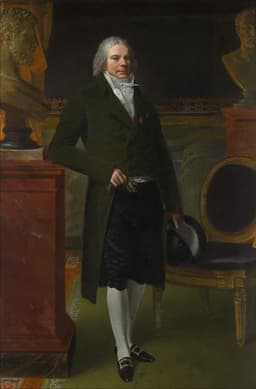
Charles Maurice de Talleyrand
Politician · Modern
70.0Total

Julius Caesar
General · Ancient
82.8Total
Basic Information
Born
1754
-100
Died
1838
-44
Era
Modern
Ancient
Nationality
France
Roman Republic
Occupation
Politician
General
Civilization
Western
Western
Score Comparison
Military (10%)
49.6
88.0
Political (20%)
70.3
78.0
Influence (20%)
88.0
85.0
Legacy (20%)
65.0
82.0
Leadership (15%)
78.0
80.0
Strategy (15%)
45.0
85.0
TOTAL
70.0
82.8
Charles Maurice de Talleyrand — Complete Timeline
1788 AD
Ordained as a BishopPolitical Action
Talleyrand was ordained as Bishop of Autun, despite his reputation for skepticism and libertine behavior. His ecclesiastical position gave him a platform in the Estates-General of 1789.
French RevolutionChurchEstates-General
Impact: national
1789 AD
Proposed the Nationalization of Church LandsPolitical Action◆ Major
As a member of the National Assembly, Talleyrand proposed the confiscation of Church lands to address France's financial crisis. The proposal led to the Civil Constitution of the Clergy and his excommunication.
French RevolutionChurch PropertyFinancial Reform
Impact: nationalconstructive
1794 AD
Exiled to the United StatesPolitical Action
Talleyrand fled France during the Reign of Terror and lived in exile in the United States until 1796. He engaged in land speculation and wrote about American politics.
French RevolutionExileUnited States
Impact: national
1799 AD
Appointed Foreign Minister under NapoleonPolitical Action◆ Major
Talleyrand was appointed Minister of Foreign Affairs by Napoleon Bonaparte after the Coup of 18 Brumaire. He served as Napoleon's chief diplomat, negotiating treaties and shaping French foreign policy.
Napoleonic WarsDiplomacyFrench Empire
Impact: global
1802 AD
Negotiated the Treaty of AmiensPolitical Action◆ Major
Talleyrand negotiated the Treaty of Amiens with Britain, which temporarily ended the Napoleonic Wars. The treaty brought a brief peace but collapsed within a year due to mutual distrust.
Napoleonic WarsPeace TreatyAnglo-French Relations
Impact: globalconstructive
1814 AD
Defected to the Bourbon RestorationPolitical Action
As Napoleon's empire collapsed, Talleyrand negotiated with the Allies to restore the Bourbon monarchy. He served as foreign minister under Louis XVIII and represented France at the Congress of Vienna.
Bourbon RestorationCongress of ViennaDiplomacy
Impact: global
1815 AD
Represented France at the Congress of ViennaPolitical Action◆ Major
Talleyrand represented defeated France at the Congress of Vienna. He skillfully exploited divisions among the Allies to secure lenient terms for France, including maintaining its 1792 borders.
Congress of ViennaDiplomacyPost-Napoleonic Europe
Impact: globalconstructive
Julius Caesar — Complete Timeline
58 BC
Gallic WarsWar◆ Major
Caesar, as proconsul of Gaul, launched a series of campaigns that conquered all of Gaul (modern France, Belgium, and parts of Switzerland). He fought numerous battles, including against the Helvetii, the Belgae, and the Gallic chieftain Vercingetorix. The wars brought immense wealth and a loyal army to Caesar.
Gallic WarsConquestRoman Expansion
Impact: regional
49 BC
Crossing the RubiconPolitical Action◆ Major
Caesar led Legio XIII across the Rubicon River into Italy, defying the Roman Senate's order to disband his army. This act triggered a civil war against Pompey and the Optimates, ultimately leading to Caesar's dictatorship and the end of the Roman Republic.
Roman Civil WarEnd of RepublicPower Struggle
Impact: global
48 BC
Battle of PharsalusWar◆ Major
Caesar's outnumbered army defeated the larger forces of Pompey the Great at Pharsalus in Greece. Caesar's tactical use of a reserve line to counter Pompey's cavalry charge proved decisive. Pompey fled to Egypt, where he was assassinated, leaving Caesar as the undisputed master of the Roman world.
Roman Civil WarBattleDecisive Victory
Impact: regional
44 BC
Appointment as Dictator for LifePolitical Action◆ Major
The Roman Senate appointed Caesar dictator perpetuo (dictator for life), granting him unprecedented personal power. This move concentrated military, legislative, and judicial authority in one person, effectively ending the Roman Republic's traditional system of checks and balances and alarming many senators.
DictatorshipEnd of RepublicPower Consolidation
Impact: regionaldestructive
Assassination on the Ides of MarchPolitical Action◆ Major
A group of Roman senators, led by Marcus Junius Brutus and Gaius Cassius Longinus, stabbed Caesar to death at a meeting of the Senate in the Theatre of Pompey. The assassination was intended to restore the Republic, but instead triggered another civil war that led to the rise of the Roman Empire.
AssassinationRoman PoliticsEnd of Republic
Impact: globaldestructive
Expert Analysis
charles-maurice-de-talleyrand-vs-julius-caesar
# The Conqueror and the Survivor
On the Ides of March, 44 BCE, Julius Caesar fell beneath twenty-three dagger blows in the Senate chamber of Rome. Nearly nineteen centuries later, in 1838, Charles Maurice de Talleyrand-Périgord died quietly in his Parisian mansion, having served every French regime from Louis XVI to Louis-Philippe. One man changed the world through conquest; the other, through survival. Both were geniuses of their age, yet their paths could not have diverged more sharply. What explains the difference between the man who reshaped history with a sword and the man who bent with every political wind?
Origins
Caesar was born into the patrician Julian clan in 100 BCE, a family that traced its lineage to the goddess Venus. But noble blood meant little in the dying Roman Republic, where political power flowed through military command and popular favor. His father died when Caesar was sixteen, leaving him to navigate a world of civil wars, proscriptions, and shifting alliances. The young patrician learned early that in Rome, survival meant ambition.
Talleyrand arrived in 1754 with a far crueler inheritance. Born with a clubfoot that disqualified him from the military career his noble family expected, he was pushed into the Church—an institution for which he had neither faith nor respect. By 1788, he had been ordained Bishop of Autun, despite his reputation for skepticism and libertine behavior. Where Caesar’s disability was political—a family name without fortune—Talleyrand’s was physical, a body that marked him as unfit for the traditional path of his class.
Rise to Power
Caesar’s ascent was a masterpiece of calculated risk. He borrowed fortunes to win popularity, forged the First Triumvirate with Pompey and Crassus, and then embarked on the Gallic Wars (58–50 BCE). His military score of 88 reflects not just tactical brilliance but an understanding that conquest was the fastest route to political power. The Commentaries he wrote were propaganda as much as history, shaping his own legend in real time.
Talleyrand rose differently. In 1789, as the French Revolution erupted, he proposed the nationalization of Church lands to solve France’s financial crisis—a betrayal of his ecclesiastical office that revealed his core principle: institutions exist to serve the state, not the other way around. When the Reign of Terror made France too dangerous, he fled to the United States in 1794, living in exile until the political winds shifted. He understood that power belonged to whoever could endure.
Leadership & Governance
Caesar ruled through presence. As dictator, he reformed the calendar, extended citizenship to provincials, and launched public works that transformed Rome. His political score of 78 understates his achievement, for he understood that the Republic’s institutions were too corrupt to survive. His solution was personal: concentrate power in one man, himself. The Senate became a theater, the people his audience.
Talleyrand governed through absence—the power of the man who is always useful but never committed. As Napoleon’s foreign minister from 1799, he negotiated the Treaty of Amiens in 1802, bringing temporary peace to a continent exhausted by war. But his true genius emerged in 1814, when he defected to the Bourbon Restoration as Napoleon’s empire crumbled. At the Congress of Vienna in 1815, he represented defeated France and, by exploiting divisions among the victorious Allies, secured remarkably favorable terms. His political score of 78.2 matches Caesar’s, but it was a different art: not command, but navigation.
Triumph & Tragedy
Caesar’s greatest triumph was the conquest of Gaul, a campaign that added a vast province to Rome and made him the most powerful man in the Republic. His greatest tragedy was the civil war that followed—a conflict he did not start but could not avoid. When he crossed the Rubicon in 49 BCE, he chose personal ambition over republican tradition. The Ides of March was the inevitable response.
Talleyrand’s triumph was the Congress of Vienna, where he transformed defeat into diplomatic victory. His tragedy was more subtle: he served every regime but was trusted by none. When asked about his principles, he reportedly said, “Above all, not too much zeal.” The man who survived revolutions, empires, and restorations died wealthy but friendless, a ghost in the corridors he had haunted for half a century.
Character & Destiny
Caesar was a gambler who believed in his own star. His strategy score of 88 reflects a mind that calculated odds but accepted risk. He pardoned enemies, promoted talent regardless of class, and assumed that generosity would inspire loyalty. It did not. Brutus was his friend; Brutus was his killer.
Talleyrand was a cynic who believed in nothing but survival. His military score of 37.5 is almost irrelevant, for he fought no battles. His strategy was patience, his weapon information. He watched Napoleon conquer Europe and knew it would end badly; he watched the Bourbons return and knew they would fall. He was always right, and always despised for it.
Legacy
Caesar’s legacy is written in stone and blood. The Roman Empire he created lasted five centuries in the West; his name became synonymous with autocracy. Every emperor after him was called “Caesar.” The calendar he reformed is still used. His influence score of 85 and legacy score of 82 reflect a man who did not just change history—he became history.
Talleyrand’s legacy is more ambiguous. His legacy score of 75 acknowledges a diplomat who defined modern statecraft, who understood that nations, like men, must adapt or die. But he left no monuments, no loyal followers, no cause. He is remembered as the man who betrayed everyone—and survived everyone.
Conclusion
Standing at the edge of history, Caesar and Talleyrand represent two answers to the same question: how does a man shape his age? Caesar answered by seizing the world and remaking it in his image, knowing he would be destroyed. Talleyrand answered by bending with every wind, knowing he would be forgotten. One created an empire; the other preserved a nation. One died in glory; the other in comfort. Which was wiser? The question has no answer—only the haunting echo of Caesar’s last words and Talleyrand’s final, silent smile.
Rankings
🥇
Julius CaesarLeader
Mil: 88.0Pol: 78.0Inf: 85.0
82.8
🥈
Charles Maurice de Talleyrand
Mil: 49.6Pol: 70.3Inf: 88.0
70.0
+12.8 behind
How This Comparison Works
Algorithm
Each figure is scored on 6 dimensions (0—100 scale) based on structured historical data: Military (10%), Political (20%), Influence (20%), Legacy (20%), Leadership (15%), Strategy (15%). The weighted total produces the final ranking.
Data Sources
Scores are computed from structured sub-indicators in the database. Scale factors adjust for era (Ancient ×0.85, Modern ×1.0) and civilization size (Eastern ×1.05, Other ×0.80) to account for differences in population and military scale.
Maximum 3 Figures
Comparisons are limited to 2—3 figures to ensure readability and statistical meaningfulness.
Error Margins
±5 points per dimension — Sub-scores are derived from historical records with inherent uncertainty. Two figures within 5 points on a dimension should be considered roughly equivalent in that area.
Total Score Accuracy
±3 points overall — The weighted combination of 6 dimensions produces a total score with approximately ±3 points of uncertainty. Differences of less than 3 points are not statistically significant— the figures are effectively tied.
Known Limitations
- Historical records are incomplete and uneven across civilizations
- Figures from oral-tradition societies may be underrepresented
- Occupation labels can misclassify multi-role figures
- Scores measure capability and impact, not moral character
- Quantitative scoring is a comparison tool, not absolute truth
Capability Radar
Military (10%) — Battles & Warfare
Battles
30
95
Win Rate
33
92
Expansion
34
97
Political (20%) — Governance & Reform
Reform
60
90
Diplomacy
95
85
Economy
70
82
Influence (20%) — Cultural & Global Reach
Cultural
65
88
Global
70
94
Legacy (20%) — Historical Impact
Historical
80
95
Longevity
75
96
Leadership (15%) — Power & Stability
Tenure
85
75
Stability
75
60
Strategy (15%) — Tactics & Innovation
Strategy
39
94
Tactics
39
96
Reform
41
88
Similar Comparisons
Comments & Discussion
TogaTracker6/17/2026
Caesar just got lucky with his timing. The Republic was already collapsing under its own weight—military commands were becoming private armies, and the Senate was a joke. Talleyrand, though? He navigated Napoleon, the Restoration, and the July Monarchy without ever losing his head. That's not bending; that's strategic supremacy. Caesar's assassination proves his model failed.
断层考古员6/17/2026
塔列朗根本不能跟恺撒比。你说他"服务了每个政权"?这不就是墙头草的政治生存术吗?恺撒在卢比孔河那句"骰子已掷出"是在赌上整个未来,而塔列朗一辈子都在计算最安全的下注。说难听点,一个是被历史折磨的幸存者,另一个是亲手改写了历史进程的人。
LegionDecay6/17/2026
The comparison misses the biggest point: scale. Caesar permanently restructured the entire Mediterranean world—the calendar, the provinces, the census, debt laws, citizenship expansion. Talleyrand's greatest achievement was smoothing over transitions in France. That's like comparing a carpenter who rebuilt a house to one who just oiled the hinges every decade. Caesar created systems; Talleyrand just preserved himself.
权力考古家6/17/2026
但你们有没有想过,塔列朗的"存活"本身就是一种情报战和心理战的巅峰?维也纳会议上,他利用"正统原则"把战败的法国重新拉回大国谈判桌,而恺撒在亚历山大灯塔前放火打仗的时候可没这么精妙的外交手腕。真要比较,塔列朗更像是提前两千年学会了冷战式的代理人博弈。
AxAndFrock6/17/2026
As a military historian, it's laughable to put a diplomat who never commanded a legion next to a general who conquered Gaul in eight years with a force that often faced ten-to-one odds. Talleyrand's Parisian salon maneuvering is cute, but Caesar's siege of Alesia is a textbook masterpiece still studied at military academies. One man changed the definition of warfare; the other changed the seating arrangement at peace conferences.