Loading...
Charles IX of Sweden vs Oscar II of Sweden
Charles IX of Sweden leads by 5.6 pts · 2 figures compared
…
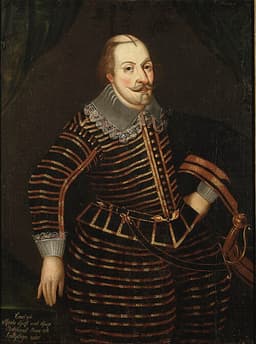
Charles IX of Sweden
Emperor · Modern
52.7Total

Oscar II of Sweden
Emperor · Modern
47.1Total
Basic Information
Born
1550
1829
Died
1611
1907
Era
Modern
Modern
Nationality
Sweden
Sweden
Occupation
Emperor
Emperor
Civilization
Western
Western
Score Comparison
Military (10%)
10.0
48.8
Political (20%)
68.0
42.3
Influence (20%)
53.3
48.6
Legacy (20%)
47.5
35.8
Leadership (15%)
74.0
62.2
Strategy (15%)
51.7
54.0
TOTAL
52.7
47.1
Charles IX of Sweden — Complete Timeline
1599 AD
Regency of Charles IXPolitical Action
Charles IX, then Duke of S
RegencyRebellionSigismund
Impact: national
1600 AD
War against Poland (Polish–Swedish War)War◆ Major
Charles IX launched a war against Poland to claim the Swedish throne from Sigismund III. The war included the Battle of Kircholm (1605), a major Polish victory, and continued intermittently until 1629.
Polish-Swedish WarDynastic Conflict
Impact: regional
1604 AD
Coronation of Charles IXPolitical Action◆ Major
Charles IX was formally crowned King of Sweden after the Riksdag declared Sigismund deposed. His coronation solidified the Vasa dynasty's break with Poland and established a Protestant, anti-Catholic policy.
CoronationSuccession
Impact: national
1611 AD
War against Denmark (Kalmar War)War◆ Major
Charles IX initiated the Kalmar War against Denmark-Norway over control of the Baltic Sea. The war ended in 1613 with the Treaty of Kn
Kalmar WarDenmarkBaltic
Impact: regionaldestructive
Founding of the Swedish East India CompanyPolitical Action
Charles IX granted a charter for the Swedish East India Company, though it was not fully realized until later. This initiative aimed to expand Swedish trade and influence in Asia.
TradeEast India CompanyColonialism
Impact: nationalconstructive
Oscar II of Sweden — Complete Timeline
1872 AD
Accession to the thronePolitical Action◆ Major
Oscar II became King of Sweden and Norway after the death of his brother, Charles XV. He inherited a dual monarchy that was increasingly strained by Norwegian demands for independence.
SuccessionMonarchy
Impact: national
1905 AD
Dissolution of the union with NorwayPolitical Action
Oscar II accepted the dissolution of the union between Sweden and Norway after the Norwegian parliament declared independence. He formally abdicated the Norwegian throne, ending the personal union that had existed since 1814.
Union DissolutionNorwayIndependence
Impact: regional
1906 AD
Arbitration in the Aland Islands disputePolitical Action
Oscar II served as an arbitrator in the dispute between Finland and Russia over the Aland Islands. His involvement helped maintain peace in the Baltic region.
DiplomacyArbitrationBaltic
Impact: regionalconstructive
Expert Analysis
Origins
Charles IX, born in 1550 as the third son of Gustav Vasa, grew up in the shadow of his father's legacy. Unlike his older brothers, he received a thorough education in statecraft and military affairs, but his path to power was blocked by primogeniture. His early years were marked by the religious strife between Lutherans and Catholics, a conflict that would define his reign. Oscar II, born in 1829, was the third son of Oscar I and Josephine of Leuchtenberg. His upbringing was steeped in the liberal ideals of the 19th century, and he pursued a career in the navy before ascending the throne. His youth was shaped by the gradual erosion of the Swedish-Norwegian union, a bond he would strive to preserve.
Rise to Power
Charles IX's rise began in 1593 when he led a rebellion against his Catholic nephew, King Sigismund III Vasa, who was also King of Poland. After defeating Sigismund's forces, Charles became regent in 1595 and was formally crowned king in 1604 after the Riksdag deposed Sigismund. His consolidation of power involved purging Catholic influences and centralizing authority. Oscar II became king in 1872 upon the death of his brother Charles XV. He inherited a dual monarchy where Norwegian nationalism was surging. His accession was peaceful, but the union's fragility demanded constant political maneuvering.
Leadership & Governance
Charles IX ruled with an iron fist, prioritizing Lutheran orthodoxy and royal supremacy. He enacted the Church Ordinance of 1571, which strengthened state control over religion. His governance was autocratic; he suppressed dissent ruthlessly, exemplified by the Linköping Bloodbath in 1600, where he executed opposition nobles. Oscar II, in contrast, was a constitutional monarch who navigated parliamentary politics. He modernized Sweden's infrastructure and supported cultural institutions like the Nobel Prize. However, his attempts to placate Norwegian demands for self-governance often backfired, leading to the union's dissolution in 1905.
Triumph & Tragedy
Charles IX's greatest triumph was securing Sweden's independence from Polish influence and laying the groundwork for his son Gustavus Adolphus's military reforms. His military score of 10.0 reflects his limited battlefield success; his campaigns against Poland and Denmark were costly, with the Kalmar War (1611-1613) ending in a humiliating treaty that forced Sweden to pay ransom for a fortress. Oscar II's triumph was his role as a peacemaker: he arbitrated the Åland Islands dispute in 1907, earning international respect. His tragedy was the dissolution of the union with Norway, which he accepted gracefully but saw as a personal failure. His leadership score of 62.2 is higher than Charles's 74.0, but his political score of 42.3 underscores his inability to preserve the union.
Character & Destiny
Charles IX was pragmatic and ruthless, driven by a vision of a strong, independent Sweden. His character, marked by suspicion and decisiveness, enabled him to seize power but also led to brutal purges. Oscar II was cultured and diplomatic, more a statesman than a warrior. His destiny was to preside over the end of an era; his acceptance of Norway's independence prevented conflict but diminished his legacy. Historians note that Charles's authoritarianism laid the foundation for Sweden's rise, while Oscar's liberalism reflected a changing world.
Legacy
Charles IX's legacy is intertwined with the Vasa dynasty's consolidation. He founded the Swedish East India Company (chartered in 1611), though it flourished later. His reign set the stage for Sweden's Golden Age. Oscar II is remembered as the last king of the united kingdoms; his support for science and culture endures through the Nobel Foundation. However, his political impotence reduced his influence score to 48.6, compared to Charles's 53.3. Charles's legacy score of 47.5 is higher than Oscar's 35.8, reflecting his more tangible impact on state-building.
Conclusion
Charles IX had a greater impact on Sweden's trajectory. His total score of 52.7 versus Oscar's 47.1 reflects his decisive role in securing independence and strengthening the monarchy. While Oscar II navigated modernity with grace, his reign marked an end, not a beginning. Charles's actions directly enabled Sweden's emergence as a European power, whereas Oscar's legacy is one of peaceful transition. The data supports Charles as the more consequential figure.
Rankings
🥇
Charles IX of SwedenLeader
Mil: 10.0Pol: 68.0Inf: 53.3
52.7
🥈
Oscar II of Sweden
Mil: 48.8Pol: 42.3Inf: 48.6
47.1
+5.6 behind
How This Comparison Works
Algorithm
Each figure is scored on 6 dimensions (0—100 scale) based on structured historical data: Military (10%), Political (20%), Influence (20%), Legacy (20%), Leadership (15%), Strategy (15%). The weighted total produces the final ranking.
Data Sources
Scores are computed from structured sub-indicators in the database. Scale factors adjust for era (Ancient ×0.85, Modern ×1.0) and civilization size (Eastern ×1.05, Other ×0.80) to account for differences in population and military scale.
Maximum 3 Figures
Comparisons are limited to 2—3 figures to ensure readability and statistical meaningfulness.
Error Margins
±5 points per dimension — Sub-scores are derived from historical records with inherent uncertainty. Two figures within 5 points on a dimension should be considered roughly equivalent in that area.
Total Score Accuracy
±3 points overall — The weighted combination of 6 dimensions produces a total score with approximately ±3 points of uncertainty. Differences of less than 3 points are not statistically significant— the figures are effectively tied.
Known Limitations
- Historical records are incomplete and uneven across civilizations
- Figures from oral-tradition societies may be underrepresented
- Occupation labels can misclassify multi-role figures
- Scores measure capability and impact, not moral character
- Quantitative scoring is a comparison tool, not absolute truth
Capability Radar
Military (10%) — Battles & Warfare
Battles
45
22
Win Rate
40
24
Expansion
45
31
Political (20%) — Governance & Reform
Reform
60
30
Diplomacy
40
40
Economy
50
30
Influence (20%) — Cultural & Global Reach
Cultural
30
20
Global
30
10
Legacy (20%) — Historical Impact
Historical
45
15
Longevity
40
10
Leadership (15%) — Power & Stability
Tenure
55
35
Stability
30
25
Strategy (15%) — Tactics & Innovation
Strategy
40
32
Tactics
35
39
Reform
50
41
Similar Comparisons
Comments & Discussion
No comments yet. Be the first to share your thoughts!