Loading...
Charles IX of Sweden vs George V of Hanover
Charles IX of Sweden leads by 16.8 pts · 2 figures compared
…
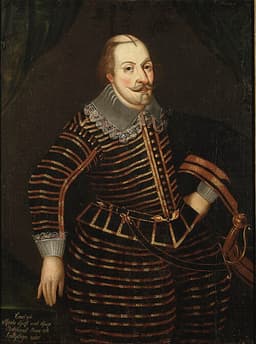
Charles IX of Sweden
Emperor · Modern
52.7Total
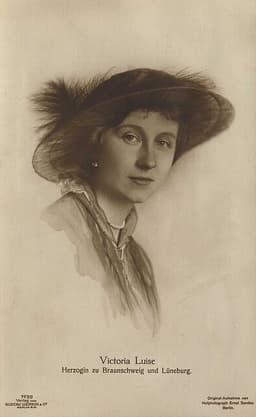
George V of Hanover
Emperor · Modern
35.9Total
Basic Information
Born
1550
1819
Died
1611
1878
Era
Modern
Modern
Nationality
Sweden
Hanover
Occupation
Emperor
Emperor
Civilization
Western
Western
Score Comparison
Military (10%)
10.0
13.3
Political (20%)
68.0
26.4
Influence (20%)
53.3
45.5
Legacy (20%)
47.5
34.2
Leadership (15%)
74.0
31.2
Strategy (15%)
51.7
60.0
TOTAL
52.7
35.9
Charles IX of Sweden — Complete Timeline
1599 AD
Regency of Charles IXPolitical Action
Charles IX, then Duke of S
RegencyRebellionSigismund
Impact: national
1600 AD
War against Poland (Polish–Swedish War)War◆ Major
Charles IX launched a war against Poland to claim the Swedish throne from Sigismund III. The war included the Battle of Kircholm (1605), a major Polish victory, and continued intermittently until 1629.
Polish-Swedish WarDynastic Conflict
Impact: regional
1604 AD
Coronation of Charles IXPolitical Action◆ Major
Charles IX was formally crowned King of Sweden after the Riksdag declared Sigismund deposed. His coronation solidified the Vasa dynasty's break with Poland and established a Protestant, anti-Catholic policy.
CoronationSuccession
Impact: national
1611 AD
War against Denmark (Kalmar War)War◆ Major
Charles IX initiated the Kalmar War against Denmark-Norway over control of the Baltic Sea. The war ended in 1613 with the Treaty of Kn
Kalmar WarDenmarkBaltic
Impact: regionaldestructive
Founding of the Swedish East India CompanyPolitical Action
Charles IX granted a charter for the Swedish East India Company, though it was not fully realized until later. This initiative aimed to expand Swedish trade and influence in Asia.
TradeEast India CompanyColonialism
Impact: nationalconstructive
George V of Hanover — Complete Timeline
1866 AD
Lost the Kingdom of Hanover to PrussiaWar
George V sided with Austria in the Austro-Prussian War. After Prussia's victory, Hanover was annexed by Prussia, and George V was deposed and went into exile. This ended the independent Kingdom of Hanover.
Austro-Prussian WarAnnexationExile
Impact: regionaltragic
Refused to accept Prussian annexationPolitical Action
After the annexation, George V refused to recognize Prussian rule and continued to claim his throne from exile. He maintained a government-in-exile and sought support from other European powers, but was unsuccessful.
ExileResistanceClaimant
Impact: regional
1878 AD
Died in exile in ParisPolitical Action◆ Major
George V died in Paris, still in exile. His death marked the end of the active Guelph claim to Hanover, though his son continued the dynasty. He never returned to Hanover after the annexation.
ExileDeathDynasty
Impact: regionaltragic
Expert Analysis
Origins
Charles IX of Sweden, born in 1550, was the third son of King Gustav Vasa. He was originally Duke of Södermanland, Närke, and Värmland. His formative years were marked by the religious conflicts of the Reformation, as Sweden transitioned from Catholicism to Lutheranism. He received a thorough education in statecraft and military affairs, but his path to the throne was blocked by his older brothers, Erik XIV and John III.
George V of Hanover, born in 1819, was the only son of King Ernest Augustus I. He was blind from a childhood accident, which affected his education and outlook. He ascended the throne in 1851, inheriting a kingdom that was part of the German Confederation but closely tied to Britain through the personal union (until 1837). George was raised with a strong sense of royal prerogative and a conservative worldview.
Rise to Power
Charles IX's rise was tumultuous. After the death of his brother John III in 1592, his nephew Sigismund III, already King of Poland, inherited the Swedish throne. Charles, a devout Lutheran, opposed Sigismund's Catholicism and policies. In 1593, he convened the Uppsala Synod, which reaffirmed Lutheranism and limited royal power. By 1595, he had effectively taken control of the government as regent, leading to a civil war. In 1599, he deposed Sigismund and was crowned King in 1604, after years of de facto rule. His political score of 68 reflects his cunning in navigating the Riksdag and noble factions.
George V rose smoothly, inheriting a stable kingdom. He quickly clashed with the liberal trends of the 1848 revolutions, seeking to restore absolutist powers. His reign was marked by conflict with the Hanoverian parliament over constitutional reforms. He refused to accept the 1848 constitution and instead imposed a more conservative one in 1855. His leadership score of 31.2 indicates his inability to adapt to changing political realities.
Leadership & Governance
Charles IX ruled with a firm hand, centralizing power and promoting Lutheranism. He established a strong bureaucracy and improved the army, laying the groundwork for Sweden's later military successes under his son, Gustavus Adolphus. He also founded the Swedish East India Company (though it became significant later). However, his leadership was marred by paranoia and ruthlessness; he executed many nobles in the Linköping Bloodbath (1600). His military score of 10.0 is low because of defeats like Kircholm (1605), but his strategic score of 51.7 shows some foresight.
George V's governance was reactionary. He attempted to rule without a constitution, leading to a constitutional crisis. He supported Austria in the Austro-Prussian War (1866), a disastrous decision that led to Hanover's annexation by Prussia. His political score of 26.4 reflects his poor judgment. He had a military score of 13.3, showing no significant military achievements; his army was quickly defeated by Prussia in 1866. His leadership score of 31.2 suggests a stubborn, inflexible ruler.
Triumph & Tragedy
Charles IX's greatest triumph was securing Sweden's independence from Polish control and establishing the Vasa dynasty firmly on the throne. He also stabilized the economy and strengthened the church. His greatest tragedy was the Kalmar War against Denmark (1611-1613), which ended in defeat and a heavy indemnity. He died shortly after the war, burdened by its failure.
George V's triumph was maintaining Hanover's neutrality until 1866, but his refusal to bend to Prussian demands led to his downfall. His tragedy was losing his kingdom entirely; he died in exile in Paris in 1878, never abdicating. His legacy is one of stubborn pride leading to ruin.
Character & Destiny
Charles IX was a calculating, ruthless, and devout ruler. He was willing to use violence to achieve his goals, as seen in the Linköping Bloodbath. His character shaped his destiny by enabling him to seize power but also creating enemies. Historians often view him as a capable but brutal leader who paved the way for Sweden's golden age.
George V was principled but inflexible. His blindness may have isolated him, reinforcing his stubbornness. He believed in divine right and refused to compromise, which led to the loss of his kingdom. His character sealed his fate as a deposed monarch.
Legacy
Charles IX's legacy is significant: he established the foundations of the Swedish Empire. His son Gustavus Adolphus became a military genius, partly due to the reforms Charles initiated. He is remembered as a key figure in Swedish history, with a total score of 52.7 reflecting his mixed but impactful reign.
George V's legacy is minimal. He is remembered as the last king of Hanover, a symbol of the old order crushed by Prussian nationalism. His total score of 35.9 reflects his failure to adapt. The Guelph dynasty continued through his son, but never regained the throne.
Conclusion
Charles IX of Sweden had a greater impact on history. Despite his military defeats, his political maneuvering and reforms set Sweden on a path to become a major European power. His total score of 52.7 outweighs George V's 35.9 by 16.8 points. George V's reign ended in disaster and obscurity, while Charles IX's legacy endured through his dynasty and nation. The data supports that Charles IX was the more consequential ruler.
Rankings
🥇
Charles IX of SwedenLeader
Mil: 10.0Pol: 68.0Inf: 53.3
52.7
🥈
George V of Hanover
Mil: 13.3Pol: 26.4Inf: 45.5
35.9
+16.8 behind
How This Comparison Works
Algorithm
Each figure is scored on 6 dimensions (0—100 scale) based on structured historical data: Military (10%), Political (20%), Influence (20%), Legacy (20%), Leadership (15%), Strategy (15%). The weighted total produces the final ranking.
Data Sources
Scores are computed from structured sub-indicators in the database. Scale factors adjust for era (Ancient ×0.85, Modern ×1.0) and civilization size (Eastern ×1.05, Other ×0.80) to account for differences in population and military scale.
Maximum 3 Figures
Comparisons are limited to 2—3 figures to ensure readability and statistical meaningfulness.
Error Margins
±5 points per dimension — Sub-scores are derived from historical records with inherent uncertainty. Two figures within 5 points on a dimension should be considered roughly equivalent in that area.
Total Score Accuracy
±3 points overall — The weighted combination of 6 dimensions produces a total score with approximately ±3 points of uncertainty. Differences of less than 3 points are not statistically significant— the figures are effectively tied.
Known Limitations
- Historical records are incomplete and uneven across civilizations
- Figures from oral-tradition societies may be underrepresented
- Occupation labels can misclassify multi-role figures
- Scores measure capability and impact, not moral character
- Quantitative scoring is a comparison tool, not absolute truth
Capability Radar
Military (10%) — Battles & Warfare
Battles
45
39
Win Rate
40
40
Expansion
45
40
Political (20%) — Governance & Reform
Reform
60
5
Diplomacy
40
5
Economy
50
10
Influence (20%) — Cultural & Global Reach
Cultural
30
5
Global
30
5
Legacy (20%) — Historical Impact
Historical
45
10
Longevity
40
5
Leadership (15%) — Power & Stability
Tenure
55
10
Stability
30
5
Strategy (15%) — Tactics & Innovation
Strategy
40
43
Tactics
35
48
Reform
50
50
Similar Comparisons
Comments & Discussion
No comments yet. Be the first to share your thoughts!