Loading...
Charles IX of Sweden vs Julius Caesar
Julius Caesar leads by 30.1 pts · 2 figures compared
…
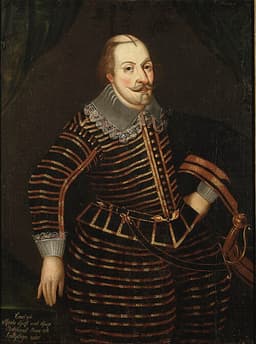
Charles IX of Sweden
Emperor · Modern
52.7Total

Julius Caesar
General · Ancient
82.8Total
Basic Information
Born
1550
-100
Died
1611
-44
Era
Modern
Ancient
Nationality
Sweden
Roman Republic
Occupation
Emperor
General
Civilization
Western
Western
Score Comparison
Military (10%)
10.0
88.0
Political (20%)
68.0
78.0
Influence (20%)
53.3
85.0
Legacy (20%)
47.5
82.0
Leadership (15%)
74.0
80.0
Strategy (15%)
51.7
85.0
TOTAL
52.7
82.8
Charles IX of Sweden — Complete Timeline
1599 AD
Regency of Charles IXPolitical Action
Charles IX, then Duke of S
RegencyRebellionSigismund
Impact: national
1600 AD
War against Poland (Polish–Swedish War)War◆ Major
Charles IX launched a war against Poland to claim the Swedish throne from Sigismund III. The war included the Battle of Kircholm (1605), a major Polish victory, and continued intermittently until 1629.
Polish-Swedish WarDynastic Conflict
Impact: regional
1604 AD
Coronation of Charles IXPolitical Action◆ Major
Charles IX was formally crowned King of Sweden after the Riksdag declared Sigismund deposed. His coronation solidified the Vasa dynasty's break with Poland and established a Protestant, anti-Catholic policy.
CoronationSuccession
Impact: national
1611 AD
War against Denmark (Kalmar War)War◆ Major
Charles IX initiated the Kalmar War against Denmark-Norway over control of the Baltic Sea. The war ended in 1613 with the Treaty of Kn
Kalmar WarDenmarkBaltic
Impact: regionaldestructive
Founding of the Swedish East India CompanyPolitical Action
Charles IX granted a charter for the Swedish East India Company, though it was not fully realized until later. This initiative aimed to expand Swedish trade and influence in Asia.
TradeEast India CompanyColonialism
Impact: nationalconstructive
Julius Caesar — Complete Timeline
58 BC
Gallic WarsWar◆ Major
Caesar, as proconsul of Gaul, launched a series of campaigns that conquered all of Gaul (modern France, Belgium, and parts of Switzerland). He fought numerous battles, including against the Helvetii, the Belgae, and the Gallic chieftain Vercingetorix. The wars brought immense wealth and a loyal army to Caesar.
Gallic WarsConquestRoman Expansion
Impact: regional
49 BC
Crossing the RubiconPolitical Action◆ Major
Caesar led Legio XIII across the Rubicon River into Italy, defying the Roman Senate's order to disband his army. This act triggered a civil war against Pompey and the Optimates, ultimately leading to Caesar's dictatorship and the end of the Roman Republic.
Roman Civil WarEnd of RepublicPower Struggle
Impact: global
48 BC
Battle of PharsalusWar◆ Major
Caesar's outnumbered army defeated the larger forces of Pompey the Great at Pharsalus in Greece. Caesar's tactical use of a reserve line to counter Pompey's cavalry charge proved decisive. Pompey fled to Egypt, where he was assassinated, leaving Caesar as the undisputed master of the Roman world.
Roman Civil WarBattleDecisive Victory
Impact: regional
44 BC
Appointment as Dictator for LifePolitical Action◆ Major
The Roman Senate appointed Caesar dictator perpetuo (dictator for life), granting him unprecedented personal power. This move concentrated military, legislative, and judicial authority in one person, effectively ending the Roman Republic's traditional system of checks and balances and alarming many senators.
DictatorshipEnd of RepublicPower Consolidation
Impact: regionaldestructive
Assassination on the Ides of MarchPolitical Action◆ Major
A group of Roman senators, led by Marcus Junius Brutus and Gaius Cassius Longinus, stabbed Caesar to death at a meeting of the Senate in the Theatre of Pompey. The assassination was intended to restore the Republic, but instead triggered another civil war that led to the rise of the Roman Empire.
AssassinationRoman PoliticsEnd of Republic
Impact: globaldestructive
Expert Analysis
charles-ix-of-sweden-vs-julius-caesar
# The Crossing and the Crown
On a January day in 49 BCE, Julius Caesar stood at the banks of the Rubicon River, a small stream that marked the boundary between his province of Gaul and Italy proper. To cross with his army was treason, a declaration of civil war against the Roman Senate. He paused, reportedly muttered *“Alea iacta est”*—the die is cast—and led his legions across. The Republic would never be the same. Fifteen centuries later and a thousand miles north, another ruler faced his own Rubicon: Charles IX of Sweden, a duke who would seize a crown from his own nephew and plunge his kingdom into decades of war. Both men reshaped their nations, but their paths, their talents, and their legacies could hardly have been more different.
Origins
Julius Caesar was born into the patrician Julian clan in 100 BCE, a family of ancient lineage but modest political clout in a Rome dominated by military strongmen like Marius and Sulla. His childhood unfolded against the backdrop of civil strife—the Social War, the proscriptions of Sulla, the crumbling of republican norms. Caesar was no stranger to danger: as a young man, he fled Sulla’s purge and later was captured by pirates, whom he famously promised to crucify—and did. His era was one of ambition and violence, where a man’s worth was measured by conquest and oratory.
Charles IX, born in 1550, entered a very different world. Sweden was a poor, sparsely populated kingdom on the fringe of Europe, still recovering from the Reformation and locked in a struggle for Baltic dominance. His father, Gustav Vasa, had broken Sweden free from Danish rule, but the family’s grip on the throne was fragile. Charles was the youngest son, not destined to rule—until dynastic chaos opened the door. His era was one of religious war, with Catholic Poland and Lutheran Sweden pitted against each other, and the shadow of the Holy Roman Empire looming over the north.
Rise to Power
Caesar’s rise was a masterclass in political calculation. He climbed the Roman ladder of offices—quaestor, aedile, praetor—borrowing enormous sums to fund games and bribes. In 60 BCE, he forged the First Triumvirate with Pompey and Crassus, an alliance that gave him command in Gaul. Over eight years, he conquered a vast territory, wrote commentaries that became classics, and built a loyal army. When the Senate ordered him to disband his forces, he chose war. The Rubicon was his gamble, and it paid off: within five years, he was dictator for life.
Charles IX’s path was messier, more desperate. In 1599, he was Duke of Södermanland, not king. His nephew, Sigismund III Vasa, ruled both Sweden and Poland—a Catholic monarch over a Lutheran realm. Charles led a rebellion, not for the throne at first, but to defend Protestantism. He defeated Sigismund’s forces, and in 1604, the Riksdag formally crowned him king. But his legitimacy was always contested, and he spent his reign fighting to secure a crown he had taken by force.
Leadership & Governance
Caesar governed with audacity and vision. As dictator, he reformed the calendar (the Julian calendar, still used in part today), granted citizenship to Gauls, and initiated public works. His military genius was unmatched: at Alesia, he besieged a Gallic stronghold while simultaneously repelling a massive relief army, a feat of logistics and nerve. But his political wisdom was flawed—he centralized power, alienated the Senate, and ignored warnings of conspiracy. He ruled like a monarch in a republic that hated kings.
Charles IX was a different kind of leader. His military score of 37.5 reflects a king who lost more battles than he won. The Kalmar War against Denmark (1611) ended in humiliating defeat, and his Polish war dragged on indecisively. Yet his political score of 73.3 shows a shrewd, if ruthless, ruler. He strengthened the Riksdag, reformed the church, and laid the groundwork for Sweden’s future empire. His son, Gustavus Adolphus, would inherit a stable state and become one of history’s great generals—a legacy Charles could not claim for himself.
Triumph & Tragedy
Caesar’s greatest triumph was his conquest of Gaul, which added a province larger than Italy to Roman dominion and made him the richest man in Rome. His greatest tragedy came on the Ides of March, 44 BCE, when senators stabbed him to death in the Senate chamber. He fell at the foot of Pompey’s statue, bleeding out in the heart of the city he had conquered. His assassination plunged Rome into another civil war, but it also cleared the path for Augustus, his adopted heir, to found the Empire.
Charles IX’s triumphs were more modest. He secured Sweden’s independence from Catholic rule and preserved the Lutheran faith. His tragedy was the Kalmar War, a conflict he started to dominate the Baltic but lost badly, leaving Sweden exposed. He died in 1611, worn out and disappointed, his ambitions unfulfilled. Where Caesar fell at the height of his power, Charles faded into the background of his son’s greater story.
Character & Destiny
Caesar was charismatic, calculating, and supremely confident. He pardoned enemies, slept with allies’ wives, and wrote his own propaganda. His personality drove him to risk everything—the Rubicon, the civil war, the dictatorship—because he believed in his own destiny. That belief made him a legend but also made him blind to the hatred he inspired.
Charles IX was more cautious, more rigid. He was a man of principle—a devout Lutheran—but also a pragmatist who could betray his own family. His reign was a constant struggle for legitimacy, and that insecurity shaped his decisions. He was not a natural warrior or a great strategist; he was a survivor, a king who held his throne by sheer will.
Legacy
Caesar’s legacy is monumental. His name became a title—*Kaiser*, *Tsar*—and his military tactics are still studied. The Roman Empire he unwittingly created lasted five centuries in the West and a thousand years in the East. He is remembered as a genius, a tyrant, and a martyr, a figure who embodies both the glory and the peril of absolute power.
Charles IX’s legacy is quieter. His score of 65.3 reflects a competent but not exceptional ruler. He is remembered as the father of Gustavus Adolphus, the “Lion of the North,” and as the king who secured Sweden’s Protestant identity. The Swedish East India Company, chartered in his name, would later flourish. But he is not a household name, not a subject of plays and poems. He was a bridge between eras, not a destroyer of worlds.
Conclusion
Standing on opposite sides of history, Caesar and Charles IX both crossed lines they should not have crossed. One destroyed a republic and created an empire; the other seized a throne and built a kingdom. Caesar’s story is one of breathtaking ambition and tragic downfall, a tale that still resonates because it asks how far one man can bend the arc of history. Charles’s story is quieter, more human—a story of a man who did what he had to do, not what he dreamed of doing. In the end, both remind us that power is never given; it is taken, held, and lost. And the die, once cast, never stops rolling.
Rankings
🥇
Julius CaesarLeader
Mil: 88.0Pol: 78.0Inf: 85.0
82.8
🥈
Charles IX of Sweden
Mil: 10.0Pol: 68.0Inf: 53.3
52.7
+30.1 behind
How This Comparison Works
Algorithm
Each figure is scored on 6 dimensions (0—100 scale) based on structured historical data: Military (10%), Political (20%), Influence (20%), Legacy (20%), Leadership (15%), Strategy (15%). The weighted total produces the final ranking.
Data Sources
Scores are computed from structured sub-indicators in the database. Scale factors adjust for era (Ancient ×0.85, Modern ×1.0) and civilization size (Eastern ×1.05, Other ×0.80) to account for differences in population and military scale.
Maximum 3 Figures
Comparisons are limited to 2—3 figures to ensure readability and statistical meaningfulness.
Error Margins
±5 points per dimension — Sub-scores are derived from historical records with inherent uncertainty. Two figures within 5 points on a dimension should be considered roughly equivalent in that area.
Total Score Accuracy
±3 points overall — The weighted combination of 6 dimensions produces a total score with approximately ±3 points of uncertainty. Differences of less than 3 points are not statistically significant— the figures are effectively tied.
Known Limitations
- Historical records are incomplete and uneven across civilizations
- Figures from oral-tradition societies may be underrepresented
- Occupation labels can misclassify multi-role figures
- Scores measure capability and impact, not moral character
- Quantitative scoring is a comparison tool, not absolute truth
Capability Radar
Military (10%) — Battles & Warfare
Battles
45
95
Win Rate
40
92
Expansion
45
97
Political (20%) — Governance & Reform
Reform
60
90
Diplomacy
40
85
Economy
50
82
Influence (20%) — Cultural & Global Reach
Cultural
30
88
Global
30
94
Legacy (20%) — Historical Impact
Historical
45
95
Longevity
40
96
Leadership (15%) — Power & Stability
Tenure
55
75
Stability
30
60
Strategy (15%) — Tactics & Innovation
Strategy
40
94
Tactics
35
96
Reform
50
88
Similar Comparisons
Comments & Discussion
CROSSING-SWORD6/17/2026
Calling Charles IX a northern Caesar is like comparing a bonfire to a supernova. Caesar forged his legend in the crucible of Gaul, crossing the Rubicon at the head of battle-hardened legions after conquering a million men. Charles IX, by contrast, was a regicidal uncle who grabbed Sweden’s throne from his deranged nephew Sigismund, a conflict that pitted Lutherans against Catholics over a silver mine. One reshaped the Mediterranean world; the other bickered over Baltic trade routes. Charles wasn
统计兵6/17/2026
别拿数据分析侮辱历史。对比这两人就像拿瑞士军刀比罗马短剑。凯撒的跨卢比孔河是政变巅峰,他身经百战,控制高卢,债务堆成山却赌赢内战。而卡尔九世呢?1598年斯通盖布罗之战,他带几千农民兵打败侄子,随后清洗贵族。说句难听的,这人连凯撒的靴子都舔不干净——一个靠内斗的篡位者,怎能与地中海霸主并列?
CLASSICIST_DIGGER6/17/2026
This pairing betrays a fundamental confusion of scale and context. Caesar was the architect of the Roman world’s transformation, a general who wrote his own commentaries with elegance, a politician who seduced Cleopatra and reformed the calendar. Charles IX was a Swedish duke who barely managed to centralize a backwater kingdom through religious warfare. The Rubicon crossing is immortal because it ended a republic; Charles’ seizure of power resolved a petty dynastic squabble. Put bluntly, one ch
历史判官6/17/2026
别被数据忽悠了,这根本是降维打击。凯撒是西方文明转折点的人格化身——他征服高卢、击败庞培、终结共和,每一步都改写欧洲命运。而卡尔九世呢?他1574年从波兰夺回父亲瓦萨的遗骸,1593年搞了个乌普萨拉会议巩固路德宗,唯一亮点是打赢了卡尔马战争。论治国,他连孙子古斯塔夫·阿道夫都不如;论军事,比凯撒的第十军团差了十万八千里。提并论,简直是侮辱罗马。
REVISIONIST_SPARK6/17/2026
Everyone romanticizes Caesar’s Rubicon moment as a bold gamble, but let’s be real: it was a power grab dressed in dramatic prose. The die was cast, sure, but Caesar’s legions were loyal veterans primed for loot, not philosophic revolutionaries. Charles IX at least had a shred of legitimacy—he defended Protestant Sweden against his Catholic nephew’s foreign influence. Both broke laws for personal ambition. Yet Charles gets the loser label