Loading...
Charles IV of Bohemia vs Hugh Capet
Hugh Capet leads by 3.8 pts · 2 figures compared
…
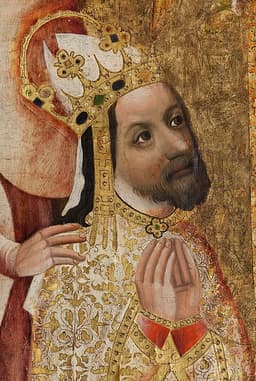
Charles IV of Bohemia
Emperor · Medieval
61.6Total
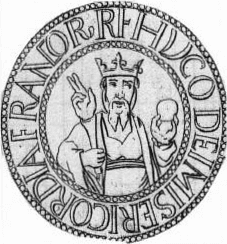
Hugh Capet
Emperor · Medieval
65.4Total
Basic Information
Born
1316
941
Died
1378
996
Era
Medieval
Medieval
Nationality
Bohemia
France
Occupation
Emperor
Emperor
Civilization
Western
Western
Score Comparison
Military (10%)
46.7
50.0
Political (20%)
78.0
68.0
Influence (20%)
65.0
68.0
Legacy (20%)
55.0
82.0
Leadership (15%)
78.0
68.0
Strategy (15%)
35.0
25.0
TOTAL
61.6
65.4
Charles IV of Bohemia — Complete Timeline
1348 AD
Foundation of Charles UniversityCultural◆ Major
Charles IV founded Charles University in Prague, the first university in Central Europe. The institution became a center of learning and culture, attracting scholars from across Europe and fostering the development of Czech intellectual life.
EducationUniversityCultural Center
Impact: regionalconstructive
1355 AD
Coronation as Holy Roman EmperorPolitical Action◆ Major
Charles IV was crowned Holy Roman Emperor in Rome by Pope Innocent VI. This coronation solidified his authority over the empire and allowed him to implement reforms that strengthened imperial governance.
CoronationImperial AuthorityPapal Relations
Impact: global
1356 AD
Golden Bull of 1356Reform
Charles IV issued the Golden Bull, a constitutional document that regulated the election of the Holy Roman Emperor. It established the seven prince-electors and defined their privileges, stabilizing the empire's political structure for centuries.
ConstitutionHoly Roman EmpireElectoral System
Impact: globalconstructive
1357 AD
Construction of Charles BridgeCultural◆ Major
Charles IV commissioned the construction of the Charles Bridge in Prague, a stone bridge connecting the Old Town with the Lesser Quarter. The bridge became a vital trade route and a symbol of Prague's architectural heritage.
ArchitectureInfrastructurePrague
constructive
Hugh Capet — Complete Timeline
987 AD
Election as King of the FranksPolitical Action◆ Major
Hugh Capet was elected King of the Franks by the nobility after the death of Louis V, the last Carolingian king. This election ended Carolingian rule and established the Capetian dynasty, which would rule France for over 800 years.
ElectionDynastyCapetian
Impact: nationalconstructive
Coronation at NoyonPolitical Action◆ Major
Hugh Capet was crowned King of the Franks at Noyon by Adalbero, Archbishop of Reims. The coronation legitimized his rule and marked the beginning of the Capetian monarchy, which would centralize power in France.
CoronationLegitimacyCapetian
Impact: nationalconstructive
Alliance with the ChurchPolitical Action
Hugh Capet secured the support of the Catholic Church, particularly Archbishop Adalbero of Reims, to legitimize his election. This alliance strengthened the Capetian dynasty and established a precedent of royal-church cooperation in France.
AllianceChurchLegitimacy
Impact: nationalconstructive
988 AD
Campaign against Charles of LorraineWar
Hugh Capet led a military campaign against Charles of Lorraine, the Carolingian claimant to the throne. Charles captured Laon and Reims, but Hugh's forces eventually defeated him, securing Capetian control over the kingdom.
WarCarolingianSuccession
Impact: regional
Expert Analysis
Origins
Charles IV was born in 1316 in Prague, the son of John of Luxembourg, King of Bohemia, and Elizabeth of Bohemia. He was educated in Paris, learning French and Latin, and spent time at the papal court in Avignon. This cosmopolitan upbringing shaped his diplomatic skills. Hugh Capet was born around 939 into the Robertian family, a powerful noble lineage in West Francia. His father, Hugh the Great, was Duke of the Franks and a rival to the Carolingian kings. Hugh Capet inherited vast lands and influence in the Île-de-France.
Rise to Power
Charles IV became King of Bohemia in 1346 after his father's death, and was elected King of the Romans the same year. He was crowned Holy Roman Emperor in 1355 by Pope Innocent VI in Rome. His political maneuvering secured his authority, notably through the Golden Bull of 1356, which regulated imperial elections and reduced papal influence. Hugh Capet was elected King of the Franks in 987 after the death of Louis V, the last Carolingian. His election was orchestrated by Archbishop Adalbero of Reims, who argued that the crown should not pass by heredity but by merit. Hugh was crowned at Noyon, marking the end of Carolingian rule.
Leadership & Governance
Charles IV focused on consolidating the Holy Roman Empire through legal and cultural means. The Golden Bull established the seven prince-electors (three archbishops and four secular princes) and set rules for majority rule, which stabilized imperial politics. He also promoted the arts and education, founding Charles University in 1348 and sponsoring the construction of Prague's Gothic architecture, including St. Vitus Cathedral and the Charles Bridge. His governance was centralized around Bohemia, making Prague the empire's cultural and political center. Hugh Capet's rule was more precarious. He controlled only a small domain around Paris and Orléans, while powerful nobles like the Duke of Aquitaine and the Count of Flanders held vast territories. He relied on alliances with the Church and the support of lesser nobles to maintain his throne. His political score of 68.0 reflects his ability to establish a dynasty despite limited resources, compared to Charles's 78.0.
Triumph & Tragedy
Charles IV's greatest triumph was the Golden Bull, which provided a stable framework for imperial elections and lasted until the empire's dissolution in 1806. He also made Prague a magnificent capital, earning it the title 'Golden City'. However, his military and strategy scores are low (46.7 and 35.0), as he avoided major wars and focused on diplomacy. His failure to expand the empire's borders or assert strong central control over all German territories left the empire fragmented. Hugh Capet's triumph was founding the Capetian dynasty, which ruled France until 1328 and through cadet branches until 1848. His coronation and the peaceful transition of power to his son Robert II set a precedent for hereditary succession. Yet his reign was marked by constant struggles with rebellious nobles and the Carolingian claimant Charles of Lorraine. He captured Laon and Reims but could not decisively defeat his enemies. His military score of 50.0 reflects these inconclusive campaigns.
Character & Destiny
Charles IV was a pragmatic and cultured ruler, known for his piety and intellectual interests. He wrote his own autobiography and was a patron of scholars. His decision-making was cautious; he preferred legal and diplomatic solutions over war. This character shaped his legacy as a builder and lawgiver rather than a conqueror. Hugh Capet was also pragmatic but more opportunistic. He seized the crown when the Carolingian line failed and used the Church's support to legitimize his rule. His character was adaptable, allowing him to survive initial challenges, but his lack of military ambition limited his territorial gains. Historians note that Hugh's destiny was to be the 'founder' rather than a 'great king'.
Legacy
Charles IV's legacy is visible in Prague's architecture and the Golden Bull's constitutional significance. The Charles Bridge, St. Vitus Cathedral, and Charles University remain symbols of his reign. The Golden Bull influenced German constitutional law until 1806. His total score of 61.6 reflects these enduring contributions. Hugh Capet's legacy is the Capetian dynasty, which directly shaped French monarchy. The dynasty's longevity (987-1328) and its cadet branches (Valois, Bourbon) created the French state. His influence score of 68.0 and legacy score of 82.0 highlight this profound impact, even though his personal achievements were modest.
Conclusion
While Charles IV achieved more in his own time—building Prague and stabilizing the empire—Hugh Capet's long-term impact is greater. The Capetian dynasty provided continuity that allowed France to centralize power over centuries, leading to the absolute monarchy of Louis XIV. Charles's empire fragmented after his death, and his constitutional reforms, though important, were limited to Germany. Hugh Capet's legacy score of 82.0 compared to Charles's 55.0 supports this view. Therefore, Hugh Capet had a greater overall impact on history, despite Charles IV's cultural and legal achievements.
Rankings
🥇
Hugh CapetLeader
Mil: 50.0Pol: 68.0Inf: 68.0
65.4
🥈
Charles IV of Bohemia
Mil: 46.7Pol: 78.0Inf: 65.0
61.6
+3.8 behind
How This Comparison Works
Algorithm
Each figure is scored on 6 dimensions (0—100 scale) based on structured historical data: Military (10%), Political (20%), Influence (20%), Legacy (20%), Leadership (15%), Strategy (15%). The weighted total produces the final ranking.
Data Sources
Scores are computed from structured sub-indicators in the database. Scale factors adjust for era (Ancient ×0.85, Modern ×1.0) and civilization size (Eastern ×1.05, Other ×0.80) to account for differences in population and military scale.
Maximum 3 Figures
Comparisons are limited to 2—3 figures to ensure readability and statistical meaningfulness.
Error Margins
±5 points per dimension — Sub-scores are derived from historical records with inherent uncertainty. Two figures within 5 points on a dimension should be considered roughly equivalent in that area.
Total Score Accuracy
±3 points overall — The weighted combination of 6 dimensions produces a total score with approximately ±3 points of uncertainty. Differences of less than 3 points are not statistically significant— the figures are effectively tied.
Known Limitations
- Historical records are incomplete and uneven across civilizations
- Figures from oral-tradition societies may be underrepresented
- Occupation labels can misclassify multi-role figures
- Scores measure capability and impact, not moral character
- Quantitative scoring is a comparison tool, not absolute truth
Capability Radar
Military (10%) — Battles & Warfare
Battles
30
15
Win Rate
40
20
Expansion
25
15
Political (20%) — Governance & Reform
Reform
80
60
Diplomacy
85
65
Economy
80
50
Influence (20%) — Cultural & Global Reach
Cultural
80
60
Global
60
70
Legacy (20%) — Historical Impact
Historical
75
85
Longevity
70
90
Leadership (15%) — Power & Stability
Tenure
85
70
Stability
75
55
Strategy (15%) — Tactics & Innovation
Strategy
45
15
Tactics
35
10
Reform
20
10
Similar Comparisons
Comments & Discussion
No comments yet. Be the first to share your thoughts!