Loading...
Charles II of England vs William III of Orange
William III of Orange leads by 9.0 pts · 2 figures compared
…
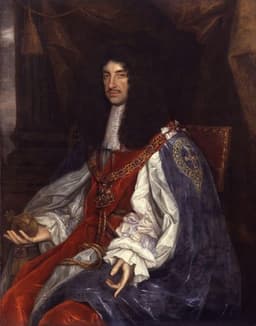
Charles II of England
Emperor · Modern
52.7Total

William III of Orange
Emperor · Modern
61.7Total
Basic Information
Born
1630
1650
Died
1685
1702
Era
Modern
Modern
Nationality
England
Netherlands
Occupation
Emperor
Emperor
Civilization
Western
Western
Score Comparison
Military (10%)
10.2
63.3
Political (20%)
60.0
62.7
Influence (20%)
62.0
55.0
Legacy (20%)
52.0
55.0
Leadership (15%)
68.0
78.0
Strategy (15%)
39.6
67.2
TOTAL
52.7
61.7
Charles II of England — Complete Timeline
1660 AD
Restoration of the MonarchyPolitical Action
Charles II was invited back to England by Parliament, restoring the monarchy after the death of Oliver Cromwell. The Declaration of Breda promised amnesty and religious tolerance, leading to a peaceful transition and the end of the Commonwealth.
RestorationMonarchyCommonwealth
Impact: nationalconstructive
1666 AD
Great Fire of LondonOther◆ Major
A massive fire destroyed much of London, including St. Paul's Cathedral and thousands of homes. Charles II oversaw the rebuilding efforts, appointing Christopher Wren to redesign the city, which modernized London's architecture.
DisasterRebuildingLondon
Impact: nationaltragic
1670 AD
Secret Treaty of DoverPolitical Action◆ Major
Charles II signed the Secret Treaty of Dover with Louis XIV of France, agreeing to convert to Catholicism and support French wars in exchange for subsidies. This secret pact undermined English Protestant interests and sparked political controversy.
TreatyCatholicismFrance
Impact: regional
1673 AD
Test Act of 1673Reform
Parliament passed the Test Act, requiring all officeholders to receive Anglican communion and renounce transubstantiation. Charles II reluctantly accepted it, which excluded Catholics from public office and deepened religious divisions.
Religious LegislationAnglicanismCatholic Exclusion
Impact: national
1678 AD
Popish PlotPolitical Action◆ Major
Titus Oates fabricated a conspiracy alleging a Catholic plot to assassinate Charles II and install his Catholic brother James. The resulting hysteria led to the execution of innocent Catholics and a political crisis, though Charles remained skeptical.
ConspiracyAnti-CatholicismPolitical Crisis
Impact: nationaldestructive
William III of Orange — Complete Timeline
1688 AD
Invasion of England (Glorious Revolution)War
William landed at Torbay with a Dutch fleet and army, invited by English nobles to overthrow King James II. James fled, and William and his wife Mary were declared joint monarchs. This event established Protestant succession and parliamentary supremacy in England.
Glorious RevolutionInvasionConstitutional Change
Impact: globalconstructive
1689 AD
Signed the Bill of Rights 1689Political Action
William accepted the Bill of Rights, which limited royal powers and affirmed parliamentary authority. It prohibited the monarch from suspending laws, levying taxes without Parliament's consent, or maintaining a standing army in peacetime. This became a cornerstone of British constitutional law.
Constitutional ReformParliamentary SupremacyRights
Impact: globalprogressive
Formed the Grand Alliance against FrancePolitical Action◆ Major
William organized the Grand Alliance (England, Dutch Republic, Holy Roman Empire, Spain, Savoy) to oppose Louis XIV's expansion. This coalition fought the Nine Years' War, aiming to contain French power. The alliance system became a model for European coalitions.
DiplomacyCoalitionBalance of Power
Impact: globalconstructive
1690 AD
Battle of the BoyneWar◆ Major
William personally led his army to victory over the Jacobite forces of James II in Ireland. The battle secured Protestant control of Ireland and confirmed William's throne. It remains a symbol of Protestant-Orange identity in Northern Ireland.
Jacobite WarIrelandBattle
Impact: regional
1697 AD
Treaty of RyswickPolitical Action◆ Major
William negotiated the end of the Nine Years' War with France. The treaty recognized William as king of England and restored most territories conquered during the war. It temporarily stabilized European borders but did not resolve the underlying conflict over Spanish succession.
Peace TreatyDiplomacyNine Years' War
Impact: globalconstructive
1702 AD
Death from pneumonia after a riding accidentOther◆ Major
William died at Kensington Palace after his horse stumbled on a molehill, breaking his collarbone. His death without heirs led to the end of the Stuart line and the accession of Queen Anne. Jacobites toasted 'the little gentleman in black velvet' (the mole).
DeathSuccessionJacobite Symbolism
Impact: nationaltragic
Expert Analysis
Origins
Charles II of England was born on May 29, 1630, at St James's Palace, London, the eldest surviving son of Charles I and Henrietta Maria. He experienced a turbulent childhood during the English Civil War, fleeing to France in 1646 after his father's forces collapsed. After his father's execution in 1649, Charles spent years in exile, traveling through France, the Dutch Republic, and Spain. His education was haphazard, shaped by courtly manners and the harsh lessons of defeat. William III of Orange was born on November 4, 1650, in The Hague, eight days after his father William II died of smallpox. He was the only child of William II and Mary Stuart, daughter of Charles I. His upbringing was dominated by political struggles: the Dutch Republic abolished the stadtholderate after his father's death, leaving William in a precarious position. He was educated by his mother and later by Johan de Witt, the Grand Pensionary, who taught him statecraft and military theory. William's Calvinist faith and sense of duty were instilled early, contrasting with Charles's more pragmatic and pleasure-seeking outlook.
Rise to Power
Charles II's rise began with the death of Oliver Cromwell in 1658 and the collapse of the Protectorate. In 1660, General George Monck marched south from Scotland and facilitated negotiations with Charles. The Declaration of Breda (April 1660) promised amnesty, religious tolerance, and payment of arrears to the army. Parliament invited Charles to return, and he landed at Dover on May 25, 1660, his 30th birthday. The Restoration was celebrated, but Charles's power was limited by Parliament's control of finances. William III's path was more arduous. After the murder of Johan de Witt in 1672 (the "Year of Disaster" when France invaded the Dutch Republic), William was appointed Stadtholder and Captain-General. He rallied the Dutch by opening flood defenses and forging alliances. In 1688, English nobles invited him to overthrow his Catholic father-in-law, James II. William landed at Torbay on November 5, 1688, with 15,000 troops and 500 ships. James fled, and William and his wife Mary were crowned as joint monarchs in 1689 after accepting the Bill of Rights.
Leadership & Governance
Charles II's leadership was characterized by pragmatism and a desire for stability. He avoided the absolutist tendencies of his father, but secretly sought to increase royal power. He used patronage and the Secret Treaty of Dover (1670) to secure French subsidies, allowing him to rule without Parliament for long periods. However, his religious policies were inconsistent: he issued the Declaration of Indulgence (1672) to suspend penal laws against Catholics and Dissenters, but was forced to withdraw it. The Test Act of 1673, requiring officeholders to be Anglican, was reluctantly signed. Charles's political score of 60.0 reflects his ability to survive crises like the Popish Plot (1678–81), but his governance was reactive and often duplicitous. William III, with a political score of 62.7, was more systematic. He accepted the Bill of Rights (1689), which limited royal prerogatives: no suspending laws, no taxation without Parliament, and regular parliaments. He also signed the Toleration Act, granting freedom of worship to nonconformists. William focused on foreign policy, creating the Grand Alliance to counter Louis XIV. His leadership in war was hands-on; he personally led armies at the Battle of the Boyne (1690) and the Siege of Namur (1695). His governance in the Dutch Republic was also effective, though he often prioritized war over domestic affairs. William's leadership score of 78.0 is significantly higher than Charles's 68.0, reflecting his decisive and active style.
Triumph & Tragedy
Charles II's greatest triumph was the Restoration itself, which ended two decades of civil war and republicanism. He also oversaw the rebuilding of London after the Great Fire of 1666, appointing Christopher Wren to design new churches. However, his reign was marred by the Plague of 1665 (100,000 deaths), the humiliation of the Dutch Raid on the Medway (1667), and the secret pro-Catholic policies that sowed distrust. His failure to produce a legitimate heir led to the succession of his Catholic brother James II, causing the Glorious Revolution. William's triumph was the Glorious Revolution, which established parliamentary supremacy and Protestant succession. His victory at the Battle of the Boyne secured Ireland for Protestant rule. He also successfully negotiated the Treaty of Ryswick (1697), ending the Nine Years' War. Yet his tragedies include the Massacre of Glencoe (1692), where government forces killed 38 MacDonalds for failing to pledge allegiance; William was criticized for not punishing the perpetrators. His constant warfare drained English and Dutch resources, and he died childless in 1702 after a fall from his horse, his legacy incomplete.
Character & Destiny
Charles II was witty, charming, and lazy in governance, preferring to delegate. He was known as the "Merry Monarch," enjoying theater, mistresses, and science (founding the Royal Society). His character was shaped by exile: he learned to dissemble and compromise. This allowed him to survive but also led to secret treaties that undermined trust. William was stoic, cold, and driven by duty. His Calvinist upbringing made him reserved and focused on the struggle against Catholic France. He was a skilled strategist (strategy score 67.2 vs. Charles's 39.6) but often lacked charisma. His destiny was to secure Protestantism in England and Europe, but his health was poor (asthma) and he was often unpopular in England due to his Dutch favorites. Charles died peacefully in 1685, converting to Catholicism on his deathbed, while William died from pneumonia after a riding accident.
Legacy
Charles II's legacy is mixed: he restored the monarchy but left a weak crown, paving the way for the Glorious Revolution. His cultural patronage (the Royal Society, theater) contributed to English arts and sciences. However, his political legacy score of 52.0 reflects the fragility of his achievements. William III's legacy is more profound. The Bill of Rights is a cornerstone of British constitutional law, influencing the U.S. Constitution. His Grand Alliance strategy established the balance-of-power principle. He transformed England into a major military and naval power, with a legacy score of 55.0. The Glorious Revolution also ensured Protestant succession, which continues today.
Conclusion
William III had a greater impact on history than Charles II. While Charles II restored the monarchy and provided stability, his reign was ultimately a prelude to revolution. William's political and military actions (scores 62.7 and 63.3, respectively) reshaped the British constitution and European power dynamics. His leadership score of 78.0 far exceeds Charles's 68.0, and his strategic vision (67.2 vs. 39.6) was superior. William's legacy—parliamentary supremacy, religious toleration, and a lasting alliance system—endures. Charles II, though charming, left a legacy of secret treaties and unresolved tensions that William resolved. Thus, William III of Orange is the more consequential figure.
Rankings
🥇
William III of OrangeLeader
Mil: 63.3Pol: 62.7Inf: 55.0
61.7
🥈
Charles II of England
Mil: 10.2Pol: 60.0Inf: 62.0
52.7
+9.0 behind
How This Comparison Works
Algorithm
Each figure is scored on 6 dimensions (0—100 scale) based on structured historical data: Military (10%), Political (20%), Influence (20%), Legacy (20%), Leadership (15%), Strategy (15%). The weighted total produces the final ranking.
Data Sources
Scores are computed from structured sub-indicators in the database. Scale factors adjust for era (Ancient ×0.85, Modern ×1.0) and civilization size (Eastern ×1.05, Other ×0.80) to account for differences in population and military scale.
Maximum 3 Figures
Comparisons are limited to 2—3 figures to ensure readability and statistical meaningfulness.
Error Margins
±5 points per dimension — Sub-scores are derived from historical records with inherent uncertainty. Two figures within 5 points on a dimension should be considered roughly equivalent in that area.
Total Score Accuracy
±3 points overall — The weighted combination of 6 dimensions produces a total score with approximately ±3 points of uncertainty. Differences of less than 3 points are not statistically significant— the figures are effectively tied.
Known Limitations
- Historical records are incomplete and uneven across civilizations
- Figures from oral-tradition societies may be underrepresented
- Occupation labels can misclassify multi-role figures
- Scores measure capability and impact, not moral character
- Quantitative scoring is a comparison tool, not absolute truth
Capability Radar
Military (10%) — Battles & Warfare
Battles
10
75
Win Rate
10
70
Expansion
5
65
Political (20%) — Governance & Reform
Reform
60
80
Diplomacy
65
85
Economy
55
70
Influence (20%) — Cultural & Global Reach
Cultural
60
60
Global
50
70
Legacy (20%) — Historical Impact
Historical
65
75
Longevity
55
70
Leadership (15%) — Power & Stability
Tenure
55
75
Stability
50
65
Strategy (15%) — Tactics & Innovation
Strategy
5
85
Tactics
5
80
Reform
15
70
Similar Comparisons
Comments & Discussion
No comments yet. Be the first to share your thoughts!