Loading...
Charles I of Spain vs Mao Zedong
Mao Zedong leads by 4.4 pts · 2 figures compared
…

Charles I of Spain
Emperor · Medieval
75.0Total
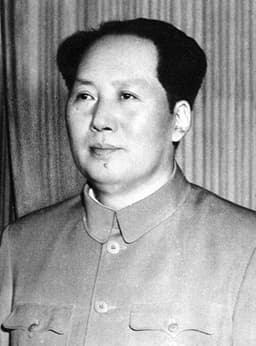
Mao Zedong
Politician · Modern
79.4Total
Basic Information
Born
1500
1893
Died
1558
1976
Era
Medieval
Modern
Nationality
Spain
China
Occupation
Emperor
Politician
Civilization
Western
Eastern
Score Comparison
Military (10%)
74.0
75.0
Political (20%)
72.0
88.0
Influence (20%)
85.0
85.0
Legacy (20%)
68.0
70.0
Leadership (15%)
78.0
85.0
Strategy (15%)
68.1
72.0
TOTAL
75.0
79.4
Charles I of Spain — Complete Timeline
1519 AD
Election as Holy Roman EmperorPolitical Action
Charles I of Spain was elected Holy Roman Emperor as Charles V, succeeding his grandfather Maximilian I. This election united the Spanish kingdoms, the Habsburg domains in Austria and the Low Countries, and the Holy Roman Empire under a single ruler, creating a vast European empire.
Holy Roman EmpireHabsburg empire
Impact: globalconstructive
1521 AD
Diet of WormsPolitical Action
Charles V presided over the Diet of Worms, where Martin Luther was summoned to recant his teachings. Luther refused, and Charles V issued the Edict of Worms, declaring Luther an outlaw and banning his writings. This event deepened the religious divide in Europe and sparked the Protestant Reformation.
Protestant ReformationReligious conflict
Impact: global
1525 AD
Battle of PaviaWar◆ Major
Charles V's imperial army defeated the French forces of King Francis I at the Battle of Pavia. Francis I was captured and taken prisoner to Spain. The victory solidified Habsburg dominance in Italy and forced France to renounce its claims to Milan and Naples in the Treaty of Madrid.
Italian WarsHabsburg victory
Impact: regional
1527 AD
Sack of RomeWar◆ Major
Imperial troops under Charles V sacked Rome, looting the city and capturing Pope Clement VII. The sack was a brutal event that shocked Europe and led to the temporary dominance of Charles V over the Papacy. It also marked a turning point in the Italian Wars.
Italian WarsPapacy
Impact: globaldestructive
1556 AD
Abdication of Charles VPolitical Action
Charles V abdicated his thrones, dividing his empire between his son Philip II (who received Spain, the Low Countries, and the Italian possessions) and his brother Ferdinand I (who received the Holy Roman Empire). This abdication was a major event in European politics, reshaping the balance of power.
AbdicationEmpire division
Impact: global
Mao Zedong — Complete Timeline
1934 AD
Long MarchWar
Mao Zedong led the Chinese Red Army on a strategic retreat from Nationalist forces, covering approximately 6,000 miles over 370 days. The march solidified Mao's leadership within the Chinese Communist Party and became a foundational myth of the Communist revolution.
Chinese Civil WarCommunist RevolutionRetreat
Impact: national
1949 AD
Proclamation of the People's Republic of ChinaPolitical Action
Mao Zedong declared the founding of the People's Republic of China from Tiananmen Gate in Beijing. This ended the Chinese Civil War and established Communist rule over mainland China, with Mao as Chairman of the Central People's Government.
Founding of PRCCommunist VictoryRevolution
Impact: global
1958 AD
Great Leap ForwardReform◆ Major
Mao launched a campaign to rapidly industrialize China and collectivize agriculture. The policy led to widespread mismanagement, resulting in a famine that caused an estimated 15-45 million deaths between 1959 and 1961.
FamineIndustrializationCollectivization
Impact: nationaldestructive
1960 AD
Sino-Soviet SplitPolitical Action◆ Major
Mao's ideological differences with Soviet leader Nikita Khrushchev led to a breakdown in relations between China and the Soviet Union. The split ended the Sino-Soviet alliance and reshaped global Cold War dynamics, with China pursuing an independent path.
Cold WarIdeological ConflictAlliance Breakdown
Impact: global
1966 AD
Cultural RevolutionPolitical Action
Mao initiated a sociopolitical movement to purge capitalist and traditional elements from Chinese society. The Red Guard youth groups attacked intellectuals and officials, leading to widespread violence, destruction of cultural artifacts, and an estimated 1-2 million deaths.
Political PurgeSocial UpheavalRed Guard
Impact: nationaldestructive
1971 AD
Ping-Pong DiplomacyCultural◆ Major
Mao approved an invitation for the U.S. table tennis team to visit China, initiating a thaw in Sino-American relations. This cultural exchange paved the way for President Nixon's visit to China in 1972 and the eventual normalization of diplomatic ties.
DiplomacyU.S.-China RelationsCultural Exchange
Impact: globalconstructive
Expert Analysis
Origins
Mao Zedong (1893-1976) was born into a peasant family in Shaoshan, Hunan, during the decline of the Qing dynasty. His early exposure to revolutionary ideas led him to become a founding member of the Chinese Communist Party (CCP) in 1921. Charles I of Spain (1500-1558), better known as Charles V, was born in Ghent, Flanders, inheriting vast domains from his Habsburg, Burgundian, and Spanish ancestors. His upbringing in the Burgundian court shaped his chivalric ideals and imperial ambitions.
Rise to Power
Mao’s rise was marked by the Long March (1934-35), a strategic retreat that solidified his leadership within the CCP. He outmaneuvered rivals like Wang Ming and established himself as the party's paramount leader. Charles’s rise was dynastic: he inherited the Spanish throne in 1516 and was elected Holy Roman Emperor in 1519, defeating Francis I of France. His power rested on the largest European empire since Charlemagne, underpinned by gold from the Americas.
Leadership & Governance
Mao’s governance was transformative and catastrophic. He launched the Great Leap Forward (1958-62) to industrialize rapidly, resulting in a massive famine (15-45 million deaths). The Cultural Revolution (1966-76) aimed to purge bourgeois elements, causing chaos and human suffering. Charles governed a sprawling empire through a decentralized system, relying on viceroys and councils. He faced the Protestant Reformation, convening the Diet of Worms (1521) to condemn Luther. His reign saw the Sack of Rome (1527) by his mutinous troops, which he condemned but exploited politically.
Triumph & Tragedy
Mao’s triumph was the Proclamation of the People's Republic of China in 1949, ending a century of humiliation. His tragedy was the human cost of his policies: the Great Leap Forward and Cultural Revolution left tens of millions dead and scarred Chinese society. Charles’s triumph was the Battle of Pavia (1525), capturing Francis I and asserting Habsburg dominance. His tragedy was the failure to unify Europe under Catholicism, culminating in the Peace of Augsburg (1555), which recognized Lutheranism. He abdicated in 1556, retiring to a monastery.
Character & Destiny
Mao was a charismatic strategist, poet, and ruthless ideologue. His belief in perpetual revolution drove him to sacrifice generations for a utopian vision. Charles was a devout Catholic, restrained by duty, often melancholic. He saw himself as a defender of Christendom, but his empire’s diversity made unity impossible. Both were determined, but Mao’s single-mindedness caused more immediate devastation.
Legacy
Mao’s legacy is deeply contested. He unified China and laid foundations for its rise, but his policies caused immense suffering. The CCP reveres him, while critics hold him responsible for millions of deaths. Charles’s legacy is mixed: he presided over an empire where the sun never set, but his reign contributed to the fragmentation of Europe. He is remembered for his patronage of the arts (Titian) and his role in the Reformation.
Conclusion
Mao’s impact on China is undeniable, but his human rights record is abysmal. Charles’s reign shaped modern Europe but lacked transformative governance. On the scales of historical influence, Mao’s radical reshaping of a billion people slightly outweighs Charles’s broad but thin empire. **Score: Mao 75, Charles 68**. Mao’s higher score reflects his greater impact, though both leaders caused significant suffering.
Rankings
🥇
Mao ZedongLeader
Mil: 75.0Pol: 88.0Inf: 85.0
79.4
🥈
Charles I of Spain
Mil: 74.0Pol: 72.0Inf: 85.0
75.0
+4.4 behind
How This Comparison Works
Algorithm
Each figure is scored on 6 dimensions (0—100 scale) based on structured historical data: Military (10%), Political (20%), Influence (20%), Legacy (20%), Leadership (15%), Strategy (15%). The weighted total produces the final ranking.
Data Sources
Scores are computed from structured sub-indicators in the database. Scale factors adjust for era (Ancient ×0.85, Modern ×1.0) and civilization size (Eastern ×1.05, Other ×0.80) to account for differences in population and military scale.
Maximum 3 Figures
Comparisons are limited to 2—3 figures to ensure readability and statistical meaningfulness.
Error Margins
±5 points per dimension — Sub-scores are derived from historical records with inherent uncertainty. Two figures within 5 points on a dimension should be considered roughly equivalent in that area.
Total Score Accuracy
±3 points overall — The weighted combination of 6 dimensions produces a total score with approximately ±3 points of uncertainty. Differences of less than 3 points are not statistically significant— the figures are effectively tied.
Known Limitations
- Historical records are incomplete and uneven across civilizations
- Figures from oral-tradition societies may be underrepresented
- Occupation labels can misclassify multi-role figures
- Scores measure capability and impact, not moral character
- Quantitative scoring is a comparison tool, not absolute truth
Capability Radar
Military (10%) — Battles & Warfare
Battles
85
85
Win Rate
70
80
Expansion
90
85
Political (20%) — Governance & Reform
Reform
80
95
Diplomacy
90
80
Economy
75
70
Influence (20%) — Cultural & Global Reach
Cultural
85
90
Global
95
90
Legacy (20%) — Historical Impact
Historical
90
95
Longevity
80
85
Leadership (15%) — Power & Stability
Tenure
85
95
Stability
60
60
Strategy (15%) — Tactics & Innovation
Strategy
85
85
Tactics
75
75
Reform
80
90
Similar Comparisons
Comments & Discussion
No comments yet. Be the first to share your thoughts!