Loading...
This comparison has not been analyzed yet.
One-time AI generation (~1 minute). Scores and timeline are already available below.
Charles I of Austria vs Murad IV
Murad IV leads by 15.8 pts · 2 figures compared
…

Charles I of Austria
Emperor · Modern
45.2Total
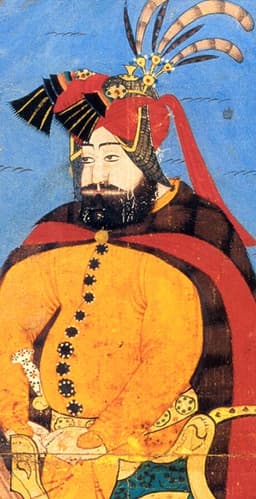
Murad IV
Emperor · Modern
61.0Total
Basic Information
Born
1887
1612
Died
1922
1640
Era
Modern
Modern
Nationality
Austria
Ottoman Empire
Occupation
Emperor
Emperor
Civilization
Western
Middle Eastern
Score Comparison
Military (10%)
14.9
67.3
Political (20%)
46.6
55.0
Influence (20%)
52.5
59.0
Legacy (20%)
44.2
52.0
Leadership (15%)
55.3
78.0
Strategy (15%)
42.3
65.4
TOTAL
45.2
61.0
Charles I of Austria — Complete Timeline
1916 AD
Accession to the ThronePolitical Action◆ Major
Charles I became Emperor of Austria and King of Hungary upon the death of his great-uncle Franz Joseph I. He inherited a war-weary empire in the midst of World War I, facing military defeat and internal disintegration.
SuccessionWorld War IHabsburg
Impact: regional
1917 AD
Sixtus Affair: Secret Peace NegotiationsPolitical Action◆ Major
Charles I conducted secret peace negotiations with France through his brother-in-law, Prince Sixtus of Bourbon-Parma. He proposed supporting French claims to Alsace-Lorraine in exchange for a separate peace. The negotiations failed when Germany refused to cede territory, and the affair was leaked, damaging Charles's credibility.
World War IPeaceDiplomacy
Impact: global
1918 AD
Abdication and End of Habsburg RulePolitical Action
Following the collapse of Austria-Hungary at the end of World War I, Charles I issued a proclamation renouncing participation in state affairs but did not formally abdicate. He went into exile in Switzerland, ending over 600 years of Habsburg rule.
AbdicationExileEnd of Empire
Impact: regionaltragic
1921 AD
Failed Restoration Attempts in HungaryPolitical Action◆ Major
Charles I made two attempts to regain the Hungarian throne, traveling to Hungary in March and October 1921. Both attempts failed due to lack of support from the Hungarian regent Mikl
HungaryRestorationExile
Impact: regionaltragic
Murad IV — Complete Timeline
1632 AD
Suppression of the Janissary RevoltPolitical Action◆ Major
Murad IV faced a major revolt by the Janissaries, who demanded the execution of several officials. Murad IV initially conceded but later executed the Janissary leaders and purged the corps. He then imposed strict discipline, reducing the Janissaries' political power and restoring order in the capital.
RevoltJanissariesPurge
Impact: nationaldestructive
1633 AD
Ban on Tobacco and AlcoholReform
Murad IV issued a decree banning the use of tobacco, coffee, and alcohol throughout the Ottoman Empire. He enforced this ban with harsh penalties, including execution for violators. This measure aimed to restore public morality and discipline, reflecting his authoritarian rule.
ProhibitionMoralityAuthoritarianism
Impact: nationaldestructive
1638 AD
Recapture of BaghdadWar◆ Major
Murad IV personally led a massive Ottoman army to recapture Baghdad from the Safavid Empire after a 40-day siege. The city had been lost to the Safavids in 1623. The victory restored Ottoman control over Mesopotamia and was a major military achievement of his reign.
SiegeSafavid WarMesopotamia
Impact: regional
1639 AD
Treaty of ZuhabPolitical Action◆ Major
Murad IV's recapture of Baghdad led to the Treaty of Zuhab with the Safavid Empire. This treaty established the permanent border between the Ottoman and Safavid empires, which largely corresponds to the modern Iran-Iraq border. It ended decades of war between the two empires.
TreatyBorderOttoman-Safavid
Impact: regionalconstructive
This comparison has not been analyzed yet.
One-time AI generation (~1 minute). Scores and timeline are already available below.
Rankings
🥇
Murad IVLeader
Mil: 67.3Pol: 55.0Inf: 59.0
61.0
🥈
Charles I of Austria
Mil: 14.9Pol: 46.6Inf: 52.5
45.2
+15.8 behind
How This Comparison Works
Algorithm
Each figure is scored on 6 dimensions (0—100 scale) based on structured historical data: Military (10%), Political (20%), Influence (20%), Legacy (20%), Leadership (15%), Strategy (15%). The weighted total produces the final ranking.
Data Sources
Scores are computed from structured sub-indicators in the database. Scale factors adjust for era (Ancient ×0.85, Modern ×1.0) and civilization size (Eastern ×1.05, Other ×0.80) to account for differences in population and military scale.
Maximum 3 Figures
Comparisons are limited to 2—3 figures to ensure readability and statistical meaningfulness.
Error Margins
±5 points per dimension — Sub-scores are derived from historical records with inherent uncertainty. Two figures within 5 points on a dimension should be considered roughly equivalent in that area.
Total Score Accuracy
±3 points overall — The weighted combination of 6 dimensions produces a total score with approximately ±3 points of uncertainty. Differences of less than 3 points are not statistically significant— the figures are effectively tied.
Known Limitations
- Historical records are incomplete and uneven across civilizations
- Figures from oral-tradition societies may be underrepresented
- Occupation labels can misclassify multi-role figures
- Scores measure capability and impact, not moral character
- Quantitative scoring is a comparison tool, not absolute truth
Capability Radar
Military (10%) — Battles & Warfare
Battles
10
75
Win Rate
5
80
Expansion
5
60
Political (20%) — Governance & Reform
Reform
40
80
Diplomacy
35
50
Economy
25
55
Influence (20%) — Cultural & Global Reach
Cultural
30
40
Global
25
45
Legacy (20%) — Historical Impact
Historical
40
60
Longevity
35
50
Leadership (15%) — Power & Stability
Tenure
30
60
Stability
20
85
Strategy (15%) — Tactics & Innovation
Strategy
10
75
Tactics
10
70
Reform
15
65
Similar Comparisons
Comments & Discussion
No comments yet. Be the first to share your thoughts!