Loading...
King Sobhuza II vs Murad IV
Murad IV leads by 3.7 pts · 2 figures compared
…

King Sobhuza II
Emperor · Modern
57.3Total
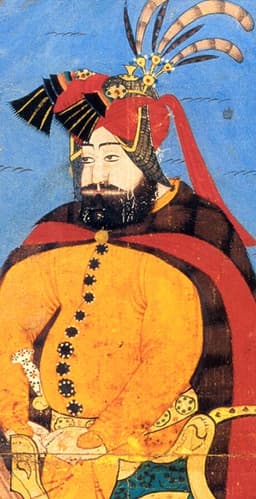
Murad IV
Emperor · Modern
61.0Total
Basic Information
Born
1899
1612
Died
1982
1640
Era
Modern
Modern
Nationality
Eswatini
Ottoman Empire
Occupation
Emperor
Emperor
Civilization
Other
Middle Eastern
Score Comparison
Military (10%)
20.0
67.3
Political (20%)
59.3
55.0
Influence (20%)
60.0
59.0
Legacy (20%)
55.0
52.0
Leadership (15%)
81.7
78.0
Strategy (15%)
54.3
65.4
TOTAL
57.3
61.0
King Sobhuza II — Complete Timeline
1921 AD
Ascended to the throne as King of SwazilandPolitical Action
Sobhuza II was crowned King of Swaziland (now Eswatini) on December 22, 1921, at age 22. He succeeded his father, King Bhunu, and began a reign that would last 82 years.
CoronationLong Reign
Impact: national
1963 AD
Led opposition to the 1963 constitutionPolitical Action◆ Major
Sobhuza II opposed the British-imposed 1963 constitution, which limited his powers and established a parliamentary system. He petitioned the British government for a return to traditional rule.
Constitutional ConflictTraditionalism
Impact: national
1968 AD
Led Swaziland to independencePolitical Action
Sobhuza II led Swaziland to independence from Britain on September 6, 1968. He became the head of state, with a constitution that established a Westminster-style parliamentary system.
IndependenceFounding Monarch
Impact: nationalconstructive
1973 AD
Repealed the 1968 constitutionPolitical Action
Sobhuza II repealed the 1968 constitution and assumed absolute power, banning political parties. He justified this as necessary to preserve Swazi tradition and prevent ethnic conflict, establishing a traditional monarchy.
Constitutional RepealAbsolute Monarchy
Impact: nationaldestructive
1978 AD
Established the Tinkhundla systemReform◆ Major
Sobhuza II introduced the Tinkhundla system of governance, a traditional-based electoral system where chiefs and local councils elect members of parliament. This system remains in place in Eswatini today.
Governance ReformTraditional System
Impact: national
1981 AD
Celebrated 60th jubileeCultural
Sobhuza II celebrated his 60th year on the throne in 1981, becoming the longest-reigning monarch in recorded history. The event was marked by national celebrations and international recognition.
JubileeLongevity Record
Impact: national
Murad IV — Complete Timeline
1632 AD
Suppression of the Janissary RevoltPolitical Action◆ Major
Murad IV faced a major revolt by the Janissaries, who demanded the execution of several officials. Murad IV initially conceded but later executed the Janissary leaders and purged the corps. He then imposed strict discipline, reducing the Janissaries' political power and restoring order in the capital.
RevoltJanissariesPurge
Impact: nationaldestructive
1633 AD
Ban on Tobacco and AlcoholReform
Murad IV issued a decree banning the use of tobacco, coffee, and alcohol throughout the Ottoman Empire. He enforced this ban with harsh penalties, including execution for violators. This measure aimed to restore public morality and discipline, reflecting his authoritarian rule.
ProhibitionMoralityAuthoritarianism
Impact: nationaldestructive
1638 AD
Recapture of BaghdadWar◆ Major
Murad IV personally led a massive Ottoman army to recapture Baghdad from the Safavid Empire after a 40-day siege. The city had been lost to the Safavids in 1623. The victory restored Ottoman control over Mesopotamia and was a major military achievement of his reign.
SiegeSafavid WarMesopotamia
Impact: regional
1639 AD
Treaty of ZuhabPolitical Action◆ Major
Murad IV's recapture of Baghdad led to the Treaty of Zuhab with the Safavid Empire. This treaty established the permanent border between the Ottoman and Safavid empires, which largely corresponds to the modern Iran-Iraq border. It ended decades of war between the two empires.
TreatyBorderOttoman-Safavid
Impact: regionalconstructive
Expert Analysis
Origins
King Sobhuza II was born on July 22, 1899, in Zombodze, Swaziland (now Eswatini), the son of King Bhunu and his wife Lomawa Ndwandwe. He was only four months old when his father died, and a regency council ruled until his coronation. Sobhuza was educated at the Swazi National School and later at the Lovedale Institution in South Africa, where he was exposed to Western education while maintaining his Swazi traditions.
Murad IV was born on July 27, 1612, in Constantinople (now Istanbul), the son of Sultan Ahmed I and Kösem Sultan. He grew up in the Ottoman palace, witnessing the political instability and corruption that plagued the empire after the death of his father. His early years were marked by the influence of his mother, who acted as regent during his brother Mustafa I's reign and his own early reign.
Rise to Power
Sobhuza II was crowned King of Swaziland on December 22, 1921, at the age of 22, after a long regency. Initially, his powers were limited under British colonial rule. He spent decades advocating for Swazi independence, opposing the British-imposed 1963 constitution that limited his authority and established a parliamentary system. His persistence paid off when Swaziland gained independence on September 6, 1968, with Sobhuza as head of state under a Westminster-style constitution.
Murad IV became sultan at the age of 11 in 1623, following the deposition of his mentally unstable brother Mustafa I. His early reign was dominated by his mother Kösem Sultan and the Janissaries, who exerted significant control. As he grew older, Murad IV asserted his authority, executing corrupt officials and suppressing the Janissary revolt of 1632. He personally led military campaigns to restore order and reclaim lost territories.
Leadership & Governance
Sobhuza II's leadership style was deeply rooted in Swazi tradition. He repealed the 1968 constitution in 1973, assuming absolute power and banning political parties. He justified this as necessary to preserve Swazi culture and unity. He established the Tinkhundla system, a traditional-based electoral process where chiefs and local councils elect members of parliament, which remains in place today. His governance emphasized consensus-building through traditional structures rather than Western democracy.
Murad IV ruled with an iron fist, using harsh measures to restore order. He banned tobacco, coffee, and alcohol, enforcing the ban with brutal penalties. He personally executed soldiers and officials who defied him, reasserting the sultan's authority. His military leadership was direct; he led the 1635-1636 campaign against the Safavids, culminating in the recapture of Baghdad after a 40-day siege. The Treaty of Zuhab (1639) established the Ottoman-Safavid border, which largely holds today.
Triumph & Tragedy
Sobhuza II's greatest triumph was leading Swaziland to independence peacefully and maintaining stability during his long reign. He preserved Swazi traditions and created a unique political system. His greatest failure was the abolition of democratic institutions and the suppression of political dissent, leading to criticism of his authoritarian rule. The constitution's repeal centralized power and stifled political freedoms.
Murad IV's triumph was the recapture of Baghdad and the restoration of Ottoman prestige after years of decline. The Treaty of Zuhab secured a lasting peace with the Safavids. His tragedy was his short life—he died at age 27 from cirrhosis, likely due to excessive drinking despite his own bans. His harsh policies, including mass executions, created a climate of fear and did not address the empire's underlying structural problems.
Character & Destiny
Sobhuza II was patient and strategic, using diplomacy and traditional authority to achieve independence. His long reign allowed him to shape Eswatini's identity, but his conservative nature resisted modernization. He scored 81.7 in leadership, reflecting his ability to maintain control, but his political score of 59.3 indicates limited institutional reform.
Murad IV was impulsive and ruthless, driven by a desire to restore Ottoman power. His military score of 67.3 and strategy of 65.4 show his effectiveness in warfare, but his political score of 55.0 reflects the instability of his rule. His early death cut short his reforms, leaving the empire vulnerable after his passing.
Legacy
Sobhuza II's legacy is the creation of modern Eswatini as a constitutional monarchy with strong traditional elements. The Tinkhundla system endures, and he is revered as the father of the nation. However, his authoritarian turn left a mixed legacy; subsequent kings have maintained similar powers. He scored 60.0 in influence and 55.0 in legacy.
Murad IV's legacy is as a restorer of Ottoman authority. The Treaty of Zuhab's borders lasted centuries, and his military campaigns are remembered. However, his brutal methods and short reign limited his long-term impact. He scored 59.0 in influence and 52.0 in legacy.
Conclusion
Murad IV scored higher overall (61.0 vs. 57.3), but Sobhuza II's impact on Eswatini is more enduring and peaceful. Murad IV's military achievements were significant, but his reign was brief and his reforms did not outlast him. Sobhuza II's 82-year reign allowed him to shape a nation's identity and institutions, giving him a more lasting legacy. While Murad IV restored order temporarily, Sobhuza II built a stable state that continues to function. Therefore, Sobhuza II had greater long-term impact on his nation, despite Murad IV's higher aggregate score.
Rankings
🥇
Murad IVLeader
Mil: 67.3Pol: 55.0Inf: 59.0
61.0
🥈
King Sobhuza II
Mil: 20.0Pol: 59.3Inf: 60.0
57.3
+3.7 behind
How This Comparison Works
Algorithm
Each figure is scored on 6 dimensions (0—100 scale) based on structured historical data: Military (10%), Political (20%), Influence (20%), Legacy (20%), Leadership (15%), Strategy (15%). The weighted total produces the final ranking.
Data Sources
Scores are computed from structured sub-indicators in the database. Scale factors adjust for era (Ancient ×0.85, Modern ×1.0) and civilization size (Eastern ×1.05, Other ×0.80) to account for differences in population and military scale.
Maximum 3 Figures
Comparisons are limited to 2—3 figures to ensure readability and statistical meaningfulness.
Error Margins
±5 points per dimension — Sub-scores are derived from historical records with inherent uncertainty. Two figures within 5 points on a dimension should be considered roughly equivalent in that area.
Total Score Accuracy
±3 points overall — The weighted combination of 6 dimensions produces a total score with approximately ±3 points of uncertainty. Differences of less than 3 points are not statistically significant— the figures are effectively tied.
Known Limitations
- Historical records are incomplete and uneven across civilizations
- Figures from oral-tradition societies may be underrepresented
- Occupation labels can misclassify multi-role figures
- Scores measure capability and impact, not moral character
- Quantitative scoring is a comparison tool, not absolute truth
Capability Radar
Military (10%) — Battles & Warfare
Battles
5
75
Win Rate
5
80
Expansion
5
60
Political (20%) — Governance & Reform
Reform
70
80
Diplomacy
65
50
Economy
60
55
Influence (20%) — Cultural & Global Reach
Cultural
60
40
Global
40
45
Legacy (20%) — Historical Impact
Historical
65
60
Longevity
85
50
Leadership (15%) — Power & Stability
Tenure
95
60
Stability
80
85
Strategy (15%) — Tactics & Innovation
Strategy
5
75
Tactics
5
70
Reform
5
65
Similar Comparisons
Comments & Discussion
No comments yet. Be the first to share your thoughts!