Loading...
Murad IV vs Saud of Saudi Arabia
Murad IV leads by 19.9 pts · 2 figures compared
…
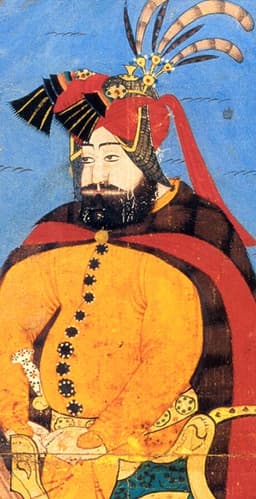
Murad IV
Emperor · Modern
61.0Total

Saud of Saudi Arabia
Emperor · Modern
41.1Total
Basic Information
Born
1612
1902
Died
1640
1969
Era
Modern
Modern
Nationality
Ottoman Empire
Saudi Arabia
Occupation
Emperor
Emperor
Civilization
Middle Eastern
Middle Eastern
Score Comparison
Military (10%)
67.3
14.9
Political (20%)
55.0
33.6
Influence (20%)
59.0
50.2
Legacy (20%)
52.0
36.7
Leadership (15%)
78.0
55.3
Strategy (15%)
65.4
45.0
TOTAL
61.0
41.1
Murad IV — Complete Timeline
1632 AD
Suppression of the Janissary RevoltPolitical Action◆ Major
Murad IV faced a major revolt by the Janissaries, who demanded the execution of several officials. Murad IV initially conceded but later executed the Janissary leaders and purged the corps. He then imposed strict discipline, reducing the Janissaries' political power and restoring order in the capital.
RevoltJanissariesPurge
Impact: nationaldestructive
1633 AD
Ban on Tobacco and AlcoholReform
Murad IV issued a decree banning the use of tobacco, coffee, and alcohol throughout the Ottoman Empire. He enforced this ban with harsh penalties, including execution for violators. This measure aimed to restore public morality and discipline, reflecting his authoritarian rule.
ProhibitionMoralityAuthoritarianism
Impact: nationaldestructive
1638 AD
Recapture of BaghdadWar◆ Major
Murad IV personally led a massive Ottoman army to recapture Baghdad from the Safavid Empire after a 40-day siege. The city had been lost to the Safavids in 1623. The victory restored Ottoman control over Mesopotamia and was a major military achievement of his reign.
SiegeSafavid WarMesopotamia
Impact: regional
1639 AD
Treaty of ZuhabPolitical Action◆ Major
Murad IV's recapture of Baghdad led to the Treaty of Zuhab with the Safavid Empire. This treaty established the permanent border between the Ottoman and Safavid empires, which largely corresponds to the modern Iran-Iraq border. It ended decades of war between the two empires.
TreatyBorderOttoman-Safavid
Impact: regionalconstructive
Saud of Saudi Arabia — Complete Timeline
1953 AD
Became King of Saudi ArabiaPolitical Action◆ Major
Saud of Saudi Arabia became the second king of Saudi Arabia after the death of his father, Abdulaziz Al Saud. His reign was marked by lavish spending and internal family conflicts.
Saudi ArabiaSuccessionKing
Impact: national
1964 AD
Deposed by the Royal FamilyPolitical Action◆ Major
King Saud was deposed by a family council led by his half-brother Faisal, due to mismanagement and financial crises. He was forced into exile, ending his ineffective rule.
Saudi ArabiaDepositionExile
Impact: nationaltragic
1969 AD
Died in ExileOther
Saud of Saudi Arabia died in exile in Athens, Greece. His death marked the end of his life after being removed from power, with his brother Faisal continuing as king.
Saudi ArabiaExileDeath
Impact: national
Expert Analysis
Origins
Murad IV was born in 1612 in Constantinople, the son of Sultan Ahmed I and his consort Kösem Sultan. He received a rigorous education in Islamic sciences and military arts, but his early years were overshadowed by the political instability of the Ottoman Empire under his mentally unstable brother Mustafa I and his own regency. Saud of Saudi Arabia was born in 1902 in Kuwait, the second son of Abdulaziz Al Saud, the founder of modern Saudi Arabia. He was raised in the desert among Bedouin tribes and learned statecraft from his father, but lacked the discipline and vision of his siblings.
Rise to Power
Murad IV ascended the throne in 1623 at age 11 after a Janissary revolt deposed his uncle Mustafa I. His early reign was dominated by his mother Kösem and the Janissaries, who wielded immense power. In 1632, Murad asserted his authority by crushing the Janissary revolt, executing thousands and reasserting imperial control. He personally led campaigns to restore order in Anatolia and the Caucasus. Saud became king in 1953 upon his father's death, inheriting a stable oil-rich kingdom. However, his lavish spending and inability to manage state affairs led to a power struggle with his half-brother Faisal, who had served as crown prince and prime minister.
Leadership & Governance
Murad IV ruled with an iron fist, banning alcohol, tobacco, and coffee to enforce religious orthodoxy. He executed anyone who disobeyed, including high-ranking officials, and reduced corruption by purging the bureaucracy. His leadership score of 78.0 reflects his decisive but brutal governance. In contrast, Saud's leadership score of 55.3 indicates his failure to manage the kingdom's finances; he spent oil revenues on personal palaces and foreign trips, leading to a national debt crisis. Faisal, as prime minister, implemented fiscal reforms that Saud resisted, causing a rift within the royal family.
Triumph & Tragedy
Murad IV's greatest triumph was the recapture of Baghdad in 1638 after a 40-day siege, ending Safavid control. This led to the Treaty of Zuhab in 1639, which established the Ottoman-Safavid border that largely remains today. His tragedy was his early death from cirrhosis at age 28 in 1640, leaving his weak son Ibrahim to undo his reforms. Saud's triumph was overseeing the early years of Saudi oil wealth, which funded infrastructure projects. His tragedy was his deposition in 1964 by a family council, forced into exile, and dying in Athens in 1969, having squandered his inheritance.
Character & Destiny
Murad IV was known for his cruel temper and paranoia, executing even close advisors on suspicion. Yet he was also a capable commander who led from the front, earning loyalty from his soldiers. His character scored 78.0 in leadership but his early death cut short his potential. Saud was generous but fiscally irresponsible, unable to delegate or listen to advisors. His political score of 33.6 reflects his inability to navigate family politics, leading to his downfall.
Legacy
Murad IV is remembered as the last Ottoman sultan to wield effective power, with his reforms prolonging the empire's life. His bans on coffee and tobacco are cultural footnotes. Saud's legacy is mixed: he is often blamed for the financial crisis that led to Faisal's reforms, but he also established the first Saudi cabinet and expanded education. However, his total score of 41.1 places him far below Murad's 61.0.
Conclusion
Murad IV had greater impact due to his military achievements (67.3 vs 14.9) and leadership (78.0 vs 55.3). While Saud inherited a stable kingdom, Murad restored order in a chaotic empire. His recapture of Baghdad and treaty with Safavids shaped regional borders for centuries. Saud's mismanagement led to his deposition, but his brother Faisal's subsequent reforms surpassed his contributions. Thus, Murad IV emerges as the more consequential figure.
Rankings
🥇
Murad IVLeader
Mil: 67.3Pol: 55.0Inf: 59.0
61.0
🥈
Saud of Saudi Arabia
Mil: 14.9Pol: 33.6Inf: 50.2
41.1
+19.9 behind
How This Comparison Works
Algorithm
Each figure is scored on 6 dimensions (0—100 scale) based on structured historical data: Military (10%), Political (20%), Influence (20%), Legacy (20%), Leadership (15%), Strategy (15%). The weighted total produces the final ranking.
Data Sources
Scores are computed from structured sub-indicators in the database. Scale factors adjust for era (Ancient ×0.85, Modern ×1.0) and civilization size (Eastern ×1.05, Other ×0.80) to account for differences in population and military scale.
Maximum 3 Figures
Comparisons are limited to 2—3 figures to ensure readability and statistical meaningfulness.
Error Margins
±5 points per dimension — Sub-scores are derived from historical records with inherent uncertainty. Two figures within 5 points on a dimension should be considered roughly equivalent in that area.
Total Score Accuracy
±3 points overall — The weighted combination of 6 dimensions produces a total score with approximately ±3 points of uncertainty. Differences of less than 3 points are not statistically significant— the figures are effectively tied.
Known Limitations
- Historical records are incomplete and uneven across civilizations
- Figures from oral-tradition societies may be underrepresented
- Occupation labels can misclassify multi-role figures
- Scores measure capability and impact, not moral character
- Quantitative scoring is a comparison tool, not absolute truth
Capability Radar
Military (10%) — Battles & Warfare
Battles
75
10
Win Rate
80
10
Expansion
60
10
Political (20%) — Governance & Reform
Reform
80
20
Diplomacy
50
30
Economy
55
20
Influence (20%) — Cultural & Global Reach
Cultural
40
20
Global
45
20
Legacy (20%) — Historical Impact
Historical
60
20
Longevity
50
10
Leadership (15%) — Power & Stability
Tenure
60
40
Stability
85
10
Strategy (15%) — Tactics & Innovation
Strategy
75
10
Tactics
70
10
Reform
65
10
Similar Comparisons
Comments & Discussion
No comments yet. Be the first to share your thoughts!