Loading...
James VI and I vs Murad IV
Murad IV leads by 5.7 pts · 2 figures compared
…

James VI and I
Emperor · Modern
55.3Total
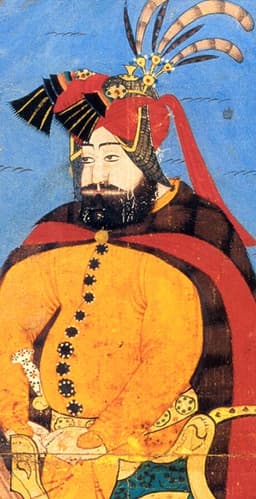
Murad IV
Emperor · Modern
61.0Total
Basic Information
Born
1566
1612
Died
1625
1640
Era
Modern
Modern
Nationality
Scotland
Ottoman Empire
Occupation
Emperor
Emperor
Civilization
Western
Middle Eastern
Score Comparison
Military (10%)
20.0
67.3
Political (20%)
60.0
55.0
Influence (20%)
58.3
59.0
Legacy (20%)
54.0
52.0
Leadership (15%)
72.0
78.0
Strategy (15%)
54.6
65.4
TOTAL
55.3
61.0
James VI and I — Complete Timeline
1567 AD
Coronation as King of ScotsPolitical Action◆ Major
James VI was crowned King of Scots at Stirling Castle at 13 months old, following the abdication of his mother Mary Queen of Scots. The coronation was overseen by regents, and Scotland was governed by a series of regents during his minority.
CoronationRegencyMinority
Impact: national
1599 AD
Basilikon DoronCultural
James VI wrote Basilikon Doron, a treatise on the theory of monarchy and the duties of a king. The work was intended as a guide for his son Henry and outlined James's belief in the divine right of kings, influencing his later rule in England.
WritingPolitical TheoryDivine Right
Impact: national
1603 AD
Union of the CrownsPolitical Action
James VI succeeded Elizabeth I as King of England and Ireland, becoming James I of England. The Union of the Crowns united the kingdoms of Scotland and England under a single monarch, though they remained separate states with their own parliaments.
UnionSuccessionMonarchy
Impact: globalconstructive
1605 AD
Gunpowder PlotPolitical Action◆ Major
James VI and I was the target of the Gunpowder Plot, a Catholic conspiracy to blow up the House of Lords during the State Opening of Parliament. The plot was foiled, and its leader Guy Fawkes was executed, leading to stricter anti-Catholic laws.
PlotAssassination AttemptAnti-Catholic
Impact: nationaldestructive
1609 AD
Plantation of UlsterPolitical Action◆ Major
James VI and I oversaw the Plantation of Ulster, a colonization scheme that settled Protestant Scots and English in northern Ireland. The plantation dispossessed native Irish Catholics and created a lasting Protestant majority in Ulster, contributing to future conflicts.
ColonizationUlsterProtestant
Impact: regionaldestructive
1611 AD
Authorized King James Version of the BibleCultural◆ Major
James VI and I authorized a new translation of the Bible into English, which became known as the King James Version. The translation was completed by 47 scholars and became the standard English Bible for centuries, influencing English literature and religion.
BibleTranslationReligion
Impact: globalconstructive
Murad IV — Complete Timeline
1632 AD
Suppression of the Janissary RevoltPolitical Action◆ Major
Murad IV faced a major revolt by the Janissaries, who demanded the execution of several officials. Murad IV initially conceded but later executed the Janissary leaders and purged the corps. He then imposed strict discipline, reducing the Janissaries' political power and restoring order in the capital.
RevoltJanissariesPurge
Impact: nationaldestructive
1633 AD
Ban on Tobacco and AlcoholReform
Murad IV issued a decree banning the use of tobacco, coffee, and alcohol throughout the Ottoman Empire. He enforced this ban with harsh penalties, including execution for violators. This measure aimed to restore public morality and discipline, reflecting his authoritarian rule.
ProhibitionMoralityAuthoritarianism
Impact: nationaldestructive
1638 AD
Recapture of BaghdadWar◆ Major
Murad IV personally led a massive Ottoman army to recapture Baghdad from the Safavid Empire after a 40-day siege. The city had been lost to the Safavids in 1623. The victory restored Ottoman control over Mesopotamia and was a major military achievement of his reign.
SiegeSafavid WarMesopotamia
Impact: regional
1639 AD
Treaty of ZuhabPolitical Action◆ Major
Murad IV's recapture of Baghdad led to the Treaty of Zuhab with the Safavid Empire. This treaty established the permanent border between the Ottoman and Safavid empires, which largely corresponds to the modern Iran-Iraq border. It ended decades of war between the two empires.
TreatyBorderOttoman-Safavid
Impact: regionalconstructive
Expert Analysis
Origins
James VI and I was born on June 19, 1566, at Edinburgh Castle, the only son of Mary Queen of Scots and Henry Stuart, Lord Darnley. His mother was forced to abdicate in 1567, and James was crowned King of Scots at Stirling Castle at 13 months old. He was raised by regents, including the Earl of Moray and the Earl of Morton, and received a rigorous Calvinist education from George Buchanan, who instilled in him a belief in the divine right of kings.
Murad IV was born on July 27, 1612, in Constantinople, the son of Sultan Ahmed I and Kosem Sultan. His early life was marked by the unstable reign of his mentally unstable brother Mustafa I and his own deposition in 1623 at age 11. He was later restored and spent his youth under the regency of his mother, Kosem, who effectively ruled until he took power in 1632.
Rise to Power
James VI assumed personal rule in Scotland in 1585 at age 19, after years of factional struggles among nobles. He skillfully navigated religious tensions between Presbyterians and Catholics, and cultivated good relations with England. His major turning point came in 1603 when Elizabeth I died childless, and James succeeded her as King of England and Ireland, uniting the crowns in the Union of the Crowns. This was a bloodless transition, but James faced immediate challenges, including the Gunpowder Plot in 1605, a Catholic conspiracy to blow up Parliament.
Murad IV's rise was more violent. After his restoration in 1623, he was initially a figurehead while his mother Kosem and the Janissaries controlled the empire. In 1631, the Janissaries revolted, demanding the heads of officials. Murad conceded but then systematically eliminated the rebel leaders. By 1632, he seized absolute control, executing thousands to restore order. He personally led campaigns, most notably the 1638 recapture of Baghdad from the Safavids, which solidified his authority.
Leadership & Governance
James VI and I advocated for absolute monarchy, believing kings were divinely appointed. He wrote tracts such as "Basilikon Doron" and "The True Law of Free Monarchies" to justify his rule. In Scotland, he managed the Presbyterian church through bishops, while in England he clashed with Parliament over finances and foreign policy. He was a patron of the arts and sponsored the King James Version of the Bible (1611), a literary masterpiece. However, his governance was marked by fiscal irresponsibility, selling titles and monopolies, which led to growing opposition.
Murad IV was a hands-on ruler known for harsh enforcement. He banned tobacco, coffee, and alcohol, punishing violators with death. He personally patrolled the streets in disguise to catch offenders. He suppressed the Janissaries, reducing their power and corruption. His military campaigns were decisive; he led the 1638 Baghdad campaign, which restored Ottoman prestige. However, his methods were brutal: he executed as many as 100,000 people during his reign to maintain order.
Triumph & Tragedy
James's greatest triumph was the peaceful union of the Scottish and English crowns, and the sponsorship of the King James Bible, which became a cornerstone of English literature. His tragedy was his inability to manage finances and Parliament, sowing seeds for the English Civil War that erupted after his death. The Plantation of Ulster (1609) also created long-term sectarian conflict in Ireland.
Murad IV's triumph was recapturing Baghdad and signing the Treaty of Zuhab (1639), which established the Ottoman-Safavid border that lasted centuries. He also stabilized the empire after years of chaos. His tragedy was his early death at 27 from cirrhosis, likely due to his heavy drinking (despite banning alcohol). His harsh rule did not outlast him; the empire soon declined again.
Character & Destiny
James was intellectually gifted but indulgent and indecisive. He favored favorites like the Duke of Buckingham, which caused political strife. His belief in divine right blinded him to the need for compromise. Murad was disciplined and ruthless, but also impulsive and cruel. His iron will saved the empire temporarily, but his repression created a culture of fear.
Legacy
James's legacy is mixed: the King James Bible endures, and the union of crowns set a precedent for the eventual political union in 1707. However, his fiscal and political mismanagement contributed to the later conflict. Murad IV is remembered as a strong sultan who restored order, but his reforms were not institutionalized. The Treaty of Zuhab defined borders, but his death left a vacuum.
Conclusion
Murad IV scored higher overall (61.0 vs 55.3), driven by superior military (67.3 vs 20.0) and strategy (65.4 vs 54.6). While James's cultural impact through the King James Bible is significant, Murad's tangible achievements in stabilizing the Ottoman Empire and securing borders had more immediate geopolitical impact. Therefore, Murad IV is the more impactful ruler in terms of decisive action and lasting territorial settlement.
Rankings
🥇
Murad IVLeader
Mil: 67.3Pol: 55.0Inf: 59.0
61.0
🥈
James VI and I
Mil: 20.0Pol: 60.0Inf: 58.3
55.3
+5.7 behind
How This Comparison Works
Algorithm
Each figure is scored on 6 dimensions (0—100 scale) based on structured historical data: Military (10%), Political (20%), Influence (20%), Legacy (20%), Leadership (15%), Strategy (15%). The weighted total produces the final ranking.
Data Sources
Scores are computed from structured sub-indicators in the database. Scale factors adjust for era (Ancient ×0.85, Modern ×1.0) and civilization size (Eastern ×1.05, Other ×0.80) to account for differences in population and military scale.
Maximum 3 Figures
Comparisons are limited to 2—3 figures to ensure readability and statistical meaningfulness.
Error Margins
±5 points per dimension — Sub-scores are derived from historical records with inherent uncertainty. Two figures within 5 points on a dimension should be considered roughly equivalent in that area.
Total Score Accuracy
±3 points overall — The weighted combination of 6 dimensions produces a total score with approximately ±3 points of uncertainty. Differences of less than 3 points are not statistically significant— the figures are effectively tied.
Known Limitations
- Historical records are incomplete and uneven across civilizations
- Figures from oral-tradition societies may be underrepresented
- Occupation labels can misclassify multi-role figures
- Scores measure capability and impact, not moral character
- Quantitative scoring is a comparison tool, not absolute truth
Capability Radar
Military (10%) — Battles & Warfare
Battles
5
75
Win Rate
5
80
Expansion
5
60
Political (20%) — Governance & Reform
Reform
60
80
Diplomacy
65
50
Economy
55
55
Influence (20%) — Cultural & Global Reach
Cultural
55
40
Global
55
45
Legacy (20%) — Historical Impact
Historical
60
60
Longevity
55
50
Leadership (15%) — Power & Stability
Tenure
70
60
Stability
50
85
Strategy (15%) — Tactics & Innovation
Strategy
5
75
Tactics
5
70
Reform
10
65
Similar Comparisons
Comments & Discussion
No comments yet. Be the first to share your thoughts!