Loading...
Charles I of Anjou vs Tamerlane
Tamerlane leads by 1.1 pts · 2 figures compared
…
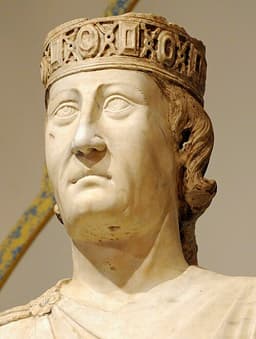
Charles I of Anjou
Emperor · Medieval
63.6Total
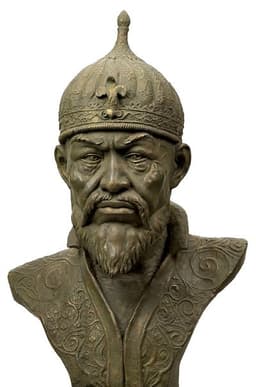
Tamerlane
Emperor · Medieval
64.7Total
Basic Information
Born
1227
1336
Died
1285
1405
Era
Medieval
Medieval
Nationality
France
Timurid Empire
Occupation
Emperor
Emperor
Civilization
Western
Middle Eastern
Score Comparison
Military (10%)
82.0
93.3
Political (20%)
68.0
57.3
Influence (20%)
62.0
55.0
Legacy (20%)
52.0
58.0
Leadership (15%)
67.0
65.0
Strategy (15%)
66.3
88.0
TOTAL
63.6
64.7
Charles I of Anjou — Complete Timeline
1266 AD
Conquest of the Kingdom of SicilyWar◆ Major
Charles I of Anjou defeated Manfred of Hohenstaufen at the Battle of Benevento, conquering the Kingdom of Sicily. He was crowned king in Rome with papal support, establishing Angevin rule in southern Italy.
ConquestSicilyAngevin
Impact: regional
1268 AD
Battle of TagliacozzoWar◆ Major
Charles I defeated Conradin of Hohenstaufen at the Battle of Tagliacozzo, ending Hohenstaufen claims to Sicily. Conradin was captured and later executed, solidifying Angevin control and earning Charles a reputation for ruthlessness.
BattleHohenstaufenExecution
Impact: regionaldestructive
1270 AD
Planned crusade against the Byzantine EmpirePolitical Action◆ Major
Charles I negotiated with the Pope and other powers to launch a crusade against the Byzantine Empire, aiming to restore the Latin Empire. He used Sicily as a base for naval preparations, but the plan was delayed by the Eighth Crusade.
CrusadeByzantineDiplomacy
Impact: regional
1282 AD
Sicilian VespersWar◆ Major
A popular uprising in Palermo, known as the Sicilian Vespers, expelled Angevin rule from Sicily. The revolt was supported by Peter III of Aragon, leading to a war that cost Charles control of the island and weakened his power.
RevoltSicilyAragon
Impact: regionaldestructive
1285 AD
Death and collapse of Angevin ambitionsOther◆ Major
Charles I died at Foggia, leaving his son Charles II a reduced kingdom. The loss of Sicily and the ongoing war with Aragon ended his dreams of a Mediterranean empire, and the Angevin dynasty never recovered its former power.
DeathAngevinDecline
Impact: regionaltragic
Tamerlane — Complete Timeline
1380 AD
Conquest of KhorasanWar◆ Major
Tamerlane conquered Khorasan from the Kartids, capturing Herat and establishing his base of power. This victory marked the beginning of his rise as a major military leader in Central Asia.
ConquestCentral AsiaKhorasan
Impact: regional
1387 AD
Sack of IsfahanWar◆ Major
After a rebellion in Isfahan, Tamerlane ordered a massacre of the city's inhabitants, reportedly building towers of skulls. The sack was part of his campaign to subdue Persia and served as a brutal warning to other cities.
MassacrePersiaTerror
Impact: regionaldestructive
1398 AD
Invasion of India and Sack of DelhiWar◆ Major
Tamerlane invaded the Delhi Sultanate, defeating Sultan Nasir-ud-Din Mahmud Shah Tughluq at the Battle of Delhi. His army sacked Delhi, massacring tens of thousands of civilians and looting the city's wealth, including the Peacock Throne.
InvasionIndiaDelhi
Impact: globaldestructive
1401 AD
Destruction of DamascusWar◆ Major
Tamerlane besieged and sacked Damascus, burning the Umayyad Mosque and deporting artisans to Samarkand. The destruction was part of his campaign against the Mamluk Sultanate, which had refused to submit to his authority.
SackSyriaMamluk Sultanate
Impact: regionaldestructive
1402 AD
Battle of AnkaraWar
Tamerlane defeated the Ottoman Sultan Bayezid I at the Battle of Ankara, capturing him. The victory shattered Ottoman power and led to a civil war in the Ottoman Empire, delaying their conquest of Constantinople by 50 years.
BattleOttoman EmpireAnatolia
Impact: global
1405 AD
Death during Campaign against Ming ChinaWar
Tamerlane died of illness while leading a massive army towards the Ming dynasty of China. His death ended the campaign and led to the fragmentation of his empire among his sons and grandsons.
DeathMing ChinaCampaign
Impact: globaltragic
Expert Analysis
Origins
Charles I of Anjou was born in 1227, the youngest son of King Louis VIII of France and Blanche of Castile. His upbringing in the Capetian court provided him with connections and ambitions far beyond his inheritance. He married Beatrice of Provence in 1246, acquiring claims to Provence and Forcalquier. Charles was a shrewd administrator and warrior, but his early years were overshadowed by his more famous brother, King Louis IX.
Tamerlane, born Timur ibn Taraghai Barlas in 1336 near Samarkand, came from a minor noble family of the Barlas tribe, a Mongol clan that had adopted Islam. A leg injury in his youth earned him the name Timur-e Lang (Tamerlane the Lame). He rose through local power struggles, initially serving as a chieftain and building a following through military prowess and alliances.
Rise to Power
Charles I's rise began when Pope Urban IV offered him the crown of Sicily in 1262, seeking a champion against the Hohenstaufen dynasty. Charles accepted and led a campaign south. At the Battle of Benevento (1266), he defeated and killed King Manfred of Sicily, securing the kingdom. Two years later, he crushed the young Conradin of Hohenstaufen at Tagliacozzo (1268), executing him and extinguishing Hohenstaufen claims. By 1270, Charles was the dominant power in Italy, with ambitions extending to the Byzantine Empire.
Tamerlane's rise started in the 1360s when he allied with the Mongol khan of Transoxiana, but soon turned against him. By 1370, he had captured Samarkand and proclaimed himself emir. He spent the next decades consolidating control over Central Asia, defeating the Khans of the Chagatai ulus and the Golden Horde. His major breakthrough came with the conquest of Khorasan (1380s), capturing Herat and establishing a base for further expansion. By the 1390s, he controlled Persia and Mesopotamia.
Leadership & Governance
Charles I of Anjou ruled Sicily as a centralized monarchy, imposing French officials and heavy taxes to fund his military campaigns. He built a powerful navy and fortified his kingdom, but his governance alienated the local nobility and populace. His policies favored the Church and French interests over Sicilian autonomy, leading to widespread resentment. He scored 67.0 in leadership and 68.0 in political acumen, reflecting his ability to organize but failure to maintain loyalty.
Tamerlane governed through a combination of terror and patronage. He established Samarkand as a cultural and economic hub, importing artisans and scholars from conquered cities. However, his rule was characterized by brutal reprisals against rebellions, such as the sack of Isfahan (1387) where he built towers of skulls. He used his military to enforce control, but his empire lacked stable institutions; it relied on his personal authority. Tamerlane scored 65.0 in leadership and 57.3 in politics, indicating his reliance on force over governance.
Triumph & Tragedy
Charles I's greatest triumph was conquering Sicily and defeating the Hohenstaufen, establishing Angevin rule. He also planned a crusade to restore the Latin Empire in Constantinople, securing alliances with Venice and the Pope. His tragedy was the Sicilian Vespers (1282), a popular uprising that expelled his forces from Sicily. The revolt, supported by Peter III of Aragon, led to a war that drained Angevin resources. Charles died in 1285, his Mediterranean empire shattered.
Tamerlane's triumphs include the Battle of Ankara (1402), where he captured Ottoman Sultan Bayezid I, halting Ottoman expansion and causing a civil war. He also sacked Delhi (1398), massacring tens of thousands and plundering immense wealth. His tragedy was his death in 1405 during a campaign against the Ming dynasty. Without him, his empire fragmented quickly, as his successors lacked his authority. His military score of 93.3 reflects his tactical genius, but his empire was ephemeral.
Character & Destiny
Charles I was ambitious, ruthless, and methodical. He pursued a grand strategy of Mediterranean dominance, but his inflexibility and harsh rule provoked rebellion. His character shaped his fate: he overreached by antagonizing the Sicilians and the Aragonese, leading to the Vespers. Historians note his administrative skills but criticize his lack of political sensitivity.
Tamerlane was cunning, brutal, and charismatic. He used religion and Mongol traditions to legitimize his rule, but his cruelty created enemies. His destiny was tied to constant conquest; when he died, his empire collapsed. His strategy score of 88.0 underscores his military brilliance, but his political score of 57.3 reveals his failure to build enduring institutions.
Legacy
Charles I's legacy is mixed. He established the Angevin dynasty in Naples, which lasted until the 15th century, but the loss of Sicily weakened it. His ambitions against Byzantium failed, but his conflict with Aragon shaped Mediterranean politics for decades. He scored 52.0 in legacy, reflecting his limited long-term impact.
Tamerlane's legacy is vast but fragmented. He inspired the Mughal Empire in India (through his descendant Babur) and influenced Persian and Central Asian culture. His empire's collapse left a power vacuum, but his military tactics were studied for centuries. He scored 58.0 in legacy, higher than Charles, due to his lasting cultural and political influence.
Conclusion
Tamerlane had greater impact than Charles I of Anjou. While Charles scored 63.6 overall versus Tamerlane's 64.7, the gap is narrow but meaningful. Tamerlane's military score (93.3) dwarfs Charles's (82.0), and his empire stretched from India to Anatolia. Charles's ambitions were more contained and ultimately failed due to the Sicilian Vespers. Tamerlane's campaigns reshaped three continents, even if his empire did not endure. In terms of sheer scale and long-term influence, Tamerlane emerges as the more significant historical figure.
Rankings
🥇
TamerlaneLeader
Mil: 93.3Pol: 57.3Inf: 55.0
64.7
🥈
Charles I of Anjou
Mil: 82.0Pol: 68.0Inf: 62.0
63.6
+1.1 behind
How This Comparison Works
Algorithm
Each figure is scored on 6 dimensions (0—100 scale) based on structured historical data: Military (10%), Political (20%), Influence (20%), Legacy (20%), Leadership (15%), Strategy (15%). The weighted total produces the final ranking.
Data Sources
Scores are computed from structured sub-indicators in the database. Scale factors adjust for era (Ancient ×0.85, Modern ×1.0) and civilization size (Eastern ×1.05, Other ×0.80) to account for differences in population and military scale.
Maximum 3 Figures
Comparisons are limited to 2—3 figures to ensure readability and statistical meaningfulness.
Error Margins
±5 points per dimension — Sub-scores are derived from historical records with inherent uncertainty. Two figures within 5 points on a dimension should be considered roughly equivalent in that area.
Total Score Accuracy
±3 points overall — The weighted combination of 6 dimensions produces a total score with approximately ±3 points of uncertainty. Differences of less than 3 points are not statistically significant— the figures are effectively tied.
Known Limitations
- Historical records are incomplete and uneven across civilizations
- Figures from oral-tradition societies may be underrepresented
- Occupation labels can misclassify multi-role figures
- Scores measure capability and impact, not moral character
- Quantitative scoring is a comparison tool, not absolute truth
Capability Radar
Military (10%) — Battles & Warfare
Battles
75
95
Win Rate
70
92
Expansion
80
97
Political (20%) — Governance & Reform
Reform
55
75
Diplomacy
50
70
Economy
60
72
Influence (20%) — Cultural & Global Reach
Cultural
45
75
Global
55
80
Legacy (20%) — Historical Impact
Historical
60
85
Longevity
50
70
Leadership (15%) — Power & Stability
Tenure
60
80
Stability
30
60
Strategy (15%) — Tactics & Innovation
Strategy
78
94
Tactics
72
96
Reform
65
85
Similar Comparisons
Comments & Discussion
No comments yet. Be the first to share your thoughts!