Loading...
Taejo of Goryeo vs Tamerlane
Tamerlane leads by 1.6 pts · 2 figures compared
…
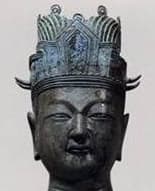
Taejo of Goryeo
Emperor · Medieval
63.1Total
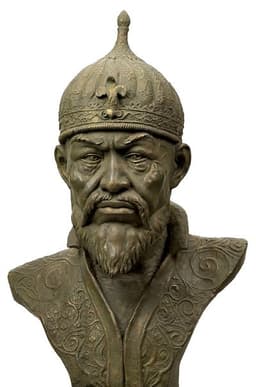
Tamerlane
Emperor · Medieval
64.7Total
Basic Information
Born
877
1336
Died
943
1405
Era
Medieval
Medieval
Nationality
Korea
Timurid Empire
Occupation
Emperor
Emperor
Civilization
Eastern
Middle Eastern
Score Comparison
Military (10%)
61.7
93.3
Political (20%)
59.3
57.3
Influence (20%)
72.0
55.0
Legacy (20%)
55.0
58.0
Leadership (15%)
72.0
65.0
Strategy (15%)
55.0
88.0
TOTAL
63.1
64.7
Taejo of Goryeo — Complete Timeline
918 AD
Battle of CheonjuWar◆ Major
Wang Geon, a general under the Later Goguryeo kingdom, defeated the forces of Gyeon Hwon at Cheonju. This victory solidified his power and set the stage for the founding of the Goryeo dynasty.
Later Three KingdomsGoryeo Foundation
Impact: regional
Founding of the Goryeo DynastyPolitical Action
Wang Geon declared himself king and founded the Goryeo dynasty, with its capital at Songak (modern Kaesong). He unified the Later Three Kingdoms (Later Goguryeo, Later Baekje, and Silla) through a combination of military conquest and diplomatic marriages.
Goryeo DynastyUnificationKorean History
Impact: regionalconstructive
936 AD
Unification of the Later Three KingdomsWar◆ Major
Taejo of Goryeo completed the unification of the Later Three Kingdoms by defeating the Later Baekje kingdom. This brought the entire Korean peninsula under Goryeo rule, ending the Later Three Kingdoms period.
UnificationLater Three KingdomsGoryeo
Impact: regionalconstructive
943 AD
Promulgation of the Ten InjunctionsReform◆ Major
Taejo issued the Ten Injunctions, a set of political and cultural guidelines for his successors. These injunctions emphasized Confucian governance, Buddhist patronage, and the importance of maintaining good relations with China.
GovernanceConfucianismBuddhism
Impact: nationalconstructive
Tamerlane — Complete Timeline
1380 AD
Conquest of KhorasanWar◆ Major
Tamerlane conquered Khorasan from the Kartids, capturing Herat and establishing his base of power. This victory marked the beginning of his rise as a major military leader in Central Asia.
ConquestCentral AsiaKhorasan
Impact: regional
1387 AD
Sack of IsfahanWar◆ Major
After a rebellion in Isfahan, Tamerlane ordered a massacre of the city's inhabitants, reportedly building towers of skulls. The sack was part of his campaign to subdue Persia and served as a brutal warning to other cities.
MassacrePersiaTerror
Impact: regionaldestructive
1398 AD
Invasion of India and Sack of DelhiWar◆ Major
Tamerlane invaded the Delhi Sultanate, defeating Sultan Nasir-ud-Din Mahmud Shah Tughluq at the Battle of Delhi. His army sacked Delhi, massacring tens of thousands of civilians and looting the city's wealth, including the Peacock Throne.
InvasionIndiaDelhi
Impact: globaldestructive
1401 AD
Destruction of DamascusWar◆ Major
Tamerlane besieged and sacked Damascus, burning the Umayyad Mosque and deporting artisans to Samarkand. The destruction was part of his campaign against the Mamluk Sultanate, which had refused to submit to his authority.
SackSyriaMamluk Sultanate
Impact: regionaldestructive
1402 AD
Battle of AnkaraWar
Tamerlane defeated the Ottoman Sultan Bayezid I at the Battle of Ankara, capturing him. The victory shattered Ottoman power and led to a civil war in the Ottoman Empire, delaying their conquest of Constantinople by 50 years.
BattleOttoman EmpireAnatolia
Impact: global
1405 AD
Death during Campaign against Ming ChinaWar
Tamerlane died of illness while leading a massive army towards the Ming dynasty of China. His death ended the campaign and led to the fragmentation of his empire among his sons and grandsons.
DeathMing ChinaCampaign
Impact: globaltragic
Expert Analysis
Origins
Taejo of Goryeo, born Wang Geon in 877 in Songak (modern Kaesong), came from a maritime trading family. His father, Wang Ryung, was a influential local lord. Wang Geon received a Confucian education and gained military experience under the Later Goguryeo kingdom.
Tamerlane, born Timur ibn Taraghai in 1336 near Kesh (modern Shahrisabz, Uzbekistan), belonged to the Barlas tribe, a Mongolized Turkic group. His father was a minor noble. Tamerlane grew up in a fractured region after the decline of the Chagatai Khanate, learning steppe warfare and archery.
Rise to Power
Taejo rose as a general under Gung Ye, the founder of Later Goguryeo. His key turning point was the Battle of Cheonju in 930, where he defeated forces of Later Baekje, solidifying his power. In 935, Gung Ye became tyrannical, and Wang Geon overthrew him, declaring himself king of Goryeo. He completed the unification of the Later Three Kingdoms by defeating Later Baekje in 936.
Tamerlane seized power through a combination of alliances and betrayals. In 1360, he joined the Chagatai Khanate but later rebelled. He conquered Khorasan from the Kartids in 1381, capturing Herat. He established his capital at Samarkand and expanded by defeating rivals like the Golden Horde and the Jalayirids. His turning point was the Battle of Ankara in 1402, where he captured Ottoman Sultan Bayezid I, shattering Ottoman power.
Leadership & Governance
Taejo ruled Goryeo with a Confucian-based system, emphasizing civil administration. He issued the Ten Injunctions in 943, guidelines for his successors that promoted Buddhism, Confucian governance, and the importance of the capital Songak. He integrated local elites through marriage alliances and granted lands to loyalists.
Tamerlane ruled through military might and terror. He built a centralized state but relied on tribal leaders. His governance was marked by systematic destruction: after rebellions, he ordered massacres, such as the sack of Isfahan in 1387 where towers of skulls were built. He used architecture and culture to legitimize his rule, building grand structures in Samarkand.
Triumph & Tragedy
Taejo's greatest success was founding the Goryeo dynasty and unifying the Korean peninsula, which lasted nearly 500 years. His Ten Injunctions provided stability. However, his reliance on local magnates led to factionalism after his death. His failure to fully centralize power allowed aristocratic families to dominate later.
Tamerlane's triumphs include conquering from Delhi to the Mediterranean, defeating the Ottomans, and building an empire. His military strategy scored 88.0. Tragically, his empire fractured after his death in 1405 during a campaign against Ming China. His destruction of cities like Delhi (1398) and Isfahan left long-term economic scars.
Character & Destiny
Taejo was pragmatic and culturally astute, using Buddhism and Confucianism to legitimize rule. He avoided unnecessary bloodshed, integrating rivals. His destiny was to create a stable dynasty.
Tamerlane was ruthless and ambitious, driven by a vision of restoring the Mongol Empire. He was strategic but cruel, often breaking promises. His character led to constant warfare and massive casualties, with some estimates of 17 million deaths. His death on campaign sealed the empire's collapse.
Legacy
Taejo's Goryeo dynasty lasted until 1392, influencing Korean culture, politics, and identity. The Ten Injunctions shaped governance. His unification of Korea set the stage for later dynasties.
Tamerlane's legacy is mixed: he revived trade along the Silk Road, patronized arts and science, and built Samarkand into a cultural center. However, his brutality left a memory of destruction. His descendants, the Mughals, ruled India for centuries.
Conclusion
Tamerlane had greater immediate impact, with a military score of 93.3 and an empire spanning continents. However, his legacy is one of destruction and short-lived empire. Taejo, with a total score of 63.1, founded a dynasty that endured 474 years, shaping Korean civilization. For long-term influence, Taejo surpasses Tamerlane. While Tamerlane's conquests were vast, Taejo's creation of a stable, culturally rich dynasty had more enduring significance.
Rankings
🥇
TamerlaneLeader
Mil: 93.3Pol: 57.3Inf: 55.0
64.7
🥈
Taejo of Goryeo
Mil: 61.7Pol: 59.3Inf: 72.0
63.1
+1.6 behind
How This Comparison Works
Algorithm
Each figure is scored on 6 dimensions (0—100 scale) based on structured historical data: Military (10%), Political (20%), Influence (20%), Legacy (20%), Leadership (15%), Strategy (15%). The weighted total produces the final ranking.
Data Sources
Scores are computed from structured sub-indicators in the database. Scale factors adjust for era (Ancient ×0.85, Modern ×1.0) and civilization size (Eastern ×1.05, Other ×0.80) to account for differences in population and military scale.
Maximum 3 Figures
Comparisons are limited to 2—3 figures to ensure readability and statistical meaningfulness.
Error Margins
±5 points per dimension — Sub-scores are derived from historical records with inherent uncertainty. Two figures within 5 points on a dimension should be considered roughly equivalent in that area.
Total Score Accuracy
±3 points overall — The weighted combination of 6 dimensions produces a total score with approximately ±3 points of uncertainty. Differences of less than 3 points are not statistically significant— the figures are effectively tied.
Known Limitations
- Historical records are incomplete and uneven across civilizations
- Figures from oral-tradition societies may be underrepresented
- Occupation labels can misclassify multi-role figures
- Scores measure capability and impact, not moral character
- Quantitative scoring is a comparison tool, not absolute truth
Capability Radar
Military (10%) — Battles & Warfare
Battles
65
95
Win Rate
70
92
Expansion
70
97
Political (20%) — Governance & Reform
Reform
80
75
Diplomacy
75
70
Economy
70
72
Influence (20%) — Cultural & Global Reach
Cultural
70
75
Global
55
80
Legacy (20%) — Historical Impact
Historical
75
85
Longevity
70
70
Leadership (15%) — Power & Stability
Tenure
75
80
Stability
65
60
Strategy (15%) — Tactics & Innovation
Strategy
75
94
Tactics
60
96
Reform
55
85
Similar Comparisons
Comments & Discussion
No comments yet. Be the first to share your thoughts!