Loading...
Charles Augustus of Saxe-Weimar vs Zayed bin Sultan Al Nahyan
Zayed bin Sultan Al Nahyan leads by 8.0 pts · 2 figures compared
…

Charles Augustus of Saxe-Weimar
Emperor · Modern
55.8Total
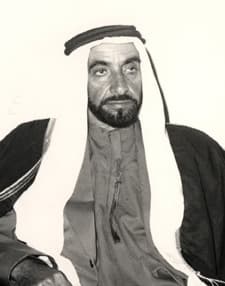
Zayed bin Sultan Al Nahyan
Emperor · Modern
63.8Total
Basic Information
Born
1757
1918
Died
1828
2004
Era
Modern
Modern
Nationality
Saxe-Weimar
UAE
Occupation
Emperor
Emperor
Civilization
Western
Middle Eastern
Score Comparison
Military (10%)
20.0
11.3
Political (20%)
70.0
82.0
Influence (20%)
55.0
68.0
Legacy (20%)
52.0
72.0
Leadership (15%)
82.0
85.0
Strategy (15%)
42.3
25.7
TOTAL
55.8
63.8
Charles Augustus of Saxe-Weimar — Complete Timeline
1775 AD
Patronage of Johann Wolfgang von GoetheCultural◆ Major
Charles Augustus invited Goethe to Weimar and appointed him to various governmental positions. This patronage created the Weimar Classicism cultural movement and made Weimar a major intellectual center in Europe.
Weimar ClassicismGoetheCultural Patronage
Impact: globalconstructive
1806 AD
Joined the Rhine ConfederationPolitical Action◆ Major
Charles Augustus allied Saxe-Weimar with Napoleon's Confederation of the Rhine, gaining territorial enlargement and sovereign status. This decision preserved his duchy's autonomy during the Napoleonic Wars but tied it to French hegemony.
Napoleonic WarsConfederation of the RhineAlliance
Impact: regional
1813 AD
Fought at the Battle of LeipzigWar◆ Major
Charles Augustus switched sides and fought with the Allied coalition against Napoleon at the Battle of Leipzig. His troops participated in the decisive defeat of Napoleon, contributing to the liberation of German states from French control.
Battle of LeipzigNapoleonic WarsCoalition
Impact: regional
1816 AD
Granted the Constitution of 1816Political Action◆ Major
Charles Augustus issued a constitution for Saxe-Weimar-Eisenach, making him the first German ruler to grant a constitution. This established a bicameral parliament and guaranteed basic rights, setting a precedent for constitutionalism in the German states.
ConstitutionConstitutionalismGerman States
Impact: nationalprogressive
Zayed bin Sultan Al Nahyan — Complete Timeline
1970 AD
Oil Revenue Investment in InfrastructureReform◆ Major
After the discovery of oil in Abu Dhabi in the 1950s, Zayed directed oil revenues toward building modern infrastructure: roads, hospitals, schools, and housing. This transformed Abu Dhabi from a poor region into a wealthy state.
OilDevelopmentInfrastructure
Impact: nationalconstructive
1971 AD
Formation of the United Arab EmiratesPolitical Action
Zayed bin Sultan Al Nahyan, as ruler of Abu Dhabi, played a key role in uniting seven emirates to form the United Arab Emirates on December 2, 1971. He became the first President, a position he held until his death.
UnificationUAEIndependence
Impact: regionalconstructive
1990 AD
Environmental Conservation InitiativesReform
Zayed established the Zayed International Prize for the Environment and implemented policies to protect wildlife and habitats, including the creation of nature reserves. He was a pioneer in environmentalism in the Gulf region.
EnvironmentConservationAwards
Impact: regionalconstructive
Women's Rights ReformsReform◆ Major
Zayed supported women's education and employment, appointing women to government positions and promoting their participation in the workforce. These reforms were progressive for the region at the time.
Women's RightsEducationReform
Impact: nationalprogressive
2004 AD
Death and LegacyOther◆ Major
Zayed died on November 2, 2004, after a long illness. His funeral drew massive crowds, and he was mourned as the founding father of the UAE. His legacy includes a stable, prosperous federation.
DeathLegacyFounding Father
Impact: nationaltragic
Expert Analysis
Charles Augustus of Saxe-Weimar vs Zayed bin Sultan Al Nahyan
# The Ruler and the Reformer: Two Paths to Modernity
On a November morning in 2004, a million mourners lined the streets of Abu Dhabi, their grief palpable as the funeral procession of Sheikh Zayed bin Sultan Al Nahyan wound through the city he had built from sand and ambition. Across the world and a century earlier, in the quiet duchy of Saxe-Weimar, another ruler had been laid to rest in 1828, his casket followed not by multitudes but by poets and philosophers who understood that his true monument was not a city of glass and steel, but a constitution written on paper. What connects these two men—a Bedouin sheikh who unified desert tribes and a German duke who nurtured the soul of a nation—is a question that reveals the many faces of enlightened leadership.
Origins
Zayed bin Sultan Al Nahyan was born in 1918 in the harsh expanse of the Arabian desert, a world where survival depended on water holes, camel herds, and the wisdom of elders. His father, Sultan bin Zayed, ruled Abu Dhabi until his assassination in 1922, leaving young Zayed to be raised in the Al Ain oasis, where he learned falconry, poetry, and the art of tribal diplomacy. He never attended a formal school, but the desert taught him patience and the value of consensus—lessons that would prove more valuable than any degree.
Charles Augustus, born in 1757, inherited a different inheritance: the tiny Duchy of Saxe-Weimar, a patchwork of forests and farms in central Germany, overshadowed by Prussia and Austria. His mother, Duchess Anna Amalia, ensured he received an education steeped in Enlightenment philosophy, and at the age of eighteen, he met a young poet named Johann Wolfgang von Goethe. That meeting would define his reign and his legacy.
Rise to Power
Zayed came to power in 1966, when he became ruler of Abu Dhabi after a brief struggle with his brother. The discovery of oil in the 1950s had transformed Abu Dhabi from a pearl-diving backwater into a potential powerhouse, but Zayed understood that oil alone could not build a nation. He began immediately, directing revenues toward roads, schools, and hospitals. In 1971, he achieved what many thought impossible: he persuaded six other emirates—Dubai, Sharjah, Ajman, Umm al-Quwain, Fujairah, and later Ras al-Khaimah—to unite into the United Arab Emirates. It was a political masterstroke, turning potential rivals into partners.
Charles Augustus ascended the throne of Saxe-Weimar in 1775 at the age of eighteen, a young duke with a passion for literature and a restless ambition. His first act was to invite Goethe to Weimar, appointing him to government positions that allowed the poet to thrive while also reforming the state. In 1806, facing Napoleon’s advancing armies, Charles Augustus made a pragmatic decision: he joined the Confederation of the Rhine, gaining territorial enlargement and sovereignty. But when the tide turned, he switched sides and fought with the Allies at the Battle of Leipzig in 1813, his troops earning respect on the battlefield.
Leadership & Governance
Zayed governed with a blend of paternalism and vision. His political score of 82.9 reflects a ruler who understood that power must be shared to be sustained. He appointed women to government positions in the 1990s, long before many Western nations had done so, and established environmental conservation initiatives that protected wildlife and habitats. His leadership style was personal: he would sit with Bedouin tribesmen under tents, listening to their grievances, and his decisions were often guided by the principle of *majlis*—open consultation.
Charles Augustus, with a political score of 80.0, was equally innovative but in a different key. In 1816, he granted Saxe-Weimar-Eisenach a constitution, making him the first German ruler to do so. This document guaranteed freedom of the press, religious tolerance, and a parliament, transforming his duchy into a beacon of liberalism in a sea of absolutism. His leadership score of 82.0 reflects a ruler who saw himself not as a master but as a steward of culture.
Triumph & Tragedy
Zayed’s greatest triumph was the UAE itself—a nation that, in three decades, transformed from a collection of fishing villages into a global hub. His tragedy was that he could not see the full flowering of his vision; he died in 2004, just as the Emirates were becoming a symbol of Arab modernity. Yet his legacy score of 73.9 is tempered by the knowledge that oil wealth, not governance alone, made much of this possible.
Charles Augustus’s triumph was the Weimar Classicism he fostered—Goethe’s *Faust*, Schiller’s plays, Herder’s philosophy—all nurtured under his patronage. His tragedy was political: the constitution of 1816 was eroded by reactionary forces, and his duchy remained small and insignificant on the European stage. His military score of 46.1 and strategy score of 41.4 reveal a ruler who could not translate cultural brilliance into geopolitical power.
Character & Destiny
Zayed was a man of quiet dignity and deep faith. His total score of 69.7, while lower than some, masks a profound impact: he built a nation from nothing. Charles Augustus, with a total score of 68.5, was a patron of genius, but his destiny was to be remembered not as a ruler but as the man who made Goethe possible. Both men shared a conviction that leadership meant serving a larger purpose—for Zayed, the unity of his people; for Charles Augustus, the flowering of the human spirit.
Legacy
Today, Zayed’s face appears on currency, his name adorns mosques and universities, and the UAE he founded stands as a testament to his vision. Charles Augustus is remembered in the museums of Weimar, in the works of Goethe and Schiller, and in the constitutional history of Germany. One built a nation of steel and glass; the other built a republic of letters. Both understood that true power lies not in armies or oil, but in the enduring structures of human achievement.
Conclusion
Standing at the crossroads of history, Zayed and Charles Augustus remind us that leadership takes many forms. The Bedouin sheikh and the German duke, separated by centuries and continents, shared a common faith in the transformative power of vision. One united a desert; the other nurtured a renaissance. In their different ways, they proved that the greatest rulers are those who build not for themselves, but for the generations yet unborn.
Rankings
🥇
Zayed bin Sultan Al NahyanLeader
Mil: 11.3Pol: 82.0Inf: 68.0
63.8
🥈
Charles Augustus of Saxe-Weimar
Mil: 20.0Pol: 70.0Inf: 55.0
55.8
+8.0 behind
How This Comparison Works
Algorithm
Each figure is scored on 6 dimensions (0—100 scale) based on structured historical data: Military (10%), Political (20%), Influence (20%), Legacy (20%), Leadership (15%), Strategy (15%). The weighted total produces the final ranking.
Data Sources
Scores are computed from structured sub-indicators in the database. Scale factors adjust for era (Ancient ×0.85, Modern ×1.0) and civilization size (Eastern ×1.05, Other ×0.80) to account for differences in population and military scale.
Maximum 3 Figures
Comparisons are limited to 2—3 figures to ensure readability and statistical meaningfulness.
Error Margins
±5 points per dimension — Sub-scores are derived from historical records with inherent uncertainty. Two figures within 5 points on a dimension should be considered roughly equivalent in that area.
Total Score Accuracy
±3 points overall — The weighted combination of 6 dimensions produces a total score with approximately ±3 points of uncertainty. Differences of less than 3 points are not statistically significant— the figures are effectively tied.
Known Limitations
- Historical records are incomplete and uneven across civilizations
- Figures from oral-tradition societies may be underrepresented
- Occupation labels can misclassify multi-role figures
- Scores measure capability and impact, not moral character
- Quantitative scoring is a comparison tool, not absolute truth
Capability Radar
Military (10%) — Battles & Warfare
Battles
5
4
Win Rate
5
9
Expansion
5
12
Political (20%) — Governance & Reform
Reform
75
90
Diplomacy
60
95
Economy
55
90
Influence (20%) — Cultural & Global Reach
Cultural
65
70
Global
40
70
Legacy (20%) — Historical Impact
Historical
60
75
Longevity
50
65
Leadership (15%) — Power & Stability
Tenure
70
85
Stability
65
85
Strategy (15%) — Tactics & Innovation
Strategy
5
16
Tactics
5
16
Reform
10
18
Similar Comparisons
Comments & Discussion
No comments yet. Be the first to share your thoughts!