Loading...
Charles Augustus of Saxe-Weimar vs Dinh Tien Hoang
Dinh Tien Hoang leads by 4.6 pts · 2 figures compared
…
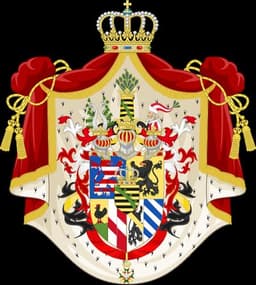
Charles Augustus of Saxe-Weimar
Emperor · Modern
55.8Total
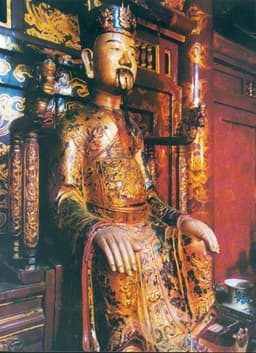
Dinh Tien Hoang
Emperor · Medieval
60.4Total
Basic Information
Born
1757
924
Died
1828
979
Era
Modern
Medieval
Nationality
Saxe-Weimar
Vietnam
Occupation
Emperor
Emperor
Civilization
Western
Eastern
Score Comparison
Military (10%)
20.0
60.0
Political (20%)
70.0
72.0
Influence (20%)
55.0
65.0
Legacy (20%)
52.0
40.0
Leadership (15%)
82.0
77.2
Strategy (15%)
42.3
58.0
TOTAL
55.8
60.4
Charles Augustus of Saxe-Weimar — Complete Timeline
1775 AD
Patronage of Johann Wolfgang von GoetheCultural◆ Major
Charles Augustus invited Goethe to Weimar and appointed him to various governmental positions. This patronage created the Weimar Classicism cultural movement and made Weimar a major intellectual center in Europe.
Weimar ClassicismGoetheCultural Patronage
Impact: globalconstructive
1806 AD
Joined the Rhine ConfederationPolitical Action◆ Major
Charles Augustus allied Saxe-Weimar with Napoleon's Confederation of the Rhine, gaining territorial enlargement and sovereign status. This decision preserved his duchy's autonomy during the Napoleonic Wars but tied it to French hegemony.
Napoleonic WarsConfederation of the RhineAlliance
Impact: regional
1813 AD
Fought at the Battle of LeipzigWar◆ Major
Charles Augustus switched sides and fought with the Allied coalition against Napoleon at the Battle of Leipzig. His troops participated in the decisive defeat of Napoleon, contributing to the liberation of German states from French control.
Battle of LeipzigNapoleonic WarsCoalition
Impact: regional
1816 AD
Granted the Constitution of 1816Political Action◆ Major
Charles Augustus issued a constitution for Saxe-Weimar-Eisenach, making him the first German ruler to grant a constitution. This established a bicameral parliament and guaranteed basic rights, setting a precedent for constitutionalism in the German states.
ConstitutionConstitutionalismGerman States
Impact: nationalprogressive
Dinh Tien Hoang — Complete Timeline
968 AD
Defeat of the Twelve WarlordsWar
Dinh Bo Linh, later known as Dinh Tien Hoang, unified Vietnam by defeating the Twelve Warlords who had divided the country after the collapse of Chinese rule. He established the Dinh dynasty and became the first emperor of an independent Vietnam.
UnificationDinh DynastyVietnamese Independence
Impact: nationalconstructive
Establishment of the Dinh DynastyPolitical Action◆ Major
Dinh Tien Hoang founded the Dinh dynasty and declared himself Emperor. He moved the capital to Hoa Lu and implemented administrative reforms to consolidate power. This marked the beginning of a new era of Vietnamese independence after centuries of Chinese domination.
Dynasty FoundingCapital MoveAdministrative Reform
Impact: nationalconstructive
979 AD
Assassination of Dinh Tien HoangPolitical Action◆ Major
Dinh Tien Hoang and his crown prince were assassinated by a court official while sleeping. The murder plunged the Dinh dynasty into chaos, leading to a succession crisis and eventual takeover by Le Hoan. The assassination ended the short-lived Dinh dynasty.
AssassinationSuccession CrisisEnd of Dinh Dynasty
Impact: nationaltragic
Expert Analysis
Charles Augustus of Saxe-Weimar vs Dinh Tien Hoang
The Emperor and the Patron: Two Paths to Power in a Divided World
In the year 968, a warlord named Dinh Bo Linh stood atop a blood-soaked field in northern Vietnam, having just crushed the last of a dozen rival chieftains. He declared himself Emperor, founding a dynasty that would break a millennium of Chinese domination. Half a world away and eight centuries later, in 1775, a young duke named Charles Augustus welcomed a poet named Goethe to his court in Weimar, setting in motion a cultural revolution that would reshape German identity. One man built a nation with a sword; the other nurtured a civilization with a patronage. Their stories, though separated by time and geography, ask a single question: what does it mean to lead when the old order crumbles?
Origins
Dinh Bo Linh was born in 924, a child of chaos. Vietnam had been under Chinese rule for nearly a thousand years, but the Tang Empire had collapsed, and local strongmen carved up the land. His father was a regional governor, but the boy grew up among peasants and soldiers, learning to fight before he could read. Legend says he once led village boys in mock battles, a natural commander even in play. The world he inherited was a patchwork of warring fiefdoms, each lord claiming a piece of a broken country.
Charles Augustus, born in 1757, was a prince of the Holy Roman Empire, a patchwork of its own—hundreds of tiny states, duchess, and free cities, all nominally under a Habsburg emperor but fiercely independent. His father died when he was an infant, leaving him to be raised by a regency council and a mother who valued Enlightenment ideas. He studied history, law, and philosophy, and was tutored in the art of courtly manners. Where Dinh Bo Linh learned to command, Charles Augustus learned to converse.
Rise to Power
Dinh Bo Linh’s path was forged in blood. After the death of the last strong king, Ngo Quyen, in 944, the country fractured into the “Twelve Warlords.” For two decades, Dinh Bo Linh fought his way through them, one by one. In 968, he defeated the last holdout, unifying the land under his banner. He took the title “Dinh Tien Hoang,” or “First Emperor of Dinh,” and built a capital at Hoa Lu, a fortress of limestone mountains and rivers. His power came from the tip of a spear.
Charles Augustus ascended to the throne of Saxe-Weimar at age eighteen in 1775, inheriting a small, poor duchy with a population of barely 100,000. His first act was not a battle but an invitation. He summoned Johann Wolfgang von Goethe, then a young lawyer and poet, to his court. Goethe would later write that the duke “took me by the hand and led me into the world.” Charles Augustus did not conquer territory; he conquered minds.
Leadership & Governance
Dinh Tien Hoang ruled as a warrior-emperor. He centralized the state, imposing a harsh legal code that punished thieves by boiling them alive and rebels by execution. He moved the capital to Hoa Lu, a natural fortress, and built a bureaucracy staffed by loyalists. His military strategy was blunt but effective: crush opposition, reward allies, and display overwhelming force. He was a pragmatist who understood that in a land of warring lords, mercy was a weakness.
Charles Augustus governed as an enlightened despot—but a despot nonetheless. He modernized the duchy’s administration, reformed the tax system, and encouraged trade. Yet his crowning achievement came in 1816, when he issued a constitution for Saxe-Weimar-Eisenach, making him the first German ruler to grant a written charter of rights. It established a parliament, guaranteed freedom of the press, and limited his own power. He had learned from the French Revolution and the Napoleonic Wars that stability required consent, not just force.
Triumph & Tragedy
Dinh Tien Hoang’s greatest moment was 968—the unification of Vietnam. He had done what no one had done for centuries: created an independent state. But his tragedy came swiftly. In 979, he and his crown prince were assassinated in their sleep by a court official named Do Thich, who had been passed over for promotion. The murder plunged the Dinh dynasty into chaos, and within a year, a new dynasty rose. Dinh Tien Hoang’s empire lasted barely a decade after his death.
Charles Augustus’s triumph was more gradual but more enduring. His patronage of Goethe turned Weimar into the intellectual capital of Germany, drawing writers, artists, and thinkers. He fought at the Battle of Leipzig in 1813, switching sides against Napoleon and earning his duchy a seat at the victors’ table. His constitution survived him, a model for later German liberalism. But his tragedy was that his vision of a unified, constitutional Germany never came to pass. He died in 1828, watching his dream slip away as Prussia and Austria tightened their grip.
Character & Destiny
Dinh Tien Hoang was a man of iron will and short temper. He trusted few and ruled through fear. His assassination was not a random act but a symptom of his style: a court built on loyalty to one man can collapse when that man falls. He left no successor capable of holding the state together.
Charles Augustus was a man of charm and intellect, but also of ambition and pride. He sought power not through conquest but through influence. His patronage of Goethe was not mere generosity; it was a calculated strategy to elevate his duchy’s status. Yet his constitution showed a genuine belief in progress. He understood that leadership in a changing world meant adapting, not just commanding.
Legacy
Dinh Tien Hoang is remembered as the father of Vietnamese independence. His statue stands in Hoa Lu, and his name is taught to every schoolchild as the man who broke the Chinese yoke. But his legacy is fragile: his dynasty fell, and his methods were too brutal to endure. He is a symbol, not a model.
Charles Augustus is remembered as the “prince of poets” and the father of German constitutionalism. Weimar became a UNESCO World Heritage site, and Goethe’s works are read worldwide. But his duchy was swallowed by larger states, and his constitution was later suspended. He is a footnote in the story of German unification, a dreamer whose dreams outran his power.
Conclusion
One man unified a country by force; the other built a culture by patronage. One died in a palace coup; the other died in his bed, honored and mourned. Dinh Tien Hoang and Charles Augustus represent two poles of leadership: the warrior and the patron, the breaker and the builder. Both faced a fractured world and tried to forge something new. One succeeded for a moment; the other succeeded for centuries. In the end, what remains is not the power they seized but the stories they left behind—and the question of which legacy matters more.
Rankings
🥇
Dinh Tien HoangLeader
Mil: 60.0Pol: 72.0Inf: 65.0
60.4
🥈
Charles Augustus of Saxe-Weimar
Mil: 20.0Pol: 70.0Inf: 55.0
55.8
+4.6 behind
How This Comparison Works
Algorithm
Each figure is scored on 6 dimensions (0—100 scale) based on structured historical data: Military (10%), Political (20%), Influence (20%), Legacy (20%), Leadership (15%), Strategy (15%). The weighted total produces the final ranking.
Data Sources
Scores are computed from structured sub-indicators in the database. Scale factors adjust for era (Ancient ×0.85, Modern ×1.0) and civilization size (Eastern ×1.05, Other ×0.80) to account for differences in population and military scale.
Maximum 3 Figures
Comparisons are limited to 2—3 figures to ensure readability and statistical meaningfulness.
Error Margins
±5 points per dimension — Sub-scores are derived from historical records with inherent uncertainty. Two figures within 5 points on a dimension should be considered roughly equivalent in that area.
Total Score Accuracy
±3 points overall — The weighted combination of 6 dimensions produces a total score with approximately ±3 points of uncertainty. Differences of less than 3 points are not statistically significant— the figures are effectively tied.
Known Limitations
- Historical records are incomplete and uneven across civilizations
- Figures from oral-tradition societies may be underrepresented
- Occupation labels can misclassify multi-role figures
- Scores measure capability and impact, not moral character
- Quantitative scoring is a comparison tool, not absolute truth
Capability Radar
Military (10%) — Battles & Warfare
Battles
5
70
Win Rate
5
75
Expansion
5
65
Political (20%) — Governance & Reform
Reform
75
70
Diplomacy
60
65
Economy
55
60
Influence (20%) — Cultural & Global Reach
Cultural
65
65
Global
40
55
Legacy (20%) — Historical Impact
Historical
60
75
Longevity
50
70
Leadership (15%) — Power & Stability
Tenure
70
60
Stability
65
55
Strategy (15%) — Tactics & Innovation
Strategy
5
70
Tactics
5
65
Reform
10
60
Similar Comparisons
Comments & Discussion
Duke of Distinction6/16/2026
Sure, Charles Augustus played intellectual patron, but that's just cushy aristocrat privilege. Dinh Bộ Lĩnh actually built a nation from scratch with blood and iron. The 'Anarchy of the 12 Warlords' wasn't a saloon debate—it was a battlefield. Let's see Weimar's duke handle being a child of chaos, dodging spears by age 10. Patronage is cheap when your throne is inherited; empire is earned when your hands are calloused. Real leadership isn't about funding poets—it's about forging a people.
文化铸剑者6/16/2026
我们得客观看:丁先皇是个军事狂人,但查尔斯·奥古斯都才是文明建筑师。魏玛宫廷不是软弱的书生聚会——歌德和席勒在那儿写下的作品定义了德意志精神。丁统一了十二使君,好,两年后果然不稳;魏玛公国却在拿破仑风暴中活下来,靠的是思想和文化。刀剑造国,很快就碎;笔杆铸魂,千年不灭。哪个更持久?历史已经判了。
Stat-Cruncher Sam6/16/2026
Numbers don't lie: Dinh ruled for 11 years (968-979) before being assassinated in his sleep. Charles Augustus reigned for 58 years (1758-1816 active). That's a 5:1 stability ratio. Moreover, Dinh's Đại Cồ Việt had maybe 2 million people; Weimar's population was under 100,000 but produced intellectual impact that shaped all of Europe. If we're measuring leadership by longevity and ripple effect, Charles Augustus wins decisively. Short-term warrior kings are exciting—but they rarely build for tomo
铁血反骨仔6/16/2026
少来道德光环。查尔斯·奥古斯都不过是个没落小邦的纨绔子弟,乾隆年间还在给诗人发工资。丁先皇呢?十岁就玩军事演习,27岁灭十二使君,建立独立王朝。你们粉饰魏玛文化辉煌,真相是:没有丁先皇的中央集权,越南早被宋朝吞了;没有那场血战,哪来的什么文化自治?和平是打出来的,不是吟诗念出来的。伪君子才喜欢装文化人。