Loading...
This comparison has not been analyzed yet.
One-time AI generation (~1 minute). Scores and timeline are already available below.
Chandragupta Maurya vs Eannatum
Chandragupta Maurya leads by 11.3 pts · 2 figures compared
…

Chandragupta Maurya
Emperor · Ancient
71.0Total
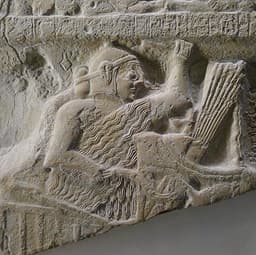
Eannatum
Emperor · Ancient
59.7Total
Basic Information
Born
-340
-2450
Died
-297
-2400
Era
Ancient
Ancient
Nationality
India
Lagash
Occupation
Emperor
Emperor
Civilization
Indian
Middle Eastern
Score Comparison
Military (10%)
76.0
61.7
Political (20%)
74.9
68.0
Influence (20%)
68.0
56.4
Legacy (20%)
65.0
56.0
Leadership (15%)
78.0
68.0
Strategy (15%)
72.0
50.0
TOTAL
71.0
59.7
Chandragupta Maurya — Complete Timeline
321 BC
Overthrow of the Nanda DynastyPolitical Action
Chandragupta Maurya, with guidance from Chanakya, led a rebellion against the Nanda Empire in Magadha. He defeated the Nanda forces and established the Maurya Empire, marking the beginning of a unified Indian state.
Maurya EmpireNandaChanakya
Impact: regional
320 BC
Unification of Northern IndiaWar◆ Major
Chandragupta Maurya conquered the kingdoms of northern India, including the Punjab and the Gangetic plain. He consolidated these territories into a centralized empire with its capital at Pataliputra, controlling most of the Indian subcontinent.
UnificationNorthern IndiaMaurya Empire
Impact: regional
Establishment of the Mauryan AdministrationReform◆ Major
Chandragupta Maurya implemented a centralized administrative system based on the Arthashastra, with a bureaucracy, taxation, and a standing army. This system enabled effective governance of the vast empire and influenced later Indian states.
AdministrationArthashastraCentralization
Impact: regionalconstructive
305 BC
Conquest of the Indus ValleyWar◆ Major
Chandragupta Maurya fought against Seleucus I Nicator, a successor of Alexander the Great, in the Indus Valley. The war ended with a treaty in which Seleucus ceded territories including Arachosia and Gedrosia, and gave his daughter in marriage.
Seleucid EmpireIndus ValleyTreaty
Impact: regional
298 BC
Conversion to JainismCultural
Chandragupta Maurya converted to Jainism and abdicated his throne. He spent his final years as an ascetic at Shravana Belgola, following Jain practices of fasting and meditation until his death.
JainismAsceticismAbdication
Impact: regional
Eannatum — Complete Timeline
2450 BC
Victory over Umma at the Boundary CanalWar◆ Major
Eannatum defeated the forces of Umma in a battle near the boundary canal between Lagash and Umma. The victory was commemorated on the Stele of the Vultures, which shows vultures carrying away the heads of the defeated. This established Lagash's dominance over Umma.
BattleUmmaLagash
Creation of the Stele of the VulturesCultural
Eannatum, king of Lagash, commissioned the Stele of the Vultures, the first known historical document. The stele depicts his victory over Umma and records the boundary treaty between the two city-states. It is a key source for early Sumerian warfare and diplomacy.
Historical DocumentSteleSumerian Art
Impact: global
2440 BC
Subjugation of Elam and SubartuWar
Eannatum campaigned against Elam and Subartu, extending Lagash's influence beyond Sumer. Inscriptions record his victories and the tribute he exacted from these regions. This expansion made Lagash a major power in Mesopotamia during his reign.
Military CampaignElamSubartu
Impact: regional
This comparison has not been analyzed yet.
One-time AI generation (~1 minute). Scores and timeline are already available below.
Rankings
🥇
Chandragupta MauryaLeader
Mil: 76.0Pol: 74.9Inf: 68.0
71.0
🥈
Eannatum
Mil: 61.7Pol: 68.0Inf: 56.4
59.7
+11.3 behind
How This Comparison Works
Algorithm
Each figure is scored on 6 dimensions (0—100 scale) based on structured historical data: Military (10%), Political (20%), Influence (20%), Legacy (20%), Leadership (15%), Strategy (15%). The weighted total produces the final ranking.
Data Sources
Scores are computed from structured sub-indicators in the database. Scale factors adjust for era (Ancient ×0.85, Modern ×1.0) and civilization size (Eastern ×1.05, Other ×0.80) to account for differences in population and military scale.
Maximum 3 Figures
Comparisons are limited to 2—3 figures to ensure readability and statistical meaningfulness.
Error Margins
±5 points per dimension — Sub-scores are derived from historical records with inherent uncertainty. Two figures within 5 points on a dimension should be considered roughly equivalent in that area.
Total Score Accuracy
±3 points overall — The weighted combination of 6 dimensions produces a total score with approximately ±3 points of uncertainty. Differences of less than 3 points are not statistically significant— the figures are effectively tied.
Known Limitations
- Historical records are incomplete and uneven across civilizations
- Figures from oral-tradition societies may be underrepresented
- Occupation labels can misclassify multi-role figures
- Scores measure capability and impact, not moral character
- Quantitative scoring is a comparison tool, not absolute truth
Capability Radar
Military (10%) — Battles & Warfare
Battles
85
65
Win Rate
90
70
Expansion
92
60
Political (20%) — Governance & Reform
Reform
85
45
Diplomacy
80
50
Economy
78
40
Influence (20%) — Cultural & Global Reach
Cultural
75
55
Global
70
45
Legacy (20%) — Historical Impact
Historical
85
70
Longevity
80
60
Leadership (15%) — Power & Stability
Tenure
75
55
Stability
70
50
Strategy (15%) — Tactics & Innovation
Strategy
88
65
Tactics
80
60
Reform
82
40
Similar Comparisons
Comments & Discussion
No comments yet. Be the first to share your thoughts!