Loading...
Chandragupta Maurya vs Seongdeok of Silla
Chandragupta Maurya leads by 17.3 pts · 2 figures compared
…
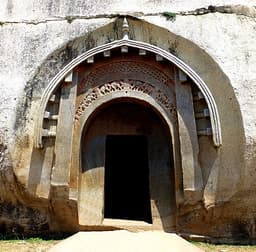
Chandragupta Maurya
Emperor · Ancient
71.0Total

Seongdeok of Silla
Emperor · Ancient
53.7Total
Basic Information
Born
-340
-691
Died
-297
—
Era
Ancient
Ancient
Nationality
India
Korea
Occupation
Emperor
Emperor
Civilization
Indian
Eastern
Score Comparison
Military (10%)
76.0
50.0
Political (20%)
74.9
45.0
Influence (20%)
68.0
58.0
Legacy (20%)
65.0
49.2
Leadership (15%)
78.0
72.0
Strategy (15%)
72.0
43.7
TOTAL
71.0
53.7
Chandragupta Maurya — Complete Timeline
321 BC
Overthrow of the Nanda DynastyPolitical Action
Chandragupta Maurya, with guidance from Chanakya, led a rebellion against the Nanda Empire in Magadha. He defeated the Nanda forces and established the Maurya Empire, marking the beginning of a unified Indian state.
Maurya EmpireNandaChanakya
Impact: regional
320 BC
Unification of Northern IndiaWar◆ Major
Chandragupta Maurya conquered the kingdoms of northern India, including the Punjab and the Gangetic plain. He consolidated these territories into a centralized empire with its capital at Pataliputra, controlling most of the Indian subcontinent.
UnificationNorthern IndiaMaurya Empire
Impact: regional
Establishment of the Mauryan AdministrationReform◆ Major
Chandragupta Maurya implemented a centralized administrative system based on the Arthashastra, with a bureaucracy, taxation, and a standing army. This system enabled effective governance of the vast empire and influenced later Indian states.
AdministrationArthashastraCentralization
Impact: regionalconstructive
305 BC
Conquest of the Indus ValleyWar◆ Major
Chandragupta Maurya fought against Seleucus I Nicator, a successor of Alexander the Great, in the Indus Valley. The war ended with a treaty in which Seleucus ceded territories including Arachosia and Gedrosia, and gave his daughter in marriage.
Seleucid EmpireIndus ValleyTreaty
Impact: regional
298 BC
Conversion to JainismCultural
Chandragupta Maurya converted to Jainism and abdicated his throne. He spent his final years as an ascetic at Shravana Belgola, following Jain practices of fasting and meditation until his death.
JainismAsceticismAbdication
Impact: regional
Seongdeok of Silla — Complete Timeline
702 AD
Period of peace and prosperityOther◆ Major
Seongdeok's reign was marked by internal peace and economic prosperity. He maintained stable relations with Tang China and focused on domestic development, including agricultural improvements and infrastructure projects, leading to a flourishing of Silla culture.
PeaceProsperitySilla
Impact: nationalconstructive
710 AD
Promotion of Buddhist scholarshipCultural
Seongdeok supported the translation of Buddhist scriptures and the training of monks. He invited renowned scholars from China and sponsored the publication of sutras, contributing to the intellectual and spiritual development of Silla Buddhism.
BuddhismScholarshipSilla
Impact: nationalconstructive
751 AD
Construction of Seokguram GrottoCultural◆ Major
King Seongdeok commissioned the construction of the Seokguram Grotto, a Buddhist cave temple near Gyeongju. The grotto features a large granite Buddha statue and intricate reliefs, representing the pinnacle of Silla Buddhist art and architecture.
ArtBuddhismSilla
Impact: regionalconstructive
Construction of Bulguksa TempleCultural◆ Major
Seongdeok initiated the construction of Bulguksa Temple, a major Buddhist complex in Gyeongju. The temple, with its stone pagodas and wooden halls, became a symbol of Silla's Buddhist faith and royal patronage, and is now a UNESCO World Heritage site.
TempleBuddhismSilla
Impact: regionalconstructive
Expert Analysis
Origins
Chandragupta Maurya (c. 340–298 BCE) was born into humble circumstances in the Magadha region of eastern India. Ancient sources, including the Mudrarakshasa, suggest he was orphaned and raised by a cowherd, later meeting the Brahmin strategist Chanakya (also known as Kautilya). Chanakya recognized his potential and groomed him for leadership, providing education at Takshashila. In contrast, Seongdeok of Silla (r. 702–737 CE) was born into royalty as the son of King Sinmun of the Silla Kingdom, which had already unified the Korean peninsula under the Unified Silla period. His upbringing was steeped in Buddhist and Confucian scholarship, preparing him for a reign focused on cultural and religious development rather than military conquest.
Rise to Power
Chandragupta's rise was marked by rebellion and warfare. Around 322 BCE, with Chanakya's guidance, he overthrew the Nanda Dynasty, which controlled a vast empire in northern India. He then expanded westward, defeating the Greek satraps left by Alexander the Great. The decisive campaign against Seleucus I Nicator in 305 BCE ended with a treaty: Seleucus ceded the Indus Valley, Gandhara, and parts of Afghanistan, receiving 500 war elephants in return. Chandragupta's military prowess scored 76.0. Seongdeok, however, ascended the throne peacefully in 702 CE after the death of his father. His reign faced no major external threats; Unified Silla enjoyed stable relations with Tang China. His rise was smooth, relying on diplomatic skills and administrative continuity, reflected in his political score of 45.0.
Leadership & Governance
Chandragupta established a centralized, autocratic empire governed by the Arthashastra, a treatise on statecraft attributed to Chanakya. He created a bureaucracy of ministers, spies, and a standing army, with provinces divided into districts. Taxation was heavy but systematic, funding a large military and public works. His leadership score of 78.0 indicates a firm, directive style. Seongdeok, by contrast, led through patronage and moral suasion. He focused on cultural flourishing, commissioning the Bulguksa Temple (begun in 751 CE) and the Seokguram Grotto (completed after his death). These projects reflected his devotion to Buddhism and his strategy of legitimizing rule through religion. His leadership score of 72.0 reflects a more collaborative, inspirational approach, but his governance lacked the administrative innovations of Chandragupta.
Triumph & Tragedy
Chandragupta's greatest triumph was unifying nearly all of the Indian subcontinent for the first time, creating an empire that stretched from the Bay of Bengal to the Hindu Kush. His treaty with Seleucus secured India's northwestern borders and established diplomatic ties with the Hellenistic world. However, his later years saw tragedy: he abdicated the throne to become a Jain ascetic, traditionally starving himself to death at Shravana Belgola. This renunciation may indicate a personal crisis or adherence to Jain doctrines. Seongdeok's triumphs were cultural: the Seokguram Grotto and Bulguksa Temple became UNESCO World Heritage sites, embodying Silla's golden age. Yet his reign left no significant political or military legacy; his scores in military (50.0) and strategy (43.7) are low. The lack of major conflicts may be seen as a missed opportunity for territorial expansion, but it also ensured peace.
Character & Destiny
Chandragupta was ambitious, ruthless, and pragmatic. He embraced Chanakya's realpolitik, using spies and assassination when needed. His conversion to Jainism suggests a later turn toward asceticism, perhaps seeking redemption. His destiny was to build an empire that would last for over a century. Seongdeok was pious, cultured, and peaceable. He prioritized art and religion over warfare, earning him a reputation as a benevolent ruler. His destiny was to preside over a period of stability, but his kingdom's vulnerability would later be exposed by invasions from the Khitan and Mongols. Historical assessments contrast Chandragupta's transformative impact with Seongdeok's consolidating role.
Legacy
Chandragupta's legacy is monumental: he founded the Maurya Empire, which under his grandson Ashoka would spread Buddhism across Asia. His administrative systems influenced later Indian empires. The Arthashastra remains a classic of political thought. His overall score of 71.0 reflects this broad impact. Seongdeok's legacy is more localized. The Seokguram Grotto and Bulguksa Temple are iconic symbols of Korean Buddhist art, but his political influence waned after Silla's fall in 935 CE. His legacy score of 49.2 indicates limited global impact. However, his cultural contributions continue to inspire.
Conclusion
Chandragupta Maurya had a greater impact on world history than Seongdeok of Silla. His unification of India, military conquests (scoring 76.0), and administrative innovations created a template for imperial rule that affected millions. Seongdeok's peaceful reign and cultural patronage, while valuable, did not alter the course of history beyond Korea. Chandragupta's total score of 71.0 versus Seongdeok's 53.7 reflects his broader significance. Thus, Chandragupta emerges as the more consequential figure.
Rankings
🥇
Chandragupta MauryaLeader
Mil: 76.0Pol: 74.9Inf: 68.0
71.0
🥈
Seongdeok of Silla
Mil: 50.0Pol: 45.0Inf: 58.0
53.7
+17.3 behind
How This Comparison Works
Algorithm
Each figure is scored on 6 dimensions (0—100 scale) based on structured historical data: Military (10%), Political (20%), Influence (20%), Legacy (20%), Leadership (15%), Strategy (15%). The weighted total produces the final ranking.
Data Sources
Scores are computed from structured sub-indicators in the database. Scale factors adjust for era (Ancient ×0.85, Modern ×1.0) and civilization size (Eastern ×1.05, Other ×0.80) to account for differences in population and military scale.
Maximum 3 Figures
Comparisons are limited to 2—3 figures to ensure readability and statistical meaningfulness.
Error Margins
±5 points per dimension — Sub-scores are derived from historical records with inherent uncertainty. Two figures within 5 points on a dimension should be considered roughly equivalent in that area.
Total Score Accuracy
±3 points overall — The weighted combination of 6 dimensions produces a total score with approximately ±3 points of uncertainty. Differences of less than 3 points are not statistically significant— the figures are effectively tied.
Known Limitations
- Historical records are incomplete and uneven across civilizations
- Figures from oral-tradition societies may be underrepresented
- Occupation labels can misclassify multi-role figures
- Scores measure capability and impact, not moral character
- Quantitative scoring is a comparison tool, not absolute truth
Capability Radar
Military (10%) — Battles & Warfare
Battles
85
15
Win Rate
90
20
Expansion
92
15
Political (20%) — Governance & Reform
Reform
85
60
Diplomacy
80
70
Economy
78
65
Influence (20%) — Cultural & Global Reach
Cultural
75
70
Global
70
40
Legacy (20%) — Historical Impact
Historical
85
60
Longevity
80
55
Leadership (15%) — Power & Stability
Tenure
75
65
Stability
70
75
Strategy (15%) — Tactics & Innovation
Strategy
88
25
Tactics
80
20
Reform
82
10
Similar Comparisons
Comments & Discussion
No comments yet. Be the first to share your thoughts!