Loading...
Cecil Rhodes vs Julius Caesar
Julius Caesar leads by 20.2 pts · 2 figures compared
…
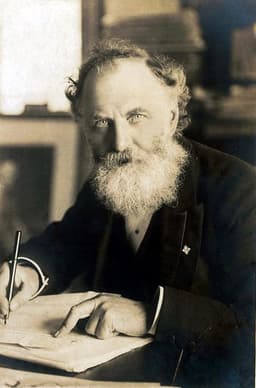
Cecil Rhodes
Politician · Modern
62.6Total

Julius Caesar
General · Ancient
82.8Total
Basic Information
Born
1853
-100
Died
1902
-44
Era
Modern
Ancient
Nationality
United Kingdom
Roman Republic
Occupation
Politician
General
Civilization
Western
Western
Score Comparison
Military (10%)
50.0
88.0
Political (20%)
72.0
78.0
Influence (20%)
72.0
85.0
Legacy (20%)
55.0
82.0
Leadership (15%)
64.0
80.0
Strategy (15%)
54.1
85.0
TOTAL
62.6
82.8
Cecil Rhodes — Complete Timeline
1888 AD
Founding of De Beers Mining CompanyPolitical Action◆ Major
Cecil Rhodes consolidated diamond mining operations in Kimberley, South Africa, into De Beers Consolidated Mines. The company gained near-monopoly control over the global diamond supply, generating immense wealth for Rhodes and funding his imperial ambitions.
Diamond IndustryMonopolyEconomic Imperialism
Impact: global
1890 AD
Founding of RhodesiaPolitical Action◆ Major
Rhodes's British South Africa Company sent the Pioneer Column into Mashonaland, establishing Fort Salisbury (Harare). This led to the colonization of the territory later named Rhodesia, which became a British colony and later a white-ruled state.
ColonialismSouthern AfricaImperialism
Impact: regionaldestructive
1895 AD
Jameson RaidWar◆ Major
Rhodes orchestrated the Jameson Raid, an armed incursion into the Transvaal Republic led by Leander Starr Jameson. The raid failed, causing a political scandal that forced Rhodes to resign as Prime Minister of the Cape Colony and damaged British relations with the Boers.
Boer WarImperialismPolitical Scandal
Impact: regionaldestructive
1899 AD
Siege of KimberleyWar◆ Major
During the Second Boer War, Rhodes was trapped in Kimberley during a 124-day siege by Boer forces. His presence and demands for relief caused friction with British military commanders, but the siege ended with the relief of Kimberley in February 1900.
Boer WarSiegeMilitary History
Impact: regional
1902 AD
Establishment of the Rhodes ScholarshipCultural◆ Major
Rhodes's will established the Rhodes Scholarship program, funding students from British colonies, the United States, and Germany to study at Oxford University. The program aimed to promote international understanding and Anglo-Saxon leadership, and continues to operate.
EducationScholarshipLegacy
Impact: globalconstructive
Julius Caesar — Complete Timeline
58 BC
Gallic WarsWar◆ Major
Caesar, as proconsul of Gaul, launched a series of campaigns that conquered all of Gaul (modern France, Belgium, and parts of Switzerland). He fought numerous battles, including against the Helvetii, the Belgae, and the Gallic chieftain Vercingetorix. The wars brought immense wealth and a loyal army to Caesar.
Gallic WarsConquestRoman Expansion
Impact: regional
49 BC
Crossing the RubiconPolitical Action◆ Major
Caesar led Legio XIII across the Rubicon River into Italy, defying the Roman Senate's order to disband his army. This act triggered a civil war against Pompey and the Optimates, ultimately leading to Caesar's dictatorship and the end of the Roman Republic.
Roman Civil WarEnd of RepublicPower Struggle
Impact: global
48 BC
Battle of PharsalusWar◆ Major
Caesar's outnumbered army defeated the larger forces of Pompey the Great at Pharsalus in Greece. Caesar's tactical use of a reserve line to counter Pompey's cavalry charge proved decisive. Pompey fled to Egypt, where he was assassinated, leaving Caesar as the undisputed master of the Roman world.
Roman Civil WarBattleDecisive Victory
Impact: regional
44 BC
Appointment as Dictator for LifePolitical Action◆ Major
The Roman Senate appointed Caesar dictator perpetuo (dictator for life), granting him unprecedented personal power. This move concentrated military, legislative, and judicial authority in one person, effectively ending the Roman Republic's traditional system of checks and balances and alarming many senators.
DictatorshipEnd of RepublicPower Consolidation
Impact: regionaldestructive
Assassination on the Ides of MarchPolitical Action◆ Major
A group of Roman senators, led by Marcus Junius Brutus and Gaius Cassius Longinus, stabbed Caesar to death at a meeting of the Senate in the Theatre of Pompey. The assassination was intended to restore the Republic, but instead triggered another civil war that led to the rise of the Roman Empire.
AssassinationRoman PoliticsEnd of Republic
Impact: globaldestructive
Expert Analysis
cecil-rhodes-vs-julius-caesar
### The Crossing and the Charter
History rarely offers a more jarring juxtaposition than two men who both sought to redraw the world in their image, yet achieved it through utterly different means. One crossed a river with a legion, defied a senate, and changed the course of Western civilization in a single, irreversible act. The other crossed a continent with a charter, paid for armies with diamonds, and carved a piece of Africa into his own personal dominion. Julius Caesar and Cecil Rhodes: one a general who became a state, the other a businessman who became an empire. Why did one end with a knife in the Senate chamber, and the other with a university scholarship bearing his name? The answer lies not just in their ambitions, but in the very different worlds they sought to conquer.
### Origins
Caesar was born into the chaos of the late Roman Republic, a world of crumbling aristocratic norms and brutal civil wars. His patrician family was ancient but poor, and his youth was spent dodging the proscription lists of Sulla. This precariousness forged a man who understood that survival depended on personal brilliance, not inherited status. He learned that in a republic torn by faction, the only safety was in power.
Rhodes was born in 1853, the son of a Hertfordshire vicar, into a Victorian Britain at the zenith of its industrial and imperial power. His world was not one of collapsing republics, but of expanding empires. Frail and asthmatic, he was sent to South Africa for his health, a land where a young man with nerve could carve a fortune from the earth. His origins taught him that the world was a map to be colored, and that the British Empire was the highest expression of human civilization. For Caesar, power was a personal necessity; for Rhodes, it was a racial and national duty.
### Rise to Power
Caesar’s ascent was a masterclass in political and military risk. He climbed the *cursus honorum*—quaestor, aedile, praetor—borrowing vast sums to fund games and win popularity. His true leap came with the governorship of Gaul. In eight years of brutal campaigning, he conquered a territory larger than Italy, built a veteran army personally loyal to him, and amassed enough wealth to pay off his debts and buy the loyalty of Rome. He did not inherit power; he conquered it, province by province.
Rhodes rose through consolidation and monopoly. He did not lead armies into battle; he bought mining claims. In 1888, he founded De Beers Consolidated Mines, not by conquest, but by buying out rivals, cornering the diamond market, and using the profits to fund his political ambitions. In 1890, his British South Africa Company sent the Pioneer Column into Mashonaland, establishing Fort Salisbury and founding Rhodesia. Where Caesar crossed the Rubicon, Rhodes signed a charter. His power was not the power of the sword, but of the checkbook—backed, of course, by the implicit threat of the British Army.
### Leadership & Governance
Caesar governed as a revolutionary reformer. As dictator, he overhauled the calendar, reformed debt laws, extended citizenship to Gauls, and began public works that would have transformed Rome. His military genius was intuitive—he wrote his own commentaries, turning his campaigns into legend. But his political wisdom was flawed. He pardoned his enemies, only to have them kill him. He believed his personal charisma could dissolve the hatred of the Senate. It could not.
Rhodes governed as a corporate CEO. In Rhodesia, his rule was efficient and ruthless, designed for extraction, not integration. He built railways and telegraphs, but he also imposed a system of racial segregation and dispossession that would echo for a century. His political acumen was in negotiation and manipulation, not public reform. He was a strategist of capital, not of battle. When he orchestrated the Jameson Raid in 1895, a botched invasion of the Transvaal, it was a disaster—exposing his schemes and forcing his resignation as Prime Minister of the Cape Colony. He had overreached, not like Caesar on a battlefield, but in a boardroom.
### Triumph & Tragedy
Caesar’s greatest moment was his triumph over Gaul and his victory in the civil war. He stood at the apex of the world. His tragedy was the Ides of March, 44 BCE. He had failed to understand that the Republic was more than a name—it was a network of resentments, and his dictatorship for life was the final provocation. He died not in battle, but at the feet of a statue of his rival, Pompey.
Rhodes’s greatest moment was the founding of Rhodesia and the consolidation of De Beers. He had turned a desert into a fortune. His tragedy was the Siege of Kimberley during the Second Boer War, from 1899 to 1900. The man who had built an empire was trapped in a town, helpless, his diamonds worthless against Boer artillery. He emerged, but his health was broken. He died in 1902, at 48, still dreaming of a Cape-to-Cairo railway that never came.
### Character & Destiny
Caesar was a man of immense personal charm, literary brilliance, and a gambler’s soul. He believed in his own star. That belief drove him to the top, but it also blinded him to the daggers in the Senate. He could forgive his enemies, but he could not imagine that they would not forgive him.
Rhodes was a man of vision, but it was a cold, administrative vision. He was not a lover of men, but of maps. His personality was that of a builder, not a warrior. He did not die by assassination, but by heart failure. His destiny was not a dramatic fall, but a slow, imperial decay. He left behind a university, not a civil war.
### Legacy
Caesar’s legacy is the Roman Empire. His name became a title—Kaiser, Tsar. He changed the calendar, the language, and the political DNA of the West. He is remembered as both a tyrant and a genius, a man who destroyed a republic and built a world.
Rhodes’s legacy is more contested. Rhodesia became Zimbabwe, and his statue was toppled. The Rhodes Scholarship endures, funding future leaders, but his name is now a symbol of colonial arrogance. He built no empire that outlasted the century. His legacy is a question: what does it mean to have carved a nation from a continent?
### Conclusion
Caesar and Rhodes both sought to impose their will on history. One used the sword, the other used the share. One died in a storm of betrayal, the other in a quiet bed. Their differences are not just of time or place, but of the very nature of power. Caesar’s power was personal, immediate, and bloody. Rhodes’s power was institutional, financial, and bureaucratic. In the end, the general’s legacy became a legend, while the businessman’s became a debate. The Rubicon and the charter—both changed the world, but only one crossed into eternity.
Rankings
🥇
Julius CaesarLeader
Mil: 88.0Pol: 78.0Inf: 85.0
82.8
🥈
Cecil Rhodes
Mil: 50.0Pol: 72.0Inf: 72.0
62.6
+20.2 behind
How This Comparison Works
Algorithm
Each figure is scored on 6 dimensions (0—100 scale) based on structured historical data: Military (10%), Political (20%), Influence (20%), Legacy (20%), Leadership (15%), Strategy (15%). The weighted total produces the final ranking.
Data Sources
Scores are computed from structured sub-indicators in the database. Scale factors adjust for era (Ancient ×0.85, Modern ×1.0) and civilization size (Eastern ×1.05, Other ×0.80) to account for differences in population and military scale.
Maximum 3 Figures
Comparisons are limited to 2—3 figures to ensure readability and statistical meaningfulness.
Error Margins
±5 points per dimension — Sub-scores are derived from historical records with inherent uncertainty. Two figures within 5 points on a dimension should be considered roughly equivalent in that area.
Total Score Accuracy
±3 points overall — The weighted combination of 6 dimensions produces a total score with approximately ±3 points of uncertainty. Differences of less than 3 points are not statistically significant— the figures are effectively tied.
Known Limitations
- Historical records are incomplete and uneven across civilizations
- Figures from oral-tradition societies may be underrepresented
- Occupation labels can misclassify multi-role figures
- Scores measure capability and impact, not moral character
- Quantitative scoring is a comparison tool, not absolute truth
Capability Radar
Military (10%) — Battles & Warfare
Battles
15
95
Win Rate
20
92
Expansion
60
97
Political (20%) — Governance & Reform
Reform
30
90
Diplomacy
65
85
Economy
80
82
Influence (20%) — Cultural & Global Reach
Cultural
40
88
Global
65
94
Legacy (20%) — Historical Impact
Historical
70
95
Longevity
60
96
Leadership (15%) — Power & Stability
Tenure
55
75
Stability
20
60
Strategy (15%) — Tactics & Innovation
Strategy
25
94
Tactics
10
96
Reform
5
88
Similar Comparisons
Comments & Discussion
SenateSlayer6/17/2026
Caesar crossed the Rubicon with 5,000 loyal legionaries—Rhodes crossed the Kalahari with a checkbook and a railroad charter. One gambled his life on a single military decision; the other gambled other people's lives on mineral rights. Comparing them buries the critical difference: Caesar was accountable to his men, Rhodes to shareholders. That's why one got daggers, the other a statue in Cape Town. Accountability changes everything.
战史拆解员6/17/2026
凯撒跨过卢比孔河只带了一个军团,五千人就敢赌命。罗德斯呢?他跨过卡拉哈里靠的是采矿特许状和英国步枪。看上去都是征服者,但本质天差地别——凯撒的剑是他自己的血换来的,罗德斯的钻石是别人的命挖出来的。一个最终死在元老院的地板上,一个死在了自己的庄园里。结果已经说明一切了。
ClassicalWreck6/17/2026
Let's be honest: Rhodes was a colonial CEO with delusions of grandeur, not a second Caesar. Caesar personally led his troops into Gaul and Britain, wrote his own commentaries, reformed the calendar, and survived a shipwreck swimming to shore with his war chest. Rhodes ran a diamond monopoly from his London office and picked fights with African chiefs. Comparing them flatters Rhodes more than it illuminates Caesar. History needs fewer "Napoleon of finance" myths.
数史论衡6/17/2026
数据不会说谎。凯撒在高卢八年打了大小战役不下三十场,亲自指挥的伤亡比例从未超过一成。罗德斯在南非呢?主导了一次詹姆森突袭,失败后灰头土脸辞职。从死亡率、亲征率到战略纵深,罗德斯连凯撒的副将都比不上。把资本家包装成征服者,是十九世纪宣传机器的遗产,不是历史判断。该拆穿这个比喻了。