Loading...
Cato the Elder vs Zigong
Cato the Elder leads by 6.1 pts · 2 figures compared
…
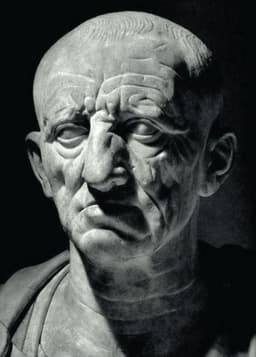
Cato the Elder
Politician · Ancient
63.0Total

Zigong
Politician · Ancient
56.9Total
Basic Information
Born
-234
-520
Died
-149
-456
Era
Ancient
Ancient
Nationality
Roman Republic
China
Occupation
Politician
Politician
Civilization
Western
Eastern
Score Comparison
Military (10%)
45.0
43.0
Political (20%)
55.0
68.0
Influence (20%)
68.0
56.4
Legacy (20%)
68.0
56.0
Leadership (15%)
72.0
55.3
Strategy (15%)
54.3
60.0
TOTAL
63.0
56.9
Cato the Elder — Complete Timeline
195 BC
Consulship and Campaign in SpainWar
Cato served as consul and led a campaign in Hispania Citerior, suppressing a rebellion. He used harsh tactics, including mass executions, to pacify the region, and later boasted of his victories in his writings.
Military campaignSpanish wars
Impact: regionaldestructive
184 BC
Censorship and Moral ReformsReform◆ Major
Cato the Elder served as censor, implementing strict moral reforms to combat luxury and corruption. He expelled senators for immorality, taxed luxury goods, and promoted traditional Roman values, earning the nickname 'Censorius'.
CensorshipMoral reform
Impact: nationalconstructive
168 BC
Publication of 'Origines'Cultural◆ Major
Cato wrote 'Origines', the first history of Rome in Latin. The work covered the founding of Rome and the early Republic, emphasizing Roman virtues and the importance of agriculture, and influenced later Roman historiography.
LiteratureHistoriography
Impact: nationalconstructive
155 BC
Opposition to HellenizationPolitical Action
Cato opposed the influence of Greek culture on Rome, arguing it undermined Roman values. He led a campaign to expel Greek philosophers from Rome and promoted traditional Roman education and customs.
Cultural conflictConservatism
Impact: national
153 BC
Campaign for the Destruction of CarthagePolitical Action◆ Major
Cato ended every speech in the Senate with 'Carthago delenda est' (Carthage must be destroyed). His persistent advocacy for war against Carthage influenced Roman policy and contributed to the outbreak of the Third Punic War.
Foreign policyImperialism
Impact: globaldestructive
Zigong — Complete Timeline
500 BC
Became a disciple of ConfuciusCultural◆ Major
Zigong, originally a merchant, became one of Confucius's most prominent disciples. He was known for his eloquence and skill in diplomacy, and Confucius praised his ability in statecraft, though he also criticized his tendency toward cleverness over virtue.
ConfucianismEducationPhilosophy
Impact: nationalconstructive
484 BC
Diplomatic mission to save LuPolitical Action◆ Major
When the state of Lu was threatened by Qi, Zigong traveled to the courts of Qi, Wu, Yue, and Jin, persuading them to alter their alliances. His diplomacy diverted Qi's attack and preserved Lu's independence, demonstrating his influence as a diplomat.
DiplomacyInterstate RelationsConfucian Disciple
Impact: regionalconstructive
480 BC
Accumulated great wealth as a merchantOther
Zigong engaged in trade between states, amassing a fortune that made him one of the wealthiest men of his time. His wealth allowed him to travel with large retinues and entertain rulers, enhancing his political influence and enabling him to promote Confucian ideas.
CommerceWealthConfucianism
Impact: nationalconstructive
470 BC
Served as a minister in Lu and WeiPolitical Action
Zigong held high office in both Lu and Wei, implementing policies that reflected Confucian principles of good governance. His administrative career was marked by efforts to maintain peace and order, though his tenure was not without political challenges.
Government ServiceConfucianismAdministration
constructive
Expert Analysis
Origins
Cato the Elder (234–149 BCE) was born into a plebeian family in Tusculum, a Latin town near Rome. His father was a farmer, and Cato grew up working the land, which instilled in him a lifelong disdain for luxury and Greek sophistication. He began his public career as a military tribune and later served as quaestor, gaining exposure to Roman administration. His early mentor, Lucius Valerius Flaccus, helped him enter the senatorial class.
Zigong (520–456 BCE), born Duanmu Ci, hailed from the state of Wei during the Spring and Autumn period. Unlike Cato, he came from a merchant family and initially engaged in trade, amassing wealth. He later became a disciple of Confucius, studying under the master at a relatively young age. Confucius praised his eloquence but criticized his tendency to overreach. Zigong's education in Confucian ethics shaped his later diplomatic and political career.
Rise to Power
Cato's rise was marked by his reputation for moral rigor and anti-Greek sentiment. He became consul in 195 BCE, suppressing a rebellion in Hispania Citerior with brutal efficiency—mass executions and enslavement pacified the province. His censorship in 184 BCE defined his career: he expelled senators for indecency, taxed luxury goods heavily, and launched public works. His slogan "Carthago delenda est" (Carthage must be destroyed) became his trademark, repeated in every Senate speech until his death.
Zigong's rise came through diplomacy. In 484 BCE, when Qi threatened Lu, Confucius tasked Zigong with a mission to prevent war. Traveling to Qi, Wu, Yue, and Jin, he convinced each state to alter its alliances, ultimately saving Lu without battle. His wealth, gained from trade, allowed him to travel with retinues and bribe officials. He later served as minister in Lu and Wei, implementing Confucian policies like reducing taxes and promoting education.
Leadership & Governance
Cato's leadership was authoritarian and conservative. As censor, he targeted Roman nobles for wearing too much jewelry or owning Greek statues. He imposed heavy taxes on luxury items and forced the construction of Rome's first basilica (the Basilica Porcia) using public funds. His military campaign in Spain was harsh: he executed 300 tribal leaders and sold thousands into slavery. He opposed the repeal of the Oppian Law, which restricted women's use of luxury goods.
Zigong's governance was diplomatic and pragmatic. He advised rulers to lead by moral example, echoing Confucius. In Lu, he reduced corvée labor and stabilized grain prices. His diplomacy relied on persuasion and bribery, not force. However, he was criticized for being too shrewd and profit-minded. Confucius once said Zigong was like a sacrificial vessel—valuable but ornate. Zigong's wealth gave him influence, but he never held supreme power like Cato.
Triumph & Tragedy
Cato's greatest triumph was his moral censorship, which temporarily curbed corruption and reinforced traditional Roman values. His campaign against Carthage succeeded posthumously—Rome destroyed Carthage in 146 BCE, partly due to his relentless agitation. His tragedy was his failure to stop Hellenization; Greek culture continued to permeate Rome. His historical work 'Origines' was influential but mostly lost, limiting his legacy.
Zigong's triumph was his diplomatic mission that saved Lu, a feat of strategic persuasion. He also preserved Confucius's teachings after the master's death, helping compile the Analects. His tragedy was his lack of lasting political reforms; his wealth and diplomacy did not prevent the eventual decline of Lu. He died in obscurity, overshadowed by other disciples like Yan Hui.
Character & Destiny
Cato was stubborn, frugal, and xenophobic. His rigid morality made him respected but feared. He opposed Scipio Africanus's leniency toward Greek culture, leading to political feuds. His character ensured his influence but limited his adaptability. Zigong was clever, ambitious, and eloquent. He used his wealth to advance, but Confucius warned he lacked inner virtue. His diplomacy succeeded, but his pragmatism sometimes clashed with Confucian ideals.
Legacy
Cato's legacy is mixed: he shaped Roman conservatism and influenced later figures like Cicero, but his anti-Carthage obsession seems excessive. His scores: Military 45.0, Political 55.0, Influence 68.0, Legacy 68.0, Leadership 72.0, Strategy 54.3, Total 63.0. Zigong's diplomatic model influenced later Chinese statecraft, but his wealth-oriented approach was downplayed by Confucians. His scores: Military 43.0, Political 68.0, Influence 56.4, Legacy 56.0, Leadership 55.3, Strategy 60.0, Total 56.9.
Conclusion
Cato the Elder scored 63.0 total versus Zigong's 56.9, a gap of 6.1 points. Cato's impact on Rome's destruction of Carthage and his moral reforms had tangible historical consequences. Zigong's diplomacy saved one state but lacked systemic change. Cato's legacy in Roman identity and Latin literature outweighs Zigong's role as a Confucian disciple. While Zigong was a skilled operator, Cato's influence on the trajectory of Western history through Rome's dominance gives him the edge. Thus, Cato the Elder had greater historical impact.
Rankings
🥇
Cato the ElderLeader
Mil: 45.0Pol: 55.0Inf: 68.0
63.0
🥈
Zigong
Mil: 43.0Pol: 68.0Inf: 56.4
56.9
+6.1 behind
How This Comparison Works
Algorithm
Each figure is scored on 6 dimensions (0—100 scale) based on structured historical data: Military (10%), Political (20%), Influence (20%), Legacy (20%), Leadership (15%), Strategy (15%). The weighted total produces the final ranking.
Data Sources
Scores are computed from structured sub-indicators in the database. Scale factors adjust for era (Ancient ×0.85, Modern ×1.0) and civilization size (Eastern ×1.05, Other ×0.80) to account for differences in population and military scale.
Maximum 3 Figures
Comparisons are limited to 2—3 figures to ensure readability and statistical meaningfulness.
Error Margins
±5 points per dimension — Sub-scores are derived from historical records with inherent uncertainty. Two figures within 5 points on a dimension should be considered roughly equivalent in that area.
Total Score Accuracy
±3 points overall — The weighted combination of 6 dimensions produces a total score with approximately ±3 points of uncertainty. Differences of less than 3 points are not statistically significant— the figures are effectively tied.
Known Limitations
- Historical records are incomplete and uneven across civilizations
- Figures from oral-tradition societies may be underrepresented
- Occupation labels can misclassify multi-role figures
- Scores measure capability and impact, not moral character
- Quantitative scoring is a comparison tool, not absolute truth
Capability Radar
Military (10%) — Battles & Warfare
Battles
10
38
Win Rate
10
42
Expansion
10
49
Political (20%) — Governance & Reform
Reform
70
10
Diplomacy
60
70
Economy
70
75
Influence (20%) — Cultural & Global Reach
Cultural
70
40
Global
60
30
Legacy (20%) — Historical Impact
Historical
70
50
Longevity
70
60
Leadership (15%) — Power & Stability
Tenure
60
20
Stability
60
30
Strategy (15%) — Tactics & Innovation
Strategy
10
49
Tactics
10
53
Reform
10
55
Similar Comparisons
Comments & Discussion
No comments yet. Be the first to share your thoughts!