Loading...
Cato the Elder vs Huang Ba
Cato the Elder leads by 9.5 pts · 2 figures compared
…
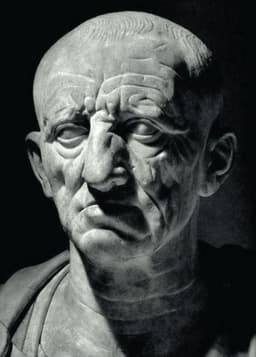
Cato the Elder
Politician · Ancient
63.0Total

Huang Ba
Politician · Ancient
53.5Total
Basic Information
Born
-234
-130
Died
-149
-51
Era
Ancient
Ancient
Nationality
Roman Republic
China
Occupation
Politician
Politician
Civilization
Western
Eastern
Score Comparison
Military (10%)
45.0
26.4
Political (20%)
55.0
72.0
Influence (20%)
68.0
51.8
Legacy (20%)
68.0
44.2
Leadership (15%)
72.0
80.0
Strategy (15%)
54.3
40.3
TOTAL
63.0
53.5
Cato the Elder — Complete Timeline
195 BC
Consulship and Campaign in SpainWar
Cato served as consul and led a campaign in Hispania Citerior, suppressing a rebellion. He used harsh tactics, including mass executions, to pacify the region, and later boasted of his victories in his writings.
Military campaignSpanish wars
Impact: regionaldestructive
184 BC
Censorship and Moral ReformsReform◆ Major
Cato the Elder served as censor, implementing strict moral reforms to combat luxury and corruption. He expelled senators for immorality, taxed luxury goods, and promoted traditional Roman values, earning the nickname 'Censorius'.
CensorshipMoral reform
Impact: nationalconstructive
168 BC
Publication of 'Origines'Cultural◆ Major
Cato wrote 'Origines', the first history of Rome in Latin. The work covered the founding of Rome and the early Republic, emphasizing Roman virtues and the importance of agriculture, and influenced later Roman historiography.
LiteratureHistoriography
Impact: nationalconstructive
155 BC
Opposition to HellenizationPolitical Action
Cato opposed the influence of Greek culture on Rome, arguing it undermined Roman values. He led a campaign to expel Greek philosophers from Rome and promoted traditional Roman education and customs.
Cultural conflictConservatism
Impact: national
153 BC
Campaign for the Destruction of CarthagePolitical Action◆ Major
Cato ended every speech in the Senate with 'Carthago delenda est' (Carthage must be destroyed). His persistent advocacy for war against Carthage influenced Roman policy and contributed to the outbreak of the Third Punic War.
Foreign policyImperialism
Impact: globaldestructive
Huang Ba — Complete Timeline
70 BC
Appointment as Governor of YingchuanPolitical Action◆ Major
Huang Ba was appointed Governor of Yingchuan Commandery. He implemented policies focused on education, agriculture, and reducing crime, earning a reputation as a model of benevolent and effective local governance.
GovernanceReformLocal Administration
Impact: regionalconstructive
68 BC
Implementation of Benevolent PoliciesReform◆ Major
Huang Ba introduced policies to support widows, orphans, and the poor in Yingchuan. He established schools, promoted agriculture, and reduced taxes, leading to a period of prosperity and social stability in the commandery.
Social WelfareEducationAgriculture
Impact: regionalprogressive
55 BC
Appointment as ChancellorPolitical Action◆ Major
Due to his success as a governor, Huang Ba was appointed Chancellor of the Han Empire. He continued his policies of frugality and benevolent governance at the national level, though his tenure was shorter than his local service.
Han CourtChancellorGovernance
Impact: nationalconstructive
Expert Analysis
Origins
Cato the Elder (234–149 BCE) was born into a plebeian family in Tusculum, a Latin town near Rome. His father was a farmer, and Cato grew up working the land, which instilled in him a lifelong disdain for luxury and corruption. He served in the Second Punic War under Quintus Fabius Maximus, gaining military experience. Cato educated himself in law and oratory, becoming a novus homo (new man) who rose through merit rather than noble birth.
Huang Ba (c. 130–50 BCE) was born in Yangxia (modern Henan, China) during the Western Han dynasty. His family was of modest means, but he studied Confucian classics and legal administration. He passed the imperial examinations and began his career as a low-level official. His early posts involved managing granaries and local justice, where he developed a reputation for fairness and efficiency.
Rise to Power
Cato's rise began with his election as quaestor in 204 BCE, followed by aedile and praetor. He gained prominence as a military tribune in the Second Punic War, but his political breakthrough came as consul in 195 BCE. He led a campaign in Hispania Citerior, brutally suppressing a rebellion with mass executions and selling captives into slavery. This victory earned him a triumph. His true power came as censor in 184 BCE, where he aggressively purged the Senate of corrupt members and imposed heavy taxes on luxury goods.
Huang Ba's rise was gradual and based on administrative success. As governor of Yingchuan Commandery (c. 70 BCE), he implemented policies that reduced crime, increased agricultural output, and improved education. His reputation for benevolence reached the imperial court, and Emperor Xuan appointed him Chancellor of the Han Empire in 67 BCE. Huang Ba held this position for over a decade, overseeing the entire bureaucracy.
Leadership & Governance
Cato's leadership was defined by moral rigor and fear of cultural decay. He expelled seven senators for immorality, including Lucius Quinctius Flamininus for killing a condemned man to please a courtesan. He taxed jewelry, carriages, and expensive clothes, and repaired Rome's aqueducts and sewers. His governance was confrontational: he opposed the repeal of the Oppian Law (which limited women's luxury) and fought against the influence of Greek philosophy, famously expelling Greek philosophers from Rome in 155 BCE. His military leadership in Spain was harsh, but effective in quickly subduing rebellion.
Huang Ba governed through persuasion and example. In Yingchuan, he reduced taxes, established schools, and provided aid to widows and orphans. He organized community granaries to prevent famine and mediated disputes without harsh punishments. As Chancellor, he advocated for frugality in the imperial court and promoted officials based on merit. His leadership style was consultative, seeking consensus among ministers. He avoided drastic reforms, focusing on steady improvement.
Triumph & Tragedy
Cato's greatest triumph was his influence on Roman policy toward Carthage. His relentless call for its destruction culminated in the Third Punic War (149–146 BCE), which ended with Carthage's annihilation. His moral reforms as censor set a precedent for conservative Roman values. However, his harshness also created enemies: he was prosecuted numerous times (always acquitted) and his opposition to Hellenization may have stifled cultural exchange. His military campaign in Spain, while successful, involved atrocities that later historians criticized.
Huang Ba's triumph was the peaceful prosperity of Yingchuan, which became a model for Han governance. His policies reduced crime and increased grain production, earning him praise from Emperor Xuan. As Chancellor, he maintained stability during a period of relative peace. His tragedy was his failure to prevent the rise of corrupt eunuchs and court factions after Emperor Xuan's death. He was eventually dismissed from office under Emperor Yuan and died in obscurity, his reforms gradually undone.
Character & Destiny
Cato was rigid, stubborn, and uncompromising. He believed that Roman virtue was under threat from luxury and foreign influence. His character shaped his destiny: his moral absolutism made him a hero to conservatives but a villain to modernizers. He died in 149 BCE, just before Carthage fell, never seeing his greatest goal achieved. His legacy was secured by his writings and political actions.
Huang Ba was patient, humble, and pragmatic. He believed in leading by example and winning hearts. His character made him beloved by common people but less effective in court politics. His downfall came from his inability to navigate imperial intrigue. He died around 50 BCE, largely forgotten until later historians revived his reputation.
Legacy
Cato's legacy is twofold: as a symbol of Roman traditionalism and as the father of Latin prose. His work 'Origines' (now lost except for fragments) was the first history of Rome in Latin, influencing later historians like Livy and Sallust. His phrase 'Carthago delenda est' became a historical byword for persistent advocacy. His moral reforms influenced Roman censors for centuries. In the score system, Cato scores 68.0 in Influence and 68.0 in Legacy.
Huang Ba's legacy is as a model of benevolent governance in Chinese history. His methods were studied by later officials and cited in Confucian texts. However, his impact was limited to his own time; his reforms did not outlast his tenure. His score of 44.2 in Legacy reflects this. He is remembered in local folklore but not as a major historical figure.
Conclusion
Cato the Elder had greater impact due to his role in shaping Roman policy and culture. His advocacy for Carthage's destruction altered the course of Mediterranean history. His moral reforms set a standard for Roman conservatism. Huang Ba, while an effective administrator, operated within a stable system and did not fundamentally change it. Cato's total score of 63.0 versus Huang Ba's 53.5 reflects his broader influence. Cato's aggressive, confrontational style left a deeper mark on history than Huang Ba's gentle benevolence.
Rankings
🥇
Cato the ElderLeader
Mil: 45.0Pol: 55.0Inf: 68.0
63.0
🥈
Huang Ba
Mil: 26.4Pol: 72.0Inf: 51.8
53.5
+9.5 behind
How This Comparison Works
Algorithm
Each figure is scored on 6 dimensions (0—100 scale) based on structured historical data: Military (10%), Political (20%), Influence (20%), Legacy (20%), Leadership (15%), Strategy (15%). The weighted total produces the final ranking.
Data Sources
Scores are computed from structured sub-indicators in the database. Scale factors adjust for era (Ancient ×0.85, Modern ×1.0) and civilization size (Eastern ×1.05, Other ×0.80) to account for differences in population and military scale.
Maximum 3 Figures
Comparisons are limited to 2—3 figures to ensure readability and statistical meaningfulness.
Error Margins
±5 points per dimension — Sub-scores are derived from historical records with inherent uncertainty. Two figures within 5 points on a dimension should be considered roughly equivalent in that area.
Total Score Accuracy
±3 points overall — The weighted combination of 6 dimensions produces a total score with approximately ±3 points of uncertainty. Differences of less than 3 points are not statistically significant— the figures are effectively tied.
Known Limitations
- Historical records are incomplete and uneven across civilizations
- Figures from oral-tradition societies may be underrepresented
- Occupation labels can misclassify multi-role figures
- Scores measure capability and impact, not moral character
- Quantitative scoring is a comparison tool, not absolute truth
Capability Radar
Military (10%) — Battles & Warfare
Battles
10
22
Win Rate
10
24
Expansion
10
25
Political (20%) — Governance & Reform
Reform
70
65
Diplomacy
60
55
Economy
70
70
Influence (20%) — Cultural & Global Reach
Cultural
70
30
Global
60
10
Legacy (20%) — Historical Impact
Historical
70
35
Longevity
70
30
Leadership (15%) — Power & Stability
Tenure
60
60
Stability
60
75
Strategy (15%) — Tactics & Innovation
Strategy
10
31
Tactics
10
32
Reform
10
38
Similar Comparisons
Comments & Discussion
No comments yet. Be the first to share your thoughts!