Loading...
Carlos Manuel de Cespedes vs Daniel Ortega
Daniel Ortega leads by 3.7 pts · 2 figures compared
…
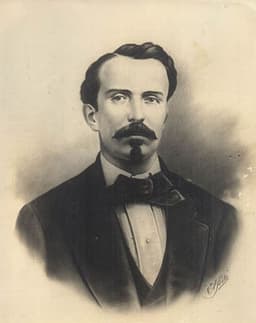
Carlos Manuel de Cespedes
Revolutionary · Modern
44.4Total
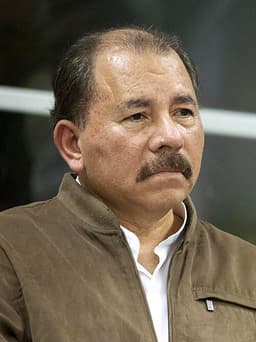
Daniel Ortega
Revolutionary · Modern
48.1Total
Basic Information
Born
1819
1945
Died
1874
—
Era
Modern
Modern
Nationality
Cuba
Nicaragua
Occupation
Revolutionary
Revolutionary
Civilization
Western
Western
Score Comparison
Military (10%)
50.0
45.0
Political (20%)
27.9
42.3
Influence (20%)
58.0
51.0
Legacy (20%)
50.0
42.5
Leadership (15%)
30.0
67.0
Strategy (15%)
36.8
38.6
TOTAL
44.4
48.1
Carlos Manuel de Cespedes — Complete Timeline
1868 AD
Grito de Yara (1868)Political Action
Carlos Manuel de C
IndependenceRevolutionTen Years' War
Impact: nationalprogressive
1869 AD
President of the Republic in Arms (1869)Political Action◆ Major
Céspedes was elected President of the Republic of Cuba in Arms by the Assembly of Guáimaro. He led the rebel government during the early years of the Ten Years' War, advocating for independence and the abolition of slavery. His leadership was marked by internal divisions.
PresidencyRebel GovernmentWar
Impact: national
1873 AD
Deposed and Killed (1873-1874)Political Action◆ Major
Céspedes was deposed as president by the rebel assembly in 1873 due to disagreements over military strategy and political direction. He was killed in a skirmish with Spanish troops in 1874. His death made him a martyr for Cuban independence.
DepositionDeathMartyr
Impact: nationaltragic
Daniel Ortega — Complete Timeline
1979 AD
Sandinista RevolutionWar
Ortega was a key commander in the Sandinista National Liberation Front (FSLN) that overthrew the Somoza dictatorship. The revolution ended decades of authoritarian rule and established a socialist-oriented government, with Ortega becoming a member of the ruling junta.
RevolutionSandinistaSomoza
Impact: nationalconstructive
1984 AD
Election as President of NicaraguaPolitical Action◆ Major
Ortega was elected president in Nicaragua's first democratic election after the revolution, winning 67% of the vote. His government faced a US-backed Contra war and implemented land reform, literacy campaigns, and social programs.
ElectionSandinistaSocial Reform
Impact: nationalconstructive
1990 AD
Electoral defeat and transition of powerPolitical Action◆ Major
Ortega lost the presidential election to Violeta Chamorro, marking the first peaceful transfer of power in Nicaragua's history. The defeat ended 11 years of Sandinista rule and was a result of war fatigue and economic crisis.
ElectionDefeatDemocracy
Impact: national
2007 AD
Return to presidencyPolitical Action◆ Major
Ortega was re-elected president after 17 years in opposition, winning 38% of the vote. His return marked a shift toward authoritarianism, as he consolidated power, controlled the judiciary, and suppressed political opposition.
ElectionReturnAuthoritarianism
Impact: national
2018 AD
2018 protests and crackdownPolitical Action◆ Major
Mass protests erupted against Ortega's government over social security reforms, which were later withdrawn. The government responded with a violent crackdown, resulting in hundreds of deaths and thousands of arrests, leading to international condemnation.
ProtestsRepressionHuman Rights
Impact: nationaldestructive
Expert Analysis
Carlos Manuel de Cespedes vs Daniel Ortega
### The Revolutionary’s Crossroads
In 1979, Daniel Ortega stood in the rubble of Managua, a triumphant guerrilla commander who had just toppled a dynasty. In 1868, Carlos Manuel de Céspedes stood on his sugar plantation in eastern Cuba, a wealthy planter who had just freed his slaves and declared war on an empire. Both men ignited revolutions that would define their nations. Yet one died a fugitive, shot down in a mountain ambush, while the other still rules from a presidential palace, more than four decades after his first victory. Why did the paths of these two revolutionary founders diverge so sharply? The answer lies not in their ideals, but in the eras they inhabited, the choices they made, and the unforgiving logic of power.
### Origins
Daniel Ortega was born in 1945 into a middle-class family in La Libertad, Nicaragua, a country suffocated by the Somoza dynasty. His father opposed the regime, and young Daniel absorbed the radicalism of the 1960s—Marxism, anti-imperialism, and the romance of armed struggle. He joined the Sandinista National Liberation Front (FSLN) as a teenager, a movement named after Augusto César Sandino, a nationalist rebel killed by the Somoza guard in 1934. Ortega was a product of the Cold War, a time when revolution was a global script, with Cuba and the Soviet Union offering funding and ideology.
Carlos Manuel de Céspedes, born in 1819 in Bayamo, Cuba, came from an older world. He was a Spanish-educated lawyer and a wealthy sugar planter—a member of the very elite that benefited from colonial rule. Cuba in the 1860s was still a bastion of Spanish absolutism, where slavery was legal and reform impossible. Céspedes was not a professional revolutionary; he was a frustrated liberal who saw that only independence could break the chains of empire and slavery. His era was one of *caudillos* and personal honor, not party cells and international brigades.
### Rise to Power
Ortega’s rise was a slow, disciplined climb through a clandestine organization. After the 1972 earthquake devastated Managua, the Somoza regime’s corruption disgusted even its allies. The FSLN, once a tiny band of guerrillas, grew into a national insurgency. Ortega became a key commander, coordinating urban cells and rural fronts. The turning point came in 1979, when a general uprising, combined with military offensives, forced dictator Anastasio Somoza Debayle to flee. Ortega entered Managua as part of the nine-member FSLN directorate—a collective leadership, not a single savior. His score of 75.1 in leadership reflects this: he was a committee man, skilled in negotiation and survival.
Céspedes’s rise was sudden and dramatic. On October 10, 1868, he rang the bell of his plantation, La Demajagua, freed his slaves, and proclaimed the *Grito de Yara*—Cuba’s declaration of independence. He was not a guerrilla building a network; he was a patriarch summoning a rebellion. Within weeks, his ragtag army of planters, peasants, and freedmen captured Bayamo. The Spanish were stunned. Céspedes was elected President of the Republic of Cuba in Arms in 1869, a position he held by sheer force of will. His strategy score of 48.6 reveals his weakness: he was a visionary, not a tactician.
### Leadership & Governance
As leader of revolutionary Nicaragua, Ortega initially shared power with a nine-person junta. He was elected president in 1984 with 67% of the vote, a genuine mandate. But his governance was immediately challenged by the U.S.-backed Contras, a brutal civil war that bled the country. Ortega’s political score of 61.3 reflects his pragmatism: he nationalized land and industries, but he also held elections and allowed a mixed economy. He was a revolutionary who learned to wear a suit and negotiate with the International Monetary Fund. Yet his military score of 36.0 is low—he was never a battlefield commander, but a political operator.
Céspedes, by contrast, was a disaster at governance. He tried to run a war and a government simultaneously, but he lacked the patience for politics. He alienated other rebel leaders by insisting on his own authority. In 1873, the Assembly of Guáimaro deposed him, tired of his autocratic style and failed military campaigns. His leadership score of 43.4 is damning: he was a man of grand gestures, not daily administration. While Ortega built a state, Céspedes could barely hold a council together.
### Triumph & Tragedy
Ortega’s greatest moment was the 1979 revolution itself—a triumph of will against a U.S.-backed dictatorship. But his tragedy came later. In 1990, he lost the presidency to Violeta Chamorro, a stunning defeat that ended his first era. He accepted the result, a rare act of democratic grace. Yet his return to power in 2007 marked a darker turn. By 2018, his government had become what it once fought: a repressive regime that crushed protests with violence, killing hundreds. The revolutionary had become the autocrat.
Céspedes’s tragedy was swifter. He was deposed in 1873, abandoned by his own followers. In 1874, Spanish troops caught him in the mountains of Sierra Maestra. He refused to surrender, drew his pistol, and was shot dead. His death was the end of the Ten Years’ War, a conflict that achieved nothing but bloodshed. Yet his legacy as the “Father of the Cuban Nation” endures, a martyr who lit a fuse that would not explode until 1895, when José Martí took up his banner.
### Character & Destiny
Ortega’s character is defined by endurance. He is a survivor, a man who outlasted the Cold War, the Contras, and his own failures. His total score of 63.4, higher than Céspedes’s 56.2, reflects this: he played the long game. But survival came at a cost. The idealism of 1979 curdled into the cynicism of 2018, when his wife, Rosario Murillo, became co-president and the regime became a family business. Ortega’s destiny was to become the thing he fought.
Céspedes’s character was that of a martyr. He was stubborn, proud, and uncompromising—a 19th-century gentleman who believed in honor more than victory. His influence score of 72.8 is higher than Ortega’s 70.4, because his symbolic power outlasted his life. He could not adapt; he could only inspire. His destiny was to die for a cause that would be won by others.
### Legacy
Daniel Ortega is remembered today as a tragic contradiction. In Nicaragua, he is both a liberator and a dictator, a man who freed his country and then imprisoned it. His legacy score of 58.3 is mediocre: he will be judged by the 2018 massacre, not the 1979 revolution. For the world, he is a cautionary tale about the corrupting nature of power.
Carlos Manuel de Céspedes is revered as a pure revolutionary. His statue stands in Havana, and his *Grito de Yara* is celebrated as the birth of Cuban independence. He failed in his lifetime, but his failure was noble. His legacy score of 68.9 is higher, because he died before he could betray his ideals.
### Conclusion
The difference between Ortega and Céspedes is the difference between the 20th and 19th centuries, between the revolutionary who learns to rule and the one who only knows how to rebel. Ortega’s life is a story of power’s long arc, from liberation to oppression. Céspedes’s life is a flash of lightning—brief, pure, and gone. One became the tyrant he overthrew; the other became the symbol he could not live to be. In the end, the question is not which man was greater, but which fate is more human: the slow corruption of survival, or the clean tragedy of a martyr’s death.
Rankings
🥇
Daniel OrtegaLeader
Mil: 45.0Pol: 42.3Inf: 51.0
48.1
🥈
Carlos Manuel de Cespedes
Mil: 50.0Pol: 27.9Inf: 58.0
44.4
+3.7 behind
How This Comparison Works
Algorithm
Each figure is scored on 6 dimensions (0—100 scale) based on structured historical data: Military (10%), Political (20%), Influence (20%), Legacy (20%), Leadership (15%), Strategy (15%). The weighted total produces the final ranking.
Data Sources
Scores are computed from structured sub-indicators in the database. Scale factors adjust for era (Ancient ×0.85, Modern ×1.0) and civilization size (Eastern ×1.05, Other ×0.80) to account for differences in population and military scale.
Maximum 3 Figures
Comparisons are limited to 2—3 figures to ensure readability and statistical meaningfulness.
Error Margins
±5 points per dimension — Sub-scores are derived from historical records with inherent uncertainty. Two figures within 5 points on a dimension should be considered roughly equivalent in that area.
Total Score Accuracy
±3 points overall — The weighted combination of 6 dimensions produces a total score with approximately ±3 points of uncertainty. Differences of less than 3 points are not statistically significant— the figures are effectively tied.
Known Limitations
- Historical records are incomplete and uneven across civilizations
- Figures from oral-tradition societies may be underrepresented
- Occupation labels can misclassify multi-role figures
- Scores measure capability and impact, not moral character
- Quantitative scoring is a comparison tool, not absolute truth
Capability Radar
Military (10%) — Battles & Warfare
Battles
30
35
Win Rate
25
40
Expansion
10
20
Political (20%) — Governance & Reform
Reform
40
40
Diplomacy
25
45
Economy
15
30
Influence (20%) — Cultural & Global Reach
Cultural
60
40
Global
50
35
Legacy (20%) — Historical Impact
Historical
65
45
Longevity
55
40
Leadership (15%) — Power & Stability
Tenure
30
65
Stability
10
25
Strategy (15%) — Tactics & Innovation
Strategy
25
35
Tactics
20
30
Reform
15
25
Similar Comparisons
Comments & Discussion
EL TIRANO COMPARADOR6/16/2026
You're putting a slave-owning sugar baron next to a Cold War guerrilla? Apples and guided missiles. Céspedes freed his slaves in 1868 to win supporters, not out of pure abolitionist fervor. Ortega at least spent his youth in actual clandestine combat against Somoza's National Guard—not playing revolutionary from his plantation mansion. One dueled with machetes, the other with Soviet AKs. Different leagues, different legacies.
数字拆穿家6/16/2026
冷知识:塞斯佩德斯起兵时带着37个人,奥尔特加1979年指挥的桑地诺阵线武装有5000人。规模差了100倍,你拿什么比?更别说塞斯佩德斯在1874年被西班牙军击毙时,身边只剩20个追随者;而奥尔特加在2018年镇压示威后,还能用俄罗斯贷款购买装甲车。弹药量和命数从来成正比,别谈理想了,谈军费吧。
野史冷眼客6/16/2026
你们忘了塞斯佩德斯最大的败笔:他被自己人背叛了。1873年古巴流亡议会把他罢免了总统职务,原因是“专制倾向”——一个解放奴隶的人被骂成独裁者。奥尔特加呢?2014年修宪取消任期限制,连装模作样的弹劾都没有。所以别叹什么理想凋零,革命者的“兄弟会”从来都是先捅刀子再说荣耀。
Historian8106/16/2026
Céspedes invoked the Roman Republic when he drafted Cuba's first independence manifesto—dude actually cited Cato and Brutus. Ortega invokes Sandino and Marx. That's the difference between a 19th-century liberal revolutionary and a 20th-century cadre boss. Céspedes wanted a constitutional republic with property rights; Ortega wanted a vanguard party state. Two different political species, same island of fire.
Chronicler21636/16/2026
Here's the tragedy: Céspedes died alone in the mountains, betrayed by a servant for 100 pesos—less than the price of a mule today. Ortega died in no ambush; he's still alive, still president, still married to his vice president. One got the martyr's exit, the other got the dictator's longevity. Which is worse for a revolution? Depends on whether you prefer your heroes dead or your presidents boring.