Loading...
Cao Cao vs Zhuge Liang
Cao Cao leads by 15.6 pts · 2 figures compared
…
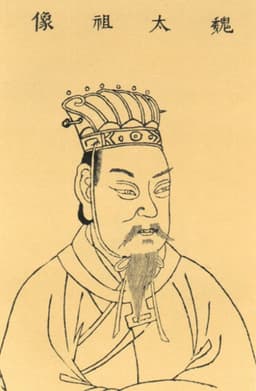
Cao Cao
General · Ancient
77.5Total
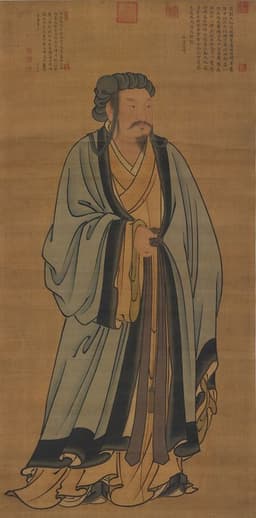
Zhuge Liang
Politician · Ancient
61.9Total
Basic Information
Born
155
181
Died
220
234
Era
Ancient
Ancient
Nationality
China
China
Occupation
General
Politician
Civilization
Eastern
Eastern
Score Comparison
Military (10%)
88.0
45.0
Political (20%)
59.0
72.0
Influence (20%)
82.0
40.0
Legacy (20%)
83.0
71.4
Leadership (15%)
64.4
80.0
Strategy (15%)
89.4
67.2
TOTAL
77.5
61.9
Cao Cao — Complete Timeline
190 AD
Formation of the Coalition against Dong ZhuoPolitical Action
Cao Cao joined a coalition of regional warlords led by Yuan Shao to overthrow the tyrannical chancellor Dong Zhuo, who had seized control of the Han court. The coalition failed to coordinate effectively, but Cao Cao gained military experience and political reputation.
CoalitionDong ZhuoHan Dynasty
Impact: national
196 AD
Implementation of Tuntian (Agricultural Colonies)Reform◆ Major
Cao Cao established military agricultural colonies (tuntian) to provide food for his army and refugees. Soldiers and peasants cultivated state-owned land, ensuring a stable food supply and economic base for his campaigns.
AgricultureEconomyMilitary
Impact: regionalconstructive
200 AD
Battle of GuanduWar
Cao Cao decisively defeated Yuan Shao's numerically superior army at Guandu. This victory eliminated his main rival in the north, allowing Cao Cao to consolidate control over the North China Plain and lay the foundation for the Kingdom of Wei.
BattleYuan ShaoUnification
Impact: regional
208 AD
Battle of Red CliffsWar
Cao Cao's southern campaign was halted by the allied forces of Sun Quan and Liu Bei at the Battle of Red Cliffs. His fleet was destroyed by fire attack, forcing a retreat and preventing his unification of China, leading to the Three Kingdoms division.
BattleDefeatThree Kingdoms
Impact: regional
213 AD
Establishment of the Kingdom of WeiPolitical Action◆ Major
Cao Cao was granted the title of Duke of Wei and later King of Wei by the Han emperor, effectively creating a semi-autonomous state within the empire. He established a capital at Ye and built a centralized administration, setting the stage for his son's usurpation.
WeiStatehoodHan Dynasty
Impact: national
Zhuge Liang — Complete Timeline
207 AD
Formulation of the Longzhong PlanPolitical Action
During a meeting at Longzhong, Zhuge Liang presented Liu Bei with a strategic plan to divide China into three spheres of influence. The plan advocated for alliance with Sun Quan, control of Jing and Yi provinces, and eventual restoration of the Han dynasty.
StrategyLongzhongLiu Bei
Impact: regionalconstructive
221 AD
Appointment as Chancellor of Shu HanPolitical Action◆ Major
After Liu Bei founded the Shu Han dynasty, Zhuge Liang was appointed Chancellor and regent. He assumed full administrative and military responsibility, governing the state with efficiency and integrity during the reign of the young emperor Liu Shan.
ChancellorShu HanGovernment
Impact: nationalconstructive
225 AD
Southern Campaign (Nanzhong)War◆ Major
Zhuge Liang led a military campaign to pacify the southern tribes in Nanzhong (modern Yunnan and Guizhou). He used a combination of force and diplomacy, winning over the local chieftain Meng Huo, and secured Shu's southern border.
CampaignSouthern TribesPacification
Impact: regional
227 AD
Composition of the Chu Shi BiaoCultural◆ Major
Before the first Northern Expedition, Zhuge Liang wrote the 'Chu Shi Biao' (Memorial on the State of the Realm) to Emperor Liu Shan. This document outlined his loyalty, strategic reasoning, and advice for governance, becoming a classic of Chinese literature.
LiteratureMemorialLoyalty
Impact: nationalconstructive
228 AD
Northern Expeditions against WeiWar◆ Major
Zhuge Liang launched five major military campaigns from 228 to 234 to attack the Kingdom of Wei and restore Han rule. Despite tactical brilliance, the expeditions failed to achieve decisive victory due to logistical challenges and Wei's strong defenses.
ExpeditionsWeiWar
Impact: regional
Expert Analysis
# The Architect and the Builder: Cao Cao and Zhuge Liang
On a spring morning in 207, a middle-aged warlord named Liu Bei trudged through the snow to a remote thatched cottage in central China. He had come, for the third time, to beg a reclusive scholar named Zhuge Liang to join his cause. Half a continent away, another man—Cao Cao, the most powerful warlord in the north—was reviewing reports from his agricultural colonies, where tens of thousands of displaced peasants tilled the soil under military supervision. Neither man knew it, but their fates were about to collide in ways that would define an era.
Both Cao Cao and Zhuge Liang were products of the Eastern Han dynasty's collapse, an age when the imperial center had rotted away and regional strongmen carved up the land. But they came from opposite ends of China's social ladder. Cao Cao was born in 155 to a family that had purchased its way into the bureaucracy—his grandfather was a eunuch, a stain on the family honor that elite families never let him forget. Zhuge Liang, born in 181, came from a lineage of minor officials, but lost both parents as a child and grew up as a wandering refugee in the chaos of civil war. One was scarred by the contempt of the aristocracy; the other by the insecurity of homelessness.
Their paths to power could not have been more different. Cao Cao burst onto the stage in 190, joining the coalition against the tyrant Dong Zhuo. While other warlords hesitated, Cao Cao threw himself into battle—and nearly died for his courage. He learned early that in a broken world, decisiveness mattered more than legitimacy. Over the next decade, he built an army from scratch, absorbing defeated enemies, promoting talent regardless of birth, and in 196, he pulled off a masterstroke: he took the helpless Han emperor under his "protection." From that moment, Cao Cao held the ultimate trump card—imperial authority. Every edict, every campaign, could now be framed as the will of heaven.
Zhuge Liang's rise was slower and more deliberate. He spent his youth in Longzhong, studying the patterns of history and the movements of the stars. When Liu Bei finally met him in 207, the 26-year-old Zhuge Liang unfurled the Longzhong Plan—a grand strategy that envisioned dividing China into three kingdoms, with Liu Bei controlling the southwest. It was breathtaking in its ambition and precision. But Zhuge Liang was not a man of action; he was a man of planning. He joined Liu Bei not as a general but as a strategist, the architect behind the throne.
As rulers, the two men embodied contrasting philosophies. Cao Cao governed through pragmatism and terror. His Tuntian agricultural colonies, established in 196, were brutally efficient: soldiers farmed when not fighting, and refugees were given land in exchange for a portion of their harvest. The system fed his armies and stabilized the north. But Cao Cao also issued harsh decrees, executed rivals without mercy, and once massacred an entire city after a siege. Yet he was also a poet of startling sensitivity, writing lines like "Drink, and let the wine cup pass / For sorrows come, and they do not last." He was a paradox—a butcher who wept for fallen soldiers, a tyrant who respected talent above birth.
Zhuge Liang governed through moral example and meticulous administration. As Chancellor of Shu Han after 221, he reformed the tax system, built irrigation canals, and promoted officials based on merit. His legal code was strict but fair—even his enemies admitted that the people of Shu did not fear punishment because they knew it would be just. Yet Zhuge Liang was also a micromanager, personally reviewing every minor case. He once wrote that he was "exhausted in body and mind, and only death would end my labors." It was not hyperbole.
Their greatest triumphs reveal their essential natures. In 200, at the Battle of Guandu, Cao Cao faced Yuan Shao's army of 100,000 with only 30,000 men. The odds were impossible. But Cao Cao saw what others missed: Yuan Shao's supply lines were exposed. He launched a daring raid, burned the enemy's grain, and watched Yuan Shao's army disintegrate. It was a victory of cunning over brute force, and it made Cao Cao the master of northern China.
Zhuge Liang's greatest moment came not through battle but through words. In 227, before his first Northern Expedition, he wrote the *Chu Shi Biao* (Memorial on the State of the Realm), a document addressed to the young emperor of Shu. It was a masterpiece of political persuasion—humble, passionate, and devastatingly logical. He admitted his own failures, praised his subordinates, and begged the emperor to trust his loyal ministers. For centuries, Chinese schoolchildren would memorize its opening lines: "Your servant was originally a commoner, tilling the fields in Nanyang..."
But both men knew tragedy. Cao Cao's dream of unifying China was shattered in 208 at the Battle of Red Cliffs. His massive fleet, filled with northern soldiers unaccustomed to water, was burned by the allied forces of Sun Quan and Liu Bei. The defeat was total. Cao Cao retreated north, never again to attempt a southern campaign. He died in 220, having unified only half of China, his Wei dynasty a kingdom rather than an empire.
Zhuge Liang's tragedy was slower and more grinding. From 228 to 234, he launched five Northern Expeditions against the Kingdom of Wei. Each time, he came close—once he nearly captured the strategic pass of Jieting, only to be betrayed by a subordinate's incompetence. Each time, he was forced to retreat. His health deteriorated from overwork. In 234, at the age of 53, he died at the front lines, having exhausted himself in a cause he knew was nearly hopeless. His last words were said to be about troop deployments.
Character shaped destiny for both men. Cao Cao's paranoia—born from a lifetime of betrayal—made him ruthless but also isolated him. He once executed a close advisor for a minor offense, then wept for days. Zhuge Liang's perfectionism—born from a refugee's need for control—made him beloved but also inflexible. He could not delegate, could not rest, could not accept that some battles were unwinnable.
Their legacies, however, have followed opposite trajectories. Cao Cao is remembered as a brilliant villain—the "white-faced traitor" of Chinese opera, a figure of cunning and cruelty. But modern historians have rehabilitated him as a unifier, a poet, and a reformer who broke the power of the old aristocracy. Zhuge Liang is remembered as a saint—the embodiment of loyalty, wisdom, and self-sacrifice. Temples were built to him across China. His name became synonymous with strategy itself.
Yet the truth is more complex. Cao Cao was not merely a villain; he was a man who tried to hold a collapsing world together with iron and ink. Zhuge Liang was not merely a saint; he was a man who spent his life chasing a dream that history had already denied him. One built an empire through force; the other sustained a kingdom through devotion. Both failed to achieve their ultimate goal. Both succeeded in becoming unforgettable.
Standing at the edge of the Three Kingdoms era, we see two men who understood that in times of chaos, the only choice is to act—and that action, whether driven by ambition or duty, always carries a price. Cao Cao once wrote: "The sage does not wait for the right time; he makes the time right." Zhuge Liang might have replied: "The sage waits for the right time, and then acts without hesitation." Between those two philosophies, an entire civilization was forged.
Rankings
🥇
Cao CaoLeader
Mil: 88.0Pol: 59.0Inf: 82.0
77.5
🥈
Zhuge Liang
Mil: 45.0Pol: 72.0Inf: 40.0
61.9
+15.6 behind
How This Comparison Works
Algorithm
Each figure is scored on 6 dimensions (0—100 scale) based on structured historical data: Military (10%), Political (20%), Influence (20%), Legacy (20%), Leadership (15%), Strategy (15%). The weighted total produces the final ranking.
Data Sources
Scores are computed from structured sub-indicators in the database. Scale factors adjust for era (Ancient ×0.85, Modern ×1.0) and civilization size (Eastern ×1.05, Other ×0.80) to account for differences in population and military scale.
Maximum 3 Figures
Comparisons are limited to 2—3 figures to ensure readability and statistical meaningfulness.
Error Margins
±5 points per dimension — Sub-scores are derived from historical records with inherent uncertainty. Two figures within 5 points on a dimension should be considered roughly equivalent in that area.
Total Score Accuracy
±3 points overall — The weighted combination of 6 dimensions produces a total score with approximately ±3 points of uncertainty. Differences of less than 3 points are not statistically significant— the figures are effectively tied.
Known Limitations
- Historical records are incomplete and uneven across civilizations
- Figures from oral-tradition societies may be underrepresented
- Occupation labels can misclassify multi-role figures
- Scores measure capability and impact, not moral character
- Quantitative scoring is a comparison tool, not absolute truth
Capability Radar
Military (10%) — Battles & Warfare
Battles
95
65
Win Rate
88
60
Expansion
92
55
Political (20%) — Governance & Reform
Reform
88
80
Diplomacy
82
75
Economy
86
70
Influence (20%) — Cultural & Global Reach
Cultural
85
95
Global
75
70
Legacy (20%) — Historical Impact
Historical
92
95
Longevity
90
95
Leadership (15%) — Power & Stability
Tenure
85
70
Stability
78
65
Strategy (15%) — Tactics & Innovation
Strategy
96
90
Tactics
97
85
Reform
90
75
Similar Comparisons
Comments & Discussion
铜雀剑客6/21/2026
数据评分?这东西把三国历史简化成Excel表格!诸葛亮六出祁山失败不是因为他笨,而是蜀汉资源差太多。曹操作战经验丰富是事实,但别忘了他赤壁之战怎么翻船的。北方的马和南方的米能比吗?完全不同的舞台。
RedCliffEcho6/21/2026
Classics scholar here: The Romance of the Three Kingdoms mythologizes Zhuge Liang as a sage, but historical records show Cao Cao was more innovative as a ruler. Cao's屯田 policy stabilized post-war economy, while Zhuge's micromanagement exhausted Shu-Han's manpower. The comparison favors Cao in statecraft, yet Zhuge's moral legacy outshines.
墨韵笑谈6/21/2026
我站蜀汉这边。诸葛亮七擒孟获展示的软实力,曹老板玩不来。数据说曹操胜场多,但他是用十万大军碾压小诸侯。诸葛以弱蜀对抗强魏,还能维持三十年国运,这才是真本事。别拿武庙排名说事,那是唐宋政治宣传。
NorthernSkeptic6/21/2026
Revisionist take: Both are overrated. Cao Cao's brilliance is inflated by Wei historians, while Zhuge Liang's administrative reforms caused peasant strain. The comparison misses the fact that neither figure's achievements lasted—Wei fell to Sima clan, Shu collapsed within decades. Let's discuss the cost of their ambition on common people.
Historian5156/21/2026
As a military historian, I'd say Cao Cao beats Zhuge Liang in strategic reach—his northern campaigns unified a fractured China, while Zhuge's northern expeditions achieved little. Cao's 200 AD victory at Guandu against Yuan Shao's larger force shows superior tactical aggression. Zhuge's supply-line failures prove he was overrated as a commander.