Loading...
Cao Cao vs Yitzhak Rabin
Cao Cao leads by 11.1 pts · 2 figures compared
…
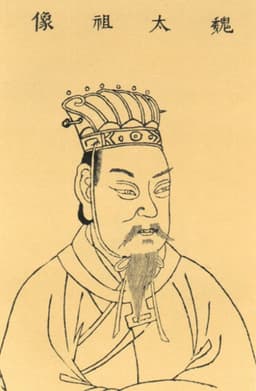
Cao Cao
General · Ancient
77.5Total
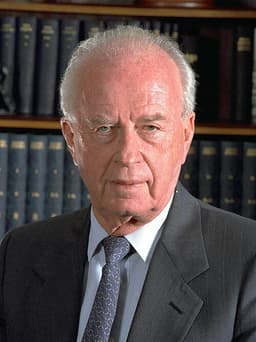
Yitzhak Rabin
General · Modern
66.4Total
Basic Information
Born
155
1922
Died
220
—
Era
Ancient
Modern
Nationality
China
Israel
Occupation
General
General
Civilization
Eastern
Middle Eastern
Score Comparison
Military (10%)
88.0
61.7
Political (20%)
59.0
82.0
Influence (20%)
82.0
68.0
Legacy (20%)
83.0
55.0
Leadership (15%)
64.4
78.0
Strategy (15%)
89.4
55.0
TOTAL
77.5
66.4
Cao Cao — Complete Timeline
190 AD
Formation of the Coalition against Dong ZhuoPolitical Action
Cao Cao joined a coalition of regional warlords led by Yuan Shao to overthrow the tyrannical chancellor Dong Zhuo, who had seized control of the Han court. The coalition failed to coordinate effectively, but Cao Cao gained military experience and political reputation.
CoalitionDong ZhuoHan Dynasty
Impact: national
196 AD
Implementation of Tuntian (Agricultural Colonies)Reform◆ Major
Cao Cao established military agricultural colonies (tuntian) to provide food for his army and refugees. Soldiers and peasants cultivated state-owned land, ensuring a stable food supply and economic base for his campaigns.
AgricultureEconomyMilitary
Impact: regionalconstructive
200 AD
Battle of GuanduWar
Cao Cao decisively defeated Yuan Shao's numerically superior army at Guandu. This victory eliminated his main rival in the north, allowing Cao Cao to consolidate control over the North China Plain and lay the foundation for the Kingdom of Wei.
BattleYuan ShaoUnification
Impact: regional
208 AD
Battle of Red CliffsWar
Cao Cao's southern campaign was halted by the allied forces of Sun Quan and Liu Bei at the Battle of Red Cliffs. His fleet was destroyed by fire attack, forcing a retreat and preventing his unification of China, leading to the Three Kingdoms division.
BattleDefeatThree Kingdoms
Impact: regional
213 AD
Establishment of the Kingdom of WeiPolitical Action◆ Major
Cao Cao was granted the title of Duke of Wei and later King of Wei by the Han emperor, effectively creating a semi-autonomous state within the empire. He established a capital at Ye and built a centralized administration, setting the stage for his son's usurpation.
WeiStatehoodHan Dynasty
Impact: national
Yitzhak Rabin — Complete Timeline
1967 AD
Chief of Staff during the Six-Day WarWar
As Chief of Staff of the Israel Defense Forces, Rabin commanded the Israeli military during the Six-Day War against Egypt, Jordan, and Syria. Israel captured the Sinai Peninsula, Gaza Strip, West Bank, East Jerusalem, and Golan Heights, reshaping the region.
Six-Day WarTerritorial ExpansionMilitary Victory
Impact: global
1993 AD
Signing of the Oslo AccordsPolitical Action
As prime minister, Rabin signed the Oslo Accords with PLO Chairman Yasser Arafat on the White House lawn. The agreement established the Palestinian Authority and set a framework for Palestinian self-governance in the West Bank and Gaza Strip.
Peace ProcessPalestiniansOslo
Impact: globalconstructive
1995 AD
Assassination at Peace RallyPolitical Action
Rabin was assassinated by Israeli extremist Yigal Amir after a peace rally in Tel Aviv. The assassination shocked Israel and the world, derailing the Oslo peace process and leading to a period of political instability.
AssassinationPeace ProcessPolitical Violence
Impact: globaltragic
Expert Analysis
Cao Cao vs Yitzhak Rabin
### The General and the Peacemaker
In the autumn of 1995, Yitzhak Rabin stood before a crowd in Tel Aviv, singing a song of peace. Hours later, a bullet from a fellow Israeli would end his life. Nearly eighteen centuries earlier, Cao Cao lay on his deathbed in Luoyang, having unified a shattered land, only to watch his empire fracture within decades. One general built an empire; the other tried to end a war. Both were masters of strategy, yet their legacies could not be more different. What drives a warrior to conquer, and what drives him to make peace? The answer lies not in their battles, but in their times, their choices, and the worlds they sought to shape.
### Origins
Cao Cao was born in 155 CE, into the twilight of the Han dynasty. His father was a eunuch’s adopted son, a stain of illegitimacy in a society obsessed with lineage. From childhood, Cao Cao learned that power was a game of perception and cunning. He was a poet who wrote of war, a fox who dreamed of lions. The Han Empire was rotting from within: corrupt eunuchs controlled the court, peasant rebellions like the Yellow Turbans swept the countryside, and warlords carved out private kingdoms. For Cao Cao, the world was a chessboard, and he intended to be the player, not the piece.
Yitzhak Rabin was born in 1922 in Jerusalem, then part of British Mandate Palestine. His family were pioneers, part of the socialist Zionist movement that drained swamps and built kibbutzim. Rabin grew up in a world where survival was a daily struggle, not for glory, but for a homeland. He was a soldier of necessity, not ambition. The Arab-Israeli conflict was not a game; it was a fire that consumed generations. While Cao Cao saw chaos as an opportunity, Rabin saw it as a wound that needed healing.
### Rise to Power
Cao Cao’s rise was a masterpiece of opportunism. In 190 CE, he joined the coalition against the tyrant Dong Zhuo, but he quickly learned that alliances were fragile. At the Battle of Guandu in 200 CE, he faced Yuan Shao, a rival with ten times his army. Cao Cao won not by brute force, but by burning Yuan Shao’s supply wagons and breaking his enemy’s will. It was a victory of strategy over numbers, of nerve over might. From that moment, he was the master of northern China, a king in all but name.
Rabin’s ascent was quieter, but no less decisive. In 1967, as Chief of Staff of the Israel Defense Forces, he commanded the Six-Day War. In six days, Israel captured the Sinai, the Golan Heights, the West Bank, and East Jerusalem. It was a stunning military triumph, but Rabin did not celebrate. He saw the cost: occupied territories, millions of Palestinians under Israeli rule, and a conflict that would never end by the sword alone. Unlike Cao Cao, who saw victory as a stepping stone, Rabin saw it as a trap.
### Leadership & Governance
Cao Cao ruled with a mix of iron and ink. In 196 CE, he implemented the *tuntian* system—military agricultural colonies that turned soldiers into farmers and refugees into laborers. It fed his army, stabilized his lands, and won him the loyalty of the starving. He was a reformer, but also a pragmatist. He executed rivals without mercy, yet he wrote poetry about the sorrow of war. “Drink your wine,” he wrote, “life is short, like the morning dew.” He understood that power required both the sword and the song.
Rabin governed differently. As prime minister, he did not seek to expand Israel’s borders but to define them. In 1993, he shook hands with Yasser Arafat on the White House lawn, signing the Oslo Accords. It was a gamble as bold as any battle. He offered land for peace, a trade that infuriated his own people. Unlike Cao Cao, who built walls, Rabin tried to tear them down. Where Cao Cao consolidated power, Rabin shared it.
### Triumph & Tragedy
Cao Cao’s greatest triumph was the unification of northern China. His greatest tragedy was the Battle of Red Cliffs in 208 CE. He led a massive fleet south to conquer the Yangtze River, but the allied forces of Sun Quan and Liu Bei burned his ships. The defeat shattered his dream of a unified empire. He died in 220 CE, having founded the Kingdom of Wei, but his sons would lose it within decades.
Rabin’s triumph was the Oslo Accords, a moment that seemed to promise an end to decades of bloodshed. His tragedy was his own people. On November 4, 1995, after a peace rally in Tel Aviv, an Israeli extremist named Yigal Amir shot him dead. Rabin fell with a song still on his lips. His assassin did not come from an enemy army, but from within.
### Character & Destiny
Cao Cao was a man of contradictions: a poet who burned cities, a reformer who crushed rivals. His personality was shaped by the chaos of his era—he trusted no one, and he was right not to. He saw history as a river of blood, and he swam in it.
Rabin was a soldier who came to hate war. He was not a natural politician; he was gruff, blunt, and uncomfortable with sentiment. But he had the courage to change. He saw that the Six-Day War had become a thirty-year occupation, and he chose to reverse course. His destiny was not to conquer, but to heal.
### Legacy
Cao Cao is remembered as a master strategist, a villain in some tales, a hero in others. In the *Romance of the Three Kingdoms*, he is the cunning anti-hero, the man who said, “Better to wrong the world than have the world wrong me.” His legacy is a divided China, a template for ambition, and a warning about the cost of power.
Rabin is remembered as a martyr for peace. His legacy is unfinished, a process that stalled with his death. He is a symbol of what might have been, a reminder that peace is harder than war.
### Conclusion
Cao Cao and Rabin were both generals who sought to shape their worlds. One built an empire on the bones of his enemies; the other tried to build a peace on the trust of his former foes. Their differences are not just personal, but historical. Cao Cao lived in an age of fragmentation, where power was the only law. Rabin lived in an age of nationalism, where survival required compromise. One conquered; the other reconciled. In the end, both were undone by the very forces they tried to master. Cao Cao’s empire crumbled; Rabin’s peace was cut short. Yet their stories endure, because they ask the same question: When you hold the sword, what do you do with it?
Rankings
🥇
Cao CaoLeader
Mil: 88.0Pol: 59.0Inf: 82.0
77.5
🥈
Yitzhak Rabin
Mil: 61.7Pol: 82.0Inf: 68.0
66.4
+11.1 behind
How This Comparison Works
Algorithm
Each figure is scored on 6 dimensions (0—100 scale) based on structured historical data: Military (10%), Political (20%), Influence (20%), Legacy (20%), Leadership (15%), Strategy (15%). The weighted total produces the final ranking.
Data Sources
Scores are computed from structured sub-indicators in the database. Scale factors adjust for era (Ancient ×0.85, Modern ×1.0) and civilization size (Eastern ×1.05, Other ×0.80) to account for differences in population and military scale.
Maximum 3 Figures
Comparisons are limited to 2—3 figures to ensure readability and statistical meaningfulness.
Error Margins
±5 points per dimension — Sub-scores are derived from historical records with inherent uncertainty. Two figures within 5 points on a dimension should be considered roughly equivalent in that area.
Total Score Accuracy
±3 points overall — The weighted combination of 6 dimensions produces a total score with approximately ±3 points of uncertainty. Differences of less than 3 points are not statistically significant— the figures are effectively tied.
Known Limitations
- Historical records are incomplete and uneven across civilizations
- Figures from oral-tradition societies may be underrepresented
- Occupation labels can misclassify multi-role figures
- Scores measure capability and impact, not moral character
- Quantitative scoring is a comparison tool, not absolute truth
Capability Radar
Military (10%) — Battles & Warfare
Battles
95
65
Win Rate
88
70
Expansion
92
50
Political (20%) — Governance & Reform
Reform
88
65
Diplomacy
82
85
Economy
86
60
Influence (20%) — Cultural & Global Reach
Cultural
85
55
Global
75
70
Legacy (20%) — Historical Impact
Historical
92
75
Longevity
90
60
Leadership (15%) — Power & Stability
Tenure
85
70
Stability
78
40
Strategy (15%) — Tactics & Innovation
Strategy
96
75
Tactics
97
60
Reform
90
55
Similar Comparisons
Comments & Discussion
铁证如刀6/16/2026
Rabin带领以色列签了奥斯陆协议这重要,但Cao Cao靠官渡之战以少胜多奠定北方基业,这才是纯纯的军事天赋。Rabin是个政客,Cao Cao是战略家和实干家。要说历史影响,Cao曹统一了中国北方,Rabin的和平进程现在都死了。别拿现代外交跟三国乱世的铁血手腕比,那是降维打击。
Desert Fox of Oslo6/16/2026
Rabbin was a tactical genius in a different league from Cao Cao. The man orchestrated the Entebbe raid from afar as chief of staff, then had the moral courage to shake Arafat's hand on the White House lawn. Cao Cao burned Xu Province alive, massacring civilians indiscriminately. Rabin's moral evolution from warrior to peacemaker is far more complex and admirable than Cao's straightforward ambition. One man learned war was the problem; the other made it his career.
铁幕之剑6/16/2026
别拿Rabin的自由主义叙事糊弄人。Cao Cao是真正的铁腕统治者,颁布求贤令,唯才是举,打破门阀制度。Rabin对巴勒斯坦人的强硬路线失败后转身搞和平,但实际让以色列安全更糟。Cao曹建立的是能打仗的政权,Rabin留下的是分裂的社会。历史评判不靠感性歌功颂德,而看谁实在改变了权力格局。
Lute and Lance6/16/2026
Rabin's legacy is frozen in a single tragic moment; Cao's is a sprawling epic. Rabin was assassinated before his peace could bear fruit, leaving only a martyred symbol. Cao, however, lived to write his own story—poetry, military reforms, agricultural colonies. He died old, surrounded by the empire he built, even if it later broke apart. One was a footnote in a larger conflict; the other was the author of an entire era. I'll take the man who finished his draft.
Chronicler18976/16/2026
Cao Cao the poet-general wins this comparison hands down. Rabin was a competent soldier, but Cao Cao wrote masterpieces like "Short Song Style" while commanding armies. You can't measure the cultural weight of a man whose verses are still memorized by schoolchildren 1,800 years later against a 20th-century politician. Rabin's peace process crumbled; Cao Cao's literary legacy remains ironclad. Give me the warlord who could compose a lament for fallen soldiers any day.