Loading...
Cao Cao vs Yamagata Aritomo
Yamagata Aritomo leads by 5.0 pts · 2 figures compared
…
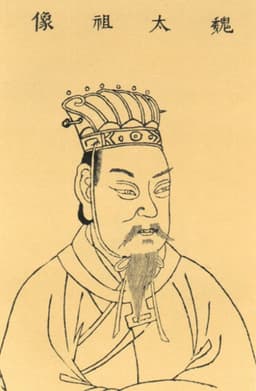
Cao Cao
General · Ancient
77.5Total
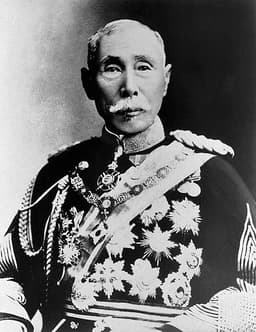
Yamagata Aritomo
General · Modern
82.5Total
Basic Information
Born
155
1838
Died
220
1922
Era
Ancient
Modern
Nationality
China
Japan
Occupation
General
General
Civilization
Eastern
Eastern
Score Comparison
Military (10%)
88.0
78.0
Political (20%)
59.0
82.0
Influence (20%)
82.0
80.0
Legacy (20%)
83.0
90.0
Leadership (15%)
64.4
78.0
Strategy (15%)
89.4
82.0
TOTAL
77.5
82.5
Cao Cao — Complete Timeline
190 AD
Formation of the Coalition against Dong ZhuoPolitical Action
Cao Cao joined a coalition of regional warlords led by Yuan Shao to overthrow the tyrannical chancellor Dong Zhuo, who had seized control of the Han court. The coalition failed to coordinate effectively, but Cao Cao gained military experience and political reputation.
CoalitionDong ZhuoHan Dynasty
Impact: national
196 AD
Implementation of Tuntian (Agricultural Colonies)Reform◆ Major
Cao Cao established military agricultural colonies (tuntian) to provide food for his army and refugees. Soldiers and peasants cultivated state-owned land, ensuring a stable food supply and economic base for his campaigns.
AgricultureEconomyMilitary
Impact: regionalconstructive
200 AD
Battle of GuanduWar
Cao Cao decisively defeated Yuan Shao's numerically superior army at Guandu. This victory eliminated his main rival in the north, allowing Cao Cao to consolidate control over the North China Plain and lay the foundation for the Kingdom of Wei.
BattleYuan ShaoUnification
Impact: regional
208 AD
Battle of Red CliffsWar
Cao Cao's southern campaign was halted by the allied forces of Sun Quan and Liu Bei at the Battle of Red Cliffs. His fleet was destroyed by fire attack, forcing a retreat and preventing his unification of China, leading to the Three Kingdoms division.
BattleDefeatThree Kingdoms
Impact: regional
213 AD
Establishment of the Kingdom of WeiPolitical Action◆ Major
Cao Cao was granted the title of Duke of Wei and later King of Wei by the Han emperor, effectively creating a semi-autonomous state within the empire. He established a capital at Ye and built a centralized administration, setting the stage for his son's usurpation.
WeiStatehoodHan Dynasty
Impact: national
Yamagata Aritomo — Complete Timeline
1873 AD
Establishment of the Imperial Japanese ArmyReform
Yamagata Aritomo, as War Minister, oversaw the creation of the Imperial Japanese Army based on the Prussian model. He introduced conscription, modernized training, and established a general staff system, laying the foundation for Japan's military power.
Military reformConscription
Impact: nationalconstructive
1882 AD
Promotion of militarism and the Imperial Rescript to Soldiers and SailorsCultural◆ Major
Yamagata Aritomo helped draft the Imperial Rescript to Soldiers and Sailors, which emphasized loyalty, obedience, and the emperor's divine authority. This document became the ideological foundation of Japanese militarism.
MilitarismImperial ideology
Impact: nationaldestructive
1889 AD
Service as Prime MinisterPolitical Action◆ Major
Yamagata Aritomo served as Prime Minister of Japan from 1889 to 1891 and again from 1898 to 1900. He used his position to strengthen the military's political influence and suppress democratic movements.
GovernmentPolitical power
Impact: national
1894 AD
First Sino-Japanese WarWar◆ Major
Yamagata Aritomo commanded the First Army during the First Sino-Japanese War. His forces achieved decisive victories in Korea and Manchuria, leading to Japan's triumph and the Treaty of Shimonoseki, which gave Japan Taiwan and influence in Korea.
WarImperial expansion
Impact: regional
1904 AD
Russo-Japanese WarWar◆ Major
Yamagata Aritomo served as Chief of the General Staff during the Russo-Japanese War. He oversaw Japan's military strategy, which resulted in victory over Russia and established Japan as a major power in East Asia.
WarGreat power
Impact: global
Expert Analysis
Origins
Yamagata Aritomo (1838-1922) emerged from a low-ranking samurai family in Choshu domain, a hotbed of anti-Tokugawa sentiment. His early exposure to Western military techniques during the Bakumatsu period shaped his vision for a modernized Japanese army. Cao Cao (155-220 CE), born into a eunuch-related family in the declining Eastern Han dynasty, used his political acumen to rise through the ranks, navigating the chaos of warlord fragmentation. Both men were products of turbulent eras that demanded military innovation, but Yamagata's path was defined by institutional building, while Cao Cao's was one of personal ambition and conquest.
Rise to Power
Yamagata's rise began with his role in the Boshin War (1868-1869), where he led imperial forces. He studied military systems in Europe, returning to establish the Imperial Japanese Army (IJA) as a conscript-based, Prussian-modeled force. His political savvy made him a key figure in the Meiji oligarchy, serving as Prime Minister twice and Home Minister. Cao Cao's ascent was more gradual and ruthless. He raised a personal army, suppressed the Yellow Turban Rebellion, and outmaneuvered rivals like Yuan Shao. His victory at the Battle of Guandu (200 CE) secured his dominance over northern China, paving the way for the Kingdom of Wei.
Leadership & Governance
Yamagata's leadership was technocratic and institutional. He authored the Imperial Rescript to Soldiers and Sailors (1882), emphasizing loyalty and discipline, and promoted militarism as a national ethos. His governance prioritized a strong central state and military independence from civilian control. Cao Cao ruled with a blend of Legalist severity and Confucian rhetoric. He implemented the Tuntian system—agricultural colonies that stabilized food supply and funded his army. Both were effective administrators, but Yamagata's approach was more systematic, while Cao Cao's was improvisational and personalized.
Triumph & Tragedy
Yamagata's greatest triumphs were the First Sino-Japanese War (1894-1895) and the Russo-Japanese War (1904-1905), where the modern IJA defeated established empires. However, his promotion of militarism sowed seeds for future disasters like World War II. Cao Cao's triumph at Guandu made him the paramount power in the north, but his tragedy came at the Battle of Red Cliffs (208-209 CE), where his ambition to conquer the south was crushed by Sun Quan and Liu Bei, preventing full unification. Both men experienced strategic overreach—Yamagata through unchecked militarism, Cao Cao through naval hubris.
Character & Destiny
Yamagata was cold, calculating, and devoted to the state, earning him the title "father of Japanese militarism." His destiny was to create a machine that eventually consumed its creators. Cao Cao was complex—ambitious, ruthless, but also a poet and strategist. He famously said, "Rather I betray the world than the world betrays me." His destiny was to lay the foundation for the Wei dynasty, but his methods invited endless conflict. In terms of character scores (Yamagata: D=78, S=82; Cao Cao: D=64, S=89), Cao Cao was more charismatic but Yamagata more disciplined.
Legacy
Yamagata's legacy is the modern Japanese army and its imperial ambitions. His scores: M=78, P=82, I=80, L=90, D=78, S=82, T=82. Cao Cao's legacy is the unification of northern China and a model of warlord-statecraft. His scores: M=88, P=59, I=82, L=83, D=64, S=89, T=78. The overall score gap is 5.0 points in Yamagata's favor, driven by higher leadership (L=90 vs 83) and political (P=82 vs 59) scores. However, Cao Cao's military genius (M=88) and strategic skill (S=89) are superior.
Conclusion
While Cao Cao was a more brilliant field commander and charismatic leader, Yamagata Aritomo's institutional impact on Japan's military and state was more profound and lasting. Yamagata's higher overall score reflects his role in creating a modern military system that dominated Asia for decades. Cao Cao, despite his tactical brilliance, failed to achieve lasting unification. Thus, Yamagata Aritomo emerges as the more consequential figure in military history, though Cao Cao's personal genius remains unmatched in ancient warfare.
Rankings
🥇
Yamagata AritomoLeader
Mil: 78.0Pol: 82.0Inf: 80.0
82.5
🥈
Cao Cao
Mil: 88.0Pol: 59.0Inf: 82.0
77.5
+5.0 behind
How This Comparison Works
Algorithm
Each figure is scored on 6 dimensions (0—100 scale) based on structured historical data: Military (10%), Political (20%), Influence (20%), Legacy (20%), Leadership (15%), Strategy (15%). The weighted total produces the final ranking.
Data Sources
Scores are computed from structured sub-indicators in the database. Scale factors adjust for era (Ancient ×0.85, Modern ×1.0) and civilization size (Eastern ×1.05, Other ×0.80) to account for differences in population and military scale.
Maximum 3 Figures
Comparisons are limited to 2—3 figures to ensure readability and statistical meaningfulness.
Error Margins
±5 points per dimension — Sub-scores are derived from historical records with inherent uncertainty. Two figures within 5 points on a dimension should be considered roughly equivalent in that area.
Total Score Accuracy
±3 points overall — The weighted combination of 6 dimensions produces a total score with approximately ±3 points of uncertainty. Differences of less than 3 points are not statistically significant— the figures are effectively tied.
Known Limitations
- Historical records are incomplete and uneven across civilizations
- Figures from oral-tradition societies may be underrepresented
- Occupation labels can misclassify multi-role figures
- Scores measure capability and impact, not moral character
- Quantitative scoring is a comparison tool, not absolute truth
Capability Radar
Military (10%) — Battles & Warfare
Battles
95
75
Win Rate
88
70
Expansion
92
80
Political (20%) — Governance & Reform
Reform
88
90
Diplomacy
82
75
Economy
86
70
Influence (20%) — Cultural & Global Reach
Cultural
85
80
Global
75
70
Legacy (20%) — Historical Impact
Historical
92
85
Longevity
90
75
Leadership (15%) — Power & Stability
Tenure
85
85
Stability
78
65
Strategy (15%) — Tactics & Innovation
Strategy
96
85
Tactics
97
80
Reform
90
95
Similar Comparisons
Comments & Discussion
No comments yet. Be the first to share your thoughts!