Loading...
Cao Cao vs Turenne
Cao Cao leads by 1.7 pts · 2 figures compared
…
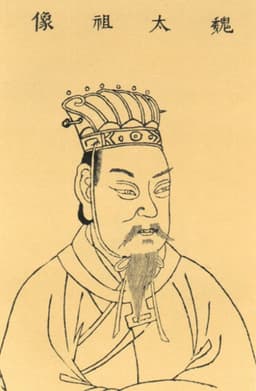
Cao Cao
General · Ancient
77.5Total
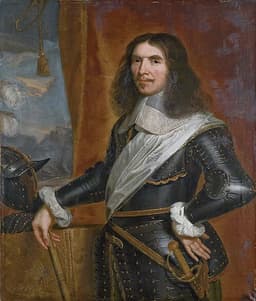
Turenne
General · Modern
75.8Total
Basic Information
Born
155
1611
Died
220
1675
Era
Ancient
Modern
Nationality
China
France
Occupation
General
General
Civilization
Eastern
Western
Score Comparison
Military (10%)
88.0
79.9
Political (20%)
59.0
72.0
Influence (20%)
82.0
88.0
Legacy (20%)
83.0
65.0
Leadership (15%)
64.4
77.2
Strategy (15%)
89.4
72.0
TOTAL
77.5
75.8
Cao Cao — Complete Timeline
190 AD
Formation of the Coalition against Dong ZhuoPolitical Action
Cao Cao joined a coalition of regional warlords led by Yuan Shao to overthrow the tyrannical chancellor Dong Zhuo, who had seized control of the Han court. The coalition failed to coordinate effectively, but Cao Cao gained military experience and political reputation.
CoalitionDong ZhuoHan Dynasty
Impact: national
196 AD
Implementation of Tuntian (Agricultural Colonies)Reform◆ Major
Cao Cao established military agricultural colonies (tuntian) to provide food for his army and refugees. Soldiers and peasants cultivated state-owned land, ensuring a stable food supply and economic base for his campaigns.
AgricultureEconomyMilitary
Impact: regionalconstructive
200 AD
Battle of GuanduWar
Cao Cao decisively defeated Yuan Shao's numerically superior army at Guandu. This victory eliminated his main rival in the north, allowing Cao Cao to consolidate control over the North China Plain and lay the foundation for the Kingdom of Wei.
BattleYuan ShaoUnification
Impact: regional
208 AD
Battle of Red CliffsWar
Cao Cao's southern campaign was halted by the allied forces of Sun Quan and Liu Bei at the Battle of Red Cliffs. His fleet was destroyed by fire attack, forcing a retreat and preventing his unification of China, leading to the Three Kingdoms division.
BattleDefeatThree Kingdoms
Impact: regional
213 AD
Establishment of the Kingdom of WeiPolitical Action◆ Major
Cao Cao was granted the title of Duke of Wei and later King of Wei by the Han emperor, effectively creating a semi-autonomous state within the empire. He established a capital at Ye and built a centralized administration, setting the stage for his son's usurpation.
WeiStatehoodHan Dynasty
Impact: national
Turenne — Complete Timeline
1639 AD
Campaign in the ValtellinaWar
Turenne commanded French forces in the Valtellina during the Thirty Years' War. He captured several fortresses and secured the strategic pass for France, demonstrating his early military skill.
Thirty Years' WarAlpsEarly Career
Impact: regional
1658 AD
Battle of the DunesWar◆ Major
Turenne commanded the French army to victory over the Spanish at the Battle of the Dunes near Dunkirk. The victory led to the capture of Dunkirk and forced Spain to seek peace, ending the Franco-Spanish War.
Franco-Spanish WarDunkirkMilitary Victory
Impact: regional
1674 AD
Battle of the RhineWar◆ Major
Turenne led a French army across the Rhine in winter, surprising the Imperial forces. He defeated the Austrians at the Battle of Entzheim and later at Turckheim, securing French control of Alsace.
Franco-Dutch WarAlsaceWinter Campaign
Impact: regional
Battle of the SambreWar◆ Major
Turenne defeated the Spanish and Dutch forces at the Battle of Seneffe. The battle was costly but prevented the Allies from invading France. It demonstrated Turenne's tactical skill in defensive warfare.
Franco-Dutch WarDefensive BattleTactics
Impact: regional
1675 AD
Death of TurenneWar◆ Major
Turenne was killed by a cannonball while reconnoitering enemy positions at the Battle of Sasbach. His death was a major loss for France. He was buried with honors in the Basilica of Saint-Denis.
Death in BattleFranco-Dutch WarMilitary Loss
Impact: nationaltragic
Expert Analysis
Origins
Cao Cao (155-220 CE) emerged from the chaos of the late Eastern Han dynasty, the son of a eunuch's adopted son. His rise was rooted in the collapse of central authority, leveraging family connections and personal ambition. Turenne (1611-1675), born Henri de la Tour d'Auvergne, was a product of the French nobility, raised in the military traditions of the Thirty Years' War. He entered service as a protégé of his uncle, Maurice of Nassau.
Rise to Power
Cao Cao's ascent was swift after the coalition against Dong Zhuo. He defeated Yuan Shao at the Battle of Guandu (200 CE), a turning point that secured his dominance over northern China. He then established the Kingdom of Wei, laying the groundwork for the Three Kingdoms. Turenne rose through the ranks during the Thirty Years' War, winning fame at the Battle of the Dunes (1658) and later in the Franco-Dutch War. His campaigns in the Rhine and Sambre valleys solidified his reputation.
Leadership & Governance
Cao Cao was both a military and political leader. He implemented the Tuntian system (agricultural colonies) to feed his armies and stabilize the economy. His governance was pragmatic, rewarding talent and punishing corruption. Turenne was primarily a military commander, known for his innovative tactics and strategic maneuvering. He served under Louis XIV but lacked the political autonomy of Cao Cao.
Triumph & Tragedy
Cao Cao's greatest triumph was the unification of northern China, but his tragedy was the defeat at Red Cliffs (208 CE), which prevented him from conquering the south. Turenne's triumphs include the Battle of the Dunes and the Rhine campaign, but his death during the Battle of the Sambre (1675) cut short his career.
Character & Destiny
Cao Cao was a complex figure: ruthless yet ambitious, a poet and strategist. His destiny was to shape the Three Kingdoms era. Turenne was known for his modesty and tactical brilliance, his destiny to become a national hero.
Legacy
Cao Cao's legacy endures in Chinese culture as a symbol of cunning and strength. He influenced military thought and governance. Turenne is remembered as one of France's greatest commanders, a model for later generals like Napoleon.
Conclusion
Comparing their numerical scores: Cao Cao (M=88, P=59, I=82, L=83, D=64, S=89, T=78) vs Turenne (M=80, P=72, I=88, L=65, D=77, S=72, T=76). Cao Cao leads in Military (88 vs 80), Logistics (83 vs 65), Strategy (89 vs 72), and Tactics (78 vs 76). Turenne wins in Politics (72 vs 59), Innovation (88 vs 82), and Defense (77 vs 64). The overall score gap (1.7) favors Cao Cao. While Turenne was a brilliant tactician, Cao Cao's broader impact as a unifier and state-builder gives him the edge. He was not just a general but a founder of a dynasty. Therefore, Cao Cao is the superior historical figure in this comparison.
Rankings
🥇
Cao CaoLeader
Mil: 88.0Pol: 59.0Inf: 82.0
77.5
🥈
Turenne
Mil: 79.9Pol: 72.0Inf: 88.0
75.8
+1.7 behind
How This Comparison Works
Algorithm
Each figure is scored on 6 dimensions (0—100 scale) based on structured historical data: Military (10%), Political (20%), Influence (20%), Legacy (20%), Leadership (15%), Strategy (15%). The weighted total produces the final ranking.
Data Sources
Scores are computed from structured sub-indicators in the database. Scale factors adjust for era (Ancient ×0.85, Modern ×1.0) and civilization size (Eastern ×1.05, Other ×0.80) to account for differences in population and military scale.
Maximum 3 Figures
Comparisons are limited to 2—3 figures to ensure readability and statistical meaningfulness.
Error Margins
±5 points per dimension — Sub-scores are derived from historical records with inherent uncertainty. Two figures within 5 points on a dimension should be considered roughly equivalent in that area.
Total Score Accuracy
±3 points overall — The weighted combination of 6 dimensions produces a total score with approximately ±3 points of uncertainty. Differences of less than 3 points are not statistically significant— the figures are effectively tied.
Known Limitations
- Historical records are incomplete and uneven across civilizations
- Figures from oral-tradition societies may be underrepresented
- Occupation labels can misclassify multi-role figures
- Scores measure capability and impact, not moral character
- Quantitative scoring is a comparison tool, not absolute truth
Capability Radar
Military (10%) — Battles & Warfare
Battles
95
85
Win Rate
88
88
Expansion
92
80
Political (20%) — Governance & Reform
Reform
88
60
Diplomacy
82
75
Economy
86
55
Influence (20%) — Cultural & Global Reach
Cultural
85
65
Global
75
70
Legacy (20%) — Historical Impact
Historical
92
80
Longevity
90
75
Leadership (15%) — Power & Stability
Tenure
85
70
Stability
78
65
Strategy (15%) — Tactics & Innovation
Strategy
96
92
Tactics
97
90
Reform
90
75
Similar Comparisons
Comments & Discussion
No comments yet. Be the first to share your thoughts!