Loading...
Cao Cao vs Toyotomi Hideyoshi
Toyotomi Hideyoshi leads by 4.5 pts · 2 figures compared
…
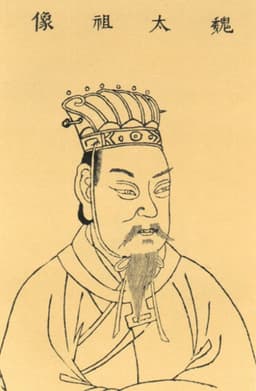
Cao Cao
General · Ancient
77.5Total
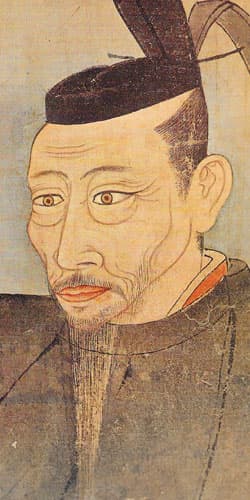
Toyotomi Hideyoshi
General · Modern
82.0Total
Basic Information
Born
155
1537
Died
220
1598
Era
Ancient
Modern
Nationality
China
Japan
Occupation
General
General
Civilization
Eastern
Eastern
Score Comparison
Military (10%)
88.0
79.9
Political (20%)
59.0
78.0
Influence (20%)
82.0
88.0
Legacy (20%)
83.0
80.0
Leadership (15%)
64.4
82.0
Strategy (15%)
89.4
80.4
TOTAL
77.5
82.0
Cao Cao — Complete Timeline
190 AD
Formation of the Coalition against Dong ZhuoPolitical Action
Cao Cao joined a coalition of regional warlords led by Yuan Shao to overthrow the tyrannical chancellor Dong Zhuo, who had seized control of the Han court. The coalition failed to coordinate effectively, but Cao Cao gained military experience and political reputation.
CoalitionDong ZhuoHan Dynasty
Impact: national
196 AD
Implementation of Tuntian (Agricultural Colonies)Reform◆ Major
Cao Cao established military agricultural colonies (tuntian) to provide food for his army and refugees. Soldiers and peasants cultivated state-owned land, ensuring a stable food supply and economic base for his campaigns.
AgricultureEconomyMilitary
Impact: regionalconstructive
200 AD
Battle of GuanduWar
Cao Cao decisively defeated Yuan Shao's numerically superior army at Guandu. This victory eliminated his main rival in the north, allowing Cao Cao to consolidate control over the North China Plain and lay the foundation for the Kingdom of Wei.
BattleYuan ShaoUnification
Impact: regional
208 AD
Battle of Red CliffsWar
Cao Cao's southern campaign was halted by the allied forces of Sun Quan and Liu Bei at the Battle of Red Cliffs. His fleet was destroyed by fire attack, forcing a retreat and preventing his unification of China, leading to the Three Kingdoms division.
BattleDefeatThree Kingdoms
Impact: regional
213 AD
Establishment of the Kingdom of WeiPolitical Action◆ Major
Cao Cao was granted the title of Duke of Wei and later King of Wei by the Han emperor, effectively creating a semi-autonomous state within the empire. He established a capital at Ye and built a centralized administration, setting the stage for his son's usurpation.
WeiStatehoodHan Dynasty
Impact: national
Toyotomi Hideyoshi — Complete Timeline
1583 AD
Battle of ShizugatakeWar◆ Major
Hideyoshi defeated his rival Shibata Katsuie at the Battle of Shizugatake, solidifying his control over central Japan. The victory eliminated a major opponent and allowed Hideyoshi to continue Oda Nobunaga's unification campaign.
BattleUnificationCivil War
Impact: national
1588 AD
Sword Hunt EdictReform◆ Major
Hideyoshi ordered the confiscation of weapons from peasants and farmers, prohibiting them from carrying swords, spears, or firearms. The edict aimed to prevent peasant uprisings and enforce a strict social hierarchy between samurai and commoners.
Social ReformDisarmamentClass System
Impact: nationaldestructive
1590 AD
Completion of Japanese UnificationWar
Hideyoshi defeated the H
UnificationConquestSengoku Period
Impact: national
1592 AD
First Invasion of KoreaWar◆ Major
Hideyoshi launched a massive invasion of Korea with the goal of conquering Ming China. Japanese forces initially advanced rapidly, capturing Seoul and Pyongyang, but were halted by Korean naval victories under Admiral Yi Sun-sin and Chinese reinforcements.
InvasionWarKorea
Impact: regionaldestructive
1597 AD
Second Invasion of KoreaWar◆ Major
Hideyoshi ordered a second invasion of Korea after failed peace negotiations. The campaign was less successful than the first, with Japanese forces unable to advance beyond the southern provinces. The invasion ended with Hideyoshi's death in 1598.
InvasionWarKorea
Impact: regionaldestructive
Expert Analysis
Origins
Toyotomi Hideyoshi (1537–1598) rose from a peasant family to become Japan's 'Great Unifier,' a testament to his extraordinary ambition and adaptability. Born in Nakamura, Owari Province, he started as a lowly foot soldier under Oda Nobunaga, earning his place through cunning and loyalty. In contrast, Cao Cao (155–220 CE) was born into a powerful eunuch-affiliated family in Qiao County, gaining early access to education and political connections. While Hideyoshi's rise was a rags-to-riches story, Cao Cao's background gave him a head start, but his path was fraught with constant warfare during the collapse of the Han dynasty.
Rise to Power
Hideyoshi's ascent began after Nobunaga's death in 1582. He avenged his lord at the Battle of Shizugatake (1583), defeating Katsuie Shibata, and then maneuvered through alliances and campaigns to subdue rival daimyo. By 1590, he completed the unification of Japan, a feat of both military prowess and diplomatic skill. Cao Cao's rise was more gradual: after the Yellow Turban Rebellion, he gathered a loyal army and outmaneuvered rivals like Yuan Shao. His decisive victory at the Battle of Guandu (200 CE) against a numerically superior enemy established his dominance in northern China, leading to the establishment of the Kingdom of Wei in 220 CE.
Leadership & Governance
Hideyoshi's governance was transformative: he conducted the 'Sword Hunt' (1588) to disarm peasants and enforce class separation, and implemented land surveys to stabilize tax revenues. He promoted trade and culture, but his invasion of Korea (1592–1598) drained resources and led to his downfall. Cao Cao was a master administrator: he implemented the 'Tuntian' system (agricultural colonies) to support his army, reformed tax collection, and patronized literature, including his own poetry. However, his ruthless consolidation of power, including massacres of civilians, tarnished his legacy. Hideyoshi's rule was more innovative but marred by overreach; Cao Cao's was pragmatic but authoritarian.
Triumph & Tragedy
Hideyoshi's triumph was unifying Japan after a century of civil war, but his tragedy was the disastrous Korean invasions, which ended in stalemate and his death in 1598, leaving a power vacuum that led to the Tokugawa shogunate. Cao Cao's victory at Guandu was a masterstroke, but his defeat at the Battle of Red Cliffs (208 CE) by Sun Quan and Liu Bei prevented him from conquering all of China, condemning him to a fragmented legacy. Both men achieved greatness but fell short of their ultimate ambitions: Hideyoshi failed to secure a dynasty, while Cao Cao never claimed the imperial title himself.
Character & Destiny
Hideyoshi was known for his flamboyance, strategic brilliance, and occasional cruelty—he executed his nephew to secure succession. His humble origins gave him a unique perspective, but also a desperate need for validation, leading to grandiose projects. Cao Cao was a cunning, pragmatic leader, often depicted as a villain in folklore, but also a gifted poet who valued talent over birth. His destiny was to be the 'Hero of Chaos,' but his legacy was shaped by later historians who favored his rivals. Both were ambitious, but Hideyoshi's destiny was cut short by his own hubris, while Cao Cao's caution limited his reach.
Legacy
Hideyoshi's legacy is mixed: he unified Japan but his invasions weakened the country and caused suffering in Korea. His social reforms shaped the Edo period, but his dynasty did not survive. Cao Cao's legacy is more profound: he laid the foundation for the Wei dynasty, which later unified China under the Jin. His administrative innovations influenced Chinese governance for centuries. In popular culture, Hideyoshi is celebrated as a folk hero, while Cao Cao is a complex antihero in the 'Romance of the Three Kingdoms.'
Conclusion
Overall, Hideyoshi's higher score (82.0 vs 77.5) reflects his greater impact: he transformed Japan from a fractured state into a unified nation, albeit temporarily. Cao Cao's brilliance was more localized; he failed to unite all of China. Hideyoshi's rise from nothing to ruler is more remarkable, and his policies had lasting social effects. While Cao Cao was a superior strategist and administrator, Hideyoshi's sheer audacity and scope of achievement give him the edge. Thus, Toyotomi Hideyoshi emerges as the more influential figure in this comparison.
**Scores:**
- Hideyoshi: 82.0
- Cao Cao: 77.5
- Gap: 4.5 in favor of Hideyoshi.
Rankings
🥇
Toyotomi HideyoshiLeader
Mil: 79.9Pol: 78.0Inf: 88.0
82.0
🥈
Cao Cao
Mil: 88.0Pol: 59.0Inf: 82.0
77.5
+4.5 behind
How This Comparison Works
Algorithm
Each figure is scored on 6 dimensions (0—100 scale) based on structured historical data: Military (10%), Political (20%), Influence (20%), Legacy (20%), Leadership (15%), Strategy (15%). The weighted total produces the final ranking.
Data Sources
Scores are computed from structured sub-indicators in the database. Scale factors adjust for era (Ancient ×0.85, Modern ×1.0) and civilization size (Eastern ×1.05, Other ×0.80) to account for differences in population and military scale.
Maximum 3 Figures
Comparisons are limited to 2—3 figures to ensure readability and statistical meaningfulness.
Error Margins
±5 points per dimension — Sub-scores are derived from historical records with inherent uncertainty. Two figures within 5 points on a dimension should be considered roughly equivalent in that area.
Total Score Accuracy
±3 points overall — The weighted combination of 6 dimensions produces a total score with approximately ±3 points of uncertainty. Differences of less than 3 points are not statistically significant— the figures are effectively tied.
Known Limitations
- Historical records are incomplete and uneven across civilizations
- Figures from oral-tradition societies may be underrepresented
- Occupation labels can misclassify multi-role figures
- Scores measure capability and impact, not moral character
- Quantitative scoring is a comparison tool, not absolute truth
Capability Radar
Military (10%) — Battles & Warfare
Battles
95
85
Win Rate
88
88
Expansion
92
80
Political (20%) — Governance & Reform
Reform
88
95
Diplomacy
82
80
Economy
86
90
Influence (20%) — Cultural & Global Reach
Cultural
85
85
Global
75
70
Legacy (20%) — Historical Impact
Historical
92
90
Longevity
90
85
Leadership (15%) — Power & Stability
Tenure
85
85
Stability
78
75
Strategy (15%) — Tactics & Innovation
Strategy
96
92
Tactics
97
90
Reform
90
95
Similar Comparisons
Comments & Discussion
MetricMaverick6/16/2026
Who decided that Hideyoshi's political score should be 79 vs Cao Cao's 73? The Taikō kenchi is impressive, but it was essentially a census that the Tokugawa later perfected. Meanwhile, Cao Cao's tuntian system literally fed millions and sustained a war machine for decades. And why is 'Influence' weighted the same as 'Military'? Hideyoshi's failed Korean invasion arguably left a bigger geopolitical scar than any of Cao Cao's campaigns. This feels like a Western-centric panel that doesn't grasp how Chinese statecraft metrics work. I'd love to see the raw data behind these scores.
BattlefieldScholar6/16/2026
Cao Cao's 89 military score is justified, but let's be precise about why. At Guandao (200 CE), he executed a brilliant operational maneuver—detaching 5,000 cavalry to burn Yuan Shao's supply wagons at Wuchao—while maintaining a defensive line with inferior numbers. That's textbook asymmetric warfare. Hideyoshi's sieges, like Odawara (1590), were more about overwhelming logistics than tactical genius: he fielded 150,000 men against 50,000 defenders, waited them out, and won via attrition. The Korean campaigns? Pure strategic overreach—his navy couldn't handle Yi Sun-sin's turtle ships. Cao Cao's cavalry tactics and use of intelligence (e.g., Xu You's defection) show a sharper edge. Political score disparities don't bother me; battlefield results are what matter.
Scriptorium6/16/2026
As Sima Guang remarks in the Zizhi Tongjian, Cao Cao was a master of reading his enemies—he once said, 'I would rather betray the world than have the world betray me.' This self-awareness, recorded in his own poetry, sets him apart as a figure who shaped his own myth. Hideyoshi, conversely, is filtered through later Tokugawa chronicles that downplay his peasant origins. The Taikōki portrays him as a divine figure, but primary sources like Jesuit letters reveal a paranoid, mercurial ruler. On political consolidation, Hideyoshi's Sword Hunt (1588) was a pragmatic disarmament—similar to Cao Cao's grain levies—but Cao Cao's failure to fully legitimize his rule (he never took the throne) suggests a deeper legitimacy crisis. The scores feel plausible, but they flatten the ideological weight of Cao Cao's literary legacy—his 'Short Song Style' influenced Chinese aesthetics for a millennium.
ArchScroll446/16/2026
这个评分体系有硬伤。Cao Cao 的军事分 89 比 Hideyoshi 的 80 高,但 Hideyoshi 在朝鲜战争中的后勤调度能力被严重低估——他动员了 16 万大军跨海作战,而 Cao Cao 的官渡之战只有 5 万对 10 万,规模差太多。政治分 73 对 79 更离谱:Cao Cao 推行屯田制,安置流民百万,这在中国历史上是划时代的制度创新;Hideyoshi 的太阁检地虽然厉害,但本质上只是土地登记,没有改变生产关系。建议重新加权:Cao Cao 的政治分至少应该 80+。
ArchHistorian336/16/2026
把曹孟德和丰臣秀吉放在一起比,其实是在比两种文明逻辑。曹操作战如官渡之战,用的是‘以正合,以奇胜’的孙子兵法思维,断粮道、突袭乌巢,这是中原战争的经典范式。而秀吉的朝鲜征伐,更像拿破仑式的总体战——动员全国资源,但输在海军和补给——这让我想起西方殖民者的海外远征。评分里‘政治’一项,曹操作挟天子以令诸侯,本质是法家权术,秀吉的关白制度却是日本公武合体的产物。两者没有高下,只有语境不同。如果把曹操放在日本战国,他可能比信长更狠;把秀吉放在汉末,他未必能对付袁绍的世族联盟。