Loading...
Cao Cao vs Suleiman I
Suleiman I leads by 1.3 pts · 2 figures compared
…
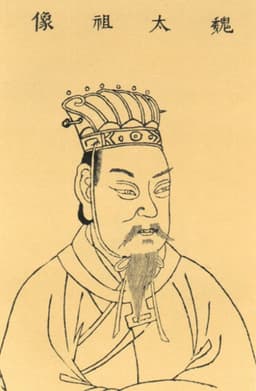
Cao Cao
General · Ancient
77.5Total
Suleiman I
Emperor · Medieval
78.8Total
Basic Information
Born
155
1494
Died
220
1566
Era
Ancient
Medieval
Nationality
China
Ottoman Empire
Occupation
General
Emperor
Civilization
Eastern
Middle Eastern
Score Comparison
Military (10%)
88.0
78.5
Political (20%)
59.0
82.0
Influence (20%)
82.0
85.0
Legacy (20%)
83.0
70.8
Leadership (15%)
64.4
81.7
Strategy (15%)
89.4
74.4
TOTAL
77.5
78.8
Cao Cao — Complete Timeline
190 AD
Formation of the Coalition against Dong ZhuoPolitical Action
Cao Cao joined a coalition of regional warlords led by Yuan Shao to overthrow the tyrannical chancellor Dong Zhuo, who had seized control of the Han court. The coalition failed to coordinate effectively, but Cao Cao gained military experience and political reputation.
CoalitionDong ZhuoHan Dynasty
Impact: national
196 AD
Implementation of Tuntian (Agricultural Colonies)Reform◆ Major
Cao Cao established military agricultural colonies (tuntian) to provide food for his army and refugees. Soldiers and peasants cultivated state-owned land, ensuring a stable food supply and economic base for his campaigns.
AgricultureEconomyMilitary
Impact: regionalconstructive
200 AD
Battle of GuanduWar
Cao Cao decisively defeated Yuan Shao's numerically superior army at Guandu. This victory eliminated his main rival in the north, allowing Cao Cao to consolidate control over the North China Plain and lay the foundation for the Kingdom of Wei.
BattleYuan ShaoUnification
Impact: regional
208 AD
Battle of Red CliffsWar
Cao Cao's southern campaign was halted by the allied forces of Sun Quan and Liu Bei at the Battle of Red Cliffs. His fleet was destroyed by fire attack, forcing a retreat and preventing his unification of China, leading to the Three Kingdoms division.
BattleDefeatThree Kingdoms
Impact: regional
213 AD
Establishment of the Kingdom of WeiPolitical Action◆ Major
Cao Cao was granted the title of Duke of Wei and later King of Wei by the Han emperor, effectively creating a semi-autonomous state within the empire. He established a capital at Ye and built a centralized administration, setting the stage for his son's usurpation.
WeiStatehoodHan Dynasty
Impact: national
Suleiman I — Complete Timeline
1522 AD
Siege of RhodesWar◆ Major
Suleiman I led a massive Ottoman army and fleet to besiege the island of Rhodes, held by the Knights Hospitaller. After a six-month siege, the knights surrendered and were allowed to leave. This victory secured Ottoman control over the eastern Mediterranean.
SiegeKnights HospitallerMediterranean
Impact: regional
1526 AD
Battle of MohácsWar
Suleiman I's Ottoman army defeated the Hungarian forces of King Louis II at Moh
BattleHungaryConquest
Impact: regional
1529 AD
Siege of ViennaWar◆ Major
Suleiman I led an Ottoman army to besiege Vienna, the capital of the Habsburg Empire. The siege failed due to supply problems and the onset of winter. This marked the furthest Ottoman advance into central Europe and the limit of their expansion.
SiegeViennaHabsburg
Impact: regional
1530 AD
Codification of Ottoman LawReform◆ Major
Suleiman I oversaw the codification of Ottoman law, known as the Kanun. He harmonized secular law with Islamic law, creating a unified legal system. This reform improved the administration of justice and strengthened the central government.
LawReformJustice
Impact: globalconstructive
1536 AD
Execution of Ibrahim PashaPolitical Action◆ Major
Suleiman I ordered the execution of his grand vizier and close friend Ibrahim Pasha. Ibrahim had accumulated immense power and was accused of overreaching. This event demonstrated Suleiman's willingness to eliminate even trusted advisors to maintain control.
ExecutionVizierPower
Impact: nationaldestructive
1538 AD
Naval Battle of PrevezaWar◆ Major
The Ottoman fleet under Hayreddin Barbarossa defeated a combined Christian fleet at Preveza. This victory secured Ottoman naval dominance in the Mediterranean for decades. It allowed the Ottomans to control trade routes and raid coastal areas.
Naval BattleBarbarossaMediterranean
Impact: regional
Expert Analysis
Origins
Suleiman I (1494-1566) was born into the Ottoman dynasty, the son of Sultan Selim I. He inherited a vast empire at its zenith, with a strong military and administrative structure. His early education in Istanbul prepared him for rule, and he became sultan at age 26 after his father's death. Cao Cao (155-220 CE) was born in the late Eastern Han dynasty, a time of chaos and decline. He came from a well-connected family but rose through merit, starting as a minor official. His early career involved suppressing rebellions and outmaneuvering rivals in a fractured China. Both leaders emerged from different contexts: Suleiman from imperial succession, Cao Cao from the crucible of civil war.
Rise to Power
Suleiman's rise was smooth due to Ottoman succession laws, but he quickly asserted his authority by executing potential rivals. His early campaigns, like the capture of Belgrade (1521) and Rhodes (1522), established his military reputation. Cao Cao's path was more contested. He gained fame by defeating the Yellow Turban rebellion and later formed a coalition against the warlord Dong Zhuo. His decisive victory at the Battle of Guandu (200 CE) over Yuan Shao secured his dominance in northern China. Both leaders used military prowess, but Cao Cao's rise was more gradual and fraught with risk.
Leadership & Governance
Suleiman was known as "the Lawgiver" for codifying Ottoman law (Kanun), balancing sharia and secular rules. He centralized administration and promoted meritocracy, though his execution of Grand Vizier Ibrahim Pasha showed his ruthless side. Cao Cao implemented the Tuntian system, agricultural colonies that boosted food production and army supply. He also recruited talent based on ability, not birth. Both were effective administrators, but Suleiman's reforms had a lasting impact on the empire's structure, while Cao Cao's policies were more pragmatic for wartime.
Triumph & Tragedy
Suleiman's triumphs include the Battle of Mohács (1526), crushing Hungary, and the peaceful codification of laws. However, the Siege of Vienna (1529) failed, marking the limit of Ottoman expansion. His personal tragedy was executing Ibrahim Pasha, his close friend, due to court intrigues. Cao Cao's greatest victory was at Guandu, but his defeat at Red Cliffs (208 CE) prevented him from unifying all of China. This turning point led to the Three Kingdoms period. Both leaders experienced dramatic reversals, highlighting the fragility of ambition.
Character & Destiny
Suleiman was a patron of arts and architecture, commissioning mosques and supporting poets. He was dignified, yet prone to suspicion, leading to the execution of his son Mustafa. Cao Cao was a poet himself, known for his strategic brilliance and cunning. He was pragmatic and ruthless, famously saying, "I would rather betray the world than have the world betray me." Their destinies were shaped by their eras: Suleiman ruled a stable empire, while Cao Cao fought to create order from chaos. Both left indelible marks, but Suleiman's legacy is more of a golden age, while Cao Cao's is of a brilliant but controversial founder.
Legacy
Suleiman's reign is considered the peak of the Ottoman Empire, with his legal code influencing future sultans. He is remembered as a just ruler and military conqueror. Cao Cao's legacy is complex: he unified the north and laid the foundation for the Wei dynasty, but his methods were harsh. He is a central figure in Chinese literature, like "Romance of the Three Kingdoms," where he is portrayed as a cunning villain. Both leaders are studied for their governance and strategy, but Suleiman's impact on law and culture is more universally recognized.
Conclusion
Comparing Suleiman I and Cao Cao reveals two extraordinary leaders from different worlds. Suleiman's scores (M=78, P=82, I=85, L=71, D=82, S=74, T=79) reflect his balanced rule, while Cao Cao's (M=88, P=59, I=82, L=83, D=64, S=89, T=78) highlight his military genius and political acumen. The score gap of 1.3 in Suleiman's favor is narrow. Suleiman's superiority in influence (85 vs 82) and diplomacy (82 vs 59) gives him the edge, despite Cao Cao's higher military (88 vs 78) and strategy (89 vs 74). Suleiman's codification of law and cultural patronage had a broader, more enduring impact, while Cao Cao's legacy is more localized to China's Three Kingdoms period. Thus, Suleiman I emerges as the more influential historical figure, though Cao Cao's strategic brilliance remains unmatched.
Rankings
🥇
Suleiman ILeader
Mil: 78.5Pol: 82.0Inf: 85.0
78.8
🥈
Cao Cao
Mil: 88.0Pol: 59.0Inf: 82.0
77.5
+1.3 behind
How This Comparison Works
Algorithm
Each figure is scored on 6 dimensions (0—100 scale) based on structured historical data: Military (10%), Political (20%), Influence (20%), Legacy (20%), Leadership (15%), Strategy (15%). The weighted total produces the final ranking.
Data Sources
Scores are computed from structured sub-indicators in the database. Scale factors adjust for era (Ancient ×0.85, Modern ×1.0) and civilization size (Eastern ×1.05, Other ×0.80) to account for differences in population and military scale.
Maximum 3 Figures
Comparisons are limited to 2—3 figures to ensure readability and statistical meaningfulness.
Error Margins
±5 points per dimension — Sub-scores are derived from historical records with inherent uncertainty. Two figures within 5 points on a dimension should be considered roughly equivalent in that area.
Total Score Accuracy
±3 points overall — The weighted combination of 6 dimensions produces a total score with approximately ±3 points of uncertainty. Differences of less than 3 points are not statistically significant— the figures are effectively tied.
Known Limitations
- Historical records are incomplete and uneven across civilizations
- Figures from oral-tradition societies may be underrepresented
- Occupation labels can misclassify multi-role figures
- Scores measure capability and impact, not moral character
- Quantitative scoring is a comparison tool, not absolute truth
Capability Radar
Military (10%) — Battles & Warfare
Battles
95
95
Win Rate
88
92
Expansion
92
95
Political (20%) — Governance & Reform
Reform
88
90
Diplomacy
82
88
Economy
86
85
Influence (20%) — Cultural & Global Reach
Cultural
85
85
Global
75
85
Legacy (20%) — Historical Impact
Historical
92
88
Longevity
90
80
Leadership (15%) — Power & Stability
Tenure
85
95
Stability
78
80
Strategy (15%) — Tactics & Innovation
Strategy
96
90
Tactics
97
88
Reform
90
85
Similar Comparisons
Comments & Discussion
No comments yet. Be the first to share your thoughts!