Loading...
Cao Cao vs Suharto
Cao Cao leads by 20.3 pts · 2 figures compared
…
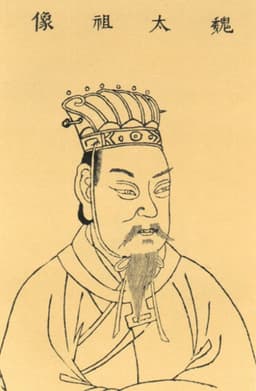
Cao Cao
General · Ancient
77.5Total
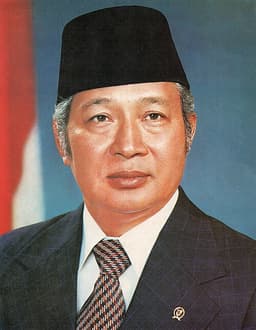
Suharto
General · Modern
57.2Total
Basic Information
Born
155
1921
Died
220
—
Era
Ancient
Modern
Nationality
China
Indonesia
Occupation
General
General
Civilization
Eastern
Eastern
Score Comparison
Military (10%)
88.0
20.0
Political (20%)
59.0
59.3
Influence (20%)
82.0
60.0
Legacy (20%)
83.0
52.0
Leadership (15%)
64.4
82.0
Strategy (15%)
89.4
60.0
TOTAL
77.5
57.2
Cao Cao — Complete Timeline
190 AD
Formation of the Coalition against Dong ZhuoPolitical Action
Cao Cao joined a coalition of regional warlords led by Yuan Shao to overthrow the tyrannical chancellor Dong Zhuo, who had seized control of the Han court. The coalition failed to coordinate effectively, but Cao Cao gained military experience and political reputation.
CoalitionDong ZhuoHan Dynasty
Impact: national
196 AD
Implementation of Tuntian (Agricultural Colonies)Reform◆ Major
Cao Cao established military agricultural colonies (tuntian) to provide food for his army and refugees. Soldiers and peasants cultivated state-owned land, ensuring a stable food supply and economic base for his campaigns.
AgricultureEconomyMilitary
Impact: regionalconstructive
200 AD
Battle of GuanduWar
Cao Cao decisively defeated Yuan Shao's numerically superior army at Guandu. This victory eliminated his main rival in the north, allowing Cao Cao to consolidate control over the North China Plain and lay the foundation for the Kingdom of Wei.
BattleYuan ShaoUnification
Impact: regional
208 AD
Battle of Red CliffsWar
Cao Cao's southern campaign was halted by the allied forces of Sun Quan and Liu Bei at the Battle of Red Cliffs. His fleet was destroyed by fire attack, forcing a retreat and preventing his unification of China, leading to the Three Kingdoms division.
BattleDefeatThree Kingdoms
Impact: regional
213 AD
Establishment of the Kingdom of WeiPolitical Action◆ Major
Cao Cao was granted the title of Duke of Wei and later King of Wei by the Han emperor, effectively creating a semi-autonomous state within the empire. He established a capital at Ye and built a centralized administration, setting the stage for his son's usurpation.
WeiStatehoodHan Dynasty
Impact: national
Suharto — Complete Timeline
1966 AD
Supersemar and Transfer of PowerPolitical Action
President Sukarno signed the Supersemar order, delegating authority to General Suharto to restore order after the 30 September Movement. Suharto used this to ban the Communist Party, purge leftists, and gradually assume executive power, effectively beginning his New Order regime.
SupersemarNew OrderIndonesia
Impact: nationaldestructive
1967 AD
New Order Economic DevelopmentReform◆ Major
Suharto implemented the New Order's economic policies, focusing on foreign investment, agricultural self-sufficiency, and industrialization. The government achieved high growth rates, reduced poverty, and stabilized the economy, but also fostered crony capitalism and corruption.
Economic GrowthDevelopmentIndonesia
Impact: nationalconstructive
1975 AD
Invasion of East TimorWar◆ Major
Suharto ordered the invasion of East Timor after Portugal withdrew. Indonesian forces occupied the territory, leading to a 24-year occupation marked by widespread human rights abuses, including massacres and forced displacement, resulting in an estimated 100,000-200,000 deaths.
East TimorOccupationHuman Rights
Impact: regionaldestructive
1998 AD
Asian Financial Crisis and Fall from PowerPolitical Action
The Asian Financial Crisis devastated Indonesia's economy, leading to massive unemployment and food shortages. Widespread protests and riots forced Suharto to resign in May 1998 after 31 years in power, ending his authoritarian rule and ushering in the Reformasi era.
Financial CrisisResignationReformasi
Impact: nationaltragic
Expert Analysis
Cao Cao vs Suharto
# The Warlord’s Bargain: Cao Cao and Suharto, Power Across the Millennia
In the winter of 200, on the frozen plains of Guandu, a Chinese general with a scarred face and a poet’s soul watched his starving army rout a force ten times its size. Eighteen centuries later, in the sweltering heat of Jakarta, a Javanese general in mirrored sunglasses signed a piece of paper that would give him absolute power over an archipelago of 17,000 islands. Both men rose from chaos. Both built regimes that promised order. But one is remembered as a genius who unified a civilization, the other as a dictator whose name became a curse. The difference lies not in their ambition—both had that in abundance—but in the worlds they inherited and the bargains they struck.
Origins
Cao Cao was born in 155 CE, in the twilight of the Han dynasty, a time when the empire was rotting from within. His father was a eunuch’s adopted son—a stain of illegitimacy in Confucian society that Cao Cao would spend his life trying to burn away. He grew up in Luoyang, the imperial capital, watching courtiers poison each other while bandits burned villages beyond the city walls. He learned early that the old rules were dead, and that survival belonged to those who could write new ones. His education was classical—he could recite the *Book of Songs* by memory—but his instinct was brutal. As a young magistrate, he ordered a man beaten to death for insulting him, then wrote a poem about it.
Suharto was born in 1921 in a thatched hut in Kemusu, a village of rice farmers in central Java. His father was a minor irrigation official who died when Suharto was a child; his mother remarried a farmer. There was no poetry in his childhood, only mud and hunger. He never finished elementary school. The Java of his youth was a Dutch colony, a world of rigid racial hierarchy where a Javanese peasant could be flogged for not stepping aside when a white man passed. Suharto learned to hide his emotions, to smile while calculating, to obey authority while waiting for his turn. He joined the Dutch colonial army as a soldier, then the Japanese-sponsored militia during World War II. By the time Indonesia declared independence in 1945, he had mastered the art of serving masters without becoming their servant.
Rise to Power
Cao Cao’s rise was a series of gambles. In 190, he joined the coalition against the tyrant Dong Zhuo, but when the other warlords hesitated, he attacked alone and was routed. He learned from the defeat. In 196, he seized the figurehead Emperor Xian and moved him to his capital, Xu—a masterstroke that gave him legitimacy over all rivals. He then implemented the *tuntian* system, settling soldiers and refugees on state farms. “Feed your army before you command it,” he wrote. By 200, he had grain reserves while his enemies starved. At Guandu, when Yuan Shao’s army outnumbered him ten to one, Cao Cao waited until a spy revealed the enemy’s supply depot, then burned it in a night raid. The victory was absolute.
Suharto’s path was less heroic, more bureaucratic. In 1965, Indonesia was convulsed by a coup attempt blamed on the Communist Party. General Suharto, then commander of the army’s strategic reserve, did not lead a charge. He waited. He let the chaos deepen, then moved. In 1966, President Sukarno signed the Supersemar order—a single sheet of paper that transferred emergency powers to Suharto. There was no battle, no poetry. Just a signature. Over the next year, Suharto orchestrated the massacre of hundreds of thousands of suspected communists, purged the military, and sidelined Sukarno. By 1967, he was president. He had not won a war; he had won a paperwork.
Leadership & Governance
Cao Cao ruled through a paradox: he was a tyrant who cherished talent. He promoted men based on ability, not birth, and famously said, “If a man is wise, let him be employed even if he is my enemy.” He surrounded himself with strategists, poets, and engineers. His agricultural colonies fed millions; his legal code was harsh but consistent. He wrote some of the finest poetry of the era, lines about “the dew on the mugwort” and “the white dew turns to frost.” But he also massacred entire cities that resisted him. At the Battle of Red Cliffs in 208, his arrogance—and his inability to adapt to naval warfare—cost him his dream of a unified China. The allied forces of Sun Quan and Liu Bei burned his fleet, and he retreated north, never to conquer the south.
Suharto governed through a different bargain: stability for corruption. The New Order, as he called it, crushed all opposition with military force, but it also built roads, schools, and factories. Foreign investment flooded in; rice production soared; the economy grew at 7% a year for two decades. Suharto’s family, meanwhile, became one of the wealthiest dynasties in Asia, controlling everything from clove monopolies to airlines. He ruled through a network of generals and businessmen, rewarding loyalty with licenses and contracts. There was no ideology, only pragmatism. “Development,” he said, “is the only way to achieve justice.” But the justice was for his friends.
Triumph & Tragedy
Cao Cao’s greatest moment was Guandu—the victory that proved strategy could defeat numbers. His greatest failure was Red Cliffs—the defeat that proved even genius has limits. He died in 220, at age 65, having unified the north but not the country. His last poem reads: “The sage of old was not a sage / He only knew what he could know.” It is a confession of humility from a man who had none.
Suharto’s triumph was economic: by the 1990s, Indonesia was a “tiger” economy, lifted by foreign capital and cheap labor. His tragedy was the Asian Financial Crisis of 1997–98. The rupiah collapsed; food prices soared; riots erupted. In May 1998, students occupied the parliament, and Suharto’s generals abandoned him. He resigned after 31 years, a frail old man in a batik shirt, driven from power by the very forces he had unleashed. He died in 2008, under house arrest, unrepentant.
Character & Destiny
Cao Cao was a man of appetite—for power, for women, for poetry, for war. He was impulsive, cruel, and brilliant. He laughed at his own defeats and wrote poems about his own mortality. His personality drove him to take risks that no cautious ruler would attempt, and it was this recklessness that both unified the north and lost the south. He was, in the end, a warlord who wanted to be a philosopher-king.
Suharto was a man of control—of himself, of others, of information. He rarely raised his voice, never wrote poetry, and left no personal writings. His personality was a void; he existed only through his system. This made him durable—he survived coup attempts, economic shocks, and international criticism—but it also made him brittle. When the system cracked in 1998, there was nothing behind it.
Legacy
Cao Cao is remembered as a villain and a hero. In official history, he is a usurper; in folk tales, a cunning fox; in poetry, a tragic figure. His kingdom of Wei did not survive him, but his model of rule—meritocratic, centralized, ruthless—became the template for Chinese empire. His poems are still taught. His strategies are still studied.
Suharto’s legacy is a graveyard. Indonesia’s economy grew under him, but so did corruption and inequality. East Timor, invaded in 1975, was occupied for 24 years with tens of thousands dead. The massacres of 1965–66 remain unpunished. He is not honored; he is endured. The New Order is remembered as a time of order without justice, prosperity without freedom.
Conclusion
Cao Cao and Suharto both seized power in moments of collapse. Both promised order and delivered it—at a price. But Cao Cao lived in a world where power was personal, where a man could write his own epic, and where defeat could be redeemed by poetry. Suharto lived in a world of institutions, of foreign capital, of mass media, where power was a system, not a story. The difference between them is not goodness—neither was good—but the shape of their ambition. Cao Cao wanted to build a kingdom; Suharto wanted to run a company. History forgives the first more easily, because it remembers the second as nothing but a ledger of debts.
Rankings
🥇
Cao CaoLeader
Mil: 88.0Pol: 59.0Inf: 82.0
77.5
🥈
Suharto
Mil: 20.0Pol: 59.3Inf: 60.0
57.2
+20.3 behind
How This Comparison Works
Algorithm
Each figure is scored on 6 dimensions (0—100 scale) based on structured historical data: Military (10%), Political (20%), Influence (20%), Legacy (20%), Leadership (15%), Strategy (15%). The weighted total produces the final ranking.
Data Sources
Scores are computed from structured sub-indicators in the database. Scale factors adjust for era (Ancient ×0.85, Modern ×1.0) and civilization size (Eastern ×1.05, Other ×0.80) to account for differences in population and military scale.
Maximum 3 Figures
Comparisons are limited to 2—3 figures to ensure readability and statistical meaningfulness.
Error Margins
±5 points per dimension — Sub-scores are derived from historical records with inherent uncertainty. Two figures within 5 points on a dimension should be considered roughly equivalent in that area.
Total Score Accuracy
±3 points overall — The weighted combination of 6 dimensions produces a total score with approximately ±3 points of uncertainty. Differences of less than 3 points are not statistically significant— the figures are effectively tied.
Known Limitations
- Historical records are incomplete and uneven across civilizations
- Figures from oral-tradition societies may be underrepresented
- Occupation labels can misclassify multi-role figures
- Scores measure capability and impact, not moral character
- Quantitative scoring is a comparison tool, not absolute truth
Capability Radar
Military (10%) — Battles & Warfare
Battles
95
40
Win Rate
88
45
Expansion
92
30
Political (20%) — Governance & Reform
Reform
88
55
Diplomacy
82
60
Economy
86
65
Influence (20%) — Cultural & Global Reach
Cultural
85
40
Global
75
50
Legacy (20%) — Historical Impact
Historical
92
55
Longevity
90
45
Leadership (15%) — Power & Stability
Tenure
85
85
Stability
78
50
Strategy (15%) — Tactics & Innovation
Strategy
96
40
Tactics
97
35
Reform
90
50
Similar Comparisons
Comments & Discussion
兵圣看客6/16/2026
把曹丞相和这个印尼屠夫并列真是历史虚无主义。曹操败袁绍于官渡,以卵击石扶危厦于将倾;苏哈托嘛,1965年政变后清洗五十万人,连中文都禁了。军事上曹操是战术艺术家,苏哈托只会买美国武器镇压自己人。比什么比?
OracleBones6/16/2026
Let’s talk numbers: Suharto’s family amassed $15-35 billion in 32 years—that’s $1-2 million *per day*. Cao Cao? Historians estimate his wealth generation rate was maybe 300,000 bushels of grain per year, mostly redistributed to soldiers. One was a warlord tax-collector, the other a kleptocrat CEO with human blood on the balance sheet.
竹简刀笔6/16/2026
作为史料考据党,提醒诸位:曹操屠城在《三国志》有据可查——征徐州“坑杀男女数万”。但苏哈托屠的是整个族群(华裔、东帝汶人)。差别在于尺度与目的:曹操杀人为了威慑归附,苏哈托杀人为了种族清洗和黄金储备。悲。
ResPublicaNerd6/16/2026
Both men mastered the art of the "order from chaos" narrative. Cao Cao used poetry and legal codes to legitimize his coup; Suharto used the "Gestapu" conspiracy and Green Revolution rice yields. But here’s the crux: Cao Cao’s *Book of Filial Piety* quotes still echo in Confucian exams today—Suharto’s ideology died with the Reformasi. History’s judgment is brutal: one created a cultural template, the other a cautionary tale.
Historian8406/16/2026
Cao Cao actually unified northern China through administrative genius, not just military might—he implemented land reforms and tax systems that saved millions from starvation. Suharto? He stole billions while his people ate sawdust. The comparison insults Chinese history. One built granaries, the other built Swiss bank accounts.