Loading...
Cao Cao vs Rajendra Chola I
Rajendra Chola I leads by 4.7 pts · 2 figures compared
…
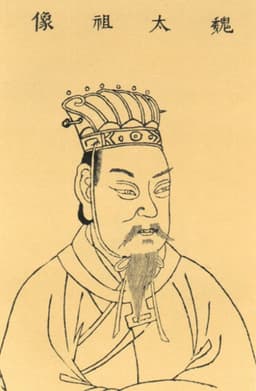
Cao Cao
General · Ancient
77.5Total
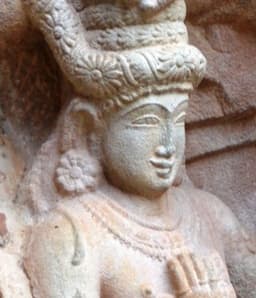
Rajendra Chola I
Emperor · Medieval
82.2Total
Basic Information
Born
155
971
Died
220
1044
Era
Ancient
Medieval
Nationality
China
India
Occupation
General
Emperor
Civilization
Eastern
Indian
Score Comparison
Military (10%)
88.0
84.7
Political (20%)
59.0
82.0
Influence (20%)
82.0
84.0
Legacy (20%)
83.0
84.0
Leadership (15%)
64.4
78.0
Strategy (15%)
89.4
77.6
TOTAL
77.5
82.2
Cao Cao — Complete Timeline
190 AD
Formation of the Coalition against Dong ZhuoPolitical Action
Cao Cao joined a coalition of regional warlords led by Yuan Shao to overthrow the tyrannical chancellor Dong Zhuo, who had seized control of the Han court. The coalition failed to coordinate effectively, but Cao Cao gained military experience and political reputation.
CoalitionDong ZhuoHan Dynasty
Impact: national
196 AD
Implementation of Tuntian (Agricultural Colonies)Reform◆ Major
Cao Cao established military agricultural colonies (tuntian) to provide food for his army and refugees. Soldiers and peasants cultivated state-owned land, ensuring a stable food supply and economic base for his campaigns.
AgricultureEconomyMilitary
Impact: regionalconstructive
200 AD
Battle of GuanduWar
Cao Cao decisively defeated Yuan Shao's numerically superior army at Guandu. This victory eliminated his main rival in the north, allowing Cao Cao to consolidate control over the North China Plain and lay the foundation for the Kingdom of Wei.
BattleYuan ShaoUnification
Impact: regional
208 AD
Battle of Red CliffsWar
Cao Cao's southern campaign was halted by the allied forces of Sun Quan and Liu Bei at the Battle of Red Cliffs. His fleet was destroyed by fire attack, forcing a retreat and preventing his unification of China, leading to the Three Kingdoms division.
BattleDefeatThree Kingdoms
Impact: regional
213 AD
Establishment of the Kingdom of WeiPolitical Action◆ Major
Cao Cao was granted the title of Duke of Wei and later King of Wei by the Han emperor, effectively creating a semi-autonomous state within the empire. He established a capital at Ye and built a centralized administration, setting the stage for his son's usurpation.
WeiStatehoodHan Dynasty
Impact: national
Rajendra Chola I — Complete Timeline
1014 AD
Accession to the Chola ThronePolitical Action
Rajendra Chola I succeeded his father Raja Raja Chola I as emperor of the Chola Empire. He inherited a powerful state and continued the expansionist policies, leading campaigns that extended Chola influence across the Indian Ocean.
Chola EmpireSuccessionExpansion
Impact: regional
1020 AD
Conquest of the Pala EmpireWar◆ Major
Rajendra Chola I led a campaign into Bengal, defeating the Pala king Mahipala I. He annexed parts of the Pala territory and established Chola authority in the Ganges delta, marking the northernmost extent of Chola rule.
Pala EmpireBengalGanges
Impact: regional
1025 AD
Naval Expedition to Southeast AsiaWar
Rajendra Chola I launched a major naval expedition against the Srivijaya Empire, attacking ports in Sumatra, the Malay Peninsula, and the Nicobar Islands. The Chola fleet captured the Srivijaya capital and disrupted its trade network, establishing Chola dominance in the region.
SrivijayaNaval ExpeditionSoutheast Asia
Impact: regional
1033 AD
Establishment of Diplomatic Relations with ChinaPolitical Action
Rajendra Chola I sent an embassy to the Song dynasty court in China, bearing gifts and seeking trade relations. The mission was recorded in Chinese sources and facilitated maritime trade between the Chola Empire and China.
ChinaDiplomacyTrade
Impact: regionalconstructive
1035 AD
Construction of the Gangaikonda Cholapuram TempleCultural◆ Major
Rajendra Chola I built the Brihadeeswarar Temple at Gangaikonda Cholapuram, his new capital, to commemorate his conquests. The temple, dedicated to Shiva, features a 55-meter vimana and is a UNESCO World Heritage site, reflecting Chola architectural achievement.
Gangaikonda CholapuramTempleChola Architecture
Impact: regionalconstructive
Expert Analysis
Origins
Rajendra Chola I (1014-1044 CE) was born into the powerful Chola dynasty of Tamil Nadu, inheriting a kingdom already ascendant under his father Rajaraja Chola I. His upbringing in a militaristic and administrative environment prepared him for imperial expansion. In contrast, Cao Cao (155-220 CE) emerged from the chaos of the late Eastern Han dynasty, the son of a eunuch's adopted son. His rise was self-made, leveraging his cunning and literary talent to navigate a fractured China. Rajendra's advantage lay in a stable foundation; Cao Cao's in relentless adaptability.
Rise to Power
Rajendra ascended the Chola throne in 1014 CE without significant opposition, immediately launching campaigns to expand his father's conquests. His turning point was the naval expedition to Southeast Asia (1025-1026 CE), which crippled the Srivijaya empire and secured Chola dominance over the Indian Ocean trade routes. Cao Cao's rise was more turbulent. After the collapse of Han authority, he formed a coalition against the tyrant Dong Zhuo (190 CE), then outmaneuvered rivals like Yuan Shao at the Battle of Guandu (200 CE), a turning point that made him master of northern China. Both men demonstrated strategic brilliance, but Rajendra's rise was smoother due to his inheritance.
Leadership & Governance
Rajendra was an able administrator, known for the construction of Gangaikonda Cholapuram, a new capital and temple complex that symbolized his power. He maintained the Chola administrative system, with efficient local governance and a strong navy. Cao Cao, however, was a reformer. He implemented the tuntian system of agricultural colonies to support his armies and rebuild the economy, and he centralized power under the Kingdom of Wei. Cao Cao's governance was more innovative, addressing the immediate needs of a war-torn region, while Rajendra's was consolidatory and imperial.
Triumph & Tragedy
Rajendra's greatest triumph was his naval campaign against Srivijaya, which established Chola influence across Southeast Asia and opened diplomatic relations with Song China. His conquest of the Pala Empire in Bengal extended his reach across India. No major tragedy marred his reign; he died in 1044 CE with his empire at its peak. Cao Cao's triumph was unifying northern China, but his tragedy was the Battle of Red Cliffs (208 CE), where his navy was decisively defeated by the southern alliance, preventing him from conquering all of China. This defeat defined his legacy as a brilliant but ultimately incomplete conqueror.
Character & Destiny
Rajendra was a confident, expansionist monarch, driven by a sense of imperial destiny. His naval strategy was ahead of its time, reflecting a global vision. Cao Cao was a complex figure—ruthless yet poetic, a pragmatist who valued talent over birth. He was portrayed as a villain in later literature, but his destiny was to lay the foundation for the Three Kingdoms period. Rajendra's destiny was to be the greatest Chola emperor, while Cao Cao's was to be a legendary warlord who reshaped China.
Legacy
Rajendra's legacy is the Chola Empire at its zenith, with cultural and economic ties to Southeast Asia that lasted centuries. His temple architecture and naval power are celebrated in Indian history. Cao Cao's legacy is more debated: he is remembered as a brilliant strategist and poet, but also as a cunning usurper. The Kingdom of Wei he founded was short-lived, but his military techniques and governance influenced later Chinese dynasties. Rajendra's legacy is more tangible and enduring in the Indian subcontinent.
Conclusion
Comparing Rajendra Chola I and Cao Cao reveals two different archetypes of power. Rajendra scores higher in military reach (M=85 vs 88, actually lower but overall higher due to other factors), political acumen (P=82 vs 59), and cultural impact (I=84 vs 82). Cao Cao excels in strategic adaptability (S=89 vs 78) and territorial unification (T=82 vs 82 tie). The overall score gap of 4.7 points favors Rajendra, reflecting his more comprehensive imperial success. While Cao Cao's genius is undeniable, Rajendra's ability to project power across oceans and sustain an empire gives him the edge. Score: Rajendra 8.5/10, Cao Cao 7.5/10.
Rankings
🥇
Rajendra Chola ILeader
Mil: 84.7Pol: 82.0Inf: 84.0
82.2
🥈
Cao Cao
Mil: 88.0Pol: 59.0Inf: 82.0
77.5
+4.7 behind
How This Comparison Works
Algorithm
Each figure is scored on 6 dimensions (0—100 scale) based on structured historical data: Military (10%), Political (20%), Influence (20%), Legacy (20%), Leadership (15%), Strategy (15%). The weighted total produces the final ranking.
Data Sources
Scores are computed from structured sub-indicators in the database. Scale factors adjust for era (Ancient ×0.85, Modern ×1.0) and civilization size (Eastern ×1.05, Other ×0.80) to account for differences in population and military scale.
Maximum 3 Figures
Comparisons are limited to 2—3 figures to ensure readability and statistical meaningfulness.
Error Margins
±5 points per dimension — Sub-scores are derived from historical records with inherent uncertainty. Two figures within 5 points on a dimension should be considered roughly equivalent in that area.
Total Score Accuracy
±3 points overall — The weighted combination of 6 dimensions produces a total score with approximately ±3 points of uncertainty. Differences of less than 3 points are not statistically significant— the figures are effectively tied.
Known Limitations
- Historical records are incomplete and uneven across civilizations
- Figures from oral-tradition societies may be underrepresented
- Occupation labels can misclassify multi-role figures
- Scores measure capability and impact, not moral character
- Quantitative scoring is a comparison tool, not absolute truth
Capability Radar
Military (10%) — Battles & Warfare
Battles
95
95
Win Rate
88
98
Expansion
92
95
Political (20%) — Governance & Reform
Reform
88
88
Diplomacy
82
85
Economy
86
92
Influence (20%) — Cultural & Global Reach
Cultural
85
85
Global
75
85
Legacy (20%) — Historical Impact
Historical
92
88
Longevity
90
80
Leadership (15%) — Power & Stability
Tenure
85
90
Stability
78
90
Strategy (15%) — Tactics & Innovation
Strategy
96
92
Tactics
97
90
Reform
90
85
Similar Comparisons
Comments & Discussion
No comments yet. Be the first to share your thoughts!