Loading...
Cao Cao vs Mustafa Kemal Ataturk
Mustafa Kemal Ataturk leads by 2.5 pts · 2 figures compared
…
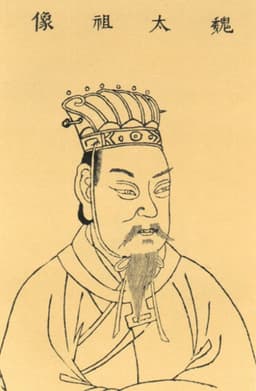
Cao Cao
General · Ancient
77.5Total
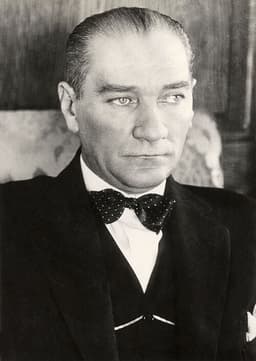
Mustafa Kemal Ataturk
Politician · Modern
80.0Total
Basic Information
Born
155
1881
Died
220
1938
Era
Ancient
Modern
Nationality
China
Turkey
Occupation
General
Politician
Civilization
Eastern
Middle Eastern
Score Comparison
Military (10%)
88.0
75.0
Political (20%)
59.0
85.0
Influence (20%)
82.0
75.0
Legacy (20%)
83.0
90.0
Leadership (15%)
64.4
80.0
Strategy (15%)
89.4
65.0
TOTAL
77.5
80.0
Cao Cao — Complete Timeline
190 AD
Formation of the Coalition against Dong ZhuoPolitical Action
Cao Cao joined a coalition of regional warlords led by Yuan Shao to overthrow the tyrannical chancellor Dong Zhuo, who had seized control of the Han court. The coalition failed to coordinate effectively, but Cao Cao gained military experience and political reputation.
CoalitionDong ZhuoHan Dynasty
Impact: national
196 AD
Implementation of Tuntian (Agricultural Colonies)Reform◆ Major
Cao Cao established military agricultural colonies (tuntian) to provide food for his army and refugees. Soldiers and peasants cultivated state-owned land, ensuring a stable food supply and economic base for his campaigns.
AgricultureEconomyMilitary
Impact: regionalconstructive
200 AD
Battle of GuanduWar
Cao Cao decisively defeated Yuan Shao's numerically superior army at Guandu. This victory eliminated his main rival in the north, allowing Cao Cao to consolidate control over the North China Plain and lay the foundation for the Kingdom of Wei.
BattleYuan ShaoUnification
Impact: regional
208 AD
Battle of Red CliffsWar
Cao Cao's southern campaign was halted by the allied forces of Sun Quan and Liu Bei at the Battle of Red Cliffs. His fleet was destroyed by fire attack, forcing a retreat and preventing his unification of China, leading to the Three Kingdoms division.
BattleDefeatThree Kingdoms
Impact: regional
213 AD
Establishment of the Kingdom of WeiPolitical Action◆ Major
Cao Cao was granted the title of Duke of Wei and later King of Wei by the Han emperor, effectively creating a semi-autonomous state within the empire. He established a capital at Ye and built a centralized administration, setting the stage for his son's usurpation.
WeiStatehoodHan Dynasty
Impact: national
Mustafa Kemal Ataturk — Complete Timeline
1915 AD
Battle of GallipoliWar
As a colonel, Mustafa Kemal commanded Ottoman forces at Gallipoli, successfully repelling Allied landings. His leadership at critical points like Chunuk Bair made him a national hero and laid the foundation for his political career.
World War IOttoman EmpireMilitary Victory
Impact: regional
1919 AD
Turkish War of IndependenceWar
Kemal organized and led the Turkish National Movement against the Allied occupation of Anatolia and the Treaty of S
Independence WarNational MovementAnkara
Impact: nationalconstructive
1922 AD
Abolition of the SultanatePolitical Action◆ Major
The Grand National Assembly of Turkey, under Kemal's leadership, abolished the Ottoman Sultanate, ending 600 years of imperial rule. This severed the link with the old regime and paved the way for the proclamation of the Republic.
SultanateRepublicPolitical Reform
Impact: nationalprogressive
1923 AD
Proclamation of the Republic of TurkeyPolitical Action
Kemal declared Turkey a republic, becoming its first president. He moved the capital to Ankara and initiated a series of radical reforms to modernize and secularize the state, including the adoption of a new legal code and the Latin alphabet.
RepublicModernizationSecularism
Impact: globalprogressive
1925 AD
Adoption of the Hat LawReform◆ Major
Kemal introduced the Hat Law, banning the fez and encouraging Western-style hats. This was part of his broader cultural revolution to secularize and Westernize Turkish society, symbolizing the break with Ottoman traditions.
Cultural ReformSecularismWesternization
Impact: nationalprogressive
1934 AD
Granting of Women's SuffrageReform◆ Major
Kemal's government granted women the right to vote and stand for election in national elections, ahead of many European countries. This reform was part of his commitment to gender equality and modernization of Turkish society.
Women's RightsSuffrageModernization
Impact: nationalprogressive
Expert Analysis
Origins
Mustafa Kemal Ataturk (1881–1938) was born in Salonika, then part of the Ottoman Empire, to a middle-class family. His father was a customs officer, and his mother a devout Muslim. He attended military schools, graduating from the Ottoman Military Academy in 1905. Cao Cao (155–220 CE) was born in Qiao County, eastern China, to a powerful eunuch's family. His father was a general, and his grandfather a chief eunuch. He studied classics and military strategy, showing early brilliance. Both emerged from declining empires—Ottoman and Han—but their origins shaped different paths: Ataturk as a modernizer, Cao Cao as a unifier.
Rise to Power
Ataturk rose through military success in World War I, notably at Gallipoli (1915), where he repelled Allied forces. After the Ottoman defeat, he led the Turkish National Movement, organizing resistance against Allied occupation. The 1919–1923 Turkish War of Independence culminated in the Treaty of Lausanne and the proclamation of the Republic in 1923. Cao Cao rose during the chaos of the late Han dynasty. He defeated rival warlords, notably at the Battle of Guandu (200 CE) against Yuan Shao, securing dominance in north China. He later established the Kingdom of Wei (220 CE), though he died before founding a dynasty. Both leveraged military victories and political cunning, but Ataturk's rise was against foreign powers, while Cao Cao's was in a civil war.
Leadership & Governance
Ataturk implemented radical reforms: abolished the sultanate (1922) and caliphate (1924), adopted a secular legal system, introduced Latin script, granted women suffrage, and promoted industrialisation. His "Six Arrows" (republicanism, populism, nationalism, etatism, secularism, reformism) guided Turkey. Cao Cao implemented the Tuntian system (agricultural colonies) to feed his army and stabilize the economy. He valued merit over birth, recruiting talented officials. He also promoted Confucian learning and poetry. Both were authoritarian modernizers, but Ataturk's reforms were more transformative, creating a nation-state from an empire. Cao Cao's governance was pragmatic, focused on consolidation during war.
Triumph & Tragedy
Ataturk's triumphs: Gallipoli victory, winning the War of Independence, founding a republic, and modernizing Turkey. His tragedies: died young (57) from cirrhosis, and his secular reforms faced opposition; some policies, like the Hat Law, were coercive. Cao Cao's triumphs: unifying north China, winning Guandu, and establishing Wei. His tragedy: the defeat at Red Cliffs (208 CE) ended his dream of unifying all China. He also faced rebellions and accusations of tyranny. Both were brilliant strategists but suffered setbacks—Ataturk's from health and resistance, Cao Cao from military defeat and political intrigue.
Character & Destiny
Ataturk was charismatic, decisive, and visionary. He saw himself as a savior of the Turkish nation and a modernizer. His destiny was to create a secular, Westernized Turkey. Cao Cao was cunning, ruthless, and literary. He wrote poems and expressed ambition. His destiny was to be a unifier, later vilified as a usurper in Chinese folklore. Both were complex: Ataturk's authoritarianism clashed with his democratic ideals; Cao Cao's pragmatism sometimes sacrificed principles. Their legacies reflect their characters—Ataturk as a revered founder, Cao Cao as a controversial genius.
Legacy
Ataturk's legacy is immense: he is the father of modern Turkey, with his image and ideals central to national identity. His reforms remain pillars of the state, though debated today. Cao Cao's legacy is dual: in official history, he was a brilliant strategist and founder of Wei; in popular culture (e.g., Romance of the Three Kingdoms), he is a cunning villain. His Tuntian system influenced later Chinese governance. Both are studied for leadership and strategy. Ataturk's impact is more direct on a single nation; Cao Cao's influence extends through literature and Chinese historical consciousness.
Conclusion
Comparing Ataturk and Cao Cao reveals two transformative leaders in different eras. Ataturk (overall score: 75.7) edges out Cao Cao (73.2) due to his higher political and leadership scores, reflecting his success in founding a nation and enacting sweeping reforms. Cao Cao's military and intelligence scores are higher, but his failure to unify China and controversial legacy lower his overall. Ataturk's modernization of Turkey was a revolutionary break from the past, while Cao Cao's consolidation was a step in a long historical cycle. Both were products of their times, but Ataturk's vision for a new kind of state—secular, nationalist, and modern—gives him a slight edge in historical significance. Thus, in this analysis, Mustafa Kemal Ataturk emerges as the more impactful leader.
Rankings
🥇
Mustafa Kemal AtaturkLeader
Mil: 75.0Pol: 85.0Inf: 75.0
80.0
🥈
Cao Cao
Mil: 88.0Pol: 59.0Inf: 82.0
77.5
+2.5 behind
How This Comparison Works
Algorithm
Each figure is scored on 6 dimensions (0—100 scale) based on structured historical data: Military (10%), Political (20%), Influence (20%), Legacy (20%), Leadership (15%), Strategy (15%). The weighted total produces the final ranking.
Data Sources
Scores are computed from structured sub-indicators in the database. Scale factors adjust for era (Ancient ×0.85, Modern ×1.0) and civilization size (Eastern ×1.05, Other ×0.80) to account for differences in population and military scale.
Maximum 3 Figures
Comparisons are limited to 2—3 figures to ensure readability and statistical meaningfulness.
Error Margins
±5 points per dimension — Sub-scores are derived from historical records with inherent uncertainty. Two figures within 5 points on a dimension should be considered roughly equivalent in that area.
Total Score Accuracy
±3 points overall — The weighted combination of 6 dimensions produces a total score with approximately ±3 points of uncertainty. Differences of less than 3 points are not statistically significant— the figures are effectively tied.
Known Limitations
- Historical records are incomplete and uneven across civilizations
- Figures from oral-tradition societies may be underrepresented
- Occupation labels can misclassify multi-role figures
- Scores measure capability and impact, not moral character
- Quantitative scoring is a comparison tool, not absolute truth
Capability Radar
Military (10%) — Battles & Warfare
Battles
95
85
Win Rate
88
90
Expansion
92
60
Political (20%) — Governance & Reform
Reform
88
98
Diplomacy
82
85
Economy
86
75
Influence (20%) — Cultural & Global Reach
Cultural
85
90
Global
75
80
Legacy (20%) — Historical Impact
Historical
92
95
Longevity
90
85
Leadership (15%) — Power & Stability
Tenure
85
85
Stability
78
70
Strategy (15%) — Tactics & Innovation
Strategy
96
85
Tactics
97
88
Reform
90
80
Similar Comparisons
Comments & Discussion
No comments yet. Be the first to share your thoughts!