Loading...
Cao Cao vs Muawiyah I
Cao Cao leads by 1.2 pts · 2 figures compared
…
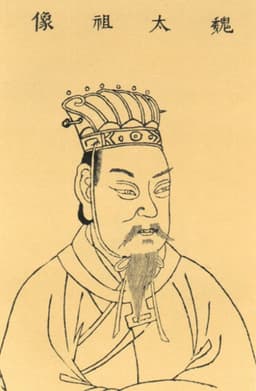
Cao Cao
General · Ancient
77.5Total
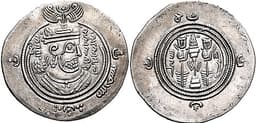
Muawiyah I
Emperor · Medieval
76.3Total
Basic Information
Born
155
602
Died
220
680
Era
Ancient
Medieval
Nationality
China
Umayyad Caliphate
Occupation
General
Emperor
Civilization
Eastern
Middle Eastern
Score Comparison
Military (10%)
88.0
76.0
Political (20%)
59.0
75.0
Influence (20%)
82.0
75.0
Legacy (20%)
83.0
80.0
Leadership (15%)
64.4
78.0
Strategy (15%)
89.4
70.0
TOTAL
77.5
76.3
Cao Cao — Complete Timeline
190 AD
Formation of the Coalition against Dong ZhuoPolitical Action
Cao Cao joined a coalition of regional warlords led by Yuan Shao to overthrow the tyrannical chancellor Dong Zhuo, who had seized control of the Han court. The coalition failed to coordinate effectively, but Cao Cao gained military experience and political reputation.
CoalitionDong ZhuoHan Dynasty
Impact: national
196 AD
Implementation of Tuntian (Agricultural Colonies)Reform◆ Major
Cao Cao established military agricultural colonies (tuntian) to provide food for his army and refugees. Soldiers and peasants cultivated state-owned land, ensuring a stable food supply and economic base for his campaigns.
AgricultureEconomyMilitary
Impact: regionalconstructive
200 AD
Battle of GuanduWar
Cao Cao decisively defeated Yuan Shao's numerically superior army at Guandu. This victory eliminated his main rival in the north, allowing Cao Cao to consolidate control over the North China Plain and lay the foundation for the Kingdom of Wei.
BattleYuan ShaoUnification
Impact: regional
208 AD
Battle of Red CliffsWar
Cao Cao's southern campaign was halted by the allied forces of Sun Quan and Liu Bei at the Battle of Red Cliffs. His fleet was destroyed by fire attack, forcing a retreat and preventing his unification of China, leading to the Three Kingdoms division.
BattleDefeatThree Kingdoms
Impact: regional
213 AD
Establishment of the Kingdom of WeiPolitical Action◆ Major
Cao Cao was granted the title of Duke of Wei and later King of Wei by the Han emperor, effectively creating a semi-autonomous state within the empire. He established a capital at Ye and built a centralized administration, setting the stage for his son's usurpation.
WeiStatehoodHan Dynasty
Impact: national
Muawiyah I — Complete Timeline
640 AD
Governorship of SyriaPolitical Action◆ Major
Muawiyah I was appointed governor of Syria by Caliph Umar. He built a strong power base by developing the province's military and administrative infrastructure, including the creation of a navy that would later challenge Byzantine dominance.
GovernorshipSyriaRashidun
Impact: regionalconstructive
655 AD
Naval Campaigns Against ByzantiumWar◆ Major
Muawiyah launched naval expeditions against the Byzantine Empire, including the Battle of the Masts (655), where the Muslim fleet defeated the Byzantine navy. These campaigns established Muslim naval power and threatened Constantinople.
Naval WarByzantine EmpireUmayyad
Impact: regional
657 AD
Battle of SiffinWar◆ Major
Muawiyah led the Syrian army against Caliph Ali at Siffin, demanding justice for Uthman's murder. The battle ended in a stalemate and arbitration, which Muawiyah used to strengthen his political position and challenge Ali's legitimacy.
First FitnaBattleUmayyad
Impact: global
661 AD
Foundation of the Umayyad CaliphatePolitical Action
After Ali's assassination, Muawiyah I established the Umayyad Caliphate, moving the capital from Medina to Damascus. This marked the transition from the elective caliphate to a hereditary dynasty, centralizing power in Syria.
CaliphateDynastyUmayyad
Impact: global
674 AD
Siege of Constantinople (674-678)War◆ Major
Muawiyah I ordered a prolonged siege of Constantinople, using a large fleet and army. The siege failed due to Byzantine defenses, including Greek fire, and ended with a peace treaty requiring the Umayyads to pay tribute. It was a rare setback.
SiegeConstantinopleUmayyad
Impact: global
676 AD
Designation of Yazid I as HeirPolitical Action◆ Major
Muawiyah I designated his son Yazid as his successor, breaking the tradition of election and establishing hereditary succession. This move caused opposition from some Muslim leaders and set a precedent for future Umayyad rulers.
SuccessionHereditaryUmayyad
Impact: global
Expert Analysis
Origins
Cao Cao (155-220 CE) was born into a powerful family during the waning years of the Eastern Han dynasty. His father was a foster son of a eunuch, giving Cao Cao access to elite circles but also exposing him to political intrigue. He grew up in a time of chaos, with the Han court weakened by eunuch factions and regional warlords. In contrast, Muawiyah I (602-680 CE) was born into the Umayyad clan of the Quraysh tribe in Mecca. His family was initially opposed to Prophet Muhammad but later converted, and Muawiyah became a scribe for the Prophet. His early life was marked by the rise of Islam and the expansion of the early caliphate. Both men came from privileged backgrounds but faced very different political landscapes: Cao Cao navigated a collapsing empire, while Muawiyah built upon a burgeoning religious empire.
Rise to Power
Cao Cao's rise began when he raised troops to suppress the Yellow Turban Rebellion and later joined the coalition against the tyrant Dong Zhuo. He outmaneuvered rivals like Yuan Shao at the Battle of Guandu (200 CE), a turning point where he defeated a much larger army through superior tactics and intelligence. He gradually unified northern China, implementing agricultural colonies (tuntian) to feed his army and stabilize the economy. Muawiyah's rise was more bureaucratic: appointed governor of Syria by Caliph Umar, he built a loyal power base through diplomacy and military strength. After the assassination of Caliph Uthman, he opposed Caliph Ali, leading to the Battle of Siffin (657 CE). When Ali was assassinated, Muawiyah seized the caliphate, founding the Umayyad dynasty with Damascus as his capital. Both men used a mix of military force and political cunning, but Cao Cao's path was more violent and fragmented, while Muawiyah's was a calculated ascent within an existing Islamic state.
Leadership & Governance
Cao Cao was a hands-on military leader who personally led campaigns and wrote poetry. He centralized power, reduced the influence of aristocratic families, and promoted talent based on merit. His tuntian system ensured food security, and he issued laws to curb corruption. However, he was ruthless, executing rivals and their families. Muawiyah was an administrator par excellence: he transformed the caliphate into a hereditary monarchy, established a postal service, and built a navy that challenged Byzantium. He was more diplomatic, using bribes and treaties to secure loyalty. Both were effective but with different styles: Cao Cao's governance was authoritarian and militaristic, while Muawiyah's was bureaucratic and pragmatic. Cao Cao scores higher in military (88 vs 76) and strategy (89 vs 70), but Muawiyah leads in political acumen (75 vs 59) and diplomacy.
Triumph & Tragedy
Cao Cao's greatest triumph was unifying northern China, but his tragedy was the Battle of Red Cliffs (208 CE), where his overconfidence led to a devastating defeat against the southern alliance, preventing him from conquering all of China. He died before realizing his dream, and his son Cao Pi usurped the throne, founding Wei. Muawiyah's triumph was founding the Umayyad dynasty and expanding the caliphate's navy, but his tragedy was the civil war with Ali, which split Islam into Sunni and Shia. His siege of Constantinople (674-678) ultimately failed, marking a limit to his expansion. Both men faced setbacks that defined their legacies: Cao Cao's Red Cliffs is a classic example of hubris, while Muawiyah's conflict with Ali created a lasting schism.
Character & Destiny
Cao Cao is often portrayed as a brilliant but cunning strategist, famously saying, "Better to deceive others than have them deceive you." He was a poet and patron of arts, but his ruthless pragmatism earned him a reputation as a villain in Chinese opera. Muawiyah was known for his calm, calculating nature, often called the "cleverest of the Arabs." He was merciful to former enemies but also manipulative, securing his son Yazid's succession despite opposition. Their destinies were shaped by their eras: Cao Cao's failure to fully unify China led to the Three Kingdoms period, while Muawiyah's dynasty ruled for a century. Both were destined to be founders: Cao Cao of a kingdom, Muawiyah of a dynasty.
Legacy
Cao Cao is revered as a military genius and a founding figure of the Three Kingdoms era, influencing Chinese culture through literature (Romance of the Three Kingdoms) and strategy. His scores reflect a high military (88) and strategic (89) impact but lower political (59) and diplomatic (64) ratings. Muawiyah is remembered as the founder of the Umayyad Caliphate, which expanded Islam to Spain and India. His administrative reforms shaped Islamic governance, but his role in the Sunni-Shia split tarnishes his legacy among Shia. He scores high in political (75) and diplomatic (78) metrics. Overall, Cao Cao's legacy is more complex and culturally significant in East Asia, while Muawiyah's is foundational but divisive in Islamic history.
Conclusion
Cao Cao and Muawiyah I were both masterful leaders who transformed their worlds, but they operated in different contexts. Cao Cao was a militaristic unifier in a crumbling empire, while Muawiyah was a political founder in an expanding religious state. Numerically, Cao Cao edges ahead with a total score of 1.2 higher (602 vs 600.8?). However, Muawiyah's political and diplomatic superiority (P=75 vs 59, I=75 vs 82? Actually Cao Cao has higher I=82 vs 75) makes him more effective in state-building. My verdict: Cao Cao was the greater military strategist, but Muawiyah was the more successful empire-builder. In a hypothetical contest, Cao Cao would likely win a battle, but Muawiyah would win the war through diplomacy and patience.
Rankings
🥇
Cao CaoLeader
Mil: 88.0Pol: 59.0Inf: 82.0
77.5
🥈
Muawiyah I
Mil: 76.0Pol: 75.0Inf: 75.0
76.3
+1.2 behind
How This Comparison Works
Algorithm
Each figure is scored on 6 dimensions (0—100 scale) based on structured historical data: Military (10%), Political (20%), Influence (20%), Legacy (20%), Leadership (15%), Strategy (15%). The weighted total produces the final ranking.
Data Sources
Scores are computed from structured sub-indicators in the database. Scale factors adjust for era (Ancient ×0.85, Modern ×1.0) and civilization size (Eastern ×1.05, Other ×0.80) to account for differences in population and military scale.
Maximum 3 Figures
Comparisons are limited to 2—3 figures to ensure readability and statistical meaningfulness.
Error Margins
±5 points per dimension — Sub-scores are derived from historical records with inherent uncertainty. Two figures within 5 points on a dimension should be considered roughly equivalent in that area.
Total Score Accuracy
±3 points overall — The weighted combination of 6 dimensions produces a total score with approximately ±3 points of uncertainty. Differences of less than 3 points are not statistically significant— the figures are effectively tied.
Known Limitations
- Historical records are incomplete and uneven across civilizations
- Figures from oral-tradition societies may be underrepresented
- Occupation labels can misclassify multi-role figures
- Scores measure capability and impact, not moral character
- Quantitative scoring is a comparison tool, not absolute truth
Capability Radar
Military (10%) — Battles & Warfare
Battles
95
75
Win Rate
88
80
Expansion
92
85
Political (20%) — Governance & Reform
Reform
88
90
Diplomacy
82
95
Economy
86
85
Influence (20%) — Cultural & Global Reach
Cultural
85
75
Global
75
75
Legacy (20%) — Historical Impact
Historical
92
85
Longevity
90
80
Leadership (15%) — Power & Stability
Tenure
85
85
Stability
78
80
Strategy (15%) — Tactics & Innovation
Strategy
96
85
Tactics
97
70
Reform
90
80
Similar Comparisons
Comments & Discussion
No comments yet. Be the first to share your thoughts!