Loading...
Cao Cao vs Marouf al-Bakhit
Cao Cao leads by 35.9 pts · 2 figures compared
…
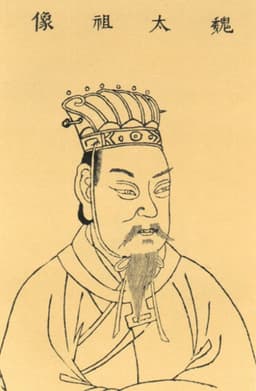
Cao Cao
General · Ancient
77.5Total
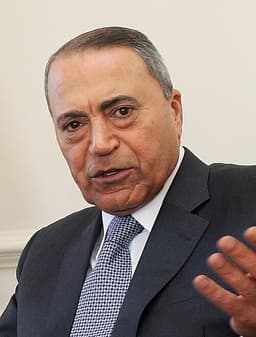
Marouf al-Bakhit
General · Modern
41.6Total
Basic Information
Born
155
1947
Died
220
—
Era
Ancient
Modern
Nationality
China
Jordan
Occupation
General
General
Civilization
Eastern
Middle Eastern
Score Comparison
Military (10%)
88.0
10.2
Political (20%)
59.0
61.3
Influence (20%)
82.0
48.6
Legacy (20%)
83.0
38.3
Leadership (15%)
64.4
40.0
Strategy (15%)
89.4
36.8
TOTAL
77.5
41.6
Cao Cao — Complete Timeline
190 AD
Formation of the Coalition against Dong ZhuoPolitical Action
Cao Cao joined a coalition of regional warlords led by Yuan Shao to overthrow the tyrannical chancellor Dong Zhuo, who had seized control of the Han court. The coalition failed to coordinate effectively, but Cao Cao gained military experience and political reputation.
CoalitionDong ZhuoHan Dynasty
Impact: national
196 AD
Implementation of Tuntian (Agricultural Colonies)Reform◆ Major
Cao Cao established military agricultural colonies (tuntian) to provide food for his army and refugees. Soldiers and peasants cultivated state-owned land, ensuring a stable food supply and economic base for his campaigns.
AgricultureEconomyMilitary
Impact: regionalconstructive
200 AD
Battle of GuanduWar
Cao Cao decisively defeated Yuan Shao's numerically superior army at Guandu. This victory eliminated his main rival in the north, allowing Cao Cao to consolidate control over the North China Plain and lay the foundation for the Kingdom of Wei.
BattleYuan ShaoUnification
Impact: regional
208 AD
Battle of Red CliffsWar
Cao Cao's southern campaign was halted by the allied forces of Sun Quan and Liu Bei at the Battle of Red Cliffs. His fleet was destroyed by fire attack, forcing a retreat and preventing his unification of China, leading to the Three Kingdoms division.
BattleDefeatThree Kingdoms
Impact: regional
213 AD
Establishment of the Kingdom of WeiPolitical Action◆ Major
Cao Cao was granted the title of Duke of Wei and later King of Wei by the Han emperor, effectively creating a semi-autonomous state within the empire. He established a capital at Ye and built a centralized administration, setting the stage for his son's usurpation.
WeiStatehoodHan Dynasty
Impact: national
Marouf al-Bakhit — Complete Timeline
2005 AD
Appointed Prime Minister of JordanPolitical Action◆ Major
King Abdullah II appointed Marouf al-Bakhit as Prime Minister of Jordan in November 2005, following the 2005 Amman bombings. Al-Bakhit, a former intelligence chief, was tasked with restoring security and stability.
JordanPrime MinisterAppointment
Impact: national
2007 AD
Resigned as Prime MinisterPolitical Action
Marouf al-Bakhit resigned as Prime Minister of Jordan in November 2007 after parliamentary elections. His resignation followed criticism of economic policies and political reforms.
JordanPrime MinisterResignation
Impact: national
2011 AD
Appointed Prime Minister for Second TermPolitical Action◆ Major
King Abdullah II appointed Marouf al-Bakhit as Prime Minister again in February 2011, during the Arab Spring protests. Al-Bakhit was tasked with implementing political reforms to address public demands.
JordanArab SpringPrime Minister
Impact: national
Resigned as Prime Minister for Second TermPolitical Action
Marouf al-Bakhit resigned as Prime Minister in October 2011, after failing to satisfy protesters' demands for faster political reforms. His resignation marked the end of his second term.
JordanArab SpringResignation
Impact: national
Expert Analysis
Cao Cao vs Marouf al-Bakhit
# The General and the Governor
On the banks of the Yellow River in the year 200, a warlord named Cao Cao watched his outnumbered army prepare for a battle that would decide the fate of northern China. Across the centuries, in the corridors of power in Amman, another man in uniform—Marouf al-Bakhit—waited for a phone call from his king that would thrust him into the chaos of the Arab Spring. One commanded armies and wrote poetry; the other managed security files and navigated palace politics. Both were generals. But their worlds, their ambitions, and their legacies could not have been more different.
Origins
Cao Cao was born in 155 CE into a China collapsing under the weight of a decaying Han dynasty. His father was a eunuch's adopted son, a stain on the family honor that Cao Cao would spend his life trying to erase. From childhood, he was shrewd, ruthless, and deeply literate—a combination that would make him both feared and admired. The Eastern Han was dying, and young men of ambition had two choices: cling to the old order or forge a new one. Cao Cao chose the latter.
Marouf al-Bakhit was born in 1947 in a Jordan still finding its feet after the British Mandate. He grew up in a kingdom that survived by balancing on a knife's edge between Palestinians, Bedouins, and the great powers of the Cold War. His path was not one of rebellion but of service. He joined the military, then the intelligence service, learning the art of survival in a state where loyalty was the highest currency. Unlike Cao Cao, who inherited a world in flames, al-Bakhit inherited a world of careful, brittle stability.
Rise to Power
Cao Cao's rise was a series of gambles. In 190, he joined the coalition against the tyrant Dong Zhuo, but when the other warlords hesitated, he acted alone—and lost. He learned from defeat. By 196, he had seized the emperor, establishing a puppet court that gave him legitimacy. He then implemented the *tuntian* system, military agricultural colonies that fed his army while others starved. His turning point came in 200 at the Battle of Guandu, where he crushed Yuan Shao, his greatest rival, despite being outnumbered. It was a victory of strategy over strength, of patience over pride.
Al-Bakhit's rise was quieter, more institutional. He served as Jordan's intelligence chief, a man who knew secrets and kept them. In 2005, after the Amman bombings, King Abdullah II appointed him Prime Minister—a general to restore order. His first term was uneventful, ending in 2007 after parliamentary elections. Then came 2011. As protests swept the Arab world, the king turned to al-Bakhit again. His task: to absorb the shock of the Arab Spring without breaking the kingdom. He was not a conqueror but a firefighter.
Leadership & Governance
Cao Cao governed like a man building an empire from rubble. He was a reformer: his *tuntian* colonies turned refugees into soldiers and farmers into taxpayers. He was a patron of literature, gathering poets and thinkers at his court. But he was also a killer. He massacred entire cities that resisted him, including the slaughter of thousands at Xuzhou. His philosophy was pragmatic: "Better to wrong the world than have the world wrong me," he reportedly said. He ruled through fear, cunning, and an unshakable belief in his own destiny.
Al-Bakhit governed like a man trying not to break the furniture. His reforms were cautious: economic measures, modest political openings. He faced protests that demanded the king's powers be curbed, but he could not touch the throne. He offered concessions—a new election law, anti-corruption measures—but they were never enough. His military background made him a natural enforcer, but he lacked the authority to reshape Jordan. He was a caretaker in a storm, not an architect of a new order.
Triumph & Tragedy
Cao Cao's greatest triumph was the unification of northern China. By 213, he had established the Kingdom of Wei, a semi-autonomous state that would outlive him. His tragedy was the Battle of Red Cliffs in 208, where his southern ambitions were crushed by the allied forces of Sun Quan and Liu Bei. The defeat was total: his fleet burned, his army shattered. He never again attempted to conquer the south. It was a reminder that even genius can be humbled by nature and alliance.
Al-Bakhit's triumph was survival. He kept Jordan stable during the Arab Spring when Egypt, Libya, and Syria descended into chaos. His tragedy was that he could not satisfy anyone. Protesters saw him as a tool of the regime; the regime saw him as a temporary fix. He resigned in October 2011, his second term ending with the same quiet defeat as his first. He had no Red Cliffs, only a slow erosion of trust.
Character & Destiny
Cao Cao was a man of contradictions: a poet who wrote tender verses about the moon and a warlord who ordered mass executions. His personality drove his decisions—the paranoia that made him strike first, the ambition that made him risk everything. He was, in the end, a man who believed he could shape history. And he did.
Al-Bakhit was a man of caution. His intelligence training taught him to see threats everywhere and to move slowly. He was loyal, competent, and uninspiring. He did not shape history; he managed it. In a monarchy, that was enough. But it was also his limitation. He was a servant, not a sovereign.
Legacy
Cao Cao is remembered as a titan—the founder of Wei, the villain of novels, the hero of historians. His poetry is still read; his strategies are still studied. He is a symbol of ambition, both admirable and terrifying.
Al-Bakhit is barely remembered. He is a footnote in Jordan's modern history, a name in a list of prime ministers. He served his king and his country, but he left no mark on the world. His legacy is the absence of disaster—a stable Jordan that might have been less stable without him.
Conclusion
What separates a general who changes the world from a general who merely manages it? It is not talent alone, nor luck. Cao Cao lived in an age when empires crumbled and everything was possible. Al-Bakhit lived in an age when the only goal was to keep the building standing. One was a creator; the other was a guardian. Both did what their times demanded. But history, as always, remembers the ones who built, not the ones who held the line.
Rankings
🥇
Cao CaoLeader
Mil: 88.0Pol: 59.0Inf: 82.0
77.5
🥈
Marouf al-Bakhit
Mil: 10.2Pol: 61.3Inf: 48.6
41.6
+35.9 behind
How This Comparison Works
Algorithm
Each figure is scored on 6 dimensions (0—100 scale) based on structured historical data: Military (10%), Political (20%), Influence (20%), Legacy (20%), Leadership (15%), Strategy (15%). The weighted total produces the final ranking.
Data Sources
Scores are computed from structured sub-indicators in the database. Scale factors adjust for era (Ancient ×0.85, Modern ×1.0) and civilization size (Eastern ×1.05, Other ×0.80) to account for differences in population and military scale.
Maximum 3 Figures
Comparisons are limited to 2—3 figures to ensure readability and statistical meaningfulness.
Error Margins
±5 points per dimension — Sub-scores are derived from historical records with inherent uncertainty. Two figures within 5 points on a dimension should be considered roughly equivalent in that area.
Total Score Accuracy
±3 points overall — The weighted combination of 6 dimensions produces a total score with approximately ±3 points of uncertainty. Differences of less than 3 points are not statistically significant— the figures are effectively tied.
Known Limitations
- Historical records are incomplete and uneven across civilizations
- Figures from oral-tradition societies may be underrepresented
- Occupation labels can misclassify multi-role figures
- Scores measure capability and impact, not moral character
- Quantitative scoring is a comparison tool, not absolute truth
Capability Radar
Military (10%) — Battles & Warfare
Battles
95
5
Win Rate
88
5
Expansion
92
5
Political (20%) — Governance & Reform
Reform
88
30
Diplomacy
82
40
Economy
86
30
Influence (20%) — Cultural & Global Reach
Cultural
85
10
Global
75
10
Legacy (20%) — Historical Impact
Historical
92
10
Longevity
90
10
Leadership (15%) — Power & Stability
Tenure
85
40
Stability
78
35
Strategy (15%) — Tactics & Innovation
Strategy
96
10
Tactics
97
10
Reform
90
10
Similar Comparisons
Comments & Discussion
数据求真6/16/2026
把曹操作对比巴希特,这数据量级压根不对等。曹操统治人口超五千万,军队数十万;巴希特当首相时管理的约旦才600多万人。一个改写了半个中国的命运,另一个只是维持了约旦的稳定。从军事、政治还是文化影响力看,根本不是一个级别的玩家。
Skeptic_Sam6/16/2026
I'm calling cherry-picking here. Cao Cao was a brilliant strategist remembered for his poetry; Bakhit was an intelligence officer who served a king's agenda. Put them side by side, and it's obvious: Cao Cao was a historical titan who wrote his own story, while Bakhit was a functionary in someone else's. The only common ground is they wore uniforms. This comparison is academic clickbait, nothing more.
草庐狂生6/16/2026
曹操文武双全,在北方征战三十余载,留下了《短歌行》这样的传世之作。巴希特呢?约旦情报头子出身,当首相三年就被换了两次。权力来源完全不同——曹操是靠剑与火登上巅峰,巴希特则是国王的一枚棋子。把两人放一起,简直是拿青龙偃月刀比塑料匕首。
Revisionist_Rick6/16/2026
Cao Cao's greatness is overhyped. He was a warlord who massacred entire cities—after capturing Xu Province in 193, he supposedly killed hundreds of thousands. Bakhit, whatever his flaws, kept Jordan stable during the Arab Spring, a messy period that saw several regimes fall. Cao Cao's legacy is martial prowess wrapped in literary myth; Bakhit's is quiet survival. I'd take the governor over the general any day.
Chronicler34226/16/2026
Cao Cao vs Bakhit? That's like comparing a wildfire to a campfire. Cao Cao unified northern China through genius strategy and ruthless ambition—he personally pacified the Yellow River basin and crushed 300,000 Yuan Shao troops at Guandu. Bakhit's biggest achievement was managing Jordan's security files and surviving palace intrigue. One reshaped history; the other just held the line. Laughable.