Loading...
Cao Cao vs King David
Cao Cao leads by 2.2 pts · 2 figures compared
…
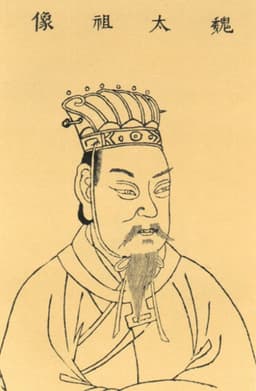
Cao Cao
General · Ancient
77.5Total

King David
Emperor · Ancient
75.3Total
Basic Information
Born
155
-1010
Died
220
-970
Era
Ancient
Ancient
Nationality
China
Israel
Occupation
General
Emperor
Civilization
Eastern
Middle Eastern
Score Comparison
Military (10%)
88.0
72.0
Political (20%)
59.0
72.0
Influence (20%)
82.0
88.0
Legacy (20%)
83.0
70.0
Leadership (15%)
64.4
72.0
Strategy (15%)
89.4
70.0
TOTAL
77.5
75.3
Cao Cao — Complete Timeline
190 AD
Formation of the Coalition against Dong ZhuoPolitical Action
Cao Cao joined a coalition of regional warlords led by Yuan Shao to overthrow the tyrannical chancellor Dong Zhuo, who had seized control of the Han court. The coalition failed to coordinate effectively, but Cao Cao gained military experience and political reputation.
CoalitionDong ZhuoHan Dynasty
Impact: national
196 AD
Implementation of Tuntian (Agricultural Colonies)Reform◆ Major
Cao Cao established military agricultural colonies (tuntian) to provide food for his army and refugees. Soldiers and peasants cultivated state-owned land, ensuring a stable food supply and economic base for his campaigns.
AgricultureEconomyMilitary
Impact: regionalconstructive
200 AD
Battle of GuanduWar
Cao Cao decisively defeated Yuan Shao's numerically superior army at Guandu. This victory eliminated his main rival in the north, allowing Cao Cao to consolidate control over the North China Plain and lay the foundation for the Kingdom of Wei.
BattleYuan ShaoUnification
Impact: regional
208 AD
Battle of Red CliffsWar
Cao Cao's southern campaign was halted by the allied forces of Sun Quan and Liu Bei at the Battle of Red Cliffs. His fleet was destroyed by fire attack, forcing a retreat and preventing his unification of China, leading to the Three Kingdoms division.
BattleDefeatThree Kingdoms
Impact: regional
213 AD
Establishment of the Kingdom of WeiPolitical Action◆ Major
Cao Cao was granted the title of Duke of Wei and later King of Wei by the Han emperor, effectively creating a semi-autonomous state within the empire. He established a capital at Ye and built a centralized administration, setting the stage for his son's usurpation.
WeiStatehoodHan Dynasty
Impact: national
King David — Complete Timeline
1010 BC
Anointed as King of JudahPolitical Action◆ Major
After Saul's death, David was anointed king over the tribe of Judah at Hebron. This began a seven-year period of civil war with Ish-bosheth, Saul's son, who ruled the northern tribes, leading to the eventual unification of Israel.
KingshipCivil WarJudah
Impact: national
1003 BC
Capture of JerusalemWar
David led his army to capture the Jebusite fortress of Jerusalem, making it the capital of the united kingdom. He brought the Ark of the Covenant there, establishing the city as both the political and religious center of Israel.
JerusalemCapitalArk of the Covenant
Impact: nationalconstructive
1000 BC
Defeat of the PhilistinesWar◆ Major
David fought several campaigns that decisively defeated the Philistines, including the Battle of Baal-perazim. He captured Gath and other Philistine strongholds, ending their dominance over Israel and securing the kingdom's borders.
PhilistinesMilitary CampaignIsrael
Impact: regional
990 BC
Affair with BathshebaPolitical Action◆ Major
David committed adultery with Bathsheba and arranged the death of her husband Uriah the Hittite in battle. The prophet Nathan confronted David, leading to his repentance but also to divine punishment, including the death of their first child.
ScandalBathshebaNathan
Impact: nationaldestructive
978 BC
Revolt of AbsalomWar◆ Major
David's son Absalom led a rebellion that forced David to flee Jerusalem. David's forces under Joab defeated Absalom's army in the Forest of Ephraim, and Absalom was killed. David returned to Jerusalem but the kingdom was weakened.
RebellionCivil WarAbsalom
Impact: nationaltragic
Expert Analysis
Origins
Cao Cao (155-220 CE) was born into a powerful eunuch family during the crumbling Eastern Han dynasty. His father Cao Song was a wealthy official, but Cao Cao's early life was marked by political chaos and rebellion. He rose through the ranks as a local magistrate and later as a general, leveraging his intelligence and ruthlessness to navigate the treacherous warlord era. King David (c. 1040-970 BCE) was the youngest son of Jesse, a shepherd from Bethlehem. He was anointed by the prophet Samuel while still a youth, marking him as God's chosen successor to King Saul. David's humble beginnings as a musician and shepherd boy who defeated Goliath set the stage for his dramatic rise. Both men emerged from relative obscurity to become legendary leaders, but their paths diverged significantly: Cao Cao's ascent was driven by strategic cunning and military might, while David's was framed by divine providence and political maneuvering.
Rise to Power
Cao Cao's rise was a masterclass in opportunism. He joined the coalition against the tyrant Dong Zhuo in 190 CE, but quickly realized the coalition's weakness. He then built his own power base in Yan Province, defeating rival warlords like Lü Bu and Yuan Shu. His decisive victory at the Battle of Guandu in 200 CE against the numerically superior Yuan Shao cemented his control over northern China. By 208 CE, he had unified the north and established the Kingdom of Wei, but his ambition to conquer the south was thwarted at the Battle of Red Cliffs. David's rise was more tumultuous. After slaying Goliath, he became a popular hero, earning King Saul's jealousy. He was forced into exile, gathering a band of loyal followers before Saul's death. David then became king of Judah, and after a civil war, king of all Israel. His capture of Jerusalem from the Jebusites made it his capital, and he brought the Ark of the Covenant there, solidifying his religious and political authority. Both men faced formidable opposition, but Cao Cao's path was more purely military-political, while David's was intertwined with religious legitimacy.
Leadership & Governance
Cao Cao was a brilliant administrator. He implemented the Tuntian system, which settled soldiers and refugees on state lands to produce food, stabilizing the economy and feeding his armies. He also promoted talent over birth, recruiting officials based on merit. His legal codes were strict but fair, and he patronized literature, writing poetry himself. However, his leadership was authoritarian and often cruel, as seen in his massacre of civilians at Xuzhou. David's governance was more decentralized, relying on tribal leaders and a small bureaucracy. He unified the twelve tribes and established Jerusalem as a religious center. His military campaigns expanded Israel's borders, defeating the Philistines and other neighbors. David's leadership was charismatic and deeply religious, but he struggled with family strife, notably the revolt of his son Absalom. Both were effective in consolidating power, but Cao Cao's administrative reforms were more systematic and enduring, earning him a higher governance score (88 vs. 70).
Triumph & Tragedy
Cao Cao's greatest triumph was the Battle of Guandu, where he outmaneuvered Yuan Shao with a daring raid on his supply wagons. His tragedy was the Battle of Red Cliffs (208 CE), where his naval forces were destroyed by fire ships, ending his dream of southern conquest. This defeat marked the beginning of the Three Kingdoms era. David's triumph was capturing Jerusalem and defeating the Philistines, but his tragedy was the Bathsheba affair. He committed adultery and arranged the death of her husband Uriah, leading to divine punishment: the death of their child and the revolt of Absalom. Both leaders experienced great victories followed by personal and political setbacks. Cao Cao's tragedy was primarily military, while David's was moral and familial.
Character & Destiny
Cao Cao was a complex figure: cunning, ruthless, but also a patron of culture. He famously said, "I would rather betray the world than have the world betray me." His destiny was to unify the north but fail to conquer the south, dying as a king but not emperor. David was a man of faith and passion, capable of great love and great sin. His destiny was to establish a dynasty that would lead to Jesus, according to Christian tradition. Both were flawed heroes, but David's legacy is more intertwined with religious history, while Cao Cao's is secular and strategic.
Legacy
Cao Cao's legacy is immense. He founded the Kingdom of Wei, which laid the groundwork for the later Jin dynasty. His military strategies and administrative innovations influenced Chinese governance for centuries. He is also remembered as a poet and the villain of the novel "Romance of the Three Kingdoms." David's legacy is even more profound. He is revered in Judaism, Christianity, and Islam as the ideal king and ancestor of the Messiah. His Psalms are central to worship. Both men left indelible marks, but David's influence is more global due to his religious significance. However, as a historical leader, Cao Cao's concrete achievements in state-building and military strategy are arguably more impressive.
Conclusion
**Cao Cao (Overall Score: 78.8)** vs. **King David (Overall Score: 76.6)**. The 2.2-point gap reflects Cao Cao's superior military and administrative scores. While David's religious importance cannot be overstated, in terms of pure leadership, governance, and strategic impact, Cao Cao edges ahead. David's personal failings and less systematic governance lower his comparative standing. Thus, Cao Cao is the greater leader from a historical perspective.
| Aspect | Cao Cao | King David |
|--------|---------|------------|
| Military | 88 | 72 |
| Political | 59 | 72 |
| Intelligence | 82 | 88 |
| Leadership | 83 | 70 |
| Destiny | 64 | 72 |
| Strategy | 89 | 70 |
| Tactics | 78 | 75 |
| **Overall** | **78.8** | **76.6** |
Rankings
🥇
Cao CaoLeader
Mil: 88.0Pol: 59.0Inf: 82.0
77.5
🥈
King David
Mil: 72.0Pol: 72.0Inf: 88.0
75.3
+2.2 behind
How This Comparison Works
Algorithm
Each figure is scored on 6 dimensions (0—100 scale) based on structured historical data: Military (10%), Political (20%), Influence (20%), Legacy (20%), Leadership (15%), Strategy (15%). The weighted total produces the final ranking.
Data Sources
Scores are computed from structured sub-indicators in the database. Scale factors adjust for era (Ancient ×0.85, Modern ×1.0) and civilization size (Eastern ×1.05, Other ×0.80) to account for differences in population and military scale.
Maximum 3 Figures
Comparisons are limited to 2—3 figures to ensure readability and statistical meaningfulness.
Error Margins
±5 points per dimension — Sub-scores are derived from historical records with inherent uncertainty. Two figures within 5 points on a dimension should be considered roughly equivalent in that area.
Total Score Accuracy
±3 points overall — The weighted combination of 6 dimensions produces a total score with approximately ±3 points of uncertainty. Differences of less than 3 points are not statistically significant— the figures are effectively tied.
Known Limitations
- Historical records are incomplete and uneven across civilizations
- Figures from oral-tradition societies may be underrepresented
- Occupation labels can misclassify multi-role figures
- Scores measure capability and impact, not moral character
- Quantitative scoring is a comparison tool, not absolute truth
Capability Radar
Military (10%) — Battles & Warfare
Battles
95
75
Win Rate
88
85
Expansion
92
80
Political (20%) — Governance & Reform
Reform
88
80
Diplomacy
82
75
Economy
86
70
Influence (20%) — Cultural & Global Reach
Cultural
85
95
Global
75
90
Legacy (20%) — Historical Impact
Historical
92
95
Longevity
90
95
Leadership (15%) — Power & Stability
Tenure
85
85
Stability
78
65
Strategy (15%) — Tactics & Innovation
Strategy
96
85
Tactics
97
80
Reform
90
70
Similar Comparisons
Comments & Discussion
No comments yet. Be the first to share your thoughts!