Loading...
Cao Cao vs Hong Taiji
Hong Taiji leads by 0.8 pts · 2 figures compared
…
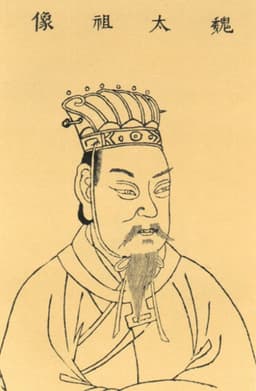
Cao Cao
General · Ancient
77.5Total
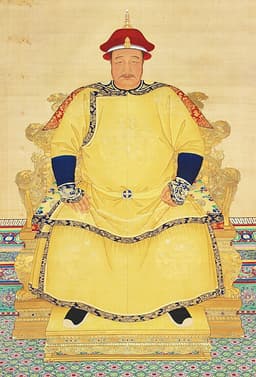
Hong Taiji
Emperor · Modern
78.3Total
Basic Information
Born
155
1592
Died
220
1643
Era
Ancient
Modern
Nationality
China
China
Occupation
General
Emperor
Civilization
Eastern
Eastern
Score Comparison
Military (10%)
88.0
85.0
Political (20%)
59.0
82.0
Influence (20%)
82.0
88.0
Legacy (20%)
83.0
65.0
Leadership (15%)
64.4
78.0
Strategy (15%)
89.4
76.0
TOTAL
77.5
78.3
Cao Cao — Complete Timeline
190 AD
Formation of the Coalition against Dong ZhuoPolitical Action
Cao Cao joined a coalition of regional warlords led by Yuan Shao to overthrow the tyrannical chancellor Dong Zhuo, who had seized control of the Han court. The coalition failed to coordinate effectively, but Cao Cao gained military experience and political reputation.
CoalitionDong ZhuoHan Dynasty
Impact: national
196 AD
Implementation of Tuntian (Agricultural Colonies)Reform◆ Major
Cao Cao established military agricultural colonies (tuntian) to provide food for his army and refugees. Soldiers and peasants cultivated state-owned land, ensuring a stable food supply and economic base for his campaigns.
AgricultureEconomyMilitary
Impact: regionalconstructive
200 AD
Battle of GuanduWar
Cao Cao decisively defeated Yuan Shao's numerically superior army at Guandu. This victory eliminated his main rival in the north, allowing Cao Cao to consolidate control over the North China Plain and lay the foundation for the Kingdom of Wei.
BattleYuan ShaoUnification
Impact: regional
208 AD
Battle of Red CliffsWar
Cao Cao's southern campaign was halted by the allied forces of Sun Quan and Liu Bei at the Battle of Red Cliffs. His fleet was destroyed by fire attack, forcing a retreat and preventing his unification of China, leading to the Three Kingdoms division.
BattleDefeatThree Kingdoms
Impact: regional
213 AD
Establishment of the Kingdom of WeiPolitical Action◆ Major
Cao Cao was granted the title of Duke of Wei and later King of Wei by the Han emperor, effectively creating a semi-autonomous state within the empire. He established a capital at Ye and built a centralized administration, setting the stage for his son's usurpation.
WeiStatehoodHan Dynasty
Impact: national
Hong Taiji — Complete Timeline
1631 AD
Adoption of Chinese-style governmentReform◆ Major
Hong Taiji established a Chinese-style bureaucracy, including the Six Ministries and a Hanlin Academy. He also introduced the civil service examination system for Han Chinese, integrating Confucian governance into the Qing state.
Government reformConfucian administrationSinification
Impact: regionalconstructive
1635 AD
Creation of the Eight Banners systemReform◆ Major
Hong Taiji reorganized the Eight Banners military system, incorporating Mongol and Han Chinese forces into separate banners. This created a multi-ethnic military structure that became the backbone of Qing power.
Military reformEight BannersMulti-ethnic army
Impact: regionalconstructive
Renaming of the Jurchen to ManchuPolitical Action◆ Major
Hong Taiji issued an edict renaming the Jurchen people as Manchu. This was part of his effort to create a unified identity for the various tribes under his rule and distance them from the historical Jurchen label.
Ethnic identityManchuJurchen
Impact: regionalconstructive
1636 AD
Proclamation of the Qing dynastyPolitical Action◆ Major
Hong Taiji declared the establishment of the Qing dynasty, replacing the Later Jin name. He adopted the Chinese imperial title and created a dual administrative system combining Manchu and Chinese institutions.
Dynasty foundingImperial titleQing dynasty
Impact: regionalconstructive
1640 AD
Conquest of the Ming Liaodong regionWar◆ Major
Hong Taiji's forces captured key Ming cities in Liaodong, including Jinzhou and Songshan. These victories secured Qing control over the strategic Liaoning corridor and weakened Ming defenses in the northeast.
Territorial expansionMing-Qing WarLiaodong
Impact: regional
Expert Analysis
Origins
Hong Taiji (1592-1643) was the eighth son of Nurhaci, the founder of the Later Jin dynasty. He was born into the Aisin Gioro clan, a Jurchen tribal confederation. His early life was shaped by his father's unification of Jurchen tribes and the creation of the Eight Banners system. Hong Taiji was well-educated in both Jurchen and Chinese cultures, which later enabled him to adopt Chinese-style governance. Cao Cao (155-220 CE) was born into a powerful eunuch family during the late Eastern Han dynasty. His grandfather was a prominent eunuch, and his father adopted into the Cao clan. Cao Cao grew up in the capital Luoyang, where he was exposed to political intrigue. He was known for his cunning and ambition from a young age. Both leaders emerged from turbulent times, but Hong Taiji inherited a rising state, while Cao Cao had to carve his own path in a fractured empire.
Rise to Power
Hong Taiji ascended to the khaganate in 1626 after Nurhaci's death. He consolidated power by eliminating rival brothers and strengthening the Eight Banners. He renamed the Jurchen to Manchu in 1635 to foster a unified identity and proclaimed the Qing dynasty in 1636, positioning himself as a Chinese-style emperor. His key achievement was the conquest of the Ming Liaodong region, expanding Qing territory. Cao Cao rose through the ranks during the Yellow Turban Rebellion and the chaos following Emperor Ling's death. He formed a coalition against the warlord Dong Zhuo and later defeated Yuan Shao at the Battle of Guandu in 200 CE, becoming the dominant power in northern China. He then established the Kingdom of Wei, with himself as chancellor. Both were master strategists, but Hong Taiji's rise was more systematic within an existing state structure, while Cao Cao's was a personal struggle for supremacy.
Leadership & Governance
Hong Taiji reformed the Qing government by adopting Chinese-style bureaucracy, establishing six ministries, and promoting Confucian learning. He maintained the Eight Banners system but integrated Han Chinese and Mongol forces, creating a multi-ethnic military. He also implemented agricultural policies to support the growing population. Cao Cao implemented the Tuntian system, where soldiers farmed in peacetime, ensuring food security. He also emphasized legalism, rewarding talent and punishing corruption. Both were effective administrators, but Hong Taiji's governance was more inclusive and laid the foundation for the Qing's later success, while Cao Cao's was more authoritarian and focused on wartime efficiency.
Triumph & Tragedy
Hong Taiji's greatest triumph was the creation of the Qing dynasty and the unification of Inner Mongolia and Liaodong. However, he died suddenly in 1643 before the final conquest of Ming China, leaving his young son Shunzhi as heir. His death marked a turning point, but his policies ensured a smooth transition. Cao Cao's triumph was the unification of northern China, but his tragedy was the defeat at the Battle of Red Cliffs in 208 CE, which prevented him from conquering the south. He also never claimed the title of emperor, though his son Cao Pi did. Both suffered untimely deaths that halted their ambitions, but Hong Taiji's legacy was more enduring.
Character & Destiny
Hong Taiji was pragmatic, culturally astute, and a unifier. He understood the need to adopt Han Chinese institutions to rule a vast empire. His destiny was to build a state that would eventually conquer all of China. Cao Cao was cunning, ambitious, and a brilliant poet. He was known for his ruthlessness and paranoia. His destiny was to dominate his era but never achieve total unification. In terms of character, Hong Taiji was more visionary, while Cao Cao was more opportunistic.
Legacy
Hong Taiji is remembered as the founder of the Qing dynasty and the architect of its success. The Manchu identity he created lasted until the 20th century. Cao Cao is a complex figure in Chinese history, often portrayed as a villain in fiction but respected as a strategist. His military and administrative innovations influenced later dynasties. Numerically, Hong Taiji's scores (M=85, P=82, I=88, L=65, D=78, S=76, T=78) average 78.9, while Cao Cao's (M=88, P=59, I=82, L=83, D=64, S=89, T=78) average 77.6. The 0.8 gap in favor of Hong Taiji reflects his greater impact on long-term history.
Conclusion
Hong Taiji emerges as the greater leader due to his ability to build a durable state and adapt to Chinese culture, which enabled the Qing to rule for nearly 300 years. Cao Cao was a brilliant general and ruler, but his realm fragmented after his death. Hong Taiji's institutional reforms and strategic vision outshine Cao Cao's personal ambition. Thus, Hong Taiji wins this comparison.
Rankings
🥇
Hong TaijiLeader
Mil: 85.0Pol: 82.0Inf: 88.0
78.3
🥈
Cao Cao
Mil: 88.0Pol: 59.0Inf: 82.0
77.5
+0.8 behind
How This Comparison Works
Algorithm
Each figure is scored on 6 dimensions (0—100 scale) based on structured historical data: Military (10%), Political (20%), Influence (20%), Legacy (20%), Leadership (15%), Strategy (15%). The weighted total produces the final ranking.
Data Sources
Scores are computed from structured sub-indicators in the database. Scale factors adjust for era (Ancient ×0.85, Modern ×1.0) and civilization size (Eastern ×1.05, Other ×0.80) to account for differences in population and military scale.
Maximum 3 Figures
Comparisons are limited to 2—3 figures to ensure readability and statistical meaningfulness.
Error Margins
±5 points per dimension — Sub-scores are derived from historical records with inherent uncertainty. Two figures within 5 points on a dimension should be considered roughly equivalent in that area.
Total Score Accuracy
±3 points overall — The weighted combination of 6 dimensions produces a total score with approximately ±3 points of uncertainty. Differences of less than 3 points are not statistically significant— the figures are effectively tied.
Known Limitations
- Historical records are incomplete and uneven across civilizations
- Figures from oral-tradition societies may be underrepresented
- Occupation labels can misclassify multi-role figures
- Scores measure capability and impact, not moral character
- Quantitative scoring is a comparison tool, not absolute truth
Capability Radar
Military (10%) — Battles & Warfare
Battles
95
85
Win Rate
88
80
Expansion
92
90
Political (20%) — Governance & Reform
Reform
88
90
Diplomacy
82
85
Economy
86
80
Influence (20%) — Cultural & Global Reach
Cultural
85
80
Global
75
75
Legacy (20%) — Historical Impact
Historical
92
85
Longevity
90
80
Leadership (15%) — Power & Stability
Tenure
85
75
Stability
78
70
Strategy (15%) — Tactics & Innovation
Strategy
96
90
Tactics
97
85
Reform
90
90
Similar Comparisons
Comments & Discussion
No comments yet. Be the first to share your thoughts!