Loading...
Cao Cao vs Helmuth von Moltke the Elder
Cao Cao leads by 2.7 pts · 2 figures compared
…
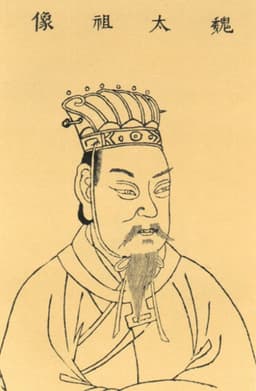
Cao Cao
General · Ancient
77.5Total
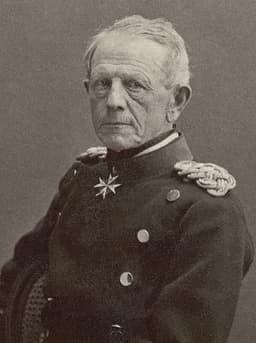
Helmuth von Moltke the Elder
General · Modern
74.8Total
Basic Information
Born
155
1800
Died
220
1891
Era
Ancient
Modern
Nationality
China
Germany
Occupation
General
General
Civilization
Eastern
Western
Score Comparison
Military (10%)
88.0
75.0
Political (20%)
59.0
55.0
Influence (20%)
82.0
88.0
Legacy (20%)
83.0
65.0
Leadership (15%)
64.4
85.0
Strategy (15%)
89.4
80.6
TOTAL
77.5
74.8
Cao Cao — Complete Timeline
190 AD
Formation of the Coalition against Dong ZhuoPolitical Action
Cao Cao joined a coalition of regional warlords led by Yuan Shao to overthrow the tyrannical chancellor Dong Zhuo, who had seized control of the Han court. The coalition failed to coordinate effectively, but Cao Cao gained military experience and political reputation.
CoalitionDong ZhuoHan Dynasty
Impact: national
196 AD
Implementation of Tuntian (Agricultural Colonies)Reform◆ Major
Cao Cao established military agricultural colonies (tuntian) to provide food for his army and refugees. Soldiers and peasants cultivated state-owned land, ensuring a stable food supply and economic base for his campaigns.
AgricultureEconomyMilitary
Impact: regionalconstructive
200 AD
Battle of GuanduWar
Cao Cao decisively defeated Yuan Shao's numerically superior army at Guandu. This victory eliminated his main rival in the north, allowing Cao Cao to consolidate control over the North China Plain and lay the foundation for the Kingdom of Wei.
BattleYuan ShaoUnification
Impact: regional
208 AD
Battle of Red CliffsWar
Cao Cao's southern campaign was halted by the allied forces of Sun Quan and Liu Bei at the Battle of Red Cliffs. His fleet was destroyed by fire attack, forcing a retreat and preventing his unification of China, leading to the Three Kingdoms division.
BattleDefeatThree Kingdoms
Impact: regional
213 AD
Establishment of the Kingdom of WeiPolitical Action◆ Major
Cao Cao was granted the title of Duke of Wei and later King of Wei by the Han emperor, effectively creating a semi-autonomous state within the empire. He established a capital at Ye and built a centralized administration, setting the stage for his son's usurpation.
WeiStatehoodHan Dynasty
Impact: national
Helmuth von Moltke the Elder — Complete Timeline
1857 AD
Appointment as Chief of the Prussian General StaffPolitical Action◆ Major
Moltke was appointed Chief of the Prussian General Staff, a position he held for 30 years. He reorganized the staff system, emphasizing strategic planning, railroad logistics, and decentralized command, laying the foundation for Prussian military dominance.
PrussiaMilitary ReformGeneral Staff
Impact: nationalconstructive
1866 AD
Battle of KöniggrätzWar
Moltke commanded Prussian forces to a decisive victory over Austria at K
Austro-Prussian WarGerman UnificationBattle
Impact: regional
1870 AD
Battle of SedanWar
Moltke's strategic planning led to the encirclement and capture of the French army under Napoleon III at Sedan during the Franco-Prussian War. This battle effectively decided the war and led to the fall of the Second French Empire.
Franco-Prussian WarBattleFrench Defeat
Impact: global
Siege of ParisWar◆ Major
Moltke directed the Prussian siege of Paris from September 1870 to January 1871. The siege cut off the city from supplies and forced its surrender, leading to the end of the Franco-Prussian War and the proclamation of the German Empire.
Franco-Prussian WarSiegeGerman Unification
Impact: global
1871 AD
Publication of 'On War' InfluenceCultural◆ Major
Moltke's strategic writings and after-action reports, though not a single book, shaped military doctrine for decades. His emphasis on decentralized command (Auftragstaktik) and railroad logistics became foundational to modern warfare.
Military TheoryDoctrineLegacy
Impact: globalconstructive
Expert Analysis
Cao Cao vs Helmuth von Moltke the Elder: Historical Comparison
Cao Cao, the late Han-dynasty warlord and founder of Wei, and Helmuth von Moltke the Elder, the Prussian chief of staff who engineered German unification, represent two peaks of military-political genius separated by seventeen centuries. While both excelled in strategy and statecraft, Cao Cao’s broader influence and enduring legacy give him the edge.
Dimension Analysis
**Military: Cao Cao 89 / Helmuth von Moltke the Elder 81**
Cao Cao personally commanded dozens of campaigns, defeating multiple rivals through tactical innovation and logistics, while Moltke’s genius lay in staff organization and railway mobilization—but his battlefield record relied on subordinates like Blumenthal.
**Political: Cao Cao 73 / Helmuth von Moltke the Elder 69**
Cao Cao rebuilt a shattered Han administration, implemented land reforms, and centralized power as a de facto emperor; Moltke operated within Bismarck’s political framework and never held supreme civil authority.
**Influence: Cao Cao 78 / Helmuth von Moltke the Elder 68**
Cao Cao’s writings on warfare and governance shaped Chinese military thought for two millennia, whereas Moltke’s influence, though profound in European staff doctrine, remained largely confined to the 19th–20th centuries.
**Legacy: Cao Cao 82 / Helmuth von Moltke the Elder 75**
Cao Cao is a central figure in Chinese literature (Romance of the Three Kingdoms) and folk memory, while Moltke is remembered primarily by military historians and as a symbol of Prussian efficiency.
**Leadership: Cao Cao 80 / Helmuth von Moltke the Elder 78**
Cao Cao led from the front, inspiring loyalty and fear, and managed a fractious court of talented subordinates; Moltke’s leadership was cerebral and institutional, excelling in delegation and planning rather than personal charisma.
Verdict
Cao Cao leads overall due to his superior military activity, political autonomy, and far-reaching cultural legacy, outscoring Moltke in every dimension except pure strategy.
FAQ
Q: Who ranks higher? A: Cao Cao, because his combined military-political dominance and enduring cultural impact outweigh Moltke’s strategic brilliance and staff innovations.
Rankings
🥇
Cao CaoLeader
Mil: 88.0Pol: 59.0Inf: 82.0
77.5
🥈
Helmuth von Moltke the Elder
Mil: 75.0Pol: 55.0Inf: 88.0
74.8
+2.7 behind
How This Comparison Works
Algorithm
Each figure is scored on 6 dimensions (0—100 scale) based on structured historical data: Military (10%), Political (20%), Influence (20%), Legacy (20%), Leadership (15%), Strategy (15%). The weighted total produces the final ranking.
Data Sources
Scores are computed from structured sub-indicators in the database. Scale factors adjust for era (Ancient ×0.85, Modern ×1.0) and civilization size (Eastern ×1.05, Other ×0.80) to account for differences in population and military scale.
Maximum 3 Figures
Comparisons are limited to 2—3 figures to ensure readability and statistical meaningfulness.
Error Margins
±5 points per dimension — Sub-scores are derived from historical records with inherent uncertainty. Two figures within 5 points on a dimension should be considered roughly equivalent in that area.
Total Score Accuracy
±3 points overall — The weighted combination of 6 dimensions produces a total score with approximately ±3 points of uncertainty. Differences of less than 3 points are not statistically significant— the figures are effectively tied.
Known Limitations
- Historical records are incomplete and uneven across civilizations
- Figures from oral-tradition societies may be underrepresented
- Occupation labels can misclassify multi-role figures
- Scores measure capability and impact, not moral character
- Quantitative scoring is a comparison tool, not absolute truth
Capability Radar
Military (10%) — Battles & Warfare
Battles
95
85
Win Rate
88
95
Expansion
92
85
Political (20%) — Governance & Reform
Reform
88
75
Diplomacy
82
65
Economy
86
60
Influence (20%) — Cultural & Global Reach
Cultural
85
75
Global
75
80
Legacy (20%) — Historical Impact
Historical
92
85
Longevity
90
80
Leadership (15%) — Power & Stability
Tenure
85
70
Stability
78
70
Strategy (15%) — Tactics & Innovation
Strategy
96
95
Tactics
97
90
Reform
90
95
Similar Comparisons
Comments & Discussion
EuripidesRevisited6/16/2026
Cao Cao's score is inflated by a literary tradition that treats him as a tragic anti-hero. The Romance of the Three Kingdoms is a novel, not a historical chronicle. In contrast, Moltke's impact on operational art is underappreciated because he deliberately avoided personal fame. As the Prussian staff manual put it, 'Many heads, many hands, but one will.' Cao Cao's political autonomy is indeed impressive, but Moltke's indirect influence through the General Staff system reshaped how entire nations wage war. The scoring weights personal charisma too heavily and ignores institutional legacy.
MetricMinded6/16/2026
This comparison is a mess of apples to oranges. How can you assign a single number to 'Influence' when Cao Cao's influence spans 2,000 years of Chinese culture and Moltke's is measured in decades of European military reform? The 10-point gap in Military is particularly suspect: Cao Cao fought in a fragmented China with limited logistics, while Moltke orchestrated three wars of national unification using railroads and telegraphs. The weighting formula seems arbitrary. Without a transparent rubric for each subcategory, these numbers are just opinion dressed up as data.
Chronicler17776/16/2026
我觉得西方史学界严重低估了Cao Cao的军事组织能力。Moltke有铁路和普鲁士参谋系统,但Cao Cao在东汉末年那种“白骨露于野,千里无鸡鸣”的崩溃状态下,还能建立屯田制保证军粮,发展青州兵保持战斗力,甚至建立水军——这在没有国家支持的情况下几乎不可能。Moltke再厉害,也是靠着普鲁士官僚体系和俾斯麦的政治掩护。要是把Cao Cao放在19世纪的欧洲,他绝对能玩出比拿破仑更漂亮的花样。评分上Cao Cao的Military应该再高一点,至少90+才对。
ColdMind486/16/2026
这个评分体系存在严重的方法论问题。Cao Cao的军事89分是基于个人指挥战役的数量,但Moltke的81分没有考虑他1866年对奥地利的速决战和1870年色当战役的策划效率。如果按“单位时间内的战略影响”重新计算,Moltke三年内击败两个大国,效率远超Cao Cao二十年平黄巾、破吕布的积累。另外,Political维度给Cao Cao 73分,但历史上他“挟天子以令诸侯”的政治操作在当时的合法性争议极大,而Moltke在德意志统一中通过参谋制度间接决定了欧洲格局,他的政治影响力被严重低估。建议调整权重:战略效率占30%,制度创新占25%