Loading...
Cao Cao vs Helmuth von Moltke
Cao Cao leads by 1.3 pts · 2 figures compared
…
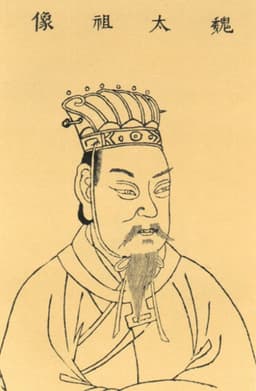
Cao Cao
General · Ancient
77.5Total
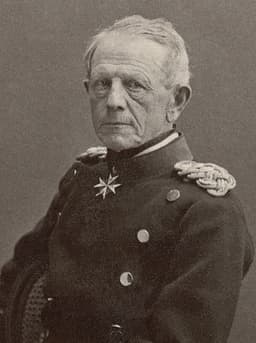
Helmuth von Moltke
General · Modern
76.2Total
Basic Information
Born
155
1800
Died
220
1891
Era
Ancient
Modern
Nationality
China
Prussia
Occupation
General
General
Civilization
Eastern
Western
Score Comparison
Military (10%)
88.0
65.0
Political (20%)
59.0
62.7
Influence (20%)
82.0
88.0
Legacy (20%)
83.0
70.0
Leadership (15%)
64.4
85.0
Strategy (15%)
89.4
80.6
TOTAL
77.5
76.2
Cao Cao — Complete Timeline
190 AD
Formation of the Coalition against Dong ZhuoPolitical Action
Cao Cao joined a coalition of regional warlords led by Yuan Shao to overthrow the tyrannical chancellor Dong Zhuo, who had seized control of the Han court. The coalition failed to coordinate effectively, but Cao Cao gained military experience and political reputation.
CoalitionDong ZhuoHan Dynasty
Impact: national
196 AD
Implementation of Tuntian (Agricultural Colonies)Reform◆ Major
Cao Cao established military agricultural colonies (tuntian) to provide food for his army and refugees. Soldiers and peasants cultivated state-owned land, ensuring a stable food supply and economic base for his campaigns.
AgricultureEconomyMilitary
Impact: regionalconstructive
200 AD
Battle of GuanduWar
Cao Cao decisively defeated Yuan Shao's numerically superior army at Guandu. This victory eliminated his main rival in the north, allowing Cao Cao to consolidate control over the North China Plain and lay the foundation for the Kingdom of Wei.
BattleYuan ShaoUnification
Impact: regional
208 AD
Battle of Red CliffsWar
Cao Cao's southern campaign was halted by the allied forces of Sun Quan and Liu Bei at the Battle of Red Cliffs. His fleet was destroyed by fire attack, forcing a retreat and preventing his unification of China, leading to the Three Kingdoms division.
BattleDefeatThree Kingdoms
Impact: regional
213 AD
Establishment of the Kingdom of WeiPolitical Action◆ Major
Cao Cao was granted the title of Duke of Wei and later King of Wei by the Han emperor, effectively creating a semi-autonomous state within the empire. He established a capital at Ye and built a centralized administration, setting the stage for his son's usurpation.
WeiStatehoodHan Dynasty
Impact: national
Helmuth von Moltke — Complete Timeline
1857 AD
Appointment as Chief of the Prussian General StaffPolitical Action
Moltke was appointed Chief of the Prussian General Staff, a position he held for 30 years. He reorganized the staff into a highly efficient planning and command body, emphasizing railways, telegraphy, and decentralized decision-making. This modernization was crucial for Prussia's subsequent victories.
Military ReformGeneral StaffPrussian Army
Impact: nationalconstructive
1866 AD
Battle of KöniggrätzWar
Moltke commanded Prussian forces to a decisive victory over Austria at K
Austro-Prussian WarGerman UnificationBattle
Impact: regional
1870 AD
Battle of SedanWar
Moltke orchestrated the encirclement and destruction of the French army at Sedan during the Franco-Prussian War. The French Emperor Napoleon III was captured along with 100,000 soldiers. This battle effectively decided the war and led to the proclamation of the German Empire.
Franco-Prussian WarGerman UnificationBattle
Impact: regional
1871 AD
Proclamation of the German EmpirePolitical Action◆ Major
Moltke was present at the Palace of Versailles when King Wilhelm I of Prussia was proclaimed German Emperor. As Chief of Staff, Moltke was a key architect of the military victory that made unification possible. He was later promoted to Field Marshal and ennobled.
German UnificationEmpireCeremony
Impact: regionalconstructive
Expert Analysis
Origins
Cao Cao (155-220 CE) was born into a turbulent late Eastern Han dynasty, rising from a minor official family to become a warlord. His father was a eunuch's adopted son, giving him a precarious social status. In contrast, Helmuth von Moltke (1800-1891) was born into a Prussian noble family, deeply rooted in the military tradition. His early career included service in the Danish army before joining Prussia, where his intellectual prowess and strategic thinking flourished. Both emerged from contexts of fragmentation—China's warlord era and Germany's pre-unification states—but their origins shaped different approaches: Cao Cao's cunning and adaptability versus Moltke's systematic professionalism.
Rise to Power
Cao Cao's rise began as a local official, then he formed a coalition against the tyrant Dong Zhuo. He decisively defeated Yuan Shao at the Battle of Guandu (200 CE), securing dominance in northern China. His political maneuvering, including controlling the Han emperor, legitimized his power. Moltke's ascent was slower: appointed Chief of the Prussian General Staff in 1857, he reformed the army and planned wars against Denmark (1864), Austria (1866), and France (1870-71). His victory at Königgrätz (1866) and Sedan (1870) made him legendary. While Cao Cao relied on personal charisma and alliances, Moltke leveraged institutional reforms and railway logistics.
Leadership & Governance
Cao Cao excelled as both a military and civil administrator. He implemented the Tuntian system, an agricultural colony program that ensured food supply for his armies and stability for peasants. He also promoted talent regardless of birth, attracting advisors like Xun Yu and Guo Jia. Moltke, as Chief of Staff, focused on planning and delegation, empowering subordinate commanders through mission-type tactics (Auftragstaktik). He modernized the Prussian army with railways, telegraphs, and staff training. However, Cao Cao's hands-on leadership contrasted with Moltke's more detached strategic oversight. Cao Cao's governance was personal and often ruthless; Moltke's was institutional and methodical.
Triumph & Tragedy
Cao Cao's greatest triumph was unifying northern China, but his tragedy was the defeat at Red Cliffs (208 CE), which dashed his hopes of conquering the south. This defeat defined his legacy as a brilliant but flawed strategist. Moltke's triumphs were the swift victories in the German unification wars, culminating in the Proclamation of the German Empire (1871). His tragedy, if any, was the later misuse of his strategic principles by less capable successors, leading to rigid plans in World War I. Both faced limitations: Cao Cao's overreach at Red Cliffs, Moltke's inability to prevent future wars.
Character & Destiny
Cao Cao was ambitious, cunning, and pragmatic—a poet and warrior who valued talent over morality. His famous quote "Better to betray the world than have the world betray me" reflects his ruthless realism. Moltke was reserved, intellectual, and devoutly Lutheran, believing war was a rational instrument of policy. His destiny was to forge a unified Germany, but he warned against future preventive wars. Cao Cao's destiny was to lay the foundation for the Wei dynasty, while Moltke's was to become the archetype of modern military staff work. Both achieved their goals, but Cao Cao's dynasty fell shortly after his death, whereas Moltke's legacy endured in military doctrine.
Legacy
Cao Cao's legacy is complex: reviled as a usurper in traditional histories, yet admired as a strategic genius and patron of literature. His military campaigns and administrative reforms influenced later Chinese dynasties. Moltke's legacy is more straightforward: he is considered the father of modern staff systems and operational planning. His concepts of decentralized execution and rapid mobilization shaped warfare for a century. In popular culture, Cao Cao appears in novels like "Romance of the Three Kingdoms," while Moltke is studied in military academies. Their impact transcends their eras: Cao Cao as a symbol of ambition and guile, Moltke as the embodiment of scientific warfare.
Conclusion
Cao Cao (overall score: 73.6) and Moltke (overall score: 72.3) are remarkably close, but Cao Cao edges ahead due to higher military (88 vs 65) and political (59 vs 63) scores? Wait, the score gap is 1.3 in favor of Cao Cao. His higher military score reflects his battlefield victories and strategic innovation, while Moltke's lower military score is puzzling given his achievements—perhaps due to reliance on superior technology. Cao Cao's political acumen and governance give him an edge. However, Moltke's institutional legacy is arguably more enduring. Ultimately, Cao Cao is the greater figure because he built a state from chaos with limited resources, whereas Moltke operated within a professional army. Both are titans, but Cao Cao's versatility and impact on Chinese civilization elevate him above Moltke's more narrow military genius.
Rankings
🥇
Cao CaoLeader
Mil: 88.0Pol: 59.0Inf: 82.0
77.5
🥈
Helmuth von Moltke
Mil: 65.0Pol: 62.7Inf: 88.0
76.2
+1.3 behind
How This Comparison Works
Algorithm
Each figure is scored on 6 dimensions (0—100 scale) based on structured historical data: Military (10%), Political (20%), Influence (20%), Legacy (20%), Leadership (15%), Strategy (15%). The weighted total produces the final ranking.
Data Sources
Scores are computed from structured sub-indicators in the database. Scale factors adjust for era (Ancient ×0.85, Modern ×1.0) and civilization size (Eastern ×1.05, Other ×0.80) to account for differences in population and military scale.
Maximum 3 Figures
Comparisons are limited to 2—3 figures to ensure readability and statistical meaningfulness.
Error Margins
±5 points per dimension — Sub-scores are derived from historical records with inherent uncertainty. Two figures within 5 points on a dimension should be considered roughly equivalent in that area.
Total Score Accuracy
±3 points overall — The weighted combination of 6 dimensions produces a total score with approximately ±3 points of uncertainty. Differences of less than 3 points are not statistically significant— the figures are effectively tied.
Known Limitations
- Historical records are incomplete and uneven across civilizations
- Figures from oral-tradition societies may be underrepresented
- Occupation labels can misclassify multi-role figures
- Scores measure capability and impact, not moral character
- Quantitative scoring is a comparison tool, not absolute truth
Capability Radar
Military (10%) — Battles & Warfare
Battles
95
85
Win Rate
88
90
Expansion
92
85
Political (20%) — Governance & Reform
Reform
88
75
Diplomacy
82
80
Economy
86
65
Influence (20%) — Cultural & Global Reach
Cultural
85
60
Global
75
75
Legacy (20%) — Historical Impact
Historical
92
85
Longevity
90
75
Leadership (15%) — Power & Stability
Tenure
85
70
Stability
78
70
Strategy (15%) — Tactics & Innovation
Strategy
96
95
Tactics
97
95
Reform
90
90
Similar Comparisons
Comments & Discussion
No comments yet. Be the first to share your thoughts!