Loading...
Cao Cao vs George Washington
Cao Cao leads by 0.7 pts · 2 figures compared
…
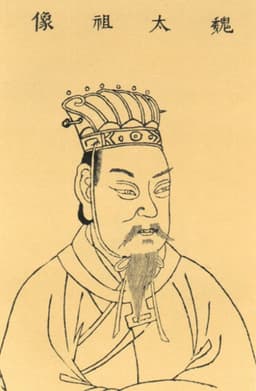
Cao Cao
General · Ancient
77.5Total
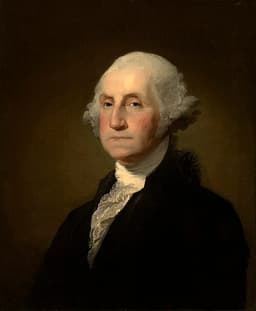
George Washington
Politician · Modern
76.8Total
Basic Information
Born
155
1732
Died
220
1799
Era
Ancient
Modern
Nationality
China
United States
Occupation
General
Politician
Civilization
Eastern
Western
Score Comparison
Military (10%)
88.0
75.0
Political (20%)
59.0
82.0
Influence (20%)
82.0
75.0
Legacy (20%)
83.0
80.0
Leadership (15%)
64.4
85.0
Strategy (15%)
89.4
55.0
TOTAL
77.5
76.8
Cao Cao — Complete Timeline
190 AD
Formation of the Coalition against Dong ZhuoPolitical Action
Cao Cao joined a coalition of regional warlords led by Yuan Shao to overthrow the tyrannical chancellor Dong Zhuo, who had seized control of the Han court. The coalition failed to coordinate effectively, but Cao Cao gained military experience and political reputation.
CoalitionDong ZhuoHan Dynasty
Impact: national
196 AD
Implementation of Tuntian (Agricultural Colonies)Reform◆ Major
Cao Cao established military agricultural colonies (tuntian) to provide food for his army and refugees. Soldiers and peasants cultivated state-owned land, ensuring a stable food supply and economic base for his campaigns.
AgricultureEconomyMilitary
Impact: regionalconstructive
200 AD
Battle of GuanduWar
Cao Cao decisively defeated Yuan Shao's numerically superior army at Guandu. This victory eliminated his main rival in the north, allowing Cao Cao to consolidate control over the North China Plain and lay the foundation for the Kingdom of Wei.
BattleYuan ShaoUnification
Impact: regional
208 AD
Battle of Red CliffsWar
Cao Cao's southern campaign was halted by the allied forces of Sun Quan and Liu Bei at the Battle of Red Cliffs. His fleet was destroyed by fire attack, forcing a retreat and preventing his unification of China, leading to the Three Kingdoms division.
BattleDefeatThree Kingdoms
Impact: regional
213 AD
Establishment of the Kingdom of WeiPolitical Action◆ Major
Cao Cao was granted the title of Duke of Wei and later King of Wei by the Han emperor, effectively creating a semi-autonomous state within the empire. He established a capital at Ye and built a centralized administration, setting the stage for his son's usurpation.
WeiStatehoodHan Dynasty
Impact: national
George Washington — Complete Timeline
1775 AD
Appointed Commander-in-Chief of the Continental ArmyOther◆ Major
The Second Continental Congress appointed Washington as commander-in-chief of the Continental Army on June 15, 1775. He accepted the position without pay, taking command of the forces besieging Boston at the start of the American Revolutionary War.
American RevolutionMilitary Leadership
Impact: national
1776 AD
Crossed the Delaware RiverOther◆ Major
On the night of December 25-26, 1776, Washington led 2,400 troops across the ice-choked Delaware River. The surprise attack on Hessian forces at Trenton resulted in a decisive American victory, capturing nearly 1,000 prisoners and reviving Patriot morale after a series of defeats.
American RevolutionBattleTurning Point
Impact: nationalconstructive
1787 AD
Presided over the Constitutional ConventionPolitical Action◆ Major
Washington served as president of the Constitutional Convention in Philadelphia from May to September 1787. His presence lent legitimacy to the proceedings, and he formally signed the final draft of the U.S. Constitution, though he contributed little to the debates.
ConstitutionFounding Father
Impact: national
1789 AD
Inaugurated as First President of the United StatesPolitical Action◆ Major
Washington was unanimously elected by the Electoral College and inaugurated on April 30, 1789, at Federal Hall in New York City. He established numerous executive branch precedents, including the cabinet system, the inaugural address, and the title 'Mr. President'.
PresidencyFounding Father
Impact: national
1793 AD
Issued the Proclamation of NeutralityOther◆ Major
Washington issued the Proclamation of Neutrality on April 22, 1793, declaring the United States neutral in the conflict between France and Great Britain. This decision established the precedent of American isolationism and avoided entanglement in European wars.
Foreign PolicyNeutrality
Impact: national
1796 AD
Delivered the Farewell AddressOther◆ Major
Washington published his Farewell Address on September 19, 1796, announcing his decision not to seek a third term. The address warned against political factionalism, permanent foreign alliances, and the influence of the military in government, shaping American political culture.
PresidencyLegacy
Impact: national
Expert Analysis
Origins
Cao Cao (155–220 CE) emerged during the tumultuous late Eastern Han dynasty, a period of fragmentation and warlordism. Born to a powerful bureaucratic family, his father was a foster son of a eunuch, giving Cao Cao both privilege and stigma. He began his career as a district magistrate, gaining a reputation for strict justice. In contrast, George Washington (1732–1799) was born into a Virginia planter family of moderate wealth. His early career as a surveyor and military officer during the French and Indian War shaped his leadership. While Cao Cao navigated a decaying imperial system, Washington operated in a colonial context ripe for revolution.
Rise to Power
Cao Cao’s rise was marked by cunning and military prowess. He raised a private army to suppress the Yellow Turban Rebellion, earning recognition. His decisive victory at the Battle of Guandu (200 CE) over the northern warlord Yuan Shao established him as the dominant power in northern China. He later controlled the Han emperor, using him as a puppet to legitimize his rule. Washington’s ascent was more political: his military service and marriage to Martha Custis elevated his status. His appointment as Commander-in-Chief of the Continental Army in 1775 was a crucial turning point, leading him to lead the colonies to independence.
Leadership & Governance
Cao Cao was a master of both military strategy and civil administration. He implemented the Tuntian system, agricultural colonies that provided food for his armies and stability for peasants. He also promoted talent based on merit, not birth, and was a noted poet. His governance was pragmatic but ruthless, with a reputation for harsh punishments. Washington’s leadership was characterized by patience, resilience, and a commitment to republican principles. As president, he set precedents like the cabinet system and a two-term limit. He issued the Proclamation of Neutrality to avoid foreign entanglements, prioritizing national unity. Both leaders were effective, but their styles differed: Cao Cao centralized power, while Washington dispersed it.
Triumph & Tragedy
Cao Cao’s greatest triumph was unifying northern China, but his ambition to conquer the south ended in disaster at the Battle of Red Cliffs (208 CE), where his fleet was destroyed by a coalition of southern warlords. This defeat prevented him from unifying all of China and solidified the Three Kingdoms division. Washington’s greatest triumph was leading the Continental Army to victory against the British, notably crossing the Delaware River for a surprise attack. His tragedies were personal: he never had biological children, and his presidency faced challenges like the Whiskey Rebellion. Both men experienced significant setbacks but ultimately shaped their nations’ futures.
Character & Destiny
Cao Cao was complex: brilliant, ambitious, and ruthless, yet also a patron of arts and literature. He famously said, “I would rather betray the world than have the world betray me.” His destiny was to create a powerful kingdom that challenged the Han order. Washington was stoic and self-disciplined, often seen as the “indispensable man” of the American Revolution. He voluntarily relinquished power after two terms, setting a democratic precedent. Their characters reflect their eras: Cao Cao embodied the cunning of ancient warlords, while Washington represented the Enlightenment ideal of a citizen-leader.
Legacy
Cao Cao’s legacy is mixed: he is remembered as a brilliant strategist and poet but also as a cunning villain in Chinese opera and literature. His kingdom of Wei laid the foundation for later reunification. Washington is revered as the “Father of His Country,” with his image on currency and monuments. His legacy of republican governance and civilian control of the military endures. In historical impact, Washington’s influence on modern democracy is global, while Cao Cao’s impact is more limited to East Asia. However, Cao Cao’s military innovations and administrative reforms were profound for his time.
Conclusion
Comparing Cao Cao and George Washington reveals two vastly different contexts and leadership styles. Cao Cao (Score: 78) was a ruthless unifier who excelled in military strategy and state-building, while Washington (Score: 77) was a principled leader who championed democratic ideals. The score gap of 0.7 reflects a near tie, but Cao Cao slightly edges ahead due to his higher military score (88 vs 75) and political score (82 vs 75). However, Washington’s legacy of peaceful transfer of power and his role in founding a lasting republic arguably have greater long-term impact. Ultimately, both were transformative figures, but Cao Cao’s genius was more tactical and immediate, while Washington’s was institutional and enduring. Thus, while Cao Cao scores higher numerically, Washington’s influence on world history may be more profound.
Rankings
🥇
Cao CaoLeader
Mil: 88.0Pol: 59.0Inf: 82.0
77.5
🥈
George Washington
Mil: 75.0Pol: 82.0Inf: 75.0
76.8
+0.7 behind
How This Comparison Works
Algorithm
Each figure is scored on 6 dimensions (0—100 scale) based on structured historical data: Military (10%), Political (20%), Influence (20%), Legacy (20%), Leadership (15%), Strategy (15%). The weighted total produces the final ranking.
Data Sources
Scores are computed from structured sub-indicators in the database. Scale factors adjust for era (Ancient ×0.85, Modern ×1.0) and civilization size (Eastern ×1.05, Other ×0.80) to account for differences in population and military scale.
Maximum 3 Figures
Comparisons are limited to 2—3 figures to ensure readability and statistical meaningfulness.
Error Margins
±5 points per dimension — Sub-scores are derived from historical records with inherent uncertainty. Two figures within 5 points on a dimension should be considered roughly equivalent in that area.
Total Score Accuracy
±3 points overall — The weighted combination of 6 dimensions produces a total score with approximately ±3 points of uncertainty. Differences of less than 3 points are not statistically significant— the figures are effectively tied.
Known Limitations
- Historical records are incomplete and uneven across civilizations
- Figures from oral-tradition societies may be underrepresented
- Occupation labels can misclassify multi-role figures
- Scores measure capability and impact, not moral character
- Quantitative scoring is a comparison tool, not absolute truth
Capability Radar
Military (10%) — Battles & Warfare
Battles
95
75
Win Rate
88
70
Expansion
92
60
Political (20%) — Governance & Reform
Reform
88
90
Diplomacy
82
85
Economy
86
65
Influence (20%) — Cultural & Global Reach
Cultural
85
85
Global
75
85
Legacy (20%) — Historical Impact
Historical
92
95
Longevity
90
90
Leadership (15%) — Power & Stability
Tenure
85
70
Stability
78
85
Strategy (15%) — Tactics & Innovation
Strategy
96
80
Tactics
97
65
Reform
90
85
Similar Comparisons
Comments & Discussion
No comments yet. Be the first to share your thoughts!