Loading...
Cao Cao vs Fuad Chehab
Cao Cao leads by 27.6 pts · 2 figures compared
…
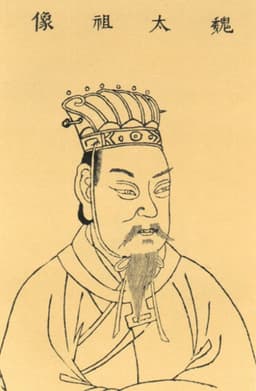
Cao Cao
General · Ancient
77.5Total
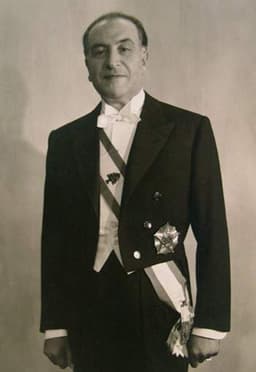
Fuad Chehab
General · Modern
49.9Total
Basic Information
Born
155
1902
Died
220
1973
Era
Ancient
Modern
Nationality
China
Lebanon
Occupation
General
General
Civilization
Eastern
Middle Eastern
Score Comparison
Military (10%)
88.0
10.2
Political (20%)
59.0
70.0
Influence (20%)
82.0
54.1
Legacy (20%)
83.0
44.2
Leadership (15%)
64.4
72.0
Strategy (15%)
89.4
30.3
TOTAL
77.5
49.9
Cao Cao — Complete Timeline
190 AD
Formation of the Coalition against Dong ZhuoPolitical Action
Cao Cao joined a coalition of regional warlords led by Yuan Shao to overthrow the tyrannical chancellor Dong Zhuo, who had seized control of the Han court. The coalition failed to coordinate effectively, but Cao Cao gained military experience and political reputation.
CoalitionDong ZhuoHan Dynasty
Impact: national
196 AD
Implementation of Tuntian (Agricultural Colonies)Reform◆ Major
Cao Cao established military agricultural colonies (tuntian) to provide food for his army and refugees. Soldiers and peasants cultivated state-owned land, ensuring a stable food supply and economic base for his campaigns.
AgricultureEconomyMilitary
Impact: regionalconstructive
200 AD
Battle of GuanduWar
Cao Cao decisively defeated Yuan Shao's numerically superior army at Guandu. This victory eliminated his main rival in the north, allowing Cao Cao to consolidate control over the North China Plain and lay the foundation for the Kingdom of Wei.
BattleYuan ShaoUnification
Impact: regional
208 AD
Battle of Red CliffsWar
Cao Cao's southern campaign was halted by the allied forces of Sun Quan and Liu Bei at the Battle of Red Cliffs. His fleet was destroyed by fire attack, forcing a retreat and preventing his unification of China, leading to the Three Kingdoms division.
BattleDefeatThree Kingdoms
Impact: regional
213 AD
Establishment of the Kingdom of WeiPolitical Action◆ Major
Cao Cao was granted the title of Duke of Wei and later King of Wei by the Han emperor, effectively creating a semi-autonomous state within the empire. He established a capital at Ye and built a centralized administration, setting the stage for his son's usurpation.
WeiStatehoodHan Dynasty
Impact: national
Fuad Chehab — Complete Timeline
1958 AD
Launched Chehabist reforms and modernizationReform◆ Major
President Chehab implemented a series of reforms known as Chehabism, including administrative modernization, economic planning, and strengthening state institutions. He established the Central Bank of Lebanon and the Civil Service Board.
ReformModernizationState Building
Impact: nationalconstructive
Elected President of LebanonPolitical Action◆ Major
Fuad Chehab was elected President of Lebanon on September 23, 1958, succeeding Camille Chamoun. His election ended the 1958 crisis and was supported by both Christian and Muslim factions seeking stability.
PresidencyElectionStabilization
Impact: nationalconstructive
Created the Deuxième Bureau intelligence agencyPolitical Action
Chehab expanded the role of the Deuxi
IntelligenceSecurityAuthoritarianism
Impact: national
1960 AD
Presided over the 1960s economic boomOther
Under Chehab's presidency, Lebanon experienced a period of economic growth and stability, with Beirut becoming a major financial and tourism hub. His policies attracted foreign investment and expanded the middle class.
Economic GrowthBeirutProsperity
Impact: nationalconstructive
1964 AD
Refused to amend constitution for a second termPolitical Action
Chehab declined to seek a second term as president, respecting the constitutional limit. He retired from politics in 1964, setting a precedent for peaceful transitions of power in Lebanon.
ConstitutionTerm LimitRetirement
Impact: nationalconstructive
Expert Analysis
Cao Cao vs Fuad Chehab
# The Strategist and the Stabilizer
On a spring morning in 200, Cao Cao watched his cavalry thunder across the plains of Guandu, their lances catching the sun as they charged into Yuan Shao’s encampment. The smell of burning grain and the screams of panicked men filled the air. He had just won the war that would make him master of northern China. Sixteen centuries later, in the summer of 1958, Fuad Chehab stood in the presidential palace in Beirut, surveying a city scarred by months of sectarian violence. He had just been elected to lead a nation that seemed ready to tear itself apart. Both men were generals who became rulers. Both faced crises that would define their nations for generations. Yet one carved an empire from chaos, while the other built a fragile peace. Why?
Origins
Cao Cao was born in 155, the son of a eunuch’s adoptive grandson—a precarious social position in Han dynasty China. The empire was rotting from within: court intrigue, peasant rebellions, and regional warlords were pulling it apart. Young Cao Cao grew up in a world where loyalty was a currency spent quickly, and survival demanded cunning. He read Sun Tzu, wrote poetry about the fleeting nature of life, and learned early that the strong devoured the weak.
Fuad Chehab entered the world in 1902, in the mountain village of Ghazir, Lebanon. His family belonged to the Maronite Christian elite, but Lebanon was then part of the Ottoman Empire, a patchwork of religious communities held together by imperial force. Chehab’s father died when he was young; he was raised by relatives who emphasized duty and discretion. He joined the French colonial army, learned the art of compromise in a multi-sectarian society, and watched empires collapse and rise. Where Cao Cao saw a chessboard of ambition, Chehab saw a mosaic of fear.
Rise to Power
Cao Cao’s path was forged in fire. In 190, he joined the coalition against the tyrant Dong Zhuo, a campaign that quickly dissolved into chaos as the warlords turned on each other. For a decade, Cao Cao fought a grinding series of campaigns—suppressing bandits, absorbing defeated armies, and building a base in the central plains. His turning point came in 200 at the Battle of Guandu. Outnumbered perhaps ten to one, he set fire to Yuan Shao’s supply depot at Wuchao, a stroke of tactical brilliance that shattered his rival’s army. It was not just a victory; it was a coronation of his method: audacity, intelligence, and ruthlessness.
Chehab’s ascent was quieter, but no less decisive. He served as Lebanon’s first commander of the army after independence in 1943, maintaining the military’s neutrality during the 1958 crisis. When President Camille Chamoun’s attempt to amend the constitution sparked a civil war, Chehab refused to use the army to suppress the rebellion. Instead, he waited—and when the United States intervened with Marines, he emerged as the only figure trusted by both Christians and Muslims. He was elected president on September 23, 1958, not as a conqueror, but as a mediator.
Leadership & Governance
Cao Cao ruled through iron and ink. In 196, he implemented the *tuntian* system: military agricultural colonies where soldiers farmed in peacetime and fought in war. This solved his chronic food shortages and turned refugees into productive subjects. He centralized administration, promoted talent regardless of birth, and wrote some of the finest poetry of the age. But his governance was also brutal—he executed rivals, suppressed dissent, and once massacred an entire city that resisted him. His philosophy was pragmatic: “Better to wrong the world than let the world wrong me.”
Chehab’s approach was the opposite. His “Chehabism” was a program of state-led modernization: building infrastructure, creating a civil service, and launching economic planning. He expanded the Deuxième Bureau, the intelligence agency, to monitor sectarian tensions and prevent coups. He presided over Lebanon’s 1960s economic boom, when Beirut became the banking capital of the Middle East. Yet his rule was cautious to a fault—he avoided confronting the entrenched feudal families and sectarian leaders, preferring to balance them against each other. He built stability, but not strength.
Triumph & Tragedy
Cao Cao’s greatest moment was his conquest of the north—an empire of grain, iron, and cavalry that stretched from the Yellow River to the Great Wall. But his tragedy came in 208 at the Battle of Red Cliffs. Confident after his victories, he launched a massive invasion of the south. His fleet of wooden ships, lashed together for stability, was set ablaze by fire ships from the allied forces of Sun Quan and Liu Bei. He watched his navy burn on the Yangtze River, the smoke blackening the sky. He would never conquer China. He died in 220, his dream of unification unfinished.
Chehab’s triumph was the 1958–1964 period itself—a rare interlude of peace in a country that would soon descend into fifteen years of civil war. He refused to amend the constitution for a second term in 1964, stepping down voluntarily—a gesture that seemed noble but also revealed his limits. His tragedy was that his reforms did not outlast him. The Deuxième Bureau became a tool of sectarian oppression. The economic boom enriched the few. When he died in 1973, the cracks in Lebanon’s mosaic were already spreading.
Character & Destiny
Cao Cao was a man of immense contradictions: a poet who wrote of “the dew of life” and a general who drowned cities; a loyal servant of the Han dynasty who dismantled it; a strategist who could win against ten-to-one odds and lose when he was overconfident. His personality—ambitious, paranoid, brilliant, cruel—shaped every decision. He trusted no one fully, and in the end, no one fully trusted him.
Chehab was the opposite: reserved, institutional, almost invisible. He spoke in whispers, avoided public drama, and believed that the state could transcend sectarianism if it stayed neutral. But his neutrality was also a weakness—he refused to take sides, even when taking a side might have built a stronger foundation. He governed like a general managing a ceasefire, not a ruler building a nation.
Legacy
Cao Cao is remembered as both a villain and a genius. In Chinese opera, he wears a white mask—the symbol of a treacherous schemer. But historians and strategists study his campaigns as masterpieces. His poetry is still memorized by schoolchildren. The Kingdom of Wei he founded became the seed of the Western Jin dynasty, which briefly reunited China. He is a figure of endless fascination—the man who almost won it all.
Fuad Chehab is a fading memory. In Lebanon, he is respected but not revered. His reforms are a footnote, his intelligence agency a warning. Historians debate whether he was a visionary or a caretaker who postponed the inevitable. The civil war that erupted in 1975, just two years after his death, suggests the latter. Yet in a region of strongmen and dictators, his refusal to cling to power stands as a quiet monument.
Conclusion
Two generals. Two eras. One who fought to unite a civilization, and one who struggled to hold a country together. Cao Cao’s northern China was a land of vast plains and ancient unity; Chehab’s Lebanon was a mountain of fractured identities. The difference in their outcomes was not just about skill or will—it was about the raw material of history. Cao Cao could dream of empire because empire was possible. Chehab could only dream of balance because balance was the best he could hope for. In the end, both men did what their time demanded. One built a kingdom of steel and fire. The other built a house of cards—and prayed it would not fall.
Rankings
🥇
Cao CaoLeader
Mil: 88.0Pol: 59.0Inf: 82.0
77.5
🥈
Fuad Chehab
Mil: 10.2Pol: 70.0Inf: 54.1
49.9
+27.6 behind
How This Comparison Works
Algorithm
Each figure is scored on 6 dimensions (0—100 scale) based on structured historical data: Military (10%), Political (20%), Influence (20%), Legacy (20%), Leadership (15%), Strategy (15%). The weighted total produces the final ranking.
Data Sources
Scores are computed from structured sub-indicators in the database. Scale factors adjust for era (Ancient ×0.85, Modern ×1.0) and civilization size (Eastern ×1.05, Other ×0.80) to account for differences in population and military scale.
Maximum 3 Figures
Comparisons are limited to 2—3 figures to ensure readability and statistical meaningfulness.
Error Margins
±5 points per dimension — Sub-scores are derived from historical records with inherent uncertainty. Two figures within 5 points on a dimension should be considered roughly equivalent in that area.
Total Score Accuracy
±3 points overall — The weighted combination of 6 dimensions produces a total score with approximately ±3 points of uncertainty. Differences of less than 3 points are not statistically significant— the figures are effectively tied.
Known Limitations
- Historical records are incomplete and uneven across civilizations
- Figures from oral-tradition societies may be underrepresented
- Occupation labels can misclassify multi-role figures
- Scores measure capability and impact, not moral character
- Quantitative scoring is a comparison tool, not absolute truth
Capability Radar
Military (10%) — Battles & Warfare
Battles
95
5
Win Rate
88
5
Expansion
92
5
Political (20%) — Governance & Reform
Reform
88
65
Diplomacy
82
60
Economy
86
50
Influence (20%) — Cultural & Global Reach
Cultural
85
30
Global
75
25
Legacy (20%) — Historical Impact
Historical
92
35
Longevity
90
30
Leadership (15%) — Power & Stability
Tenure
85
55
Stability
78
45
Strategy (15%) — Tactics & Innovation
Strategy
96
10
Tactics
97
10
Reform
90
20
Similar Comparisons
Comments & Discussion
The Emperor's Architect6/16/2026
Cao Cao wasn't just a warlord—he was a nation-builder who understood that victory without administration is just organized looting. His屯田 (tuntian) agricultural colonies fed armies while stabilizing northern China. Sure, he was ruthless, but he also promoted talent regardless of background. Chehab? A competent crisis manager at best. He governed a country that was never viable as a nation-state. Apples and oranges. Give me the poet who conquered a civilization over the general who managed a fail
数据暴君6/16/2026
你们都被浪漫化的三国叙事骗了!曹操的"屯田制"本质是军管奴隶制,农民成了国家佃农。而Chehab虽然只当了6年总统,却建立起了黎巴嫩历史上唯一真正独立的司法体系和中央银行。曹操军队赤壁死伤数十万,Chehab靠外交斡旋避免了全面内战。数据不会撒谎:曹操治下人口锐减80%,Chehab时期黎巴嫩GDP年增5%。谁才是真正的治国能手?
The Battle Standard6/16/2026
Anyone comparing these two misses the fundamental difference in strategic context. Cao Cao fought at Guandu with 50,000 men against Yuan Shao's 110,000—a decisive field battle that took one day to break his enemy's power. He understood war as a tool to erase problems permanently. Chehab inherited a mess of 17 sectarian factions and realized military victory was impossible. Different tools for different problems: the hammer versus the suture kit. Both effective in their own surgical applications.
折中主义者6/16/2026
Chehab主义被严重高估了!他搞的"军队干预政治"不过是换种形式的军人独裁。黎巴嫩1958年危机后,他把情报机构扩编三倍,用军人监视文官政府。这算什么政治家风范?反观曹操,《求贤令》里明明白白写着"唯才是举",不管出身多低微都能当官。Chehab的"aa"折中政策只是拖延烂摊子的时间——二十年后的内战就是证明。曹操至少建立了稳固的制度遗产!
L'Équilibriste Libanais6/16/2026
You Western historians always romanticize the sword-wielder over the peace-builder. Fuad Chehab wasn't grand, precisely because he chose to be effective rather than legendary. While Cao Cao burned Xu Province (reportedly massacring hundreds of thousands), Chehab personally drove into Beirut's burning streets to negotiate ceasefires between gunmen. He understood that in Lebanon, lasting stability meant managing complexity, not crushing it. Cao Cao built an empire; Chehab kept a fragile mosaic fro