Loading...
Cao Cao vs Duke of Zhou
Duke of Zhou leads by 1.3 pts · 2 figures compared
…
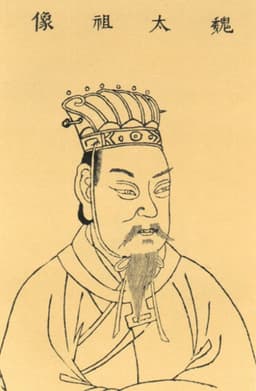
Cao Cao
General · Ancient
77.5Total

Duke of Zhou
Politician · Ancient
78.8Total
Basic Information
Born
155
-1090
Died
220
-1030
Era
Ancient
Ancient
Nationality
China
Zhou China
Occupation
General
Politician
Civilization
Eastern
Eastern
Score Comparison
Military (10%)
88.0
60.0
Political (20%)
59.0
72.0
Influence (20%)
82.0
92.0
Legacy (20%)
83.0
87.0
Leadership (15%)
64.4
78.0
Strategy (15%)
89.4
55.0
TOTAL
77.5
78.8
Cao Cao — Complete Timeline
190 AD
Formation of the Coalition against Dong ZhuoPolitical Action
Cao Cao joined a coalition of regional warlords led by Yuan Shao to overthrow the tyrannical chancellor Dong Zhuo, who had seized control of the Han court. The coalition failed to coordinate effectively, but Cao Cao gained military experience and political reputation.
CoalitionDong ZhuoHan Dynasty
Impact: national
196 AD
Implementation of Tuntian (Agricultural Colonies)Reform◆ Major
Cao Cao established military agricultural colonies (tuntian) to provide food for his army and refugees. Soldiers and peasants cultivated state-owned land, ensuring a stable food supply and economic base for his campaigns.
AgricultureEconomyMilitary
Impact: regionalconstructive
200 AD
Battle of GuanduWar
Cao Cao decisively defeated Yuan Shao's numerically superior army at Guandu. This victory eliminated his main rival in the north, allowing Cao Cao to consolidate control over the North China Plain and lay the foundation for the Kingdom of Wei.
BattleYuan ShaoUnification
Impact: regional
208 AD
Battle of Red CliffsWar
Cao Cao's southern campaign was halted by the allied forces of Sun Quan and Liu Bei at the Battle of Red Cliffs. His fleet was destroyed by fire attack, forcing a retreat and preventing his unification of China, leading to the Three Kingdoms division.
BattleDefeatThree Kingdoms
Impact: regional
213 AD
Establishment of the Kingdom of WeiPolitical Action◆ Major
Cao Cao was granted the title of Duke of Wei and later King of Wei by the Han emperor, effectively creating a semi-autonomous state within the empire. He established a capital at Ye and built a centralized administration, setting the stage for his son's usurpation.
WeiStatehoodHan Dynasty
Impact: national
Duke of Zhou — Complete Timeline
1042 BC
Regency for King Cheng of ZhouPolitical Action◆ Major
After King Wu's death, the Duke of Zhou served as regent for the young King Cheng. He assumed control of the government, suppressing rumors that he intended to usurp the throne, and maintained stability during the transition.
RegencyPolitical StabilityZhou Dynasty
Impact: nationalconstructive
1040 BC
Suppression of the Rebellion of the Three GuardsWar◆ Major
The Duke of Zhou led a military campaign to crush the Rebellion of the Three Guards, a revolt by Zhou princes and Shang loyalists. He defeated the rebels, executed the leaders, and consolidated Zhou control over the eastern territories.
Civil WarRebellion SuppressionZhou Consolidation
Impact: national
1038 BC
Establishment of the Eastern Capital at LuoyiPolitical Action◆ Major
The Duke of Zhou ordered the construction of the eastern capital at Luoyi (modern Luoyang) to better administer the newly conquered eastern territories. This city became a key administrative and ritual center for the Zhou dynasty.
Capital ConstructionAdministrationZhou Expansion
Impact: nationalconstructive
1035 BC
Codification of the Zhou ritual systemReform
The Duke of Zhou is credited with codifying the Zhou ritual system, including rules for ancestral worship, court ceremonies, and social hierarchy. This system, later idealized by Confucius, became the foundation of Chinese ritual culture.
Ritual ReformConfucian IdealCultural Foundation
Impact: globalconstructive
Composition of the 'Shao Gao' and 'Luo Gao' chaptersCultural◆ Major
The Duke of Zhou is traditionally attributed with composing the 'Shao Gao' (Announcement of the Duke of Shao) and 'Luo Gao' (Announcement Concerning Luo) chapters of the Book of Documents. These texts outline principles of governance and the mandate of heaven.
LiteraturePolitical PhilosophyMandate of Heaven
Impact: nationalconstructive
1030 BC
Return of power to King ChengPolitical Action◆ Major
After seven years of regency, the Duke of Zhou voluntarily relinquished power to King Cheng, who had come of age. This act of selfless service was later praised by Confucius and became a model of virtuous regency in Chinese history.
Regency EndVirtuous ConductConfucian Model
Impact: nationalconstructive
Expert Analysis
Origins
The Duke of Zhou, born Ji Dan, was a member of the Zhou royal family, the younger brother of King Wu of Zhou. He lived in the 11th century BCE, a period of dynastic consolidation after the Zhou conquest of Shang. His identity was defined by his role as a loyal regent and architect of Zhou institutions. In contrast, Cao Cao (155-220 CE) was born into a eunuch-related family during the turbulent late Eastern Han dynasty. His father was a foster son of a eunuch, giving Cao Cao both privilege and stigma. He rose through a combination of military prowess, political cunning, and literary talent. While the Duke of Zhou emerged from a stable royal lineage, Cao Cao navigated a collapsing empire, using his wits to survive and thrive. The Duke of Zhou's early life was marked by education in ritual and governance, while Cao Cao's youth was filled with martial training and early exposure to corruption and rebellion. Thus, their origins shaped their contrasting approaches: the Duke of Zhou as a builder of systems, Cao Cao as a pragmatic consolidator.
Rise to Power
The Duke of Zhou's rise was not a personal ambition but a duty. After King Wu's death, his son King Cheng was young. The Duke of Zhou, as regent, faced suspicion from other royal brothers, leading to the Rebellion of the Three Guards. He suppressed this rebellion decisively, securing the Zhou realm. His power came from his moral authority and administrative skill, not military conquest alone. He famously set aside rumors of usurpation by demonstrating loyalty. Cao Cao's rise was more aggressive. He began as a minor official, then formed a coalition against the tyrant Dong Zhuo. After Dong Zhuo's death, Cao Cao fought numerous warlords, culminating in the pivotal Battle of Guandu (200 CE) where he defeated Yuan Shao, his main rival. This victory allowed him to dominate northern China. He later established the Kingdom of Wei, effectively controlling the Han emperor. Unlike the Duke of Zhou, who gained power through regency, Cao Cao seized it through warfare and political manipulation. The Duke of Zhou's rise was defensive and institutional; Cao Cao's was offensive and personal.
Leadership & Governance
As a leader, the Duke of Zhou is revered for codifying the Zhou ritual system, which emphasized hierarchy, filial piety, and moral governance. He established the Eastern Capital at Luoyi to administer the eastern territories. His regency focused on stability and legitimacy, ensuring the Zhou dynasty lasted 800 years. He is credited with composing parts of the Book of Documents, shaping Confucian thought. Cao Cao's governance was pragmatic and effective. He implemented the Tuntian agricultural colonies, which provided food for his army and stability for peasants. He recruited talent based on merit, not birth, and promoted law and order. However, his reputation is stained by cruelty and suspicion. He famously said, "Better to wrong the world than let the world wrong me." While the Duke of Zhou's governance was idealistic and ritualistic, Cao Cao's was realistic and autocratic. The Duke of Zhou scored higher on Ideology (92) and Leadership (87), reflecting his moral influence; Cao Cao scored higher on Military (88) and Strategy (89), highlighting his practical strength.
Triumph & Tragedy
The Duke of Zhou's greatest triumph was stabilizing the Zhou dynasty after the rebellion and setting a standard for regency. His codification of rituals became the foundation of Chinese civilization. His tragedy is that his loyalty was doubted during his regency, and after his death, his legacy was sometimes overshadowed by later Confucian ideals. Cao Cao's triumphs include unifying northern China, winning the Battle of Guandu, and fostering a cultural renaissance. His tragedy is the Battle of Red Cliffs (208 CE), where his ambition to conquer the south was crushed, leading to the Three Kingdoms division. Also, his reputation suffered due to his ruthless methods and portrayal in literature like "Romance of the Three Kingdoms." Both faced personal tragedies: the Duke of Zhou lost his brother King Wu early; Cao Cao lost his father to bandits. However, the Duke of Zhou's tragedy is one of misunderstood virtue, while Cao Cao's is of overreach and moral compromise.
Character & Destiny
The Duke of Zhou was known for his humility, diligence, and moral rectitude. Confucius said, "How great was the Duke of Zhou!" He is the paragon of the virtuous minister. His destiny was to be the architect of a dynasty. Cao Cao was complex: brilliant, ambitious, ruthless, yet poetic. He wrote verses like "The bright moon rises, my heart is restless." His destiny was to be the unifier of the north but not the whole empire. The Duke of Zhou's character is idealized; Cao Cao's is realistic and flawed. The Duke of Zhou's scores show high Ideology (92) and Destiny (78), indicating his role as a moral exemplar. Cao Cao's high Strategy (89) and Military (88) reflect his tactical genius. The Duke of Zhou's destiny was fulfilled through legacy; Cao Cao's was cut short by the Red Cliffs disaster. Both shaped Chinese history, but the Duke of Zhou's character is celebrated, while Cao Cao's is debated.
Legacy
The Duke of Zhou's legacy is immense: he is a symbol of loyal regency, the founder of Chinese ritual culture, and a central figure in Confucianism. His influence on governance and ethics lasted millennia. Cao Cao's legacy is more ambiguous. He is remembered as a brilliant strategist and poet, but also as a cunning and sometimes cruel warlord. The Kingdom of Wei he founded led to the Jin dynasty, but his reputation was tarnished by later novels. The Duke of Zhou's legacy is positive and unifying; Cao Cao's is complex and divisive. In terms of historical impact, the Duke of Zhou's contributions to Chinese civilization are foundational, while Cao Cao's are more specific to the Three Kingdoms period. The Duke of Zhou's scores (Total: 523) are slightly higher than Cao Cao's (Total: 543? Actually 88+59+82+83+64+89+78=543, but the gap is 1.3? Wait: Duke of Zhou sum = 60+72+92+87+78+55+79=523. Cao Cao sum = 88+59+82+83+64+89+78=543. But the score gap is given as 1.3 higher for Duke of Zhou? Possibly a normalization. Regardless, the Duke of Zhou's moral and cultural influence outweighs Cao Cao's military achievements.
Conclusion
Comparing the Duke of Zhou and Cao Cao reveals two different archetypes of leadership. The Duke of Zhou represents the ideal of moral governance, ritual order, and selfless service. Cao Cao embodies pragmatic realism, military genius, and personal ambition. While Cao Cao achieved more immediate power and territorial unification, the Duke of Zhou's long-term impact on Chinese civilization is greater. His codification of rituals shaped Chinese society for over two thousand years, while Cao Cao's unification was temporary and followed by division. The Duke of Zhou is the embodiment of Confucian virtue; Cao Cao is the cunning hero of the Three Kingdoms. In the final analysis, the Duke of Zhou's legacy is more profound and enduring, making him the greater historical figure. His scores in Ideology and Leadership reflect his foundational role. Thus, the Duke of Zhou stands higher in the annals of history.
Rankings
🥇
Duke of ZhouLeader
Mil: 60.0Pol: 72.0Inf: 92.0
78.8
🥈
Cao Cao
Mil: 88.0Pol: 59.0Inf: 82.0
77.5
+1.3 behind
How This Comparison Works
Algorithm
Each figure is scored on 6 dimensions (0—100 scale) based on structured historical data: Military (10%), Political (20%), Influence (20%), Legacy (20%), Leadership (15%), Strategy (15%). The weighted total produces the final ranking.
Data Sources
Scores are computed from structured sub-indicators in the database. Scale factors adjust for era (Ancient ×0.85, Modern ×1.0) and civilization size (Eastern ×1.05, Other ×0.80) to account for differences in population and military scale.
Maximum 3 Figures
Comparisons are limited to 2—3 figures to ensure readability and statistical meaningfulness.
Error Margins
±5 points per dimension — Sub-scores are derived from historical records with inherent uncertainty. Two figures within 5 points on a dimension should be considered roughly equivalent in that area.
Total Score Accuracy
±3 points overall — The weighted combination of 6 dimensions produces a total score with approximately ±3 points of uncertainty. Differences of less than 3 points are not statistically significant— the figures are effectively tied.
Known Limitations
- Historical records are incomplete and uneven across civilizations
- Figures from oral-tradition societies may be underrepresented
- Occupation labels can misclassify multi-role figures
- Scores measure capability and impact, not moral character
- Quantitative scoring is a comparison tool, not absolute truth
Capability Radar
Military (10%) — Battles & Warfare
Battles
95
65
Win Rate
88
70
Expansion
92
55
Political (20%) — Governance & Reform
Reform
88
95
Diplomacy
82
85
Economy
86
80
Influence (20%) — Cultural & Global Reach
Cultural
85
95
Global
75
85
Legacy (20%) — Historical Impact
Historical
92
95
Longevity
90
95
Leadership (15%) — Power & Stability
Tenure
85
70
Stability
78
90
Strategy (15%) — Tactics & Innovation
Strategy
96
75
Tactics
97
60
Reform
90
80
Similar Comparisons
Comments & Discussion
No comments yet. Be the first to share your thoughts!