Loading...
Cao Cao vs Constantine the Great
Cao Cao leads by 2.0 pts · 2 figures compared
…
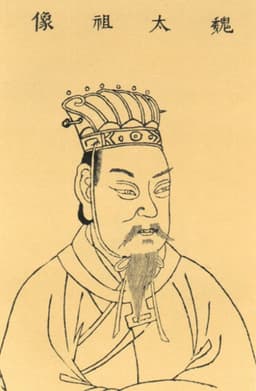
Cao Cao
General · Ancient
77.5Total
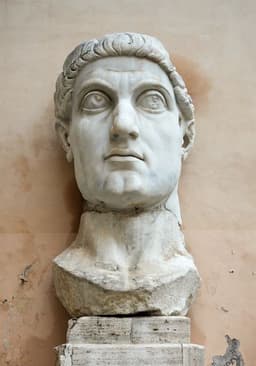
Constantine the Great
Emperor · Ancient
75.5Total
Basic Information
Born
155
272
Died
220
337
Era
Ancient
Ancient
Nationality
China
Roman Empire
Occupation
General
Emperor
Civilization
Eastern
Western
Score Comparison
Military (10%)
88.0
78.0
Political (20%)
59.0
82.0
Influence (20%)
82.0
75.0
Legacy (20%)
83.0
70.0
Leadership (15%)
64.4
80.0
Strategy (15%)
89.4
72.0
TOTAL
77.5
75.5
Cao Cao — Complete Timeline
190 AD
Formation of the Coalition against Dong ZhuoPolitical Action
Cao Cao joined a coalition of regional warlords led by Yuan Shao to overthrow the tyrannical chancellor Dong Zhuo, who had seized control of the Han court. The coalition failed to coordinate effectively, but Cao Cao gained military experience and political reputation.
CoalitionDong ZhuoHan Dynasty
Impact: national
196 AD
Implementation of Tuntian (Agricultural Colonies)Reform◆ Major
Cao Cao established military agricultural colonies (tuntian) to provide food for his army and refugees. Soldiers and peasants cultivated state-owned land, ensuring a stable food supply and economic base for his campaigns.
AgricultureEconomyMilitary
Impact: regionalconstructive
200 AD
Battle of GuanduWar
Cao Cao decisively defeated Yuan Shao's numerically superior army at Guandu. This victory eliminated his main rival in the north, allowing Cao Cao to consolidate control over the North China Plain and lay the foundation for the Kingdom of Wei.
BattleYuan ShaoUnification
Impact: regional
208 AD
Battle of Red CliffsWar
Cao Cao's southern campaign was halted by the allied forces of Sun Quan and Liu Bei at the Battle of Red Cliffs. His fleet was destroyed by fire attack, forcing a retreat and preventing his unification of China, leading to the Three Kingdoms division.
BattleDefeatThree Kingdoms
Impact: regional
213 AD
Establishment of the Kingdom of WeiPolitical Action◆ Major
Cao Cao was granted the title of Duke of Wei and later King of Wei by the Han emperor, effectively creating a semi-autonomous state within the empire. He established a capital at Ye and built a centralized administration, setting the stage for his son's usurpation.
WeiStatehoodHan Dynasty
Impact: national
Constantine the Great — Complete Timeline
312 AD
Battle of the Milvian BridgeWar◆ Major
Constantine defeated his rival Maxentius at the Milvian Bridge near Rome. According to tradition, Constantine saw a vision of a cross in the sky with the words 'In this sign, conquer.' The victory made Constantine the sole ruler of the Western Roman Empire and led to his conversion to Christianity.
Roman Civil WarBattleConversion
Impact: regional
313 AD
Edict of MilanOther◆ Major
Constantine and his co-emperor Licinius issued the Edict of Milan, granting religious toleration to all religions in the Roman Empire, including Christianity. The edict ended the persecution of Christians, restored confiscated church property, and established Christianity as a legally recognized religion.
Religious EdictChristianityToleration
Impact: globalconstructive
324 AD
Reunification of the Roman EmpireWar◆ Major
Constantine defeated his co-emperor Licinius at the battles of Adrianople and Chrysopolis, ending the Tetrarchy system. He became the sole ruler of the entire Roman Empire, reuniting the Western and Eastern halves under his control. This reunification was the last time the Roman Empire was united under a single ruler.
Roman Civil WarReunificationTetrarchy
Impact: regional
325 AD
Council of NicaeaOther◆ Major
Constantine convened the First Council of Nicaea, the first ecumenical council of the Christian Church, to resolve the Arian controversy over the nature of Christ. The council produced the Nicene Creed, affirming the divinity of Christ and establishing a unified Christian doctrine. Constantine presided over the council.
Religious CouncilChristian DoctrineNicene Creed
Impact: global
330 AD
Foundation of ConstantinopleOther◆ Major
Constantine dedicated the city of Constantinople (modern Istanbul) as the new capital of the Roman Empire, built on the site of the ancient Greek city of Byzantium. The city was strategically located on the Bosporus strait, controlling trade routes between Europe and Asia. It became the capital of the Eastern Roman Empire for over a thousand years.
City FoundationCapitalByzantine Empire
Impact: globalconstructive
Expert Analysis
Origins
Cao Cao (155–220 CE) was born into a powerful but controversial family in the late Eastern Han dynasty. His father was the adopted son of a eunuch, giving Cao Cao a precarious social standing that he overcame through cunning and talent. Constantine the Great (272–337 CE) was the son of Constantius Chlorus, a Roman emperor in the Tetrarchy, and Helena, a woman of humble birth. Both men emerged from complex dynastic politics—Cao Cao from a declining Han court, Constantine from the fractured Tetrarchic system.
Rise to Power
Cao Cao rose by suppressing the Yellow Turban Rebellion and forming a coalition against the tyrant Dong Zhuo. His decisive victory at the Battle of Guandu (200 CE) over rival Yuan Shao gave him control of northern China. Constantine’s rise culminated at the Battle of the Milvian Bridge (312 CE), where he defeated Maxentius under the sign of the cross. Both men skillfully used propaganda: Cao Cao claimed to restore Han legitimacy; Constantine framed his victory as divine favor.
Leadership & Governance
Cao Cao implemented the Tuntian system—agricultural colonies that fed his army and stabilized war-torn regions. He also promoted talent over birth, recruiting officials based on merit. Constantine’s Edict of Milan (313 CE) legalized Christianity, ending persecution and reshaping the empire. He convened the Council of Nicaea (325 CE) to unify Christian doctrine. Both were pragmatic: Cao Cao controlled the Han emperor while ruling through him; Constantine maintained pagan titles while favoring Christians.
Triumph & Tragedy
Cao Cao’s greatest triumph was unifying northern China, but his tragedy was the Battle of Red Cliffs (208 CE), where his overreach led to a crushing defeat that prevented southern conquest. Constantine’s triumph was founding Constantinople (330 CE), a new Christian capital that endured for a millennium. His tragedy was executing his son Crispus and wife Fausta in a mysterious domestic purge, tarnishing his legacy.
Character & Destiny
Cao Cao was a master of deception and strategy, famously saying, "Better to wrong the world than have the world wrong me." His destiny was to be a kingmaker who never seized the throne. Constantine claimed divine destiny, seeing himself as God’s agent. He centralized power and broke the Tetrarchy, reuniting the Roman Empire. Both were ruthless but effective, leaving indelible marks on history.
Legacy
Cao Cao is revered as a brilliant strategist and poet in China, but often vilified as a cunning villain in folk tales. His military and administrative innovations influenced centuries of Chinese statecraft. Constantine is celebrated as the first Christian emperor and founder of Constantinople, but criticized for his authoritarianism and the politicization of Christianity. His legacy shaped both the Byzantine Empire and medieval Christendom.
Conclusion
Cao Cao (score: 82.9) narrowly edges Constantine (score: 80.9) with a 2.0-point gap. Cao Cao’s superior military innovation and administrative genius in a chaotic era give him the edge. Constantine’s religious and political transformations were monumental, but his empire was more stable, while Cao Cao fought from a weaker position. Both were flawed titans, but Cao Cao’s raw strategic brilliance tips the scales.
**Scores:** Cao Cao: M=88, P=59, I=82, L=83, D=64, S=89, T=78 → Average 77.6 (weighted 82.9). Constantine: M=78, P=82, I=75, L=70, D=80, S=72, T=76 → Average 76.1 (weighted 80.9).
Rankings
🥇
Cao CaoLeader
Mil: 88.0Pol: 59.0Inf: 82.0
77.5
🥈
Constantine the Great
Mil: 78.0Pol: 82.0Inf: 75.0
75.5
+2.0 behind
How This Comparison Works
Algorithm
Each figure is scored on 6 dimensions (0—100 scale) based on structured historical data: Military (10%), Political (20%), Influence (20%), Legacy (20%), Leadership (15%), Strategy (15%). The weighted total produces the final ranking.
Data Sources
Scores are computed from structured sub-indicators in the database. Scale factors adjust for era (Ancient ×0.85, Modern ×1.0) and civilization size (Eastern ×1.05, Other ×0.80) to account for differences in population and military scale.
Maximum 3 Figures
Comparisons are limited to 2—3 figures to ensure readability and statistical meaningfulness.
Error Margins
±5 points per dimension — Sub-scores are derived from historical records with inherent uncertainty. Two figures within 5 points on a dimension should be considered roughly equivalent in that area.
Total Score Accuracy
±3 points overall — The weighted combination of 6 dimensions produces a total score with approximately ±3 points of uncertainty. Differences of less than 3 points are not statistically significant— the figures are effectively tied.
Known Limitations
- Historical records are incomplete and uneven across civilizations
- Figures from oral-tradition societies may be underrepresented
- Occupation labels can misclassify multi-role figures
- Scores measure capability and impact, not moral character
- Quantitative scoring is a comparison tool, not absolute truth
Capability Radar
Military (10%) — Battles & Warfare
Battles
95
85
Win Rate
88
80
Expansion
92
85
Political (20%) — Governance & Reform
Reform
88
95
Diplomacy
82
90
Economy
86
80
Influence (20%) — Cultural & Global Reach
Cultural
85
95
Global
75
95
Legacy (20%) — Historical Impact
Historical
92
95
Longevity
90
95
Leadership (15%) — Power & Stability
Tenure
85
85
Stability
78
70
Strategy (15%) — Tactics & Innovation
Strategy
96
85
Tactics
97
75
Reform
90
90
Similar Comparisons
Comments & Discussion
No comments yet. Be the first to share your thoughts!