Loading...
Burnaburiash II vs Emperor Xian of Han
Burnaburiash II leads by 1.8 pts · 2 figures compared
…
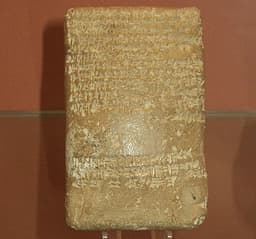
Burnaburiash II
Emperor · Ancient
43.1Total
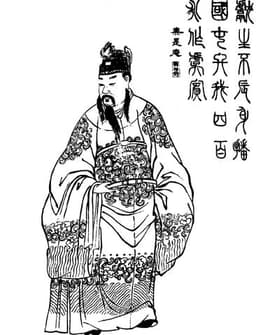
Emperor Xian of Han
Emperor · Ancient
41.3Total
Basic Information
Born
-1359
181
Died
-1333
234
Era
Ancient
Ancient
Nationality
Kassite Dynasty
China
Occupation
Emperor
Emperor
Civilization
Middle Eastern
Eastern
Score Comparison
Military (10%)
25.9
21.4
Political (20%)
40.8
39.4
Influence (20%)
47.1
42.4
Legacy (20%)
38.3
37.5
Leadership (15%)
62.2
48.4
Strategy (15%)
36.8
60.0
TOTAL
43.1
41.3
Burnaburiash II — Complete Timeline
1350 BC
Correspondence with AkhenatenPolitical Action◆ Major
Burnaburiash II exchanged diplomatic letters with the Egyptian pharaoh Akhenaten, as recorded in the Amarna letters. The correspondence dealt with marriage alliances, trade, and mutual recognition, reflecting the diplomatic network of the Late Bronze Age.
DiplomacyAmarna LettersEgypt
Impact: regional
1345 BC
Conflict with Assyria over Border TerritoriesWar
Burnaburiash II engaged in a conflict with Assyria over border territories, as mentioned in the Amarna letters. The dispute highlighted the shifting power dynamics in Mesopotamia, though the outcome was inconclusive and did not lead to major territorial changes.
ConflictAssyriaBorder
Impact: regional
Emperor Xian of Han — Complete Timeline
196 AD
Appointment of Cao Cao as ChancellorPolitical Action◆ Major
Emperor Xian, fleeing from warlords, was taken under Cao Cao's protection. Cao Cao had the emperor appoint him Chancellor and granted him control over the imperial court. This gave Cao Cao political legitimacy to issue decrees in the emperor's name, centralizing power under his control.
Political ManeuverCao CaoHan Court
Impact: national
200 AD
Decree Ordering the Killing of Dong ChengPolitical Action◆ Major
Emperor Xian issued a secret decree to Dong Cheng and others to assassinate Cao Cao. The plot was discovered, and Cao Cao executed Dong Cheng and his co-conspirators, including Emperor Xian's consort. This event deepened the emperor's powerlessness and Cao Cao's control.
PlotExecutionCao Cao
Impact: nationaltragic
214 AD
Forced Execution of Empress FuPolitical Action◆ Major
Cao Cao forced Emperor Xian to depose and execute Empress Fu Shou after her involvement in a plot against Cao Cao was revealed. The emperor was powerless to stop it, and Cao Cao installed his own daughter as empress. This further demonstrated Cao Cao's dominance over the throne.
ExecutionPalace IntrigueCao Cao
Impact: nationaltragic
220 AD
Abdication to Cao PiPolitical Action
Emperor Xian, under pressure from Cao Pi, formally abdicated the throne, ending the 400-year Han dynasty. He issued an edict claiming the Mandate of Heaven had passed to Cao Pi, who then founded the Cao Wei dynasty. This event marked the beginning of the Three Kingdoms period.
AbdicationHan Dynasty EndThree Kingdoms
Impact: nationaltragic
Expert Analysis
Origins
Burnaburiash II was a Kassite king of Babylon, reigning during the 14th century BCE (circa 1359–1333 BCE). He was born into the Kassite dynasty, which had ruled Babylonia for centuries after conquering it. His father was likely Kadashman-Enlil I. Burnaburiash II's early life is obscure, but as a prince, he would have been trained in governance and diplomacy, as evidenced by his later correspondence with the Egyptian pharaoh. The Kassites maintained a complex bureaucracy and engaged in long-distance trade and diplomacy.
Emperor Xian of Han, born Liu Xie in 181 CE, was the last emperor of the Han dynasty. He was the son of Emperor Ling and became emperor at age 8 after his brother was deposed. His early life was marked by the decline of central authority, as eunuchs and warlords vied for power. He grew up in the imperial palace but was essentially a puppet, first under Dong Zhuo, then Cao Cao. His education was likely neglected amid the chaos, leaving him ill-prepared for independent rule.
Rise to Power
Burnaburiash II ascended to the throne of Babylon after his father's death, inheriting a kingdom that was a major power in the Near East. His rise was not marked by dramatic conflict but by the routine succession of a stable dynasty. However, his reign saw the rise of Assyria under Ashur-uballit I, which challenged Babylonian dominance. Burnaburiash II's power was tested in diplomatic and military struggles over border territories, as recorded in the Amarna letters. He maintained his position through alliances, particularly with Egypt, and by asserting his authority over vassal states.
Emperor Xian's rise to power was accidental. He became emperor at age 8 after his brother was murdered by Dong Zhuo, who controlled the capital. Xian was a puppet ruler from the start. In 196 CE, he fled from Dong Zhuo's successor Li Jue and was taken under the protection of Cao Cao, who saw the value of controlling the emperor. Cao Cao had Xian appoint him Chancellor, and from then on, Xian was a figurehead. His rise was not one of personal agency but of being a pawn in others' games.
Leadership & Governance
Burnaburiash II's leadership is best understood through his diplomatic correspondence. In the Amarna letters, he skillfully negotiated with Akhenaten, demanding gold and gifts as signs of respect. He maintained Babylon's independence and status as a great power, even as Assyria grew. His governance was typical of Kassite rule: maintaining control through a feudal system, supporting temples, and managing trade routes. He scored 62.2 in leadership, reflecting his ability to navigate diplomacy and keep his kingdom stable.
Emperor Xian's leadership was severely constrained. He had no real power; Cao Cao made all decisions. Xian did attempt to resist, most notably by issuing a secret decree to assassinate Cao Cao, but the plot failed. He also tried to assert authority by appointing his own officials, but these moves were quickly suppressed. His leadership score of 48.4 reflects his inability to govern effectively, though given his circumstances, it is remarkable he survived as long as he did.
Triumph & Tragedy
Burnaburiash II's greatest triumph was maintaining Babylonian independence and prestige during a period of Assyrian expansion. His correspondence with Akhenaten shows he was treated as an equal by Egypt. However, his tragedy was the loss of border territories to Assyria, as mentioned in the Amarna letters. This conflict foreshadowed Babylon's later decline. His military score of 25.9 is low, indicating that despite his diplomatic success, he could not defend all his holdings.
Emperor Xian's triumph was simply surviving for over 30 years as a puppet emperor, and his abdication to Cao Pi in 220 CE was a peaceful transition that avoided a bloody civil war. His tragedy was his utter powerlessness: he was forced to execute his own empress and saw his dynasty end. He scored 21.4 in military, reflecting his lack of control over armies. His political score of 39.4 shows his limited influence in a system dominated by warlords.
Character & Destiny
Burnaburiash II appears in the Amarna letters as a proud and demanding king, insisting on proper protocol and gifts. He was diplomatic but firm, understanding the importance of prestige. His character helped maintain Babylon's status, but his inability to counter Assyrian aggression may reflect a cautious nature. His destiny was to be a king of a declining power, though he managed to keep his kingdom intact during his reign.
Emperor Xian was described as intelligent but weak-willed. He attempted to resist Cao Cao but lacked the ruthlessness to succeed. His character was shaped by his upbringing as a puppet; he learned to survive by acquiescing. His destiny was to be the last Han emperor, a tragic figure who presided over the collapse of a 400-year dynasty. His decision to abdicate, perhaps to avoid further bloodshed, shows a measure of wisdom.
Legacy
Burnaburiash II's legacy is largely through the Amarna letters, which provide a window into Bronze Age diplomacy. He is remembered as a Kassite king who interacted with the famous Akhenaten. His influence score of 47.1 reflects his role in the diplomatic network of the time, but his legacy is overshadowed by Assyria's rise. The Kassite dynasty continued after him, but his reign marked the beginning of its decline.
Emperor Xian's legacy is as the last Han emperor. His abdication ended the Han dynasty and ushered in the Three Kingdoms period, which became a legendary era in Chinese history. He is often portrayed as a sympathetic but powerless ruler. His influence score of 42.4 is modest, but his role in the transition of power is significant. The Han dynasty's fall reshaped Chinese civilization, and Xian was the symbol of its end.
Conclusion
Burnaburiash II had a slightly higher total score (43.1 vs 41.3), but the impact of Emperor Xian is arguably greater. Burnaburiash II was a competent king in a stable dynasty, but his reign did not change history. In contrast, Emperor Xian's abdication marked the end of one of China's greatest dynasties, leading to centuries of division and eventual reunification. While Burnaburiash II's diplomatic correspondence is historically valuable, Xian's role in the fall of Han had more profound consequences. Therefore, Emperor Xian had greater impact, despite his lower score.
Rankings
🥇
Burnaburiash IILeader
Mil: 25.9Pol: 40.8Inf: 47.1
43.1
🥈
Emperor Xian of Han
Mil: 21.4Pol: 39.4Inf: 42.4
41.3
+1.8 behind
How This Comparison Works
Algorithm
Each figure is scored on 6 dimensions (0—100 scale) based on structured historical data: Military (10%), Political (20%), Influence (20%), Legacy (20%), Leadership (15%), Strategy (15%). The weighted total produces the final ranking.
Data Sources
Scores are computed from structured sub-indicators in the database. Scale factors adjust for era (Ancient ×0.85, Modern ×1.0) and civilization size (Eastern ×1.05, Other ×0.80) to account for differences in population and military scale.
Maximum 3 Figures
Comparisons are limited to 2—3 figures to ensure readability and statistical meaningfulness.
Error Margins
±5 points per dimension — Sub-scores are derived from historical records with inherent uncertainty. Two figures within 5 points on a dimension should be considered roughly equivalent in that area.
Total Score Accuracy
±3 points overall — The weighted combination of 6 dimensions produces a total score with approximately ±3 points of uncertainty. Differences of less than 3 points are not statistically significant— the figures are effectively tied.
Known Limitations
- Historical records are incomplete and uneven across civilizations
- Figures from oral-tradition societies may be underrepresented
- Occupation labels can misclassify multi-role figures
- Scores measure capability and impact, not moral character
- Quantitative scoring is a comparison tool, not absolute truth
Capability Radar
Military (10%) — Battles & Warfare
Battles
10
33
Win Rate
10
37
Expansion
10
36
Political (20%) — Governance & Reform
Reform
30
0
Diplomacy
50
5
Economy
30
0
Influence (20%) — Cultural & Global Reach
Cultural
20
5
Global
20
5
Legacy (20%) — Historical Impact
Historical
30
20
Longevity
20
15
Leadership (15%) — Power & Stability
Tenure
40
10
Stability
40
0
Strategy (15%) — Tactics & Innovation
Strategy
10
42
Tactics
10
45
Reform
10
50
Similar Comparisons
Comments & Discussion
No comments yet. Be the first to share your thoughts!