Loading...
Agrippa I vs Emperor Xian of Han
Agrippa I leads by 1.0 pts · 2 figures compared
…
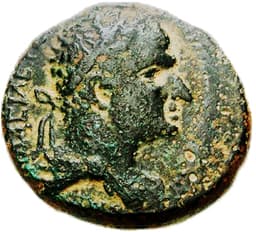
Agrippa I
Emperor · Ancient
42.3Total
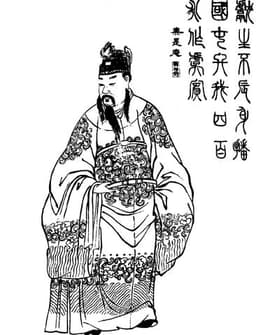
Emperor Xian of Han
Emperor · Ancient
41.3Total
Basic Information
Born
-11
181
Died
44
234
Era
Ancient
Ancient
Nationality
Judea
China
Occupation
Emperor
Emperor
Civilization
Middle Eastern
Eastern
Score Comparison
Military (10%)
22.6
21.4
Political (20%)
43.7
39.4
Influence (20%)
48.6
42.4
Legacy (20%)
38.3
37.5
Leadership (15%)
51.9
48.4
Strategy (15%)
39.6
60.0
TOTAL
42.3
41.3
Agrippa I — Complete Timeline
36 AD
Imprisoned by TiberiusPolitical Action◆ Major
Agrippa I was imprisoned by Emperor Tiberius after making a remark interpreted as wishing for Tiberius's death. He was held in chains for six months until Tiberius's death in 37 AD, when he was released by the new emperor Caligula, who granted him territories.
ImprisonmentTiberiusCaligula
Impact: regionaltragic
37 AD
Appointed King of Judea by CaligulaPolitical Action◆ Major
Upon his release from prison, Emperor Caligula appointed Agrippa I as king of the territories formerly held by his uncle Philip (Batanea, Trachonitis, and Gaulanitis). In 39 AD, Caligula added the tetrarchy of Herod Antipas (Galilee and Perea) after Antipas's exile.
KingshipCaligulaTerritorial Expansion
Impact: regionalconstructive
44 AD
Persecuted the Apostles and Executed JamesPolitical Action◆ Major
According to the Acts of the Apostles, King Agrippa I began persecuting the early Christian church. He executed James, son of Zebedee, by the sword. This was the first apostolic martyrdom recorded in the New Testament. The persecution pleased the Jewish authorities.
Christian PersecutionJames the ApostleMartyrdom
Impact: regionaldestructive
Imprisoned Peter the ApostlePolitical Action◆ Major
Agrippa I arrested Peter the Apostle during Passover and imprisoned him, intending to execute him after the festival. According to Acts, Peter was freed by an angel and escaped. Agrippa executed the guards who had been responsible for Peter's custody.
Peter the ApostleImprisonmentMiraculous Escape
Impact: regionaldestructive
Death at Caesarea MaritimaOther◆ Major
Agrippa I died suddenly at Caesarea Maritima during a public festival. According to Josephus and Acts, he was struck down by an angel of God after accepting acclamation as a god. He was eaten by worms and died after five days of illness. His death ended the Herodian kingdom.
DeathDivine JudgmentEnd of Kingdom
Impact: regionaltragic
Emperor Xian of Han — Complete Timeline
196 AD
Appointment of Cao Cao as ChancellorPolitical Action◆ Major
Emperor Xian, fleeing from warlords, was taken under Cao Cao's protection. Cao Cao had the emperor appoint him Chancellor and granted him control over the imperial court. This gave Cao Cao political legitimacy to issue decrees in the emperor's name, centralizing power under his control.
Political ManeuverCao CaoHan Court
Impact: national
200 AD
Decree Ordering the Killing of Dong ChengPolitical Action◆ Major
Emperor Xian issued a secret decree to Dong Cheng and others to assassinate Cao Cao. The plot was discovered, and Cao Cao executed Dong Cheng and his co-conspirators, including Emperor Xian's consort. This event deepened the emperor's powerlessness and Cao Cao's control.
PlotExecutionCao Cao
Impact: nationaltragic
214 AD
Forced Execution of Empress FuPolitical Action◆ Major
Cao Cao forced Emperor Xian to depose and execute Empress Fu Shou after her involvement in a plot against Cao Cao was revealed. The emperor was powerless to stop it, and Cao Cao installed his own daughter as empress. This further demonstrated Cao Cao's dominance over the throne.
ExecutionPalace IntrigueCao Cao
Impact: nationaltragic
220 AD
Abdication to Cao PiPolitical Action
Emperor Xian, under pressure from Cao Pi, formally abdicated the throne, ending the 400-year Han dynasty. He issued an edict claiming the Mandate of Heaven had passed to Cao Pi, who then founded the Cao Wei dynasty. This event marked the beginning of the Three Kingdoms period.
AbdicationHan Dynasty EndThree Kingdoms
Impact: nationaltragic
Expert Analysis
Origins
Agrippa I (born 10 BCE) was a grandson of Herod the Great, raised in the Roman imperial court alongside future emperors. His father Aristobulus was executed by Herod, leaving Agrippa to navigate a precarious family legacy. He received a Roman education and cultivated friendships with Caligula and Claudius.
Emperor Xian of Han (born 181 CE, personal name Liu Xie) was the son of Emperor Ling and Consort Wang. After his mother was poisoned by Empress He, he was raised by Empress Dowager Dong. He became Prince of Chenliu and later emperor at age 8, thrust into a collapsing dynasty amid warlord conflicts.
Rise to Power
Agrippa I's rise was driven by personal connections. After his father's execution, he lived in Rome, befriending the future emperor Caligula. In 36 CE, he was imprisoned by Tiberius for a remark wishing for his death, but upon Caligula's accession in 37 CE, he was released and granted the former territories of Philip (Batanea, Trachonitis, and Gaulanitis) with the title of king. Later, Claudius added Judea and Samaria, making Agrippa king over a realm as large as his grandfather's.
Emperor Xian's rise was accidental. He became emperor in 189 CE after his half-brother Liu Bian was deposed by the warlord Dong Zhuo. Xian was a puppet from the start, controlled first by Dong Zhuo, then by Cao Cao after 196 CE. Cao Cao 'rescued' the emperor and used him to legitimize his own rule, compelling Xian to appoint him Chancellor.
Leadership & Governance
Agrippa I governed as a Hellenistic king with Roman backing. He maintained Jewish traditions, earning him popularity among his subjects. He began a new city wall in Jerusalem but was cut short by death. His political score of 43.7 reflects his ability to balance Roman interests with Jewish sensibilities, though he lacked strategic depth (39.6).
Emperor Xian had no real governance role. His leadership score of 48.4 reflects his symbolic position rather than actual decisions. The Han bureaucracy was run by Cao Cao, who implemented land reforms and military consolidation. Xian's only acts of independence were secret plots, all of which failed, such as the decree to kill Cao Cao in 200 CE, which led to the execution of Dong Cheng and his daughter (Empress Fu).
Triumph & Tragedy
Agrippa I's greatest triumph was unifying the Herodian kingdom and ruling as a respected Jewish king. He intervened successfully with Caligula to prevent the emperor from placing a statue in the Jerusalem Temple. His tragedy was his sudden death in 44 CE at Caesarea, struck by an angel according to Acts and Josephus. This occurred after he accepted divine honors from a crowd, leading to his demise. His reign lasted only three years.
Emperor Xian's triumph was surviving the fall of the Han dynasty, living until 234 CE as a retired noble. His tragedy was being a powerless emperor forced to abdicate in 220 CE, ending the 400-year Han dynasty. He witnessed the execution of his wife Empress Fu and his concubines, and his own son was later killed. His military score of 21.4 reflects his complete lack of military control.
Character & Destiny
Agrippa I was charismatic and politically astute, using his Roman connections to regain his grandfather's kingdom. However, his acceptance of flattery (the crowd calling him a god) led to his death. His character combined Jewish piety with Roman ambition, a duality that served him well until the end.
Emperor Xian was passive and powerless, his destiny shaped entirely by stronger men. He attempted resistance through secret plots but lacked the ruthlessness or support to succeed. His character, described as 'gentle and weak,' made him a perfect puppet. He abdicated when Cao Pi demanded it, claiming the Mandate of Heaven had passed.
Legacy
Agrippa I is remembered as the last king of Judea to rule a unified Jewish state before the Jewish-Roman wars. His legacy is mixed: he persecuted early Christians (executing James and imprisoning Peter), which cemented his negative image in Christian tradition. His death marked the end of Herodian independence, with Judea reverting to a Roman province.
Emperor Xian is remembered as the last Han emperor, a symbol of the dynasty's decline. His abdication established the precedent for peaceful transfers of power in Chinese history. He is often pitied as a tragic figure. His reign saw the rise of Cao Cao and the Three Kingdoms period, which shaped Chinese history for centuries.
Conclusion
Agrippa I had a greater impact in his shorter reign. His total score of 42.3 vs Xian's 41.3 reflects this, though the gap is narrow. Agrippa actively governed, influenced Roman policy toward Jews, and left a tangible legacy in Judea. Emperor Xian was a passive figure whose main impact was as a symbol. While Xian's abdication marked the end of an era, Agrippa's actions directly affected the course of Jewish and early Christian history. Therefore, Agrippa I takes the edge as the more consequential ruler.
Rankings
🥇
Agrippa ILeader
Mil: 22.6Pol: 43.7Inf: 48.6
42.3
🥈
Emperor Xian of Han
Mil: 21.4Pol: 39.4Inf: 42.4
41.3
+1.0 behind
How This Comparison Works
Algorithm
Each figure is scored on 6 dimensions (0—100 scale) based on structured historical data: Military (10%), Political (20%), Influence (20%), Legacy (20%), Leadership (15%), Strategy (15%). The weighted total produces the final ranking.
Data Sources
Scores are computed from structured sub-indicators in the database. Scale factors adjust for era (Ancient ×0.85, Modern ×1.0) and civilization size (Eastern ×1.05, Other ×0.80) to account for differences in population and military scale.
Maximum 3 Figures
Comparisons are limited to 2—3 figures to ensure readability and statistical meaningfulness.
Error Margins
±5 points per dimension — Sub-scores are derived from historical records with inherent uncertainty. Two figures within 5 points on a dimension should be considered roughly equivalent in that area.
Total Score Accuracy
±3 points overall — The weighted combination of 6 dimensions produces a total score with approximately ±3 points of uncertainty. Differences of less than 3 points are not statistically significant— the figures are effectively tied.
Known Limitations
- Historical records are incomplete and uneven across civilizations
- Figures from oral-tradition societies may be underrepresented
- Occupation labels can misclassify multi-role figures
- Scores measure capability and impact, not moral character
- Quantitative scoring is a comparison tool, not absolute truth
Capability Radar
Military (10%) — Battles & Warfare
Battles
10
33
Win Rate
10
37
Expansion
5
36
Political (20%) — Governance & Reform
Reform
30
0
Diplomacy
60
5
Economy
30
0
Influence (20%) — Cultural & Global Reach
Cultural
30
5
Global
20
5
Legacy (20%) — Historical Impact
Historical
30
20
Longevity
20
15
Leadership (15%) — Power & Stability
Tenure
40
10
Stability
25
0
Strategy (15%) — Tactics & Innovation
Strategy
10
42
Tactics
10
45
Reform
5
50
Similar Comparisons
Comments & Discussion
No comments yet. Be the first to share your thoughts!