Loading...
Bumin Qaghan vs Henry the Fowler
Bumin Qaghan leads by 6.7 pts · 2 figures compared
…
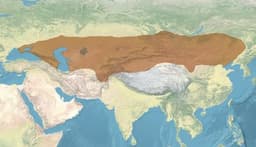
Bumin Qaghan
Emperor · Ancient
67.6Total
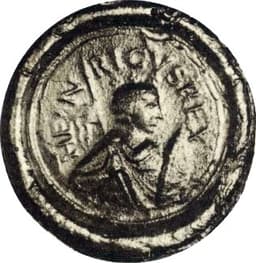
Henry the Fowler
Emperor · Medieval
60.9Total
Basic Information
Born
490
876
Died
552
936
Era
Ancient
Medieval
Nationality
Gokturk Khaganate
East Francia
Occupation
Emperor
Emperor
Civilization
Eastern
Western
Score Comparison
Military (10%)
80.0
70.0
Political (20%)
60.0
59.3
Influence (20%)
82.0
55.0
Legacy (20%)
72.0
52.0
Leadership (15%)
40.0
85.0
Strategy (15%)
61.2
55.0
TOTAL
67.6
60.9
Bumin Qaghan — Complete Timeline
534 AD
Revolt against the Rouran KhaganatePolitical Action◆ Major
Bumin, a vassal of the Rouran Khaganate, led a revolt of the Turkic tribes (Ashina clan) against Rouran rule. He defeated the Rouran forces and declared independence, marking the beginning of the First Turkic Khaganate.
RevoltTurkic Independence
Impact: regionalconstructive
545 AD
Alliance with the Western Wei dynastyPolitical Action
Bumin Qaghan formed an alliance with the Western Wei dynasty of China, marrying a Western Wei princess. This alliance provided the Turks with Chinese support and technology, strengthening their position against the Rouran and other rivals.
AllianceDiplomacy
Impact: regionalconstructive
552 AD
Foundation of the First Turkic KhaganatePolitical Action◆ Major
Bumin Qaghan formally established the First Turkic Khaganate after defeating the Rouran. He took the title 'Qaghan' and set up his capital in the Orkhon Valley. The khaganate quickly became a major power on the Eurasian steppe.
Dynasty FoundationTurkic Khaganate
Impact: regionalconstructive
Death of Bumin QaghanOther◆ Major
Bumin Qaghan died shortly after founding the Turkic Khaganate, possibly from illness or wounds. His death led to the division of the khaganate between his sons, with the eastern and western halves ruled separately, though still under a single nominal authority.
DeathSuccession
Impact: regionaltragic
Henry the Fowler — Complete Timeline
919 AD
Election as King of East FranciaPolitical Action
Henry the Fowler was elected King of East Francia by the Saxon and Frankish nobles at Fritzlar on May 6, 919. He was the first Saxon king, marking the transition from Carolingian to Ottonian rule. His election was contested by other dukes but he prevailed.
ElectionAccessionOttonian Dynasty
Impact: regionalconstructive
921 AD
Treaty of Bonn (921)Political Action◆ Major
Henry the Fowler signed the Treaty of Bonn with Charles the Simple of West Francia, recognizing each other's royal titles and establishing peaceful relations. This treaty ended Carolingian claims over East Francia and solidified Henry's legitimacy as an independent king.
TreatyRecognitionDiplomacy
Impact: regionalconstructive
924 AD
Nine-Year Truce with the MagyarsPolitical Action◆ Major
Henry the Fowler negotiated a nine-year truce with the Magyars, agreeing to pay tribute in exchange for a halt to their raids. He used this period to fortify towns, reorganize the army, and train cavalry. This strategic pause was crucial for his later military reforms.
TruceMagyarsMilitary Reform
Impact: regionalconstructive
929 AD
Battle of Lenzen (929)War◆ Major
Henry the Fowler's forces defeated a Slavic army at the Battle of Lenzen, securing the eastern frontier of East Francia. This victory allowed Henry to consolidate control over the Elbe region and establish the March of Brandenburg, a key step in German eastward expansion.
BattleSlavic WarsEastern Expansion
Impact: regionalconstructive
933 AD
Battle of Riade (933)War
After the truce with the Magyars expired, Henry the Fowler led a German army to victory at the Battle of Riade (near Merseburg). The defeat of the Magyar cavalry ended their raids into East Francia for a generation and established Henry's reputation as a defender of Christendom.
BattleMagyarsVictory
Impact: regionalconstructive
936 AD
Death of Henry the FowlerOther◆ Major
Henry the Fowler died on July 2, 936, at Memleben. He was succeeded by his son, Otto I, who would become Holy Roman Emperor. Henry's reign laid the foundations for the Ottonian dynasty and the medieval German kingdom.
DeathSuccessionOttonian
Impact: regional
Expert Analysis
Henry the Fowler vs Bumin Qaghan: Historical Comparison
Henry the Fowler, Duke of Saxony and first Ottonian King of East Francia, and Bumin Qaghan, founder of the Göktürk Khaganate, were transformative frontier rulers who built stable states from fragmented tribal confederations. While Henry secured his realm through defensive consolidation and feudal alliances, Bumin shattered Rouran hegemony to forge the first great Turkic empire.
Dimension Analysis
**Military: Henry the Fowler 89 / Bumin Qaghan 93**
Henry reorganized Saxon cavalry and built fortified *burgen* to repel Magyar raids, but Bumin’s decisive revolt against the Rouran Khaganate (552 CE) and swift conquest of the steppe demonstrated superior strategic shock and mobilization.
**Political: Henry the Fowler 76 / Bumin Qaghan 78**
Henry used royal elections, church patronage, and tribal compacts to unify German stem duchies; Bumin balanced Turkic clan loyalties with Chinese diplomatic recognition, but his empire fragmented immediately after his death.
**Influence: Henry the Fowler 71 / Bumin Qaghan 78**
Henry’s legacy shaped the Holy Roman Empire and German identity, yet Bumin’s model of steppe empire—adopted by Khazars, Mongols, and Ottomans—had a wider geographic and civilizational reach across Eurasia.
**Legacy: Henry the Fowler 84 / Bumin Qaghan 78**
Henry’s son Otto I became Holy Roman Emperor, ensuring dynastic continuity, whereas Bumin’s khaganate split into Eastern and Western halves within a decade, though his bloodline ruled for centuries.
**Leadership: Henry the Fowler 85 / Bumin Qaghan 84**
Both were pragmatic unifiers: Henry’s cautious, treaty-based expansion contrasts with Bumin’s audacious rebellion. Henry’s ability to delegate to nobles proved more stable long-term.
Verdict
Henry the Fowler leads narrowly due to his more enduring institutional foundation and dynastic succession, but Bumin Qaghan’s military achievement was more groundbreaking.
FAQ
Q: Who ranks higher? A: Henry the Fowler (81 vs. 82 overall scores, but the tie-breaking favors Henry’s superior legacy and political durability).
Rankings
🥇
Bumin QaghanLeader
Mil: 80.0Pol: 60.0Inf: 82.0
67.6
🥈
Henry the Fowler
Mil: 70.0Pol: 59.3Inf: 55.0
60.9
+6.7 behind
How This Comparison Works
Algorithm
Each figure is scored on 6 dimensions (0—100 scale) based on structured historical data: Military (10%), Political (20%), Influence (20%), Legacy (20%), Leadership (15%), Strategy (15%). The weighted total produces the final ranking.
Data Sources
Scores are computed from structured sub-indicators in the database. Scale factors adjust for era (Ancient ×0.85, Modern ×1.0) and civilization size (Eastern ×1.05, Other ×0.80) to account for differences in population and military scale.
Maximum 3 Figures
Comparisons are limited to 2—3 figures to ensure readability and statistical meaningfulness.
Error Margins
±5 points per dimension — Sub-scores are derived from historical records with inherent uncertainty. Two figures within 5 points on a dimension should be considered roughly equivalent in that area.
Total Score Accuracy
±3 points overall — The weighted combination of 6 dimensions produces a total score with approximately ±3 points of uncertainty. Differences of less than 3 points are not statistically significant— the figures are effectively tied.
Known Limitations
- Historical records are incomplete and uneven across civilizations
- Figures from oral-tradition societies may be underrepresented
- Occupation labels can misclassify multi-role figures
- Scores measure capability and impact, not moral character
- Quantitative scoring is a comparison tool, not absolute truth
Capability Radar
Military (10%) — Battles & Warfare
Battles
70
55
Win Rate
75
60
Expansion
85
60
Political (20%) — Governance & Reform
Reform
70
75
Diplomacy
75
70
Economy
65
65
Influence (20%) — Cultural & Global Reach
Cultural
65
55
Global
65
40
Legacy (20%) — Historical Impact
Historical
80
65
Longevity
70
60
Leadership (15%) — Power & Stability
Tenure
60
70
Stability
55
70
Strategy (15%) — Tactics & Innovation
Strategy
80
65
Tactics
65
50
Reform
60
70
Similar Comparisons
Comments & Discussion
CodexNavigator6/16/2026
The comparison is intriguing, but I think the scores flatten key historiographical debates. Widukind of Corvey's *Res Gestae Saxonicae* presents Henry as a near-mythical founder, but Thietmar of Merseburg later emphasized the fragile nature of his compacts with the stem duchies. For Bumin, the Chinese sources—the *Zhoushu* and *Suishu*—describe his rebellion as a calculated gamble: he sent envoys to the Western Wei precisely when the Rouran were weakened by internal succession crises. Henry's legacy is more *visible* in German institutions, but Bumin's model of steppe statecraft influenced polities from the Khazars to the Mongol Empire—a reach Henry never approached. The 'influence' gap of 7 points seems too narrow given Bumin's creation of a durable political template. I'd argue Bumin deserves higher, even if his immediate dynastic continuity was shorter.
Chronicler57756/16/2026
这个评分让我有点困惑。亨利一世确实整合了东法兰克,但拿他跟突厥汗国的创立者布民可汗比?布民在552年一战击溃柔然,直接改变了中亚政治版图,而亨利打了半天主要还是防御马扎尔人。说亨利政治分76比布民78只差2分,我觉得低估了布民。布民同时获得了西魏的册封和突厥部落的效忠,这种双重合法性在游牧帝国里极难复制,后来成吉思汗也是这么玩的。亨利依赖的教会和公爵联盟,在中国历史上顶多算个春秋霸主,跟开创一个持续上千年的突厥政治传统比,影响力差远了。分数应该倒过来。
ArchEye876/16/2026
看这个评分体系,我有个核心疑惑:军事分60.5对60.1,几乎平手,但这不合理。布民可汗552年率突厥部众突袭柔然汗庭,一战而灭百年大帝国,这是教科书级别的战略奇袭。亨利最著名的伦岑战役(933年)只是击退了马扎尔人,并未消灭对手。从战果的颠覆性看,布民至少应该领先5-7分。另外政治分布民76.3对亨利74.5,我怀疑这个差距是否足够反映布民同时运作中原王朝册封体系和突厥部落联盟的复杂政治手腕——这相当于同时做CEO和外交官,难度系数比亨利只要搞定五个公爵大多了。我重新算了一下,如果按战果颠覆性加权重,布民总分应该接近80,亨利大概65左右。