Loading...
Bulent Ecevit vs Julius Caesar
Julius Caesar leads by 28.5 pts · 2 figures compared
…
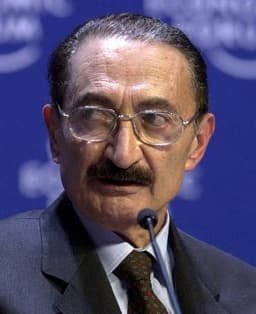
Bulent Ecevit
Politician · Modern
54.3Total

Julius Caesar
General · Ancient
82.8Total
Basic Information
Born
1925
-100
Died
—
-44
Era
Modern
Ancient
Nationality
Turkey
Roman Republic
Occupation
Politician
General
Civilization
Middle Eastern
Western
Score Comparison
Military (10%)
47.5
88.0
Political (20%)
68.0
78.0
Influence (20%)
60.0
85.0
Legacy (20%)
50.0
82.0
Leadership (15%)
53.2
80.0
Strategy (15%)
38.3
85.0
TOTAL
54.3
82.8
Bulent Ecevit — Complete Timeline
1974 AD
Ordered the Cyprus InvasionWar
Ecevit ordered the Turkish military invasion of Cyprus following a Greek-backed coup on the island. The invasion led to the partition of Cyprus and the establishment of the Turkish Republic of Northern Cyprus.
Cyprus InvasionMilitary ActionPartition
Impact: regionaldestructive
First Term as Prime Minister of TurkeyPolitical Action◆ Major
Bulent Ecevit became Prime Minister of Turkey for the first time, leading a coalition government of the Republican People's Party (CHP). He served as prime minister four times between 1974 and 1999.
Prime MinisterRepublican People's PartyCoalition
Impact: nationalconstructive
1980 AD
Ousted by the 1980 Military CoupPolitical Action◆ Major
The Turkish military coup overthrew Ecevit's government. He was arrested and banned from politics for a decade, along with other party leaders.
Military CoupArrestPolitical Ban
Impact: nationaldestructive
1999 AD
Return to Politics and Fourth Term as Prime MinisterPolitical Action◆ Major
Ecevit returned as prime minister after the 1999 elections, leading a coalition government. His term was marked by economic crisis and the capture of PKK leader Abdullah Ocalan.
Return to PoliticsCoalitionEconomic Crisis
Impact: national
Capture of Abdullah OcalanPolitical Action◆ Major
Under Ecevit's government, Turkish authorities captured Abdullah Ocalan, leader of the Kurdistan Workers' Party (PKK), in Kenya. Ocalan's capture led to a ceasefire and reduced violence.
PKKAbdullah OcalanCounterterrorism
Impact: nationalconstructive
Julius Caesar — Complete Timeline
58 BC
Gallic WarsWar◆ Major
Caesar, as proconsul of Gaul, launched a series of campaigns that conquered all of Gaul (modern France, Belgium, and parts of Switzerland). He fought numerous battles, including against the Helvetii, the Belgae, and the Gallic chieftain Vercingetorix. The wars brought immense wealth and a loyal army to Caesar.
Gallic WarsConquestRoman Expansion
Impact: regional
49 BC
Crossing the RubiconPolitical Action◆ Major
Caesar led Legio XIII across the Rubicon River into Italy, defying the Roman Senate's order to disband his army. This act triggered a civil war against Pompey and the Optimates, ultimately leading to Caesar's dictatorship and the end of the Roman Republic.
Roman Civil WarEnd of RepublicPower Struggle
Impact: global
48 BC
Battle of PharsalusWar◆ Major
Caesar's outnumbered army defeated the larger forces of Pompey the Great at Pharsalus in Greece. Caesar's tactical use of a reserve line to counter Pompey's cavalry charge proved decisive. Pompey fled to Egypt, where he was assassinated, leaving Caesar as the undisputed master of the Roman world.
Roman Civil WarBattleDecisive Victory
Impact: regional
44 BC
Appointment as Dictator for LifePolitical Action◆ Major
The Roman Senate appointed Caesar dictator perpetuo (dictator for life), granting him unprecedented personal power. This move concentrated military, legislative, and judicial authority in one person, effectively ending the Roman Republic's traditional system of checks and balances and alarming many senators.
DictatorshipEnd of RepublicPower Consolidation
Impact: regionaldestructive
Assassination on the Ides of MarchPolitical Action◆ Major
A group of Roman senators, led by Marcus Junius Brutus and Gaius Cassius Longinus, stabbed Caesar to death at a meeting of the Senate in the Theatre of Pompey. The assassination was intended to restore the Republic, but instead triggered another civil war that led to the rise of the Roman Empire.
AssassinationRoman PoliticsEnd of Republic
Impact: globaldestructive
Expert Analysis
bulent-ecevit-vs-julius-caesar
# The Dictator and the Democrat: How Julius Caesar and Bülent Ecevit Shaped Their Worlds
On a cold January morning in 49 BCE, Julius Caesar stood at the banks of the Rubicon River in northern Italy, a small stream that marked the boundary between his province and Rome itself. To cross with his army was treason, a declaration of civil war. Across the centuries and continents, another moment of decision arrived in July 1974, when Bülent Ecevit, a poet-turned-prime minister in Ankara, ordered Turkish troops to land on the shores of Cyprus. Both men chose action over hesitation, and both changed history forever. But one became the father of an empire, the other a controversial figure whose legacy remains tangled in the politics of a divided island. What explains the gulf between them?
Origins
Julius Caesar was born into the patrician class of the Roman Republic in 100 BCE, a world of senatorial intrigue, military glory, and relentless ambition. His family, the Julii, claimed descent from the goddess Venus, but they were politically marginal. Caesar’s childhood was shaped by the violent struggles between populists and aristocrats—his uncle Marius was a populist general, his adversary Sulla a conservative dictator. From an early age, Caesar learned that survival required cunning, charm, and a willingness to break rules.
Bülent Ecevit, born in Istanbul in 1925, came of age in a very different world: the young Turkish Republic, forged from the ashes of the Ottoman Empire. His father was a professor, his mother a painter, and Ecevit himself was a published poet and journalist before entering politics. He studied in London, translated T.S. Eliot into Turkish, and seemed more suited to a literary salon than a cabinet room. Where Caesar was shaped by the sword, Ecevit was shaped by the word—and by the secular, nationalist ideals of Mustafa Kemal Atatürk.
Rise to Power
Caesar’s path to power was a masterclass in strategic patience. He served as a military tribune, then quaestor in Spain, then aedile, spending fortunes on public games to win popularity. In 63 BCE, he became pontifex maximus, the chief priest of Rome, and later praetor. But his true springboard was the governorship of Gaul from 58 to 50 BCE, where he conducted a brutal, brilliant campaign that conquered modern France and Belgium, amassed immense wealth, and built a loyal army. The Rubicon crossing in 49 BCE was not a gamble—it was the logical culmination of a decade of preparation.
Ecevit’s rise was slower and more democratic. He entered parliament in 1957 as a member of the Republican People’s Party (CHP), the party founded by Atatürk. He became minister of labor in the 1960s, championing workers’ rights, and gradually transformed the CHP from a statist, authoritarian party into a social democratic one. In 1974, at age 49, he became prime minister for the first time, leading a fragile coalition. His path was not one of conquest but of coalition-building, ideological struggle, and electoral politics.
Leadership & Governance
Caesar ruled as a military autocrat. After defeating his rival Pompey and the senatorial forces in a series of civil wars, he was appointed dictator for life in 44 BCE. He reformed the calendar, granted citizenship to provincials, launched public works projects, and centralized power in his own hands. His military genius was undeniable—his sieges at Alesia and his tactics at Pharsalus are still studied in war colleges. But his political wisdom was more fragile: he pardoned his enemies, but he also humiliated the Senate, and his contempt for republican norms sowed the seeds of his downfall.
Ecevit governed as a democrat, even in crisis. His decision to invade Cyprus in 1974 was a military action, but it was authorized by parliament and framed as a peace operation to protect Turkish Cypriots. His first term was short—just ten months—but he returned to power in 1978 and again in 1999. As prime minister, he pursued social welfare programs, expanded public education, and maintained a secular, pro-Western foreign policy. Yet his later years were marred by economic crisis and a stubborn refusal to resign, even as his health declined. His military score of 43.2 reflects a leader who used force sparingly, compared to Caesar’s 88.0.
Triumph & Tragedy
Caesar’s greatest triumph was the conquest of Gaul, which brought him glory, wealth, and a veteran army. His greatest tragedy was his assassination on the Ides of March, 44 BCE, stabbed by senators he had pardoned, including his friend Brutus. His last words, according to tradition, were “Et tu, Brute?”—a cry of betrayal that echoed through history.
Ecevit’s greatest triumph was the Cyprus operation, which secured the northern third of the island for Turkish Cypriots and remains a cornerstone of Turkish foreign policy. His greatest tragedy was the 1980 military coup, which overthrew his government, arrested him, and banned him from politics for a decade. He returned in 1999, but his final term was overshadowed by a severe economic crash and the 1999 earthquake, which exposed the government’s incompetence. He died in 2006, a figure of both respect and regret.
Character & Destiny
Caesar was audacious, calculating, and relentlessly ambitious. He cultivated an image of clemency but brooked no rivals. His personality drove him to seek absolute power, and that same personality made his assassination inevitable. He could not imagine a world where he was not at the center.
Ecevit was introspective, principled, and stubborn. He wrote poetry, refused to wear a tie, and was known for his integrity. But his stubbornness also made him inflexible. He could not adapt to the economic realities of the 1990s, and his refusal to step aside damaged his party and his legacy. Where Caesar’s flaw was overreach, Ecevit’s was rigidity.
Legacy
Caesar’s legacy is monumental. His name became a title—Kaiser, Tsar—and his reforms laid the foundation for the Roman Empire. He is remembered as a military genius, a political innovator, and a warning against tyranny. His influence score of 85.0 and legacy of 82.0 reflect his enduring grip on the Western imagination.
Ecevit’s legacy is more contested. In Turkey, he is revered as a patriot who stood up to the West and protected Turkish Cypriots. But the Cyprus invasion also created a divided island, recognized only by Turkey, and Ecevit’s later economic failures tarnish his record. His total score of 67.4 places him as a significant but not transformative figure.
Conclusion
Caesar and Ecevit never met, never could have met. One ruled an ancient republic on the verge of empire; the other led a modern republic struggling with democracy. Yet both faced the same question: when do you act, and when do you wait? Caesar crossed the Rubicon and changed the world. Ecevit ordered the Cyprus landings and changed a region. The difference is not just in scale but in kind—one was a conqueror, the other a politician. And perhaps that is the deepest lesson: history rewards audacity, but it also punishes it. Caesar died on the Senate floor; Ecevit died in his bed. Which fate is better is a question every leader must answer for themselves.
Rankings
🥇
Julius CaesarLeader
Mil: 88.0Pol: 78.0Inf: 85.0
82.8
🥈
Bulent Ecevit
Mil: 47.5Pol: 68.0Inf: 60.0
54.3
+28.5 behind
How This Comparison Works
Algorithm
Each figure is scored on 6 dimensions (0—100 scale) based on structured historical data: Military (10%), Political (20%), Influence (20%), Legacy (20%), Leadership (15%), Strategy (15%). The weighted total produces the final ranking.
Data Sources
Scores are computed from structured sub-indicators in the database. Scale factors adjust for era (Ancient ×0.85, Modern ×1.0) and civilization size (Eastern ×1.05, Other ×0.80) to account for differences in population and military scale.
Maximum 3 Figures
Comparisons are limited to 2—3 figures to ensure readability and statistical meaningfulness.
Error Margins
±5 points per dimension — Sub-scores are derived from historical records with inherent uncertainty. Two figures within 5 points on a dimension should be considered roughly equivalent in that area.
Total Score Accuracy
±3 points overall — The weighted combination of 6 dimensions produces a total score with approximately ±3 points of uncertainty. Differences of less than 3 points are not statistically significant— the figures are effectively tied.
Known Limitations
- Historical records are incomplete and uneven across civilizations
- Figures from oral-tradition societies may be underrepresented
- Occupation labels can misclassify multi-role figures
- Scores measure capability and impact, not moral character
- Quantitative scoring is a comparison tool, not absolute truth
Capability Radar
Military (10%) — Battles & Warfare
Battles
30
95
Win Rate
40
92
Expansion
30
97
Political (20%) — Governance & Reform
Reform
55
90
Diplomacy
50
85
Economy
45
82
Influence (20%) — Cultural & Global Reach
Cultural
40
88
Global
50
94
Legacy (20%) — Historical Impact
Historical
55
95
Longevity
40
96
Leadership (15%) — Power & Stability
Tenure
60
75
Stability
40
60
Strategy (15%) — Tactics & Innovation
Strategy
40
94
Tactics
35
96
Reform
20
88
Similar Comparisons
Comments & Discussion
No comments yet. Be the first to share your thoughts!