Loading...
Brian Boru vs Li Yuan
Li Yuan leads by 17.9 pts · 2 figures compared
…
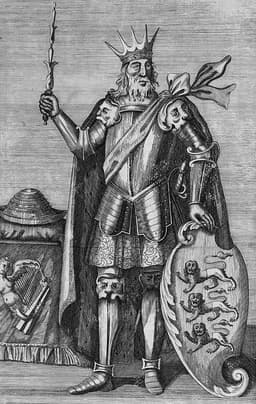
Brian Boru
Emperor · Medieval
55.8Total

Li Yuan
Emperor · Medieval
73.7Total
Basic Information
Born
941
566
Died
1014
635
Era
Medieval
Medieval
Nationality
Ireland
China
Occupation
Emperor
Emperor
Civilization
Western
Eastern
Score Comparison
Military (10%)
60.0
78.0
Political (20%)
54.7
70.0
Influence (20%)
58.0
80.0
Legacy (20%)
50.0
71.4
Leadership (15%)
64.0
72.0
Strategy (15%)
50.0
67.2
TOTAL
55.8
73.7
Brian Boru — Complete Timeline
978 AD
Reign as King of MunsterPolitical Action
Brian Boru became King of Munster after the death of his brother Mathgamain. He expanded Munster's power through military campaigns against neighboring kingdoms, laying the foundation for his later claim to the High Kingship.
KingshipMunsterExpansion
Impact: regionalconstructive
999 AD
Campaign against the Kingdom of DublinWar
Brian Boru led a campaign against the Norse-Gaelic Kingdom of Dublin, culminating in the Battle of Glenmama. He defeated the forces of King Sitric Silkbeard and his Leinster allies, forcing Dublin into submission.
Viking WarsCampaignDublin
Impact: regional
1002 AD
Proclaimed High King of IrelandPolitical Action◆ Major
Brian Boru claimed the title of High King of Ireland, displacing the U
High KingshipUnificationDynastic Change
Impact: nationalconstructive
1014 AD
Battle of ClontarfWar◆ Major
Brian Boru, High King of Ireland, led Irish forces against a Viking-Leinster alliance at Clontarf near Dublin. Brian was killed at the end of the battle, but his forces won. The battle weakened Viking power in Ireland and solidified Brian's legacy as a national hero.
Viking WarsBattleHigh Kingship
Impact: regional
Li Yuan — Complete Timeline
618 AD
Founded the Tang dynastyPolitical Action
Li Yuan, Duke of Tang, rebelled against the Sui dynasty and captured Chang'an. He declared himself Emperor Gaozu, founding the Tang dynasty that would rule China for nearly 300 years.
Tang dynastyFoundingSui-Tang transition
Impact: globalconstructive
621 AD
Battle of Hulao PassWar◆ Major
Li Yuan's son Li Shimin defeated the rival warlord Dou Jiande at Hulao Pass. This victory eliminated a major competitor and secured Tang control over the central plains.
Tang unificationBattleLi Shimin
Impact: national
626 AD
Abdicated in favor of Li ShiminPolitical Action◆ Major
After the Xuanwu Gate Incident where Li Shimin killed his brothers, Li Yuan abdicated the throne to his son. He became Taishang Huang (retired emperor) and lived in retirement.
Tang dynastySuccessionXuanwu Gate
Impact: national
Expert Analysis
Origins
Brian Boru (c. 941–1014) was born into the Dál gCais dynasty in Munster, Ireland. His father Cennétig mac Lorcáin was King of Thomond, but the family was not of the highest royal rank. Brian's elder brother Mathgamain became King of Munster, and Brian learned warfare early, participating in raids against Norse settlements. The fragmented Irish political landscape, with over 150 petty kingdoms, shaped his ambition.
Li Yuan (566–635) was born into a noble family of mixed Han and Xianbei ancestry in Chang'an, Sui China. His father Li Bing was a general and Duke of Tang, giving Li Yuan a privileged upbringing. He served as a military officer under the Sui dynasty, gaining administrative experience. The Sui's heavy taxation and failed campaigns created widespread rebellion, providing Li Yuan's opportunity.
Rise to Power
Brian Boru became King of Munster in 976 after his brother's murder by the Norse of Limerick. He campaigned against the Kingdom of Dublin, defeating them at Glenmama in 999. By 1002, he claimed the High Kingship, displacing the Uí Néill dynasty through military force and alliances with Leinster and Connacht. His reign saw tribute from most Irish kingdoms, but resistance persisted in the north.
Li Yuan rose when the Sui dynasty collapsed. In 617, as Duke of Tang, he rebelled, capturing Chang'an and declaring the Tang dynasty in 618. He relied on his son Li Shimin, who won the decisive Battle of Hulao Pass in 621 against Dou Jiande. Li Yuan's political acumen secured support from Confucian officials and military elites. He abdicated in 626 after the Xuanwu Gate Incident, where Li Shimin killed his brothers.
Leadership & Governance
Brian Boru's governance was typical of medieval Irish kings: he collected tribute, enforced over-lordship, and patronized the Church. He rebuilt monasteries and promoted literacy, but his authority was personal, not institutional. He lacked a centralized bureaucracy, relying on kinship ties and military coercion. His military score of 60.0 reflects his tactical ability but limited strategic reach.
Li Yuan established a centralized bureaucracy based on Sui models, including the Three Departments and Six Ministries system. He issued a new legal code, the Tang Code, which influenced East Asia. He promoted meritocracy through civil service exams, though still favoring aristocrats. His political score of 70.0 and leadership of 72.0 indicate effective state-building. He also introduced land reforms to stabilize agriculture.
Triumph & Tragedy
Brian Boru's greatest triumph was the Battle of Clontarf (1014), where he defeated a Viking-Leinster alliance. However, he was killed in his tent after the battle, a tragic end that prevented consolidation. His victory broke Viking power in Ireland but led to renewed infighting among Irish kings. His legacy score of 50.0 reflects limited long-term impact.
Li Yuan's triumph was founding the Tang dynasty, which lasted for 289 years and became a golden age. His tragedy was the Xuanwu Gate Incident: his sons' rivalry led to fratricide, and he was forced to abdicate. He lived as retired emperor until 635, watching his son Li Shimin (Emperor Taizong) create the dynasty's glory. His legacy score of 71.4 reflects enduring influence.
Character & Destiny
Brian Boru was determined and ruthless, but his single-minded focus on personal supremacy left no succession plan. His death at Clontarf, just as victory was secured, shows the fragility of charismatic leadership. He scored 64.0 in leadership but only 54.7 in politics, indicating weakness in institution-building.
Li Yuan was cautious and pragmatic, willing to delegate to his talented sons. After abdication, he remained influential. His character allowed the Tang to survive his reign. His political score of 70.0 and strategy of 67.2 show a balanced approach. However, his failure to manage succession led to bloodshed.
Legacy
Brian Boru is remembered as a national hero in Ireland, symbolizing resistance against Vikings. His descendants, the O'Brien clan, ruled Thomond for centuries. But his High Kingship did not survive; Ireland remained divided until the Norman invasion. His influence score of 58.0 reflects regional significance.
Li Yuan's Tang dynasty became a model for Chinese governance, influencing Korea, Japan, and Vietnam. The Tang Code persisted, and the civil service exam system expanded. His legacy score of 71.4 and influence of 80.0 show global impact. The Tang period is considered China's cosmopolitan era.
Conclusion
Li Yuan had greater impact by a wide margin. His total score of 73.7 versus Brian Boru's 55.8 reflects the Tang dynasty's long-term influence on Chinese civilization and beyond. Brian Boru's achievements were significant but localized and short-lived. Li Yuan's institutional foundations shaped East Asia for centuries. While Brian Boru's story is compelling, Li Yuan's legacy endures in governance, law, and culture.
Rankings
🥇
Li YuanLeader
Mil: 78.0Pol: 70.0Inf: 80.0
73.7
🥈
Brian Boru
Mil: 60.0Pol: 54.7Inf: 58.0
55.8
+17.9 behind
How This Comparison Works
Algorithm
Each figure is scored on 6 dimensions (0—100 scale) based on structured historical data: Military (10%), Political (20%), Influence (20%), Legacy (20%), Leadership (15%), Strategy (15%). The weighted total produces the final ranking.
Data Sources
Scores are computed from structured sub-indicators in the database. Scale factors adjust for era (Ancient ×0.85, Modern ×1.0) and civilization size (Eastern ×1.05, Other ×0.80) to account for differences in population and military scale.
Maximum 3 Figures
Comparisons are limited to 2—3 figures to ensure readability and statistical meaningfulness.
Error Margins
±5 points per dimension — Sub-scores are derived from historical records with inherent uncertainty. Two figures within 5 points on a dimension should be considered roughly equivalent in that area.
Total Score Accuracy
±3 points overall — The weighted combination of 6 dimensions produces a total score with approximately ±3 points of uncertainty. Differences of less than 3 points are not statistically significant— the figures are effectively tied.
Known Limitations
- Historical records are incomplete and uneven across civilizations
- Figures from oral-tradition societies may be underrepresented
- Occupation labels can misclassify multi-role figures
- Scores measure capability and impact, not moral character
- Quantitative scoring is a comparison tool, not absolute truth
Capability Radar
Military (10%) — Battles & Warfare
Battles
55
75
Win Rate
60
80
Expansion
55
80
Political (20%) — Governance & Reform
Reform
45
75
Diplomacy
55
80
Economy
40
75
Influence (20%) — Cultural & Global Reach
Cultural
50
85
Global
40
85
Legacy (20%) — Historical Impact
Historical
55
90
Longevity
45
90
Leadership (15%) — Power & Stability
Tenure
50
70
Stability
45
70
Strategy (15%) — Tactics & Innovation
Strategy
60
85
Tactics
65
70
Reform
40
65
Similar Comparisons
Comments & Discussion
No comments yet. Be the first to share your thoughts!