Loading...
Boris Yeltsin vs Julius Caesar
Julius Caesar leads by 31.6 pts · 2 figures compared
…
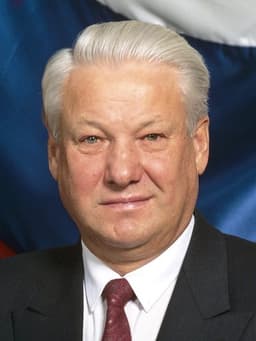
Boris Yeltsin
Politician · Modern
51.2Total

Julius Caesar
General · Ancient
82.8Total
Basic Information
Born
1931
-100
Died
—
-44
Era
Modern
Ancient
Nationality
Russia
Roman Republic
Occupation
Politician
General
Civilization
Western
Western
Score Comparison
Military (10%)
10.0
88.0
Political (20%)
53.8
78.0
Influence (20%)
55.0
85.0
Legacy (20%)
54.0
82.0
Leadership (15%)
74.0
80.0
Strategy (15%)
38.3
85.0
TOTAL
51.2
82.8
Boris Yeltsin — Complete Timeline
1991 AD
Elected President of the Russian Soviet Federative Socialist RepublicOther◆ Major
Yeltsin was elected President of the Russian SFSR in a direct popular election on June 12, 1991, winning 57% of the vote. This made him the first popularly elected leader in Russian history and gave him a democratic mandate separate from Soviet President Mikhail Gorbachev.
Russian PresidencyDemocracySoviet Union
Impact: nationalconstructive
Led Resistance to August 1991 CoupPolitical Action◆ Major
During the August 1991 coup attempt by hardline Communist Party members against Gorbachev, Yeltsin famously climbed onto a tank outside the Russian White House and called for resistance. His defiance rallied opposition to the coup, which collapsed within days, accelerating the dissolution of the Soviet Union.
Soviet CoupRussian ResistanceDemocracy
Impact: globalconstructive
Signed Belavezha Accords Dissolving Soviet UnionOther◆ Major
Yeltsin, along with leaders of Ukraine and Belarus, signed the Belavezha Accords on December 8, 1991, declaring the Soviet Union dissolved and establishing the Commonwealth of Independent States (CIS). This effectively ended the USSR and created the Russian Federation as an independent state.
Soviet DissolutionCISRussian Independence
Impact: global
1993 AD
Ordered Shelling of Russian ParliamentOther◆ Major
Yeltsin ordered the Russian army to shell the White House (parliament building) on October 4, 1993, to end a constitutional crisis where the Supreme Soviet had refused to accept his decrees. The attack killed hundreds and led to the adoption of a new constitution with strong presidential powers.
Constitutional CrisisRussian ParliamentAuthoritarianism
Impact: nationaldestructive
1994 AD
Launched First Chechen WarOther◆ Major
Yeltsin ordered Russian troops into Chechnya on December 11, 1994, to suppress the separatist government of Dzhokhar Dudayev. The war resulted in massive casualties, destruction of Grozny, and a humiliating Russian withdrawal in 1996, severely damaging Yeltsin's popularity and military reputation.
Chechen WarRussian MilitarySeparatism
Impact: regionaldestructive
1999 AD
Resigned as President of RussiaPolitical Action◆ Major
Yeltsin announced his resignation on December 31, 1999, in a televised address, appointing Prime Minister Vladimir Putin as acting president. The resignation was unexpected and allowed Putin to consolidate power before the 2000 election, marking the end of Yeltsin's tumultuous decade in power.
Russian PresidencySuccessionPutin
Impact: national
Julius Caesar — Complete Timeline
58 BC
Gallic WarsWar◆ Major
Caesar, as proconsul of Gaul, launched a series of campaigns that conquered all of Gaul (modern France, Belgium, and parts of Switzerland). He fought numerous battles, including against the Helvetii, the Belgae, and the Gallic chieftain Vercingetorix. The wars brought immense wealth and a loyal army to Caesar.
Gallic WarsConquestRoman Expansion
Impact: regional
49 BC
Crossing the RubiconPolitical Action◆ Major
Caesar led Legio XIII across the Rubicon River into Italy, defying the Roman Senate's order to disband his army. This act triggered a civil war against Pompey and the Optimates, ultimately leading to Caesar's dictatorship and the end of the Roman Republic.
Roman Civil WarEnd of RepublicPower Struggle
Impact: global
48 BC
Battle of PharsalusWar◆ Major
Caesar's outnumbered army defeated the larger forces of Pompey the Great at Pharsalus in Greece. Caesar's tactical use of a reserve line to counter Pompey's cavalry charge proved decisive. Pompey fled to Egypt, where he was assassinated, leaving Caesar as the undisputed master of the Roman world.
Roman Civil WarBattleDecisive Victory
Impact: regional
44 BC
Appointment as Dictator for LifePolitical Action◆ Major
The Roman Senate appointed Caesar dictator perpetuo (dictator for life), granting him unprecedented personal power. This move concentrated military, legislative, and judicial authority in one person, effectively ending the Roman Republic's traditional system of checks and balances and alarming many senators.
DictatorshipEnd of RepublicPower Consolidation
Impact: regionaldestructive
Assassination on the Ides of MarchPolitical Action◆ Major
A group of Roman senators, led by Marcus Junius Brutus and Gaius Cassius Longinus, stabbed Caesar to death at a meeting of the Senate in the Theatre of Pompey. The assassination was intended to restore the Republic, but instead triggered another civil war that led to the rise of the Roman Empire.
AssassinationRoman PoliticsEnd of Republic
Impact: globaldestructive
Expert Analysis
boris-yeltsin-vs-julius-caesar
# The Rubicon and the Kremlin
On a January morning in 1991, Boris Yeltsin stood atop a tank outside the Russian White House, his chest puffed against the Moscow winter, defying the crumbling Soviet order. Two thousand years earlier, on a winter day in 49 BCE, Julius Caesar halted his army at the banks of a small Italian river called the Rubicon, knowing that to cross meant civil war—and the death of a republic. Both men stood at the hinge of history, but they swung the door in opposite directions. One built an empire that would endure for centuries; the other dismantled one that had lasted seventy-four years. What drove them, and why did their paths diverge so radically?
Origins
Caesar was born into the patrician Julian clan, a family with mythic roots stretching back to the goddess Venus, but by his birth in 100 BCE, the Roman Republic was bleeding from decades of civil strife. His father died when he was sixteen, leaving him to navigate a world where power belonged to those who could seize it. Young Caesar was no natural warrior—he was slender, epileptic, and famously vain about his thinning hair—but he possessed a mind that saw politics as a chessboard and a will that refused to lose. He studied rhetoric in Rhodes, was captured by pirates (whom he later crucified, politely), and learned early that reputation was the currency of Rome.
Boris Yeltsin was born in 1931 in a peasant village in the Ural Mountains, into a family that had suffered Stalin’s purges—his father was arrested and sent to a labor camp. The Soviet Union was a world of scarcity and suspicion, where survival meant conformity. Yeltsin rose through the Communist Party apparatus not as a visionary but as a builder: he studied construction engineering, managed housing projects in Sverdlovsk, and became known as a blunt, bearish figure who could get things done. Where Caesar breathed the air of a republic in crisis, Yeltsin inhaled the stale oxygen of a totalitarian state that had already decided everything.
Rise to Power
Caesar’s ascent was a masterpiece of calculated risk. He allied with the wealthy Crassus and the popular general Pompey in the First Triumvirate, then used the governorship of Gaul to build a loyal army and a legend. In eight years of brutal campaigning—from the Rhine to the English Channel—he conquered a territory larger than Italy itself, amassing wealth, glory, and a fighting force that worshipped him. His Commentaries on the Gallic Wars were not just history; they were propaganda, crafted to make Rome see him as invincible. When the Senate ordered him to disband his army and return as a private citizen, he knew that would mean prosecution and ruin. So he crossed the Rubicon.
Yeltsin’s rise was less elegant but no less dramatic. In the 1980s, as Mikhail Gorbachev’s perestroika loosened the Soviet grip, Yeltsin emerged as a populist firebrand. He was expelled from the Politburo for criticizing the slow pace of reform, but that only made him a hero to the disillusioned. In 1991, when hardliners attempted a coup against Gorbachev, Yeltsin climbed onto that tank and rallied the crowds. It was a moment of pure theater—his jacket unzipped, his voice raw—and it worked. By the end of the year, the Soviet Union was dissolved, and Yeltsin was president of a new Russia.
Leadership & Governance
Caesar governed as a revolutionary in a toga. He reformed the calendar (the Julian calendar, with its 365 days and leap year, was used for 1600 years), granted citizenship to provincials, initiated massive public works, and curbed the power of the corrupt senatorial aristocracy. But his rule was also a dictatorship: he centralized authority, packed the Senate with his supporters, and accepted the title “dictator for life.” His military genius lay in speed and adaptability—at the Battle of Alesia, he built a double ring of fortifications to trap both the Gauls inside and their relief army outside, a feat of engineering and nerve that still astounds strategists.
Yeltsin’s governance was a chaotic experiment in democracy and capitalism. He pushed through shock therapy—price liberalization, privatization—that dismantled the command economy but plunged millions into poverty. His leadership style was erratic: he fired prime ministers with the regularity of a revolving door, battled a hostile parliament that culminated in tanks shelling the White House in 1993, and waged a brutal war in Chechnya that devastated both his army and his reputation. Where Caesar was precise and strategic, Yeltsin was impulsive and often drunk. He had no Commentaries; he had only the raw, unscripted drama of a man trying to steer a superpower through collapse.
Triumph & Tragedy
Caesar’s greatest moment was his triumph over Pompey in the civil war—a four-year campaign that ended with him as master of the Roman world. His tragedy was that he could not stop. He refused to restore the republic, alienated even his allies, and on the Ides of March, 44 BCE, a group of senators stabbed him twenty-three times. His last words, according to legend, were to Brutus: “Et tu, Brute?”—and then he fell at the foot of a statue of his rival Pompey, a brutal irony that history loves.
Yeltsin’s triumph was the peaceful dissolution of the Soviet Union—a nuclear superpower that vanished without a world war. His tragedy was the aftermath. He left office on the last day of 1999, a frail and exhausted man, apologizing to the Russian people: “I want to ask for your forgiveness. For not fulfilling some of the hopes of those people who believed that we would be able to jump from the gray, stagnating totalitarian past into a bright, prosperous, and civilized future in one go.” He had crossed his own Rubicon, but the other side was not a new Rome—it was a landscape of oligarchs, poverty, and a wounded national pride.
Character & Destiny
Caesar was a man of ice and fire. He could forgive his enemies (he pardoned Brutus and Cassius after the civil war) and charm his rivals, but he could also order the massacre of a Gallic tribe without blinking. His ambition was not personal vanity—it was a conviction that only he could save Rome. This belief made him brilliant and doomed him. He saw the republic as a corpse and himself as the only physician; the senators saw him as a tyrant.
Yeltsin was a man of instinct and emotion. He tore down statues of Lenin and KGB monuments, but he could not build institutions to replace them. He genuinely believed in freedom—he said, “The most important thing is to give people freedom”—but he did not know how to manage it. His character was shaped by defiance, not construction. He was a destroyer of worlds, not a builder of empires.
Legacy
Caesar’s legacy is the Roman Empire. His adopted heir, Octavian, became Augustus, and the imperial system that Caesar pioneered lasted in the West for five centuries and in the East for another thousand. His name became a title—Kaiser, Tsar—and his reforms shaped the legal and political DNA of Europe. He is remembered as a genius, a tyrant, and a martyr, depending on who tells the story.
Yeltsin’s legacy is more ambiguous. He is honored in Russia as the man who ended communism, but he is also blamed for the chaos that followed. His constitution still governs Russia, but his successor, Vladimir Putin, dismantled the democracy Yeltsin championed. In the West, he is seen as a flawed hero; in Russia, he is often dismissed as a tragic failure. History’s verdict is still being written.
Conclusion
The Rubicon and the Kremlin are not so different. Both are rivers that men crossed at great risk, believing they could change the world. Caesar crossed into immortality; Yeltsin crossed into ambiguity. One built an empire that lasted; the other tore one down that could not be saved. Perhaps the deepest difference is this: Caesar knew exactly what he wanted, and he got it, even if it killed him. Yeltsin wanted something—freedom, democracy, a new Russia—but he never quite knew how to hold it. In the end, both men remind us that history is not made by saints or monsters, but by human beings who stand at the edge of a river, take a breath, and step forward into the unknown.
Rankings
🥇
Julius CaesarLeader
Mil: 88.0Pol: 78.0Inf: 85.0
82.8
🥈
Boris Yeltsin
Mil: 10.0Pol: 53.8Inf: 55.0
51.2
+31.6 behind
How This Comparison Works
Algorithm
Each figure is scored on 6 dimensions (0—100 scale) based on structured historical data: Military (10%), Political (20%), Influence (20%), Legacy (20%), Leadership (15%), Strategy (15%). The weighted total produces the final ranking.
Data Sources
Scores are computed from structured sub-indicators in the database. Scale factors adjust for era (Ancient ×0.85, Modern ×1.0) and civilization size (Eastern ×1.05, Other ×0.80) to account for differences in population and military scale.
Maximum 3 Figures
Comparisons are limited to 2—3 figures to ensure readability and statistical meaningfulness.
Error Margins
±5 points per dimension — Sub-scores are derived from historical records with inherent uncertainty. Two figures within 5 points on a dimension should be considered roughly equivalent in that area.
Total Score Accuracy
±3 points overall — The weighted combination of 6 dimensions produces a total score with approximately ±3 points of uncertainty. Differences of less than 3 points are not statistically significant— the figures are effectively tied.
Known Limitations
- Historical records are incomplete and uneven across civilizations
- Figures from oral-tradition societies may be underrepresented
- Occupation labels can misclassify multi-role figures
- Scores measure capability and impact, not moral character
- Quantitative scoring is a comparison tool, not absolute truth
Capability Radar
Military (10%) — Battles & Warfare
Battles
0
95
Win Rate
0
92
Expansion
0
97
Political (20%) — Governance & Reform
Reform
75
90
Diplomacy
60
85
Economy
40
82
Influence (20%) — Cultural & Global Reach
Cultural
50
88
Global
60
94
Legacy (20%) — Historical Impact
Historical
65
95
Longevity
40
96
Leadership (15%) — Power & Stability
Tenure
70
75
Stability
20
60
Strategy (15%) — Tactics & Innovation
Strategy
0
94
Tactics
0
96
Reform
10
88
Similar Comparisons
Comments & Discussion
Tank-Standing Tribune6/17/2026
Caesar crossed the Rubicon knowing exactly what empire looked like; Yeltsin climbed that tank with no blueprint for what came next. The dictator’s gamble was calculated, the democrat’s was desperate. One built a system that lasted 500 years posthumously, the other left a failed state that still can’t decide if it’s Europe or Asia. Different leagues entirely.
数据怀疑论者6/17/2026
说Yeltsin和Caesar都站在历史转折点?这比较本身就是视角陷阱。Caesar跨过卢比孔河时罗马人口约百万,Yeltsin面对的是两亿八千万苏联公民——规模不同,决策权重能一样?样本量差了两个数量级,别拿个人英雄史观偷换系统性崩溃的现实。
Classics Pedant6/17/2026
Let’s be precise: Caesar’s Rubicon crossing was a trained general executing a calculated coup, citing tribunician sacrosanctity as his fig leaf. Yeltsin’s tank moment was a populist gamble with a microphone. Caesar wrote his own commentary; Yeltsin had CNN. The former retired to dictatorship, the latter presided over economic collapse. One legacy is marble, the other is IMF spreadsheets.
崩溃考古学家6/17/2026
说Caesar建立帝国而Yeltsin瓦解帝国?忽略关键事实:Caesar杀光政敌,Yeltsin让克格勃改行卖二手车。前者巩固权力,后者靠崩溃前的惯性收拾残局。把Yeltsin的混乱攀比成古代政变,是对历史逻辑的侮辱——1991年不是49 BCE,坦克上的演说救不了已经分裂的国家。
History's Ironist6/17/2026
Both men stood on literal or metaphorical riverbanks, but here’s the punchline: Caesar crossed to create a personal empire; Yeltsin crossed to destroy a collective one. Caesar died by conspiracy; Yeltsin died in retirement, unrepentant. One ended the Republic with genius, the other ended the USSR with incompetence. History loves a parallel—but it also loves a pratfall.