Loading...
This comparison has not been analyzed yet.
One-time AI generation (~1 minute). Scores and timeline are already available below.
Borges de Medeiros vs Jean Chretien
Borges de Medeiros leads by 3.6 pts · 2 figures compared
…
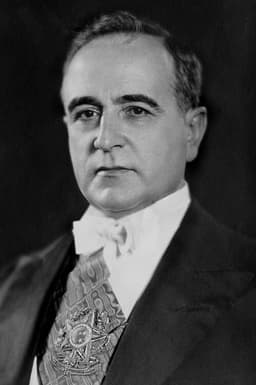
Borges de Medeiros
Politician · Modern
55.1Total

Jean Chretien
Politician · Modern
51.5Total
Basic Information
Born
1863
1934
Died
1961
—
Era
Modern
Modern
Nationality
Brazil
Canada
Occupation
Politician
Politician
Civilization
Western
Western
Score Comparison
Military (10%)
47.1
13.0
Political (20%)
68.0
55.0
Influence (20%)
51.8
58.3
Legacy (20%)
45.8
50.0
Leadership (15%)
78.0
79.8
Strategy (15%)
40.5
29.3
TOTAL
55.1
51.5
Borges de Medeiros — Complete Timeline
1893 AD
Led the Federalist RevolutionWar◆ Major
Borges de Medeiros was a leader of the Federalist Revolution in Rio Grande do Sul, a rebellion against the central government. The revolt was eventually suppressed, but it established his reputation as a political and military leader.
RebellionFederalismCivil War
Impact: regional
1898 AD
Elected President of Rio Grande do SulPolitical Action◆ Major
Borges de Medeiros was elected President of the state of Rio Grande do Sul. He would hold this position for 25 years, becoming one of the longest-serving state leaders in Brazilian history. His rule was marked by stability and modernization.
State GovernmentRio Grande do SulLong Tenure
Impact: regional
1900 AD
Implemented the 'Borgismo' Political MachinePolitical Action◆ Major
Borges de Medeiros established a powerful political machine known as 'Borgismo' in Rio Grande do Sul. This system used patronage, electoral manipulation, and control of state institutions to maintain his power for decades.
Political MachinePatronagePower
Impact: regional
1930 AD
Supported the 1930 RevolutionPolitical Action◆ Major
Borges de Medeiros initially supported the Liberal Alliance and Get
RevolutionPolitical SupportVargas
Impact: national
Jean Chretien — Complete Timeline
2000 AD
Clarity Act on Quebec SecessionPolitical Action◆ Major
Chretien's government passed the Clarity Act, which set conditions for future Quebec secession referendums. The law required a clear majority on a clear question and gave the federal government a role in determining the terms of separation.
Quebec SovereigntyReferendumFederalism
Impact: nationalconstructive
2003 AD
Decision to Keep Canada Out of the Iraq WarPolitical Action◆ Major
Chretien announced that Canada would not participate in the US-led invasion of Iraq without a UN Security Council resolution. This decision aligned with public opinion in Canada and strained relations with the US, but was praised by many Canadians.
Iraq WarForeign PolicyUN
Impact: nationalconstructive
2004 AD
Sponsorship ScandalPolitical Action◆ Major
A scandal emerged over the misuse of federal funds in a sponsorship program designed to promote Canadian unity in Quebec. The scandal damaged the Liberal Party's reputation and contributed to the fall of Chretien's successor, Paul Martin.
CorruptionQuebecLiberal Party
Impact: nationaldestructive
This comparison has not been analyzed yet.
One-time AI generation (~1 minute). Scores and timeline are already available below.
Rankings
🥇
Borges de MedeirosLeader
Mil: 47.1Pol: 68.0Inf: 51.8
55.1
🥈
Jean Chretien
Mil: 13.0Pol: 55.0Inf: 58.3
51.5
+3.6 behind
How This Comparison Works
Algorithm
Each figure is scored on 6 dimensions (0—100 scale) based on structured historical data: Military (10%), Political (20%), Influence (20%), Legacy (20%), Leadership (15%), Strategy (15%). The weighted total produces the final ranking.
Data Sources
Scores are computed from structured sub-indicators in the database. Scale factors adjust for era (Ancient ×0.85, Modern ×1.0) and civilization size (Eastern ×1.05, Other ×0.80) to account for differences in population and military scale.
Maximum 3 Figures
Comparisons are limited to 2—3 figures to ensure readability and statistical meaningfulness.
Error Margins
±5 points per dimension — Sub-scores are derived from historical records with inherent uncertainty. Two figures within 5 points on a dimension should be considered roughly equivalent in that area.
Total Score Accuracy
±3 points overall — The weighted combination of 6 dimensions produces a total score with approximately ±3 points of uncertainty. Differences of less than 3 points are not statistically significant— the figures are effectively tied.
Known Limitations
- Historical records are incomplete and uneven across civilizations
- Figures from oral-tradition societies may be underrepresented
- Occupation labels can misclassify multi-role figures
- Scores measure capability and impact, not moral character
- Quantitative scoring is a comparison tool, not absolute truth
Capability Radar
Military (10%) — Battles & Warfare
Battles
31
13
Win Rate
33
12
Expansion
38
17
Political (20%) — Governance & Reform
Reform
60
55
Diplomacy
55
70
Economy
50
60
Influence (20%) — Cultural & Global Reach
Cultural
30
40
Global
20
50
Legacy (20%) — Historical Impact
Historical
40
45
Longevity
35
35
Leadership (15%) — Power & Stability
Tenure
75
65
Stability
65
65
Strategy (15%) — Tactics & Innovation
Strategy
37
19
Tactics
38
25
Reform
42
25
Similar Comparisons
Comments & Discussion
No comments yet. Be the first to share your thoughts!