Loading...
Axel Oxenstierna vs Borges de Medeiros
Axel Oxenstierna leads by 11.1 pts · 2 figures compared
…
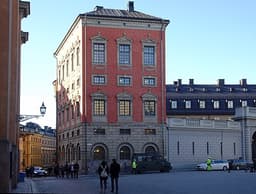
Axel Oxenstierna
Politician · Modern
66.2Total
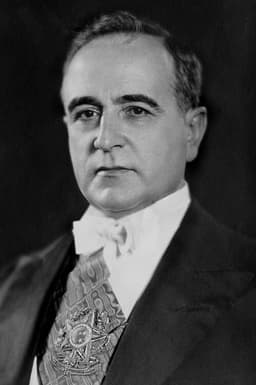
Borges de Medeiros
Politician · Modern
55.1Total
Basic Information
Born
1583
1863
Died
1654
1961
Era
Modern
Modern
Nationality
Sweden
Brazil
Occupation
Politician
Politician
Civilization
Western
Western
Score Comparison
Military (10%)
55.0
47.1
Political (20%)
75.0
68.0
Influence (20%)
72.0
51.8
Legacy (20%)
55.0
45.8
Leadership (15%)
78.0
78.0
Strategy (15%)
60.0
40.5
TOTAL
66.2
55.1
Axel Oxenstierna — Complete Timeline
1612 AD
Appointed Lord High Chancellor of SwedenPolitical Action◆ Major
Axel Oxenstierna was appointed Lord High Chancellor by King Gustavus Adolphus. This position made him the chief administrator of the Swedish government, a role he held for over four decades, shaping Swedish policy during its rise as a great power.
GovernmentAdministrationSwedish Empire
Impact: nationalconstructive
1632 AD
Governed Sweden during Christina's minorityPolitical Action◆ Major
After King Gustavus Adolphus died at the Battle of L
RegencyThirty Years' WarGovernment
Impact: nationalconstructive
1634 AD
Implemented the Form of Government of 1634Reform◆ Major
Oxenstierna introduced a new constitution that established a centralized administrative system with five government colleges. This reform streamlined governance, reduced the power of the nobility, and created a more efficient state apparatus that lasted for over a century.
ConstitutionAdministrationReform
Impact: nationalconstructive
1648 AD
Negotiated the Treaty of WestphaliaPolitical Action
Oxenstierna led Swedish negotiations at the Peace of Westphalia, which ended the Thirty Years' War. Sweden gained territories including Western Pomerania, Bremen, and Verden, securing its status as a major European power and gaining control of key Baltic and North Sea ports.
TreatyThirty Years' WarSwedish Empire
Impact: globalconstructive
Borges de Medeiros — Complete Timeline
1893 AD
Led the Federalist RevolutionWar◆ Major
Borges de Medeiros was a leader of the Federalist Revolution in Rio Grande do Sul, a rebellion against the central government. The revolt was eventually suppressed, but it established his reputation as a political and military leader.
RebellionFederalismCivil War
Impact: regional
1898 AD
Elected President of Rio Grande do SulPolitical Action◆ Major
Borges de Medeiros was elected President of the state of Rio Grande do Sul. He would hold this position for 25 years, becoming one of the longest-serving state leaders in Brazilian history. His rule was marked by stability and modernization.
State GovernmentRio Grande do SulLong Tenure
Impact: regional
1900 AD
Implemented the 'Borgismo' Political MachinePolitical Action◆ Major
Borges de Medeiros established a powerful political machine known as 'Borgismo' in Rio Grande do Sul. This system used patronage, electoral manipulation, and control of state institutions to maintain his power for decades.
Political MachinePatronagePower
Impact: regional
1930 AD
Supported the 1930 RevolutionPolitical Action◆ Major
Borges de Medeiros initially supported the Liberal Alliance and Get
RevolutionPolitical SupportVargas
Impact: national
Expert Analysis
Origins
Axel Oxenstierna was born on June 16, 1583, in Fånö, Uppland, Sweden, into a high noble family. His father, Gustaf Gabrielsson Oxenstierna, was a privy councillor, and his mother, Barbro Bielke, came from a powerful aristocratic clan. He studied at the universities of Rostock and Jena, receiving a thorough humanist education in law and government. In 1602, he returned to Sweden and began his career in the royal chancery.
Borges de Medeiros was born on November 17, 1863, in Caçapava do Sul, Rio Grande do Sul, Brazil, into a family of wealthy landowners. His father, Antônio Borges de Medeiros, was a colonel in the National Guard, and his mother, Maria José de Medeiros, was from a traditional gaúcho family. He studied law at the Faculdade de Direito de São Paulo, graduating in 1886. He soon entered politics, becoming a deputy in the state assembly.
Rise to Power
Oxenstierna's rise began in 1609 when he was appointed to the Royal Council by King Charles IX. In 1612, King Gustavus Adolphus appointed him Lord High Chancellor, making him the chief administrator of the Swedish government. He quickly became the king's most trusted advisor, overseeing domestic reforms and foreign policy. During the Thirty Years' War, he managed logistics and diplomacy, securing alliances with France and the Netherlands. After Gustavus Adolphus died at the Battle of Lützen in 1632, Oxenstierna became regent for the six-year-old Queen Christina, effectively ruling Sweden as its de facto leader.
Borges de Medeiros rose to prominence during the early years of the Brazilian Republic. He was elected President of Rio Grande do Sul in 1898, a position he held for 25 years (with brief interruptions). He consolidated power by leading the Federalist Revolution (1893-1895) against the central government, though the revolt was eventually suppressed. Through a combination of patronage, electoral manipulation, and control over the state militia, he built a political machine known as 'Borgismo,' which dominated Rio Grande do Sul until the 1930 Revolution.
Leadership & Governance
Oxenstierna's leadership style was methodical and institutional. He implemented the Form of Government of 1634, which created a centralized administrative system with five government colleges (chancery, treasury, war, admiralty, and mining). This structure professionalized the Swedish state and reduced the power of the nobility. He also reformed the judiciary and standardized tax collection. His governance was characterized by careful planning and adherence to legal procedures, earning him a reputation as a skilled administrator.
Borges de Medeiros ruled as a caudilho, relying on personal loyalty and patronage. His 'Borgismo' machine controlled elections through fraud and intimidation, ensuring his allies held key positions. He maintained a strong state militia and used it to suppress opposition. Unlike Oxenstierna, who built institutions, Medeiros built a personal network. His governance was pragmatic but authoritarian, prioritizing stability over democratic norms. He held power for a quarter-century, but at the cost of political pluralism.
Triumph & Tragedy
Oxenstierna's greatest triumph was the Treaty of Westphalia (1648), which ended the Thirty Years' War. Sweden gained territories in northern Germany, including Western Pomerania, and became a major European power. His administrative reforms strengthened the Swedish state, enabling it to wage war effectively. However, his tragedy was that his protégé, Queen Christina, abandoned his policies after reaching adulthood. She abdicated in 1654, converting to Catholicism and moving to Rome, undermining the regency's work. Additionally, Sweden's overextension after Westphalia led to later decline.
Borges de Medeiros's triumph was his long tenure and the stability he brought to Rio Grande do Sul. He modernized the state's infrastructure, including roads and telegraphs. However, his tragedy was the erosion of democratic processes. His political machine stifled opposition and led to corruption. He initially supported Getúlio Vargas's 1930 Revolution, but later opposed Vargas's centralization, leading to his marginalization. He died in 1941, his machine dismantled by Vargas's Estado Novo.
Character & Destiny
Oxenstierna was pragmatic, disciplined, and loyal to the Swedish crown. He believed in rule of law and efficient administration. His character shaped Sweden's destiny by creating a modern bureaucracy that outlasted him. However, his reliance on noble patronage sowed seeds of aristocratic resistance. Historians rate his political skill at 75.0 and leadership at 78.0, reflecting his ability to govern effectively during a minority.
Borges de Medeiros was ambitious, cunning, and authoritarian. He saw politics as a game of personal power. His character led him to build a machine that ensured his dominance but prevented the development of democratic institutions. His political score of 68.0 and leadership of 78.0 are comparable to Oxenstierna's, but his strategy score of 40.5 is lower, indicating his failure to adapt to national changes.
Legacy
Oxenstierna's legacy is the transformation of Sweden into a centralized, efficient state. His constitutional reforms influenced Swedish governance for centuries. The Form of Government of 1634 remained in effect until 1772. He is remembered as the architect of Sweden's Age of Greatness, with a legacy score of 55.0. His diplomatic achievements at Westphalia set a precedent for modern peace negotiations.
Borges de Medeiros's legacy is more mixed. He is remembered as a symbol of regional oligarchy in Brazil. His 'Borgismo' became a cautionary tale about political machines. He left little institutional reform; his power was personal and did not survive his retirement. His legacy score of 45.8 reflects his limited impact beyond Rio Grande do Sul.
Conclusion
Axel Oxenstierna had greater impact due to his role in shaping European diplomacy and Swedish state-building. His total score of 66.2 exceeds Borges de Medeiros's 55.1, with a gap of 11.1 points. Oxenstierna's reforms endured for centuries, while Medeiros's influence was confined to a single state and era. Although both were effective leaders, Oxenstierna's contributions to international law and administrative systems give him a clear edge in historical importance.
Rankings
🥇
Axel OxenstiernaLeader
Mil: 55.0Pol: 75.0Inf: 72.0
66.2
🥈
Borges de Medeiros
Mil: 47.1Pol: 68.0Inf: 51.8
55.1
+11.1 behind
How This Comparison Works
Algorithm
Each figure is scored on 6 dimensions (0—100 scale) based on structured historical data: Military (10%), Political (20%), Influence (20%), Legacy (20%), Leadership (15%), Strategy (15%). The weighted total produces the final ranking.
Data Sources
Scores are computed from structured sub-indicators in the database. Scale factors adjust for era (Ancient ×0.85, Modern ×1.0) and civilization size (Eastern ×1.05, Other ×0.80) to account for differences in population and military scale.
Maximum 3 Figures
Comparisons are limited to 2—3 figures to ensure readability and statistical meaningfulness.
Error Margins
±5 points per dimension — Sub-scores are derived from historical records with inherent uncertainty. Two figures within 5 points on a dimension should be considered roughly equivalent in that area.
Total Score Accuracy
±3 points overall — The weighted combination of 6 dimensions produces a total score with approximately ±3 points of uncertainty. Differences of less than 3 points are not statistically significant— the figures are effectively tied.
Known Limitations
- Historical records are incomplete and uneven across civilizations
- Figures from oral-tradition societies may be underrepresented
- Occupation labels can misclassify multi-role figures
- Scores measure capability and impact, not moral character
- Quantitative scoring is a comparison tool, not absolute truth
Capability Radar
Military (10%) — Battles & Warfare
Battles
30
31
Win Rate
40
33
Expansion
65
38
Political (20%) — Governance & Reform
Reform
90
60
Diplomacy
85
55
Economy
80
50
Influence (20%) — Cultural & Global Reach
Cultural
60
30
Global
65
20
Legacy (20%) — Historical Impact
Historical
75
40
Longevity
70
35
Leadership (15%) — Power & Stability
Tenure
85
75
Stability
75
65
Strategy (15%) — Tactics & Innovation
Strategy
60
37
Tactics
45
38
Reform
70
42
Similar Comparisons
Comments & Discussion
No comments yet. Be the first to share your thoughts!