Loading...
Bongbong Marcos vs Brian Mulroney
Brian Mulroney leads by 23.0 pts · 2 figures compared
…

Bongbong Marcos
Politician · Modern
37.8Total
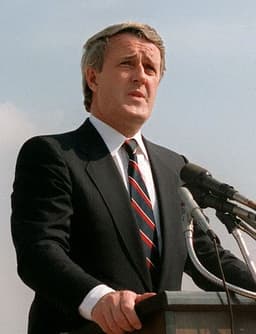
Brian Mulroney
Politician · Modern
60.8Total
Basic Information
Born
1957
1939
Died
—
—
Era
Modern
Modern
Nationality
Philippines
Canada
Occupation
Politician
Politician
Civilization
Eastern
Western
Score Comparison
Military (10%)
10.8
48.4
Political (20%)
32.2
78.0
Influence (20%)
48.6
61.0
Legacy (20%)
35.8
56.0
Leadership (15%)
51.9
72.0
Strategy (15%)
30.1
42.5
TOTAL
37.8
60.8
Bongbong Marcos — Complete Timeline
1998 AD
Elected Governor of Ilocos NortePolitical Action◆ Major
Bongbong Marcos was elected Governor of Ilocos Norte, a position his father had also held. He served for 9 years, focusing on infrastructure and economic development in the province.
GovernorshipPolitical Career
Impact: regionalconstructive
2010 AD
Elected Senator of the PhilippinesPolitical Action◆ Major
Bongbong Marcos was elected Senator of the Philippines, placing 7th in the national election. He served until 2016, advocating for infrastructure and agricultural development.
SenatePolitical Career
Impact: national
2016 AD
Lost vice presidential election to Leni RobredoPolitical Action◆ Major
Bongbong Marcos ran for Vice President of the Philippines in the 2016 election, losing narrowly to Leni Robredo by 263,473 votes. He contested the result, filing an electoral protest that was ultimately dismissed by the Supreme Court.
Vice Presidential ElectionElectoral Protest
Impact: national
2022 AD
Elected President of the PhilippinesPolitical Action
Bongbong Marcos was elected President of the Philippines in a landslide victory, winning 58.8% of the vote. His election marked the return of the Marcos family to the highest office, 36 years after his father's ouster.
PresidencyElectionMarcos Family
Impact: national
Brian Mulroney — Complete Timeline
1988 AD
Negotiation of the Canada-US Free Trade AgreementPolitical Action◆ Major
Mulroney's government negotiated the Canada-US Free Trade Agreement (CUSFTA), which eliminated tariffs and trade barriers between the two countries. The deal was controversial in Canada but passed after a federal election fought largely on the issue.
Free TradeUS-Canada RelationsEconomic Policy
Impact: regionalconstructive
1991 AD
Introduction of the Goods and Services TaxReform◆ Major
Mulroney's government implemented a 7% federal Goods and Services Tax (GST) to replace the hidden Manufacturers' Sales Tax. The GST was deeply unpopular and contributed to the Progressive Conservative Party's electoral collapse in 1993.
Tax ReformGSTFiscal Policy
Impact: nationaldestructive
1992 AD
Signing of the North American Free Trade AgreementPolitical Action◆ Major
Mulroney signed NAFTA alongside US President George H.W. Bush and Mexican President Carlos Salinas de Gortari. The agreement expanded CUSFTA to include Mexico, creating a trilateral trade bloc that reshaped North American commerce.
NAFTATrade BlocNorth America
Impact: regionalconstructive
Expert Analysis
Origins
Ferdinand 'Bongbong' Marcos Jr. was born on September 13, 1957, in Batac, Ilocos Norte, Philippines, as the only son of dictator Ferdinand Marcos and Imelda Marcos. He was educated at the University of Oxford (special diploma in social studies) and the Wharton School of the University of Pennsylvania (no degree), returning to the Philippines after his father's overthrow in 1986. In contrast, Martin Brian Mulroney was born on March 20, 1939, in Baie-Comeau, Quebec, Canada, to an electrician father and homemaker mother. He studied political science at St. Francis Xavier University and law at Dalhousie University, later becoming a successful labor lawyer and corporate executive. Mulroney's humble, bilingual upbringing in a small Quebec town shaped his political pragmatism.
Rise to Power
Marcos Jr. entered politics in 1980 as Vice Governor of Ilocos Norte, then Governor (1983-1986), but his family's exile after the 1986 People Power Revolution halted his ascent. He returned in 1991 and was elected Governor of Ilocos Norte again (1998-2007), then Representative (2007-2010), Senator (2010-2016), and narrowly lost the 2016 vice presidency to Leni Robredo. His 2022 presidential campaign leveraged social media, historical revisionism, and a united opposition, winning 58.8% of the vote. Mulroney rose through the Progressive Conservative Party, losing the 1976 and 1983 leadership conventions before winning in 1983. He became Prime Minister in 1984 with the largest majority in Canadian history (211 of 282 seats), driven by his charisma, bilingualism, and appeal to Quebec nationalists and Western conservatives.
Leadership & Governance
Marcos Jr. governs with a coalition called 'UniTeam', emphasizing continuity with his father's infrastructure program 'Build Better More'. He has maintained high approval ratings (scoring 51.9 in leadership) but faced criticism for historical distortion, rising debt (PHP 13.4 trillion by 2023), and inflation. His political score of 32.2 reflects limited legislative achievements. Mulroney, scoring 78.0 in politics, pursued aggressive economic reforms: the Canada-US Free Trade Agreement (CUSFTA, 1989) and NAFTA (1994), replacing the Manufacturers' Sales Tax with the deeply unpopular Goods and Services Tax (GST) in 1991. He also attempted constitutional reform with the Meech Lake (1987) and Charlottetown Accords (1992), both failing, which weakened his government. Mulroney's leadership score of 72.0 reflects his transactional, consensus-building style.
Triumph & Tragedy
Marcos Jr.'s greatest triumph is his 2022 election, returning the Marcos family to Malacañang 36 years after his father's ouster, and maintaining broad political support despite economic challenges. His tragedy includes a lack of major legislative accomplishments, rising food prices, and ongoing accusations of historical whitewashing. Mulroney's triumph is the signing of NAFTA, which fundamentally integrated Canada into North American trade and boosted exports (Canada's trade with the US tripled from 1989 to 2000). His tragedy is the failure of the Meech Lake and Charlottetown Accords, which deepened Quebec separatism and led to the 1995 referendum (51.4% to stay). The GST cost him the 1993 election, reducing the Progressive Conservatives to two seats. Mulroney's influence score of 61.0 reflects his international stature, while legacy is 56.0 due to mixed domestic views.
Character & Destiny
Marcos Jr. is cautious, methodical, and media-savvy, avoiding direct confrontation while using family narratives to consolidate power. His low military score (10.8) indicates no involvement in defense, but his strategic patience (30.1) allowed him to rebuild the Marcos brand. Mulroney was bold, pragmatic, and sometimes abrasive, willing to stake his political capital on large deals. His strategy score of 42.5 reflects his ability to forge cross-party alliances, but his personal unpopularity (approval rating as low as 11% in 1992) sealed his electoral collapse. Both men faced accusations of corruption: Marcos Jr. from human rights groups, Mulroney from the Airbus affair (a 1995 bribery scandal, later settled).
Legacy
Marcos Jr.'s legacy is uncertain: he has revived the Marcos dynasty but faces governance challenges; his influence score of 48.6 suggests moderate regional impact. He will be remembered for returning the Marcoses to power and continuing infrastructure projects. Mulroney's legacy is more defined: NAFTA reshaped North American economics; the GST remains a key revenue source; his environmental record includes the Acid Rain Treaty (1991) and the Rio Earth Summit. However, his constitutional failures and unpopularity limit his domestic standing. Mulroney ranks 5th in Canadian prime ministerial surveys, while Marcos Jr. is too recent for such rankings.
Conclusion
Brian Mulroney had greater impact, with a total score of 60.8 versus Bongbong Marcos's 37.8. Mulroney's policy achievements—NAFTA, GST, and environmental treaties—transformed Canada's economy and international relations, with effects lasting decades. Marcos Jr., while politically successful in winning office, has not enacted comparable structural changes. His governance is overshadowed by his father's legacy and current economic struggles. Mulroney's influence on trade architecture and his role in shaping modern Canada outweigh Marcos Jr.'s dynastic restoration, which remains unproven in its long-term effects. Therefore, Mulroney is the more consequential historical figure.
Rankings
🥇
Brian MulroneyLeader
Mil: 48.4Pol: 78.0Inf: 61.0
60.8
🥈
Bongbong Marcos
Mil: 10.8Pol: 32.2Inf: 48.6
37.8
+23.0 behind
How This Comparison Works
Algorithm
Each figure is scored on 6 dimensions (0—100 scale) based on structured historical data: Military (10%), Political (20%), Influence (20%), Legacy (20%), Leadership (15%), Strategy (15%). The weighted total produces the final ranking.
Data Sources
Scores are computed from structured sub-indicators in the database. Scale factors adjust for era (Ancient ×0.85, Modern ×1.0) and civilization size (Eastern ×1.05, Other ×0.80) to account for differences in population and military scale.
Maximum 3 Figures
Comparisons are limited to 2—3 figures to ensure readability and statistical meaningfulness.
Error Margins
±5 points per dimension — Sub-scores are derived from historical records with inherent uncertainty. Two figures within 5 points on a dimension should be considered roughly equivalent in that area.
Total Score Accuracy
±3 points overall — The weighted combination of 6 dimensions produces a total score with approximately ±3 points of uncertainty. Differences of less than 3 points are not statistically significant— the figures are effectively tied.
Known Limitations
- Historical records are incomplete and uneven across civilizations
- Figures from oral-tradition societies may be underrepresented
- Occupation labels can misclassify multi-role figures
- Scores measure capability and impact, not moral character
- Quantitative scoring is a comparison tool, not absolute truth
Capability Radar
Military (10%) — Battles & Warfare
Battles
16
31
Win Rate
16
32
Expansion
22
36
Political (20%) — Governance & Reform
Reform
20
75
Diplomacy
25
80
Economy
20
75
Influence (20%) — Cultural & Global Reach
Cultural
10
40
Global
10
65
Legacy (20%) — Historical Impact
Historical
10
65
Longevity
5
55
Leadership (15%) — Power & Stability
Tenure
30
65
Stability
15
60
Strategy (15%) — Tactics & Innovation
Strategy
26
38
Tactics
28
39
Reform
31
46
Similar Comparisons
Comments & Discussion
No comments yet. Be the first to share your thoughts!